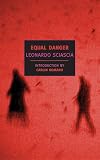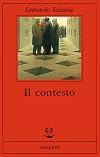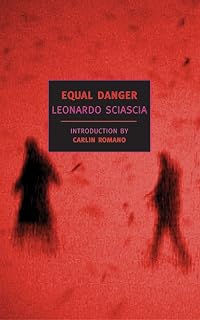
Equal Danger
by Leonardo Sciascia
On This Page
Description
District Attorney Varga is shot dead. Then Judge Sanza is killed. Then Judge Azar. Are these random murders, or part of a conspiracy? Inspector Rogas thinks he might know, but as soon as he makes any progress he is transferred and encouraged to blame the Left. But how committed are the cynical but comfortable Left to revolution, or anything? Who is doing what to whom?Tags
Recommendations
















Member Reviews
Leonardo Sciascia writes rereadable thrillers, loaded with action and existential angst. There is no one quite like him. In Equal Danger Detective Rogas is put on a case meant to solve the serial killings of a number of judges and district attorneys. Rogas very methodically tracks down his man. It's a simple operation but with its own peculiar logic. He stakes out the man's house, but his plainclothesmen promptly "lose" the suspect. Rogas speculates that his man, Cres, simply walked away from the house without any knowledge of the stakeout. In other words, Rogas has been countermanded by higher ups who for political reasons wish to pin the crimes on others.
When a fifth man is killed, another DA, Rogas's boss takes him off of the case show more entirely and assigns him to the Political Section. It is after all 1971 in a state very much like Italy. This is a time of dime-a-dozen revolutionaries, the Red Brigades (Brigate Rosse) terrorist faction most famous for the assassination of former Christian Democrat Prime Minister Aldo Moro, etc.
Detective Rogas is told by his new boss in the Political Section to be somewhere for certain undeclared purposes. He realizes he's been double-crossed when he walks right into a cosy evening gathering of the same revolutionaries he has been told to investigate in the Political Section and their friends, various high-level government ministers. Thus we see the obstacles Rogas is facing. They are systemic. How can one arm of the government be investigating the very people who are friends and acquaintances of high-level ministers? Meanwhile Cres is at large and the murders go on. This is very Sciascia. To take one police problem and to study it until a far larger problem is exposed. The writing is hyper compressed and the story tics by in 119 pages.
There's an almost Nabokovian high style that Sciascia employs that I've never come across in his work before. (I don't think this is a peculiarity of the translation, it's too consistent to be so, though I yield to native Italian speakers on the matter.) Sciascia seems to me a writer of tremendous tonal range, and here he is applying these skills to what on the surface appears to be a rather formulaic detective yarn. It isn't, of course.
My favorite passage comes in the last third of the book. Detective Rogas decides to visit the head of the State Supreme Court, President Riches, whom he believes is or will soon be a target of Cres. Sitting before Riches he expounds upon his theory of Cres's revenge. Cres, Rogas believes, was the victim of judicial error. He was convicted and served five years for an attempted murder of his wife that was staged by her. President Riches will simply not hear it. What follows is his fascinating disquisition on the infallibility of the judiciary. Citing Voltaire's essay "Treatise on Tolerance: On the Occasion of the Death of Jean Calas," President Riches comes up with an argument that must be read (and reread) to be believed. His model is the Catholic Church's doctrine of papal infallibility!
Extremely recommended. show less
When a fifth man is killed, another DA, Rogas's boss takes him off of the case show more entirely and assigns him to the Political Section. It is after all 1971 in a state very much like Italy. This is a time of dime-a-dozen revolutionaries, the Red Brigades (Brigate Rosse) terrorist faction most famous for the assassination of former Christian Democrat Prime Minister Aldo Moro, etc.
Detective Rogas is told by his new boss in the Political Section to be somewhere for certain undeclared purposes. He realizes he's been double-crossed when he walks right into a cosy evening gathering of the same revolutionaries he has been told to investigate in the Political Section and their friends, various high-level government ministers. Thus we see the obstacles Rogas is facing. They are systemic. How can one arm of the government be investigating the very people who are friends and acquaintances of high-level ministers? Meanwhile Cres is at large and the murders go on. This is very Sciascia. To take one police problem and to study it until a far larger problem is exposed. The writing is hyper compressed and the story tics by in 119 pages.
There's an almost Nabokovian high style that Sciascia employs that I've never come across in his work before. (I don't think this is a peculiarity of the translation, it's too consistent to be so, though I yield to native Italian speakers on the matter.) Sciascia seems to me a writer of tremendous tonal range, and here he is applying these skills to what on the surface appears to be a rather formulaic detective yarn. It isn't, of course.
My favorite passage comes in the last third of the book. Detective Rogas decides to visit the head of the State Supreme Court, President Riches, whom he believes is or will soon be a target of Cres. Sitting before Riches he expounds upon his theory of Cres's revenge. Cres, Rogas believes, was the victim of judicial error. He was convicted and served five years for an attempted murder of his wife that was staged by her. President Riches will simply not hear it. What follows is his fascinating disquisition on the infallibility of the judiciary. Citing Voltaire's essay "Treatise on Tolerance: On the Occasion of the Death of Jean Calas," President Riches comes up with an argument that must be read (and reread) to be believed. His model is the Catholic Church's doctrine of papal infallibility!
Extremely recommended. show less
This beautifully written novella starts off as a straightforward crime story. Varga, a district attorney trying a highly publicized case, has been killed in a place that is and isn't Sicily, and Rogas, the "shrewdest investigator," is sent to figure it out without finding out anything that might make Varga look bad. Soon, judges are being murdered too, and Rogas does what any smart and savvy detective would do: he tries to find connections among the victims, specifically trying to find innocent people who were convicted by Varga and one ore more of the judges. Although he finds someone he considers highly likely to have committed the crimes, complications ensue because some "witnesses" saw "revolutionaries" running away after one judge show more was shot, and the powers that be, for their own reasons, attach themselves to this idea and demote Rogas to working with the political department of the police. And then Rogas sees how there are all sorts of connections among the powerful from all backgrounds.
For this novel is masquerading as a police story. It is a bleak story of collusion and collaboration and corruption at the highest levels, mixed in with philosophical comments and literary quotes and allusions. It is a satire of sorts, and Sciascia has a wonderful sly, pointed wit. For example, when another character comments that a revolutionary group is shrinking, Rogas points out that all its members are spending the summer at their parents' country homes or on their yachts, and that the only group members left are the poor ones. At another point, Rogas is talking to the minister responsible for the police, and notes that he thinks they have gone off on the wrong track in the investigation; the minister looks at Rogas "with sympathy and suspicion" and replies, "Perhaps. But right or wrong, stay on it. Stay on it." Other high spots include Rogas's visit to a noted author who is embittered because an earnest revolutionary is staying at their villa as a guest of his wife, and his visit to the chief judge who believes a miscarriage of justice is impossible in the same way that the failure of transubstantiation in a Catholic service is impossible.
The ending, perhaps to be expected, is also both chilling and cynical. Sciascia's note at the end of the book says about it that "I kept this fable in a drawer in my desk for two years. Why? I don't know, but this could be one explanation: I began to write it with amusement, and at the end I was no longer amused." Those are the very feelings of the reader, at least this one. show less
For this novel is masquerading as a police story. It is a bleak story of collusion and collaboration and corruption at the highest levels, mixed in with philosophical comments and literary quotes and allusions. It is a satire of sorts, and Sciascia has a wonderful sly, pointed wit. For example, when another character comments that a revolutionary group is shrinking, Rogas points out that all its members are spending the summer at their parents' country homes or on their yachts, and that the only group members left are the poor ones. At another point, Rogas is talking to the minister responsible for the police, and notes that he thinks they have gone off on the wrong track in the investigation; the minister looks at Rogas "with sympathy and suspicion" and replies, "Perhaps. But right or wrong, stay on it. Stay on it." Other high spots include Rogas's visit to a noted author who is embittered because an earnest revolutionary is staying at their villa as a guest of his wife, and his visit to the chief judge who believes a miscarriage of justice is impossible in the same way that the failure of transubstantiation in a Catholic service is impossible.
The ending, perhaps to be expected, is also both chilling and cynical. Sciascia's note at the end of the book says about it that "I kept this fable in a drawer in my desk for two years. Why? I don't know, but this could be one explanation: I began to write it with amusement, and at the end I was no longer amused." Those are the very feelings of the reader, at least this one. show less
This was recommended bu a Goodreads friend. (Thanks.) I've been hooked on foreign police procedurals for a while now, Mankell, Leon, Larsson, Turston, Eriksson and some other unspellables from Norway and Sweden. I guess what I really like about them is the sense of grayness and dark. There's a gloom, a sense of constant struggle, particularly in the Italian police procedurals, of labyrinthine bureaucracy, the little guy seeking small truths amidst a gigantic, corrupt society. British PP's are civilized, while American PP's (except for the funny ones) have a cauldron of violence just lurking beneath the surface. Enough generalizations.
Equal Danger is representative of the Italian gloom but it's a fable about power that supersedes show more national boundaries. Rogas, a police detective, in an unidentified country, but clearly patterned on Sicily on the 70's?, has been assigned, against his better judgment, to investigate the serial killing of judges and prosecuting attorneys. His approach is extremely methodical. Rogas, seems to operate almost independently of his chain of command, and outside the corruption of the system.
Rogas is the man of principles, the man without opinions; it's the only way he can stay with his job. His investigation leads him to the top levels of government. He is told to "sort of" drop the case. His boss says in a classic display of bureaucratese, "But right track or wrong,stay on it, stay on it." Rogas is supremely confident, but as the author says, "one can be cleverer than another, not cleverer than all others". The ending came as a shock.
The author, in a note at the end of the book, calls it a fable which he didn't submit to his publisher for two years. His explanation? "I began to write it with amusement, and as I was finishing it, I was no longer amused. " Neither is the reader.You'll also learn about Black Rice. show less
Equal Danger is representative of the Italian gloom but it's a fable about power that supersedes show more national boundaries. Rogas, a police detective, in an unidentified country, but clearly patterned on Sicily on the 70's?, has been assigned, against his better judgment, to investigate the serial killing of judges and prosecuting attorneys. His approach is extremely methodical. Rogas, seems to operate almost independently of his chain of command, and outside the corruption of the system.
Rogas is the man of principles, the man without opinions; it's the only way he can stay with his job. His investigation leads him to the top levels of government. He is told to "sort of" drop the case. His boss says in a classic display of bureaucratese, "But right track or wrong,stay on it, stay on it." Rogas is supremely confident, but as the author says, "one can be cleverer than another, not cleverer than all others". The ending came as a shock.
The author, in a note at the end of the book, calls it a fable which he didn't submit to his publisher for two years. His explanation? "I began to write it with amusement, and as I was finishing it, I was no longer amused. " Neither is the reader.You'll also learn about Black Rice. show less
L'inspecteur Rogas est chargé d'élucider une mystérieuse affaire : une série d'assassinats commis dans plusieurs villes et dont toutes les victimes sont des juges. Rogas suit diverses pistes dont certaines lui font découvrir d'étranges collusions entre le chef du Parti révolutionnaire d'opposition et les hauts fonctionnaires du gouvernement en place. Rogas a, depuis le début, deviné qui était le vrai coupable : un innocent injustement condamné qui, sa peine purgée, se venge. Un double meurtre clôt cette ' parodie ' qui, débutant par une classique ' enquête ' policière, se mue, selon un schéma très borgésien, en une méditation ironique et passionnée sur le Pouvoir et la Justice.
An interesting story but not as good as [b:The Day of the Owl|130219|The Day of the Owl (New York Review Books Classics)|Leonardo Sciascia|http://photo.goodreads.com/books/1171992138s/130219.jpg|946962] although still a page turner. However if you like your stories with nice neat endings and all questions answered then this is not the book for you. Who killed the lawyer and the judges? Was it Cres or the revolutionaries? Did Rogas kill Amar before being killed by the agent or is he being made a scapegoat because he can't deny the charge? None of these questions are answered for you, the author leaves the reader to decide what has happened?
A simple plot, a parody of a detective story. A policeman is investigating a very simple case. As soon as he feels close to the solution, some extra complication appears, making the case more obscure; again and again, the policeman gets closer to the killer, and every time a new party enters the game: mafia, secret services, political parties, church, you name it.
This small book has been written in 1972, but only published much later. Sciascia started writing it with a lot of fun, and ended in frustration.
Italy’s situation today is even worse. We have a masonic prime minister, accused of bonds with mafia, convicted for a large set of crimes, unconvictable thanks to a self-written and promulgated law, owning the italian media system. show more Italy has consistently shown the lowest scores on economic growth, information and freedom of speech, as well as law enforcing among the western civilization.
Today there are bloggers that censor comments in fear of political or even criminal prosecution; there are twitters that deride commentators, and some others that even declare that they do not tweet while they are, in the astonishing silence of public opinion. Only Berlusconi’s death might save Italy from his misery. show less
This small book has been written in 1972, but only published much later. Sciascia started writing it with a lot of fun, and ended in frustration.
Italy’s situation today is even worse. We have a masonic prime minister, accused of bonds with mafia, convicted for a large set of crimes, unconvictable thanks to a self-written and promulgated law, owning the italian media system. show more Italy has consistently shown the lowest scores on economic growth, information and freedom of speech, as well as law enforcing among the western civilization.
Today there are bloggers that censor comments in fear of political or even criminal prosecution; there are twitters that deride commentators, and some others that even declare that they do not tweet while they are, in the astonishing silence of public opinion. Only Berlusconi’s death might save Italy from his misery. show less
This is a book to be seen reading, or to say that you have read - whether you enjoy it is a secondary issue. It has an independent publisher (Granta), it is post-modern, it has an author who is both obscure and revered. Best of all, it’s not even Italian; it’s Sicilian.
But if the above make it a hard book to love, it has one major redeeming feature: it is very short. You don’t have to invest much time in it - lucky, or Sciascia’s casual round up and dismissal of his plot, like a millionaire lighting cigars with $100 notes, would be even more annoying.
He’s good, you see, Sciascia, and he knows what he’s doing. Unfortunately what he does here is slightly frustrating. He has a few other books in translation - I’ll be giving show more them a try; they’re short too. show less
But if the above make it a hard book to love, it has one major redeeming feature: it is very short. You don’t have to invest much time in it - lucky, or Sciascia’s casual round up and dismissal of his plot, like a millionaire lighting cigars with $100 notes, would be even more annoying.
He’s good, you see, Sciascia, and he knows what he’s doing. Unfortunately what he does here is slightly frustrating. He has a few other books in translation - I’ll be giving show more them a try; they’re short too. show less
Members
- Recently Added By
Lists

Harold Bloom - The Western Canon: D. The Chaotic Age
833 works; 24 members
Author Information

626+ Works 9,819 Members
Born in Sicily, Sciascia was a literary and critical genius as well as a best-selling activist-writer. In the tradition of such Sicilian writers as Luigi Pirandello and Giuseppe Di Lampedusa, he explored in neorealist novels the island's impact on its inhabitants' lives: how they coped with crime, the Mafia, and corruption. His best-known works show more include The Day of the Owl, The Sicilian Relatives, and the collection of short stories The Wine-Dark Sea. In his most controversial work, The Moro Affair, he implicated Italy's leaders in the 1978 kidnapping and murder of former premier Aldo Moro by the leftist terrorist group, the Red Brigade. Though a long-time Communist, Sciascia eventually left the party to become a member of the Radical party, whose tenets were closer to his own anarchist leanings. As a representative of the party, Sciascia was elected to both the Italian and European Parliaments. (Bowker Author Biography) show less
Some Editions
Series
Belongs to Publisher Series
Work Relationships
Is contained in
Has the adaptation
Common Knowledge
- Canonical title
- Equal Danger
- Original title
- Il contesto. Una parodia
- Original publication date
- 1971
- First words*
- El fiscal Varga andaba metido en el proceso Reis, que duraba casi un mes y se habría arrastrado al menos otros dos, cuando en una deliciosa noche de mayo, después de la diez y no más tarde de la medianoche según los testi... (show all)monios y la autopsia, le mataron.
- Original language*
- Italiaans
*Some information comes from Common Knowledge in other languages. Click "Edit" for more information.
Classifications
- Genres
- Fiction and Literature, General Fiction, Mystery
- DDC/MDS
- 853.914 — Literature & rhetoric Italian, Romanian & related literatures Italian fiction 1900- 20th Century 1945-1999
- LCC
- PQ4879 .C54 .C713 — Language and Literature French, Italian, Spanish and Portuguese literatures Italian literature Individual authors, 1961-2000
- BISAC
Statistics
- Members
- 533
- Popularity
- 55,918
- Reviews
- 11
- Rating
- (3.60)
- Languages
- 11 — Dutch, English, French, German, Italian, Norwegian (Bokmål), Norwegian, Polish, Portuguese, Spanish, Swedish
- Media
- Paper, Ebook
- ISBNs
- 34
- ASINs
- 10