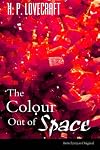
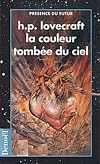
The Colour Out of Space and Others
by H. P. Lovecraft
On This Page
Description
It was just a colour out of space - a frightful messenger from unformed realms of infinity beyond all Nature as we know it; from realms whose mere existence stuns the brain and numbs us with the black extra-cosmic gulfs it throws open before our frenzied eyes.Tags
Recommendations





















Member Reviews
La edición de "El color que cayó del cielo" publicada por Pulpture Ediciones dentro de la colección Almaya (traducción de J. R. Plana) destaca por su cuidada presentación y su objetivo de acercar a nuevos lectores al universo lovecraftiano. Con un prólogo de Javier Jiménez Barco, que aporta contexto histórico y literario, y un formato compacto en rústica con solapas, la obra ofrece una lectura ágil y visualmente atractiva. Esta edición no busca ser un tratado académico, sino una puerta de entrada sólida y estéticamente agradable al terror cósmico de Lovecraft.
El relato, uno de los más emblemáticos del autor, narra la caída de un meteorito en las cercanías de Arkham, suceso que libera un color imposible de describir y show more que contamina todo a su alrededor. Lovecraft logra aquí una de sus mejores representaciones del horror indescriptible, mostrando cómo lo desconocido —aquello que desafía las leyes naturales— puede desatar la locura y el deterioro progresivo de lo vivo. El texto combina la ambientación rural con la ciencia ficción y el terror cósmico, convirtiéndose en una metáfora sobre la pequeñez del ser humano frente a lo incomprensible. show less
El relato, uno de los más emblemáticos del autor, narra la caída de un meteorito en las cercanías de Arkham, suceso que libera un color imposible de describir y show more que contamina todo a su alrededor. Lovecraft logra aquí una de sus mejores representaciones del horror indescriptible, mostrando cómo lo desconocido —aquello que desafía las leyes naturales— puede desatar la locura y el deterioro progresivo de lo vivo. El texto combina la ambientación rural con la ciencia ficción y el terror cósmico, convirtiéndose en una metáfora sobre la pequeñez del ser humano frente a lo incomprensible. show less
I'm going to throw out my first five-star rating for Lovecraft. I don't think he ever does better than he does in this short story. While he does tend to slip back into his old ways here and there, the writing that actually opens this story is gorgeous, and I don't think he ever attains the same level of creeping horror in any other story.
This story was a standout the first time I read it, and it remains so, as I work my way through this illustrated series.
This story was a standout the first time I read it, and it remains so, as I work my way through this illustrated series.
These days I am trying to read more of the authors that have influenced so many others, and Lovecraft is one of them. The high priest of `weird', his short stories are dark Gothic fantasies, horror with some fairy tale elements or science fiction thrown in. These are the first I've read, and if the three in this little volume are anything to go by, I'll enjoy reading more and think I'll need to acquire the full anthologies available.
The Colour Out of Space written in 1927 - is a classic Sci-Fi horror tale of a meteorite that falls in a farming valley and gradually poisons everything around it. The dread engendered by this tale's narrator is palpable and terrible - pure evil poisoning and sucking the life out of all living things within show more its grasp.
The Outsider is more of a fantasy, and strangely brought to mind a miniature reversal of Mark Z Danielewski's magnificent modern horror novel House Of Leaves, in which a door in a house is found with a never-ending world going down, down, down. In this short story a twisted creature discovers a door leading up, up from his dark subterranean castle.
Lastly, in The Hound, a grave-robber takes one amulet too many and is driven mad by a curse. Less `weird' than the preceding two tales, but still highly atmospheric and charged with dark energy.
I loved the `weirdness' of these tales - that word is perfect for them. They were fantastical, bleakly pessimistic, dark in tone as well as lacking sunshine, and rich in descriptive language. Lovecraft is a hit. show less
The Colour Out of Space written in 1927 - is a classic Sci-Fi horror tale of a meteorite that falls in a farming valley and gradually poisons everything around it. The dread engendered by this tale's narrator is palpable and terrible - pure evil poisoning and sucking the life out of all living things within show more its grasp.
The Outsider is more of a fantasy, and strangely brought to mind a miniature reversal of Mark Z Danielewski's magnificent modern horror novel House Of Leaves, in which a door in a house is found with a never-ending world going down, down, down. In this short story a twisted creature discovers a door leading up, up from his dark subterranean castle.
Lastly, in The Hound, a grave-robber takes one amulet too many and is driven mad by a curse. Less `weird' than the preceding two tales, but still highly atmospheric and charged with dark energy.
I loved the `weirdness' of these tales - that word is perfect for them. They were fantastical, bleakly pessimistic, dark in tone as well as lacking sunshine, and rich in descriptive language. Lovecraft is a hit. show less
A reread for me. Most of these are classic examples of Lovecraft: strange unearthly beings come to earth and terrorize people. Lovecraft's monsters are always cosmically alien. His characters are always pedantic academics who don't believe the stories they are told, or even their own experiences, until it is too late. A lot of the tension in these stories comes from the reader realizing the danger and the horror long before the narrator does. People fault Lovecraft for his lack of character development, but that is never the point of his stories. The horror is always something from outside, and the hapless narrator is forced to deal with it -- or not.
The Colour out of Space: highly original, creepy and satisfying. The monster is an show more alien miasma, or color.
The Picture in the House: also creepy, less satisfying. This time the monster is human.
The Call of Cthulhu: evil godlike creature from outer space, waiting to take over the world.
Cool Air: an unorthodox search for immortality goes wrong
The Whisperer in Darkness: one of Lovecraft's best stories, IMHO. Aliens with a secret agenda invade rural Vermont, and no one can stand in their way.
The Terrible Old Man: meh
The Shadow out of Time: this one was okay, but dragged quite a bit and had some redundancy. But I liked reading about the ancient creatures who once ruled the earth. show less
The Colour out of Space: highly original, creepy and satisfying. The monster is an show more alien miasma, or color.
The Picture in the House: also creepy, less satisfying. This time the monster is human.
The Call of Cthulhu: evil godlike creature from outer space, waiting to take over the world.
Cool Air: an unorthodox search for immortality goes wrong
The Whisperer in Darkness: one of Lovecraft's best stories, IMHO. Aliens with a secret agenda invade rural Vermont, and no one can stand in their way.
The Terrible Old Man: meh
The Shadow out of Time: this one was okay, but dragged quite a bit and had some redundancy. But I liked reading about the ancient creatures who once ruled the earth. show less
It was not a matter of old legendry at all, but something within the lifetime of those who spoke. It had happened in the ’eighties, and a family had disappeared or was killed. Speakers would not be exact; and because they all told me to pay no attention to old Ammi Pierce’s crazy tales, I sought him out the next morning, having heard that he lived alone in the ancient tottering cottage where the trees first begin to get very thick.
To me this reads entirely as camp, and it's camp I love. (I have no doubt whatsoever that Lovecraft was deadly serious about it, though. I was going to plaster photo realistic rainbow fields and forests all over this review, but I will tip my hat to Lovecraft and refrain. The story is sufficiently show more horrifying in spite of its rainbows of disgusting vegetation.) There's even an almost killer bunny. That said, Lovecraft's writing is awful and he's back to using characters as props to observe the horror as it unfolds rather than allowing them to do anything actual people would do when faced with a threat of this nature. (And the Darwin Award on this entry goes to the entire municipality of Arkham, or at least whoever is in charge of their water and sanitation departments.) By rights this should be two stars, but it made me laugh. Take your three stars and go, Lovecraft. show less
To me this reads entirely as camp, and it's camp I love. (I have no doubt whatsoever that Lovecraft was deadly serious about it, though. I was going to plaster photo realistic rainbow fields and forests all over this review, but I will tip my hat to Lovecraft and refrain. The story is sufficiently show more horrifying in spite of its rainbows of disgusting vegetation.) There's even an almost killer bunny. That said, Lovecraft's writing is awful and he's back to using characters as props to observe the horror as it unfolds rather than allowing them to do anything actual people would do when faced with a threat of this nature. (And the Darwin Award on this entry goes to the entire municipality of Arkham, or at least whoever is in charge of their water and sanitation departments.) By rights this should be two stars, but it made me laugh. Take your three stars and go, Lovecraft. show less
"The Colour Out of Space" is a science fiction/horror short story by American author H. P. Lovecraft, written in March 1927. In the tale, an unnamed narrator pieces together the story of an area known by the locals as the "blasted heath" in the hills west of the fictional town of Arkham, Massachusetts. The narrator discovers that many years ago a meteorite crashed there, poisoning every living being nearby; vegetation grows large but foul-tasting, animals are driven mad and deformed into grotesque shapes, and the people go insane or die one by one.
The Colour Out of Space is one of Lovecraft's famous stories, and for good reason. The existential dread is palpable throughout the story. Lovecraft, in attempting to create a horror that is show more beyond human reasoning, I think succeeded. Why? The entity's motive (if any) is unknown and it is impossible to discern whether or not the "colour" is emotional, moral, or even conscious. It just wreaks havoc on the inhabitants of a New England Farm.
Literally, all hell breaks loose.
Grounded in material reality, and scientific theories, this work of horror quickly becomes otherwordly.
A must-read if you're a horror fan.
And don't miss the Nicholas Cage film adaptation. It's different but bonkers. show less
The Colour Out of Space is one of Lovecraft's famous stories, and for good reason. The existential dread is palpable throughout the story. Lovecraft, in attempting to create a horror that is show more beyond human reasoning, I think succeeded. Why? The entity's motive (if any) is unknown and it is impossible to discern whether or not the "colour" is emotional, moral, or even conscious. It just wreaks havoc on the inhabitants of a New England Farm.
Literally, all hell breaks loose.
Grounded in material reality, and scientific theories, this work of horror quickly becomes otherwordly.
A must-read if you're a horror fan.
And don't miss the Nicholas Cage film adaptation. It's different but bonkers. show less
The “blasted heath” near Arkham and the “strange days”. ?!?!?
That little piece of land, described above, is creepy from start to finish in this tale. Something happens to that land, and all the organic life around it is highly affected - and changed. And whether or not the mystery is ever solved, that land will soon be underwater when the reservoir is built, and “nothing could bribe me to drink the new city water of Arkham.” - creepy, right?
And how about these quotes, from the ending...
“Something terrible came to the hills and valleys... and something terrible - - though I know not in what proportion - - still remains.”
“I shall be glad to see the water come.”
Lovecraft has "crafted" one spooky story here, and a great show more tale to read around Halloween! show less
That little piece of land, described above, is creepy from start to finish in this tale. Something happens to that land, and all the organic life around it is highly affected - and changed. And whether or not the mystery is ever solved, that land will soon be underwater when the reservoir is built, and “nothing could bribe me to drink the new city water of Arkham.” - creepy, right?
And how about these quotes, from the ending...
“Something terrible came to the hills and valleys... and something terrible - - though I know not in what proportion - - still remains.”
“I shall be glad to see the water come.”
Lovecraft has "crafted" one spooky story here, and a great show more tale to read around Halloween! show less
Members
- Recently Added By
Lists

In and About the 1920s
181 works; 31 members

Paperbacks from Hell
382 works; 9 members

Kate & Cheyanne's Horror Extravaganza
144 works; 6 members

Horror: Page & Screen
27 works; 3 members

Les 100 principaux titres de la science-fiction (1981)
126 works; 3 members
Reading LIst
648 works; 1 member

Survey of Classic Science Fiction
171 works; 48 members
Best Science Fiction Novels
816 works; 426 members
Talk Discussions
Past Discussions
THE DEEP ONES: "The Colour Out of Space" by H.P. Lovecraft in The Weird Tradition (February 2015)
Author Information

1,931+ Works 74,016 Members
Howard Phillips Lovecraft, 1890 - 1937 H. P. Lovecraft was born on August 20, 1890 in Providence, Rhode Island. His mother was Sarah Susan Phillips Lovecraft and his father was Winfield Scott Lovecraft, a traveling salesman for Gorham & Co. Silversmtihs. Lovecraft was reciting poetry at the age of two and when he was three years old, his father show more suffered a mental breakdown and was admitted to Butler Hospital. He spent five years there before dying on July 19, 1898 of paresis, a form of neurosyphillis. During those five years, Lovecraft was told that his father was paralyzed and in a coma, which was not the case. His mother, two aunts and grandfather were now bringing up Lovecraft. He suffered from frequent illnesses as a boy, many of which were psychological. He began writing between the ages of six and seven and, at about the age of eight, he discovered science. He began to produce the hectographed journals, "The Scientific Gazette" (1899-1907) and "The Rhode Island Journal of Astronomy" (1903-07). His first appearance in print happened, in 1906, when he wrote a letter on an astronomical matter to The Providence Sunday Journal. A short time later, he began writing a monthly astronomy column for The Pawtuxet Valley Gleaner - a rural paper. He also wrote columns for The Providence Tribune (1906-08), The Providence Evening News (1914-18), The Asheville (N.C.) Gazette-News (1915). In 1904, his grandfather died and the family suffered severe financial difficulties, which forced him and his mother to move out of their Victorian home. Devastated by this, he apparently contemplated suicide. In 1908, before graduating from high school, he suffered a nervous breakdown. He didn't receive a diploma and failed to get into Brown University, both of which caused him great shame. Lovecraft was not heard from for five years, re-emerging because of a letter he wrote in protest to Fred Jackson's love story in The Argosy. His letter was published in 1913 and caused great controversy, which was noted by Edward F. Daas, President of the United Amateur Press Association (UAPA). Daas invited Lovecraft to join the UAPA, which he did in early 1914. He eventually became President and Official Editor of the UAPA and served briefly as President of the rival National Amateur Press Association (NAPA). He published thirteen issues of his own paper, The Conservative (1915-23) and contributed poetry and essays to other journals. He also wrote some fiction which titles include "The Beast in the Cave" (1905), "The Alchemist" (1908), "The Tomb" and "Dagon" (1917). In 1919, Lovecraft's mother was deteriorating, mentally and physically, and was admitted to Butler Hospital. On May 24, 1921, his mother died from a gall bladder operation. While attending an amateur journalism convention in Boston, Lovecraft met his future wife Sonia Haft Greene, a Russian Jew. They were married on March 3, 1924 and Lovecraft moved to her apartment in Brooklyn. Sonia had a shop on Fifth Avenue that went bankrupt. In 1925, Sonia went to Cleveland for a job and Lovecraft moved to a smaller apartment in the Red Hook district of Brooklyn. In 1926, he decided to move back to Providence. Lovecraft had his aunts bar his wife, Sonia, from going to Providence to start a business because he couldn't have the stigma of a tradeswoman wife. They were divorced in 1929. After his return to Providence, he wrote his greatest fiction, which included the titles "The Call of Cthulhu" (1926), "At the Mountains of Madness" (1931), and "The Shadow Out of Time" (1934-35). In 1932, his aunt, Mrs. Clark, died; and he moved in with his other aunt, Mrs. Gamwell, in 1933. Suffering from cancer of the intestine, Lovecraft was admitted to Jane Brown Memorial Hospital and on March 15, 1937 he died. (Bowker Author Biography) show less
Some Editions
Series
Belongs to Publisher Series
Work Relationships
Contains
Has the adaptation
Common Knowledge
- Canonical title
- The Colour Out of Space and Others
- Original title
- The Colour Out of Space
- Alternate titles*
- El color del espacio exterior
- Original publication date
- 1927
- Important places
- Arkham, Massachusetts, USA
- Related movies*
- The Colour Out of Space (2017 | IMDb); Color Out of Space (2019 | IMDb); Die, Monster, Die! (1965 | IMDb)
- Blurbers
- Wilson, Colin; Russell, Robert Leonard
- Original language*
- Inglés
- Disambiguation notice
- There are several books entitled the Colour out of Space. This is for those that include HP Lovecraft's stories The Colour Out of Space, The Picture in the House, The Call of Cthulhu, Cool Air, The Whisperer in Darkness, The ... (show all)Terrible Old Man, and the Shadow out of Time. In particular, it's not ISBN 1590170261, from the New York Review Books Classics, which is a multi-author anthology only including one story by Lovecraft.
*Some information comes from Common Knowledge in other languages. Click "Edit" for more information.
Classifications
Statistics
- Members
- 851
- Popularity
- 32,192
- Reviews
- 28
- Rating
- (3.88)
- Languages
- 7 — English, Finnish, French, German, Italian, Portuguese, Spanish
- Media
- Paper, Audiobook, Ebook
- ISBNs
- 73
- ASINs
- 38