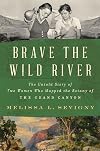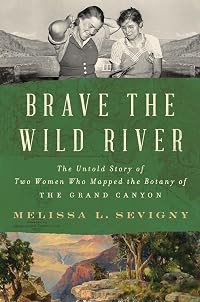
Brave the Wild River: The Untold Story of Two Women Who Mapped the Botany of the Grand Canyon
by Melissa L. Sevigny
On This Page
Description
In the summer of 1938, botanists Elzada Clover and Lois Jotter set off to run the Colorado River, accompanied by an ambitious and entrepreneurial expedition leader, a zoologist, and two amateur boatmen. With its churning waters and treacherous boulders, the Colorado was famed as the most dangerous river in the world. Journalists and veteran river runners boldly proclaimed that the motley crew would never make it out alive. But for Clover and Jotter, the expedition held a tantalizing appeal: show more no one had yet surveyed the plant life of the Grand Canyon, and they were determined to be the first. Through the vibrant letters and diaries of the two women, science journalist Melissa L. Sevigny traces their daring forty-three-day journey down the river, during which they meticulously cataloged the thorny plants that thrived in the Grand Canyon's secret nooks and crannies. Along the way, they chased a runaway boat, ran the river's most fearsome rapids, and turned the harshest critic of female river runners into an ally. Clover and Jotter's plant list, including four new cactus species, would one day become vital for efforts to protect and restore the river ecosystem. Brave the Wild River is a spellbinding adventure of two women who risked their lives to make an unprecedented botanical survey of a defining landscape in the American West. show lessTags
Recommendations

















Member Reviews
I went into this book with rather high expectations, as it seemed to offer a good balance between genuine adventure and real science, and I finished it with my expectations met.
Quite a few people have already glossed this work about how in 1938 Elzada Clover and Lois Jotter became part of an expedition to run the Colorado River through the Grand Canyon, but what impressed me the most was the flinty professionalism of these women, as they got all the sexist grief that you could imagine, to the point that they didn't really care to talk about their experience for a long time afterwards. One is relieved that virtue was rewarded and that both Clover & Jotter eventually made full professor, and are still well-regarded in their field.
Apart show more from that, Sevigny, besides telling a good tale, elegantly interweaves policy debates about water use, public lands, and equitable treatment of the people of the First Nations into this story. Matters that remain of serious importance, particularly since there are folks who want to take us back to the worst attitudes of the 19th century in power.
Highly recommended. show less
Quite a few people have already glossed this work about how in 1938 Elzada Clover and Lois Jotter became part of an expedition to run the Colorado River through the Grand Canyon, but what impressed me the most was the flinty professionalism of these women, as they got all the sexist grief that you could imagine, to the point that they didn't really care to talk about their experience for a long time afterwards. One is relieved that virtue was rewarded and that both Clover & Jotter eventually made full professor, and are still well-regarded in their field.
Apart show more from that, Sevigny, besides telling a good tale, elegantly interweaves policy debates about water use, public lands, and equitable treatment of the people of the First Nations into this story. Matters that remain of serious importance, particularly since there are folks who want to take us back to the worst attitudes of the 19th century in power.
Highly recommended. show less
Elzada Clover and Lois Jotter were botanists, which was allowable for women in the 1930s, though they were generally discouraged from more than leisurely walks in the fields. Both where well-educated: Clover was a professor at the University of Michigan with a specialization in cacti, while Jotter was a graduate student whom Clover mentored. In 1938, these two women went on a trip down the formidable Colorado River, to collect plants and learn about the plants in and around the Grand Canyon.
Sevigny's account of the trip is fascinating, as much about the river itself as about the Nevills Expedition - the one Clover and Jotter were on with Norm Nevills and a few others with disparate goals for the trip. Including stories of other show more expeditions and giving enough history and science for lay readers to appreciate the importance of the trip, Sevigny grounds the story in its time and place, letting us see the challenges of women in their field - many thought they shouldn't be on such a dangerous river at all, and when newspapers covered it, they sensationalized and often glossed over or didn't mention that the women were scientists. National parks' complicated history and ignoring of Indigenous peoples' knowledge (indeed, often moving tribes off the land to make the park) add to the details of the history. Sevigny also does a great job of balancing the science as known then versus now, detailing the changes in understanding of ecology through the changes in the river, as dams were added after the 1938 expedition. A compelling story about people that deserve to be remembered for their scientific contributions. show less
Sevigny's account of the trip is fascinating, as much about the river itself as about the Nevills Expedition - the one Clover and Jotter were on with Norm Nevills and a few others with disparate goals for the trip. Including stories of other show more expeditions and giving enough history and science for lay readers to appreciate the importance of the trip, Sevigny grounds the story in its time and place, letting us see the challenges of women in their field - many thought they shouldn't be on such a dangerous river at all, and when newspapers covered it, they sensationalized and often glossed over or didn't mention that the women were scientists. National parks' complicated history and ignoring of Indigenous peoples' knowledge (indeed, often moving tribes off the land to make the park) add to the details of the history. Sevigny also does a great job of balancing the science as known then versus now, detailing the changes in understanding of ecology through the changes in the river, as dams were added after the 1938 expedition. A compelling story about people that deserve to be remembered for their scientific contributions. show less
Very entertaining and informative recount of the botanical expedition by river raft in 1930s, a time when "women don't do such things". A woman botanist and a grad student have a chance to join an expedition down the Grand Canyon during a time when there are efforts afoot to dam the river, and it is a time when scientists are expanding ideas of evolution and ecosystems. They jump at the chance.
Sevigny uses descriptions that come alive. Describing Ocotillo, "green leaves erupted", "a spray of red flowers exploded", "lose precious water every time the pores open...sucking in carbon dioxide to transform into sugars" (p 191). "Every algae-slicked pool hummed with an uncanny chorus...chorus which rose, claiming sand, water, and stone. show more Nothing here belonged to humans, not now." (p.112). "Inside the rock, pressed thin as paper, tiny fish were forever frozen midswim" (p.135)
The botanists left journals and diaries which gave a personal perspective to their experience, and the author wrote vividly, filling in descriptions of what they were seeing and the interactions among the crew members. As women, it was 'naturally' assumed that they would do all the cooking. As women, they were often frustrated by not being allowed to run the wilder rapids, as they were assigned to walk the river edge (when there was one!).
Sevigny gives us a perspective which these botanists did not have in her inclusion of native people's use of the area; e.g. the Hualapai planted & tended a particularly large sweet species of Agave (p.144); when they were barred from their traditional wintering grounds they began planting Cottonwoods in order to have firewood (p.194). People called the Grand Canyon "pristine...ignoring centuries of stewardship by Native Americans" (p.172-3). She also comments on use of the canyon and river by other people of color; the park was segregated (p.157) and there is no record of Black people living in Boulder City despite it having been constructed to house the dam workers (some of whom were Black) (p.210).
Yes, there is some description of the plants (and their latin names), but Sevigny researched widely and brings in related items from previous trips down the river (by whites), American politics, geology, management of the National Park, and an introduction to the development of botany as a science. I never knew that Linnaeus classified plants by counting their stamens & pistils (now science is using evolutionary relationships based on DNA to reclassify them). It was up to Asa Gray, a confidant of Darwin in the 1850s, to develop a taxonomy based on the whole plant structure, even tho that required more specialized training.
The book contains a lengthy list of sources, including oral interviews and archived films. show less
Sevigny uses descriptions that come alive. Describing Ocotillo, "green leaves erupted", "a spray of red flowers exploded", "lose precious water every time the pores open...sucking in carbon dioxide to transform into sugars" (p 191). "Every algae-slicked pool hummed with an uncanny chorus...chorus which rose, claiming sand, water, and stone. show more Nothing here belonged to humans, not now." (p.112). "Inside the rock, pressed thin as paper, tiny fish were forever frozen midswim" (p.135)
The botanists left journals and diaries which gave a personal perspective to their experience, and the author wrote vividly, filling in descriptions of what they were seeing and the interactions among the crew members. As women, it was 'naturally' assumed that they would do all the cooking. As women, they were often frustrated by not being allowed to run the wilder rapids, as they were assigned to walk the river edge (when there was one!).
Sevigny gives us a perspective which these botanists did not have in her inclusion of native people's use of the area; e.g. the Hualapai planted & tended a particularly large sweet species of Agave (p.144); when they were barred from their traditional wintering grounds they began planting Cottonwoods in order to have firewood (p.194). People called the Grand Canyon "pristine...ignoring centuries of stewardship by Native Americans" (p.172-3). She also comments on use of the canyon and river by other people of color; the park was segregated (p.157) and there is no record of Black people living in Boulder City despite it having been constructed to house the dam workers (some of whom were Black) (p.210).
Yes, there is some description of the plants (and their latin names), but Sevigny researched widely and brings in related items from previous trips down the river (by whites), American politics, geology, management of the National Park, and an introduction to the development of botany as a science. I never knew that Linnaeus classified plants by counting their stamens & pistils (now science is using evolutionary relationships based on DNA to reclassify them). It was up to Asa Gray, a confidant of Darwin in the 1850s, to develop a taxonomy based on the whole plant structure, even tho that required more specialized training.
The book contains a lengthy list of sources, including oral interviews and archived films. show less
This is the nonfiction account of a group of six people who make a trek down the dangerous Colorado River in the 1930s. Their goal is to provide opportunities for two women botanists, Elzada Clover and Lois Jotter, to catalog the plants in this remote and unstudied region.
In the 1930s, few people had survived the trek down the Colorado River. This was before any significant dams and reservoirs had been built and there were tons of dangerous rapids. Also, the sheer faces of the cliffs rise straight up from the river, leaving few sandbanks to camp on. In fact, no women had survived the journey. Clover and Jotter had already faced tons of discrimination to even try to be recognized in the field of botany. In trying to organize this trip, show more they faced even more sexism and discrimination.
After a rough start, they and the group do have a successful journey and contribute much to the field of botany. Because they go before the Colorado River is significantly changed by dams and controlled water flow, their research illluminates plant life during a window of time that no longer exists after human interference.
I really enjoyed this book. show less
In the 1930s, few people had survived the trek down the Colorado River. This was before any significant dams and reservoirs had been built and there were tons of dangerous rapids. Also, the sheer faces of the cliffs rise straight up from the river, leaving few sandbanks to camp on. In fact, no women had survived the journey. Clover and Jotter had already faced tons of discrimination to even try to be recognized in the field of botany. In trying to organize this trip, show more they faced even more sexism and discrimination.
After a rough start, they and the group do have a successful journey and contribute much to the field of botany. Because they go before the Colorado River is significantly changed by dams and controlled water flow, their research illluminates plant life during a window of time that no longer exists after human interference.
I really enjoyed this book. show less
In 1938 few explorers had attempted to float the length of the Grand Canyon. Parts of it were regarded as unfloatable – those attempting to do so had lost expedition members or mysteriously disappeared.
Enter Elzada Clover. Although botany was considered a pretty and popular hobby for well bred young ladies, Clover had pushed all reasonable boundaries by earning a degree in botany and becoming a professor at the University of Michigan, specializing in American cacti.
She determined that she wanted to put together an expedition mapping the native plants, especially the cacti of the Grand Canyon, especially useful as the recently completed Hoover dam was filling the westernmost part of the canyon with Lake Mead, permanently changing the show more plant life in the area forever.
There were many obstacles to putting together such an expedition – the first being that although she was a professor at the University of Michigan, she had to obtain permission from her father. Next came the thorny hurdle of funding, which after monumental efforts she received from a private source. She had previously met an adventurer and river man Norman Neville, who agreed to hand build three wooden cataract boats for the trip and would be the expedition’s outfitter.
Clover would be joined by Lois Jotter Cutter a graduate student in botany; there was also a male scientist with an interest in collecting animal specimens.
The press framed the expedition as a stunt by women. Although there was ever increasing coverage of the expedition, the focus was on the absurdity of two women undertaking the float and whether it was possible for them to survive the trip. The trip became known as the ‘Neville Expedition’ after the name of the outfitter and did not reflect that Clover had organized it, financed it and made significant scientific discoveries.
Clover and Cutter collected and described the flora of the canyon, including identifying new species of cacti and identifying areas where indigenous peoples had brought in plants non-native to the area. At the same time, the two women handled all the cooking and other camp chores while the men of the expedition took their ease around camp.
This book reads like an adventure story – showcasing the disregard the public felt for women scientists while describing the beauty of the Canyons and Clover and Cutter’s significant contributions to the understanding of the ecosystems (itself a new concept) of the Grand Canyon.
Highly recommended for those who love the Grand Canyon, tales of adventure and the pioneering efforts of women scientists. show less
Enter Elzada Clover. Although botany was considered a pretty and popular hobby for well bred young ladies, Clover had pushed all reasonable boundaries by earning a degree in botany and becoming a professor at the University of Michigan, specializing in American cacti.
She determined that she wanted to put together an expedition mapping the native plants, especially the cacti of the Grand Canyon, especially useful as the recently completed Hoover dam was filling the westernmost part of the canyon with Lake Mead, permanently changing the show more plant life in the area forever.
There were many obstacles to putting together such an expedition – the first being that although she was a professor at the University of Michigan, she had to obtain permission from her father. Next came the thorny hurdle of funding, which after monumental efforts she received from a private source. She had previously met an adventurer and river man Norman Neville, who agreed to hand build three wooden cataract boats for the trip and would be the expedition’s outfitter.
Clover would be joined by Lois Jotter Cutter a graduate student in botany; there was also a male scientist with an interest in collecting animal specimens.
The press framed the expedition as a stunt by women. Although there was ever increasing coverage of the expedition, the focus was on the absurdity of two women undertaking the float and whether it was possible for them to survive the trip. The trip became known as the ‘Neville Expedition’ after the name of the outfitter and did not reflect that Clover had organized it, financed it and made significant scientific discoveries.
Clover and Cutter collected and described the flora of the canyon, including identifying new species of cacti and identifying areas where indigenous peoples had brought in plants non-native to the area. At the same time, the two women handled all the cooking and other camp chores while the men of the expedition took their ease around camp.
This book reads like an adventure story – showcasing the disregard the public felt for women scientists while describing the beauty of the Canyons and Clover and Cutter’s significant contributions to the understanding of the ecosystems (itself a new concept) of the Grand Canyon.
Highly recommended for those who love the Grand Canyon, tales of adventure and the pioneering efforts of women scientists. show less
I can't imagine even now boating on the Colorado River through the Grand Canyon. Just for fun I looked up one of the companies that offer river trips through the Grand Canyon and this is part of what they say: "In the backcountry of Grand Canyon, there are no hotel accommodations, no hot showers, and no developed bathroom facilities. We cannot stop by the store to resupply or pick up that forgotten meal ingredient, nor can we rush an injured or ill guest quickly to the hospital. " So when six people who had never done this trip before decided in 1938 to take three homemade boats down the Colorado, it's no wonder many thought they wouldn't make it. Many of the doubters throught two women plant biologists would not be able to withstand show more the rigours. Elzada Clover and Lois Jotter proved them wrong and they collected numerous plant samples and made copious notes along the way.
Clover was an instructor in botany at the University of Michigan, consigned to the lowest tier of academia because of her gender. Jotter was a graduate student in botany at the university and a generation younger than Clover. The two had discussed gathering plant samples in the US Southwest some time and Jotter was keen. Clover had spent a lot of time in the Southwest. In 1937 she spent two weeks at the Mexican Hat Lodge in Utah on the San Juan River. That's where she met Norman Nevills, owner of the Mexican Hat Lodge with his wife. Norman shared his dream of going down the Colorado one day and Clover said she would be interested in accompanying him. That dream became a reality the next summer.
I can't possibly detail the whole trip but suffice it to say that they had their share of dangers and setbacks. Two of the original members of the trip didn't complete it but it wasn't the two women who dropped out. They were there when the boats emptied into the still filling Boulder Dam reservoir. It was a triumph plus they did important scientific work. Did this mean they were acknowledged as important scientists back in Michigan? Clover was finally made a full professor at the University of Michigan but that wasn't until 1960. Jotter's career was sidelined for a while when she married and became a mother but she returned to teaching after her husband died in 1962. In 1994 she went back on the Colorado River as part of an "Old Timers Trip" to explore how Glen Canyon Dam had changed the river below the dam. The recommendation from this group that the annual flooding below the dam had to be restored was followed, showing the virtue of having a historical perspective when assessing projects. Women in science still face challenges but learning about stories of women like Clover and Jotter should encourage young females to attempt science if they are so inclined. show less
Clover was an instructor in botany at the University of Michigan, consigned to the lowest tier of academia because of her gender. Jotter was a graduate student in botany at the university and a generation younger than Clover. The two had discussed gathering plant samples in the US Southwest some time and Jotter was keen. Clover had spent a lot of time in the Southwest. In 1937 she spent two weeks at the Mexican Hat Lodge in Utah on the San Juan River. That's where she met Norman Nevills, owner of the Mexican Hat Lodge with his wife. Norman shared his dream of going down the Colorado one day and Clover said she would be interested in accompanying him. That dream became a reality the next summer.
I can't possibly detail the whole trip but suffice it to say that they had their share of dangers and setbacks. Two of the original members of the trip didn't complete it but it wasn't the two women who dropped out. They were there when the boats emptied into the still filling Boulder Dam reservoir. It was a triumph plus they did important scientific work. Did this mean they were acknowledged as important scientists back in Michigan? Clover was finally made a full professor at the University of Michigan but that wasn't until 1960. Jotter's career was sidelined for a while when she married and became a mother but she returned to teaching after her husband died in 1962. In 1994 she went back on the Colorado River as part of an "Old Timers Trip" to explore how Glen Canyon Dam had changed the river below the dam. The recommendation from this group that the annual flooding below the dam had to be restored was followed, showing the virtue of having a historical perspective when assessing projects. Women in science still face challenges but learning about stories of women like Clover and Jotter should encourage young females to attempt science if they are so inclined. show less
This is the story of Elzada Clover and Lois Jotter, botanists, who ran the Colorado River from Green River, Utah to Boulder Dam, Nevada in 1938. It tells of their preparation and funding for the trip as well as the men who would steer the boats.
I loved this book. It read like a novel. I enjoyed hearing the stories from the river as well as the naysayers about the trip. I got a little mad as I read that the women would do the cooking, set up, and packing each day for the trip down the river. The two women went through the same hardships as the men but the men got to sleep longer every morning as the women start their day. I liked how the women were not happy about the media coverage and the misinformation and sensationalism of it.
This show more is a book that all should read. It is fascinating. show less
I loved this book. It read like a novel. I enjoyed hearing the stories from the river as well as the naysayers about the trip. I got a little mad as I read that the women would do the cooking, set up, and packing each day for the trip down the river. The two women went through the same hardships as the men but the men got to sleep longer every morning as the women start their day. I liked how the women were not happy about the media coverage and the misinformation and sensationalism of it.
This show more is a book that all should read. It is fascinating. show less
Members
- Recently Added By
Lists

Science: Earth
109 works; 1 member
Author Information
3 Works 266 Members
Melissa L. Sevigny grew up on a four-acre plot of Sonoran desert on the outskirts of Tucson, Arizona. She currently writes science stories for KNAU (Arizona Public Radio) and lives in Flagstaff, Arizona.
Awards and Honors
Awards
Common Knowledge
- Original publication date
- 2023
- People/Characters
- Elzada Clover; Lois Jotter
- Important places
- Colorado River, USA; Grand Canyon, Arizona, USA
- Epigraph
- I know of no more effective way to wreck an expedition than to put in one woman, or worse still, two.
--Roy Chapman Andrews, Explorer's Club, 1932
We don't have much truth to express unless we have gone into those rooms and closets and woods and abysses that we were told not to go into.
--Anne Lamott, Bird by Bird - Dedication
- For Gia and Sofia--be curious and be brave.
- First words
- Prologue: The night was full of noises.
When Sarah and Maynard Clover brought their seventh child into the world on September 12, 1896, they were evidently at a loss for a name. - Quotations
- A wild place isn't one unchanged by humans. It is a place that changes us. (p.250)
- Last words
- (Click to show. Warning: May contain spoilers.)They go ahead and, like stars reflected on the river, show the way.
- Publisher's editor
- Weiland, Matt; Siddiqui, Huneeya
- Blurbers
- Deming, Alison Hawthorne; Holt, Nathalia; Fedarko, Kevin; Davidson, Ash; Childs, Craig; Aschwanden, Christie (show all 7); Williams, Florence
Classifications
- Genres
- Science & Nature, General Nonfiction, Nonfiction, Biography & Memoir, History, Sexuality and Gender Studies
- DDC/MDS
- 578.0979132 — Natural sciences & mathematics Biology Natural history of organisms and related subjects Biography; History By Place North America
- LCC
- QK5 .S48 — Science Botany Botany General
- BISAC
Statistics
- Members
- 240
- Popularity
- 135,534
- Reviews
- 12
- Rating
- (4.20)
- Languages
- English
- Media
- Paper, Audiobook, Ebook
- ISBNs
- 7
- ASINs
- 4