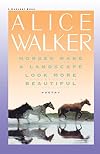
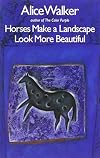
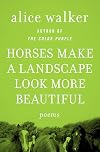
Horses Make a Landscape Look More Beautiful
by Alice Walker
On This Page
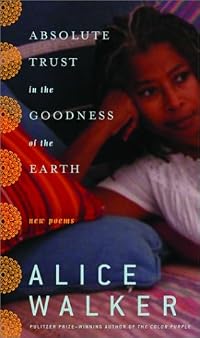
Description
In Alice Walker's fourth collection of poetry, simple observations from a life well lived balance an unflinching examination of critical global worriesThe title of this collection comes from a Native American shaman who, reflecting on the terrible problems brought by white colonizers, nearly forgave them all because with the settlers came horses to the North American Plains. And, indeed, in these poems we find Alice Walker seeking a saving grace even in the most difficult circumstances, and show more in the hearts of the most brutal oppressors. Here Walker's attention turns toward the small moments and subliminal exchanges between lovers and enemies, even as her verse addresses concerns as vast as the choking of the planet by war and pollution.This ebook features an illustrated biography of Alice Walker including rare photos from the author's personal collection. show lessTags
Recommendations



















Member Reviews
A quick read at barely 80 pages. And a tough one, for me. As a northern small town-raised white man, hard to relate to Alice Walker's inner thoughts so nakedly stated in these poems. But then there was this -
"My father and mother both / used to warn me / that 'a whistling woman and a crowing / hen would surely come to no good end' ..." ("Mississippi Winter IV")
And I remember my mother reciting that same verse, and, like Walker, she chose to "whistle like a woman undaunted."
And there was also her excitement at an upcoming visit, and preparations made, in "My Daughter Is Coming!" A pretty universal experience for older folks.
And "" Poem at Thirty-nine" is about a father - " How I miss my father," who taught her to tell the truth, thrift, show more and cooking
"He would have grown / to admire / the woman I've become: / cooking, writing, chopping wood, / staring into the fire."
But then there's that steely, strange dedication to her ancestors, including a "white great-great grandfather ... / whose only remembered act / is that he raped / A child: / my great-great grandmother, / who bore his son, / my great grandfather, / when she was eleven"
Chilling, yes. And courageous. And nearly inconceivable to this old white man.
This is a book filled with joy and pain, life and living. And certainly worth your time. HORSES MAKE A LANDSCAPE LOOK MORE BEAUTIFUL (a quote from Lame Deer) is a long title for a short book. I rarely read poems, but I liked these. Highly recommended.
- Tim Bazzett,author of the memoir, BOOKLOVER show less
"My father and mother both / used to warn me / that 'a whistling woman and a crowing / hen would surely come to no good end' ..." ("Mississippi Winter IV")
And I remember my mother reciting that same verse, and, like Walker, she chose to "whistle like a woman undaunted."
And there was also her excitement at an upcoming visit, and preparations made, in "My Daughter Is Coming!" A pretty universal experience for older folks.
And "" Poem at Thirty-nine" is about a father - " How I miss my father," who taught her to tell the truth, thrift, show more and cooking
"He would have grown / to admire / the woman I've become: / cooking, writing, chopping wood, / staring into the fire."
But then there's that steely, strange dedication to her ancestors, including a "white great-great grandfather ... / whose only remembered act / is that he raped / A child: / my great-great grandmother, / who bore his son, / my great grandfather, / when she was eleven"
Chilling, yes. And courageous. And nearly inconceivable to this old white man.
This is a book filled with joy and pain, life and living. And certainly worth your time. HORSES MAKE A LANDSCAPE LOOK MORE BEAUTIFUL (a quote from Lame Deer) is a long title for a short book. I rarely read poems, but I liked these. Highly recommended.
- Tim Bazzett,author of the memoir, BOOKLOVER show less
The poems in this collection are generally short with fairly short lines. Many poems provide insights into the African-American experience or reflect on events of the 1960s and 1970s. I found the poetry enjoyable.
most of these were middle of the road for me, but there were a few standouts. in particular her poem "Well." was outstanding. i'd like to read more of her poetry but i think i might just be a bigger fan of her novels.
from "Well.":
"But what a pity
that
the poet
the priest
and the revolution
never seem
to arrive
for the black woman,
herself."
from "Well.":
"But what a pity
that
the poet
the priest
and the revolution
never seem
to arrive
for the black woman,
herself."
More wonderful words from Walker, whose prose manages to be more poetic than many a novel.
She's a wonderful poet. So raw and radical. You should read this.
From back cover: Walker "writes about ordinary joys...and about poetry itself...She also addresses racism, injustice, and the need to save our planet from self-destruction."
dust jacket
Members
- Recently Added By
Lists

Books Read in 2020
4,379 works; 124 members
Author Information

96+ Works 40,776 Members
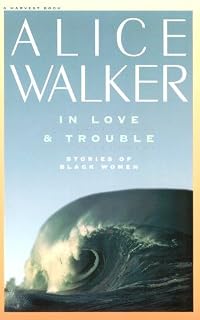
Alice Walker won the Pulitzer Prize and the American Book Award for her novel The Color Purple. Her other bestselling novels include By the Light of My Father's Smile, Possessing the Secret of Joy, and The Temple of My Familiar. She is also the author of two collections of short stories, three collections of essays, five volumes of poetry, and show more several children's books. Her books have been translated into more than two dozen languages. Born in Eaton, Georgia, Walker now lives in Northern California. Like so many characters in her fiction, Alice Walker was born into a family of sharecroppers in Eaton, Georgia. She began Spelman College on a scholarship and graduated from Sarah Lawrence College in 1965. While still in college, Walker became active in the civil rights movement and continued her involvement after she graduated, serving as a voter registration worker in Georgia. She also worked in a Head Start program in Mississippi and was on the staff of the New York City welfare department. She has lectured and taught at several colleges and universities and currently operates a publishing house, Wild Trees Press, of which she is a co-founder. Walker began her literary career as a poet, publishing Once: Poems in 1968. The collection reflects her experiences in the civil rights movement and her travels in Africa. Her second collection of poetry, Revolutionary Petunias and Other Poems (1973), is a celebration of the struggle against oppression and racism. In between these two collections, she published her first novel, The Third Life of Grange Copeland (1970), the story of Ruth Copeland, a young black girl, and her grandfather, Grange, who brutalizes his own family out of the frustrations of racial prejudice and his own sense of inadequacy. Walker's first collection of short stories, In Love and Trouble: Stories of Black Women (1973), established her special concern for the struggles, hardships, loyalties, and triumphs of black women, a powerful force in the rest of her fiction. Meridian (1976), her second novel, is the story of Meridian Hill, a civil rights worker. In her second collection of short stories, You Can't Keep A Good Woman Down (1981), Walker again portrays black women struggling against sexual, racial, and economic oppression. Walker's third novel, The Color Purple (1982), brought her the national recognition denied her earlier works. Through this story of the sharecropper Celie and the abuses she endures, Walker draws together the themes that have run through her earlier work into a concentrated and powerful attack on racism and sexism, and produces a triumphant celebration of the spirit and endurance of black women. The book received the Pulitzer Prize and was made into a successful film. Walker describes her most recent novel, The Temple of My Familiar (1989) as "a romance of the last 500,000 years." The book is a blend of myth and history revolving around three marriages. As the married couples tell their stories, they explore both their origins and the inner life of modern African Americans. (Bowker Author Biography) show less
Some Editions
Common Knowledge
- Canonical title
- Horses Make a Landscape Look More Beautiful
- Original publication date
- 1984
- People/Characters
- Martin Luther King, Jr.; Golda Meir; John Lennon; Yoko Ono; Sean Lennon
- Important events
- Assassination of Martin Luther King, Jr.; Vietnam War; Invasion of Grenada
- Epigraph
- We had no word for the strange animal we got from the white man--the horse. So we called it sunka wakan, "holy dog." For bringing us the horse we could almost forgive you for bringing us whiskey. Horses make a landscape loo... (show all)k more beautiful.
--Lame Deer, "Lame Deer Seeker of Visions" - Dedication
- for two who
slipped away
almost
entierly:
my "part" Cherokee
great-grandmother
Tallulah
(Grandmama Lula)
on my mother's side
about whom
only one
agreed-upon
thing
is known:
her hair w... (show all)as so long
she could sit on it.
and my white (Anglo-Irish?)
great-great-grandfather
on my father's side;
nameless
(Walker, perhaps?),
whose only remembered act
is that he raped
a child:
my great-great-grandmother,
who bore his son,
my great-grandfather,
when she was eleven.
Rest in peace.
The meaning of your lives
is still
unfolding.
Rest in peace.
In me
the meaning of your lives
is still
unfolding.
Rest in peace, in me.
The meaning of your lives
is still
unfolding.
Rest. In me
the meaning of your lives
is still
unfolding.
Rest. In peace
in me
The meaning
of our lives
is still
unfolding.
Rest. - First words
- Remember me?
- Last words
- (Click to show. Warning: May contain spoilers.)Surely the earth can be saved
by all the people
who insist
on love. - Blurbers
- Gernes, Sonia
Classifications
Statistics
- Members
- 299
- Popularity
- 106,894
- Reviews
- 7
- Rating
- (3.97)
- Languages
- English
- Media
- Paper, Ebook
- ISBNs
- 6
- ASINs
- 6