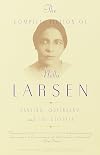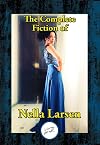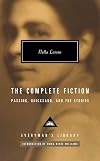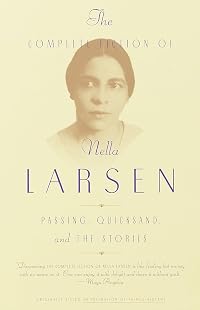
The Complete Fiction of Nella Larsen: Passing, Quicksand, and The Stories
by Nella Larsen
On This Page
Description
Throughout her [...] literary career, Nella Larsen wrote piercing dramas about the Black middle class that featured sensitive, spirited heroines struggling to find a place where they belonged. Passing, Larsen's best-known work, is a disturbing story about the unraveling lives of two childhood friends, one of whom turns her back on her past and marries a white racist. Just as disquieting is the portrait in Quicksand of biracial Helga Crane, who is unable to escape her loneliness no matter show more where and with whom she lives. Race and marriage offer few securities here or in the other stories in this compulsively readable collection, rich in psychological complexity and imbued with a vibrant sense of place. show lessTags
Recommendations













Member Reviews
Although this slim volume actually represents Harlem Renaissance writer Nella Larsen's entire written output, for my money her 1929 novella Passing so far eclipses any of its other contents, that I might almost suggest starting the book on page 163, reading to the end, and only re-starting from the beginning if you fall in love with what you find. I'll therefore be focusing today on Passing, with only a brief note to explain my preference: in her 1928 Quicksand, and even more in the short stories that precede it, I was underwhelmed by Larsen's compulsion to "tell" rather than "show"; in fact she spends so much time over-explaining her main character's mental states that she has scarcely any opportunity to demonstrate them through show more actions or circumstances. While the result would probably still be of interest to a diaspora studies major (the protagonist of Quicksand, Helga Crane, is a chronically restless woman of mixed race attempting to find her place in the world), it struck me as basically a bundle of theoretical circumstances, with no real evocation of place or character. Add to that a "cold," not-particularly-supple prose style, and I was surprised to have read about Larsen's increasing prominence in the canon over the past few years—unless Quicksand is to be read purely as a logic-based essay on mixed-race socialization.
Passing, however, changed my opinion of Larsen's capabilities, and made me regret her 1930 abandonment of writing for nursing, since I would love to see where her trajectory would have taken her otherwise. While Larsen's preoccupation with her protagonist's psychology is still on display here, it is complemented by vivid depictions of late 1920s Harlem and its upper-middle-class black culture. Her prose is more limber, more versatile, and creates sinister undercurrents running among her characters. With this kind of backdrop, Larsen's trademark insights into the liminal spaces between white and black (and possibly between same-sex and opposite-sex attraction) are much more engaging, since they seem to pertain to actual humans rather than to bundles of explication only.
Plot-wise, Passing centers around the relationship between two old school friends, Irene Redfield and Clare Kindry, who meet again by chance on hot summer day after many years apart. Irene, from whose perspective we get our limited-third-person narration, is an upstanding member of the middle-class Negro set, the kind of woman who organizes luncheons and charity balls. As such she feels scandalized by the knowledge, picked up here and there via vague rumors, that blond, charismatic Clare has crossed the color line, married a white man, and is passing herself off as white. Indeed, it soon transpires that Clare's situation is both more privileged and more precarious than Irene's own, and both women have conflicted feelings about the choices they have made. Although Irene spends much of her time feeling offended by Clare, and repeatedly promises herself and her husband that she will cut all ties with her old friend, she allows an ongoing relationship to develop—this even after she has met Clare's shockingly racist husband, and despite her knowledge that by helping Clare to revisit Harlem she is putting them both in danger.
One of the interesting aspects of the novella is Irene's relationship with the idea of "passing." She herself is light-skinned, usually taken for someone of Italian or Spanish descent, and in the opening scene we actually see her passing for white herself by entering and allowing herself to be served at a segregated restaurant:
Despite her own willingness to slip through the color boundary now and then, however, Irene's morality is outraged by Clare's decision to turn her back on "her own kind," to live permanently with white people who believe that she is also white. Interestingly, many of Irene's objections seem to be similar to those a middle-class white woman might make: Clare ought to know her place, but instead she is grasping. Irene says several times that Clare always had a "having" disposition, that she was greedy, unsatisfiable. When Clare asks Irene if she's ever thought of "passing," Irene answers contemptuously "No, why would I?" (despite the fact that she IS passing at the very moment this conversation is going on), and continues "I have everything I want." Passing, then, in Irene's mind and also Clare's, equates to a way of "getting more," of obtaining illicit goods and status that would be unavailable to a black person. Irene takes Clare's decision as an insult, since it implies that what Irene "has" isn't good enough, but she also, at some level, understands the allure. She also definitely understands the allure of Clare herself; there is a strong current of physical attraction that overtakes her more logical resolutions every time she meets Clare in person. During their initial meeting Irene thinks to herself that Clare had
At first flush the above paragraph reads like so many pointless fawning descriptions of beautiful women, but in reality there's much more going on. As Irene contemplates Clare, she is more and more drawn in—that "tempting" mouth isn't just tempting in the abstract, but tempting to Irene specifically. It's worth noting, too, that as much as Clare's decision to pass for white legitimately offends Irene, it's the "exotic" mixture of white European and black African features in the other woman's face that she finds so irresistible. So too, Clare's "Negro" eyes are "mysterious and concealing"—mysterious even to Irene, who herself identifies as a Negro. In this association of Negro with mystery, we can see Irene's internalization of the dominant (i.e., white) messaging around racial identity. Even though she is herself black, and socializes primarily with black people, she still thinks of blacks as embodying "mystery" in a way whites do not. Later in the novel, she and a white novelist speculate about what draws white men and women to balls given by black people. Irene opines that it's merely "curiosity" about potential dancing partners of another race, but she herself is more curious about—and drawn to—the "mysterious" hidden blackness of Clare than about dancing with any white man.
In fact, if we consider Irene's association of exoticism, mystery and concealment with black people, and if we see her own bourgeois morality as inherited from white Christian society, Larsen could be read as implying that blond, passing Clare is somehow more of a Negro than black-haired, repressive Irene—or at least, that Irene is engaged in just as much artifice as her coveted friend.
I know that this review is almost over and I've hardly strayed outside the novella's opening scene, but this is a piece whose plot-based subtleties are best discovered for oneself. Suffice it to say that the anxieties and ambivalences on display in this scene continue to grind against each other in interesting and, ultimately, tragic ways as the novella progresses. A fascinating glimpse of the interactions of race and sexuality in early 20th century Harlem. show less
Passing, however, changed my opinion of Larsen's capabilities, and made me regret her 1930 abandonment of writing for nursing, since I would love to see where her trajectory would have taken her otherwise. While Larsen's preoccupation with her protagonist's psychology is still on display here, it is complemented by vivid depictions of late 1920s Harlem and its upper-middle-class black culture. Her prose is more limber, more versatile, and creates sinister undercurrents running among her characters. With this kind of backdrop, Larsen's trademark insights into the liminal spaces between white and black (and possibly between same-sex and opposite-sex attraction) are much more engaging, since they seem to pertain to actual humans rather than to bundles of explication only.
Plot-wise, Passing centers around the relationship between two old school friends, Irene Redfield and Clare Kindry, who meet again by chance on hot summer day after many years apart. Irene, from whose perspective we get our limited-third-person narration, is an upstanding member of the middle-class Negro set, the kind of woman who organizes luncheons and charity balls. As such she feels scandalized by the knowledge, picked up here and there via vague rumors, that blond, charismatic Clare has crossed the color line, married a white man, and is passing herself off as white. Indeed, it soon transpires that Clare's situation is both more privileged and more precarious than Irene's own, and both women have conflicted feelings about the choices they have made. Although Irene spends much of her time feeling offended by Clare, and repeatedly promises herself and her husband that she will cut all ties with her old friend, she allows an ongoing relationship to develop—this even after she has met Clare's shockingly racist husband, and despite her knowledge that by helping Clare to revisit Harlem she is putting them both in danger.
One of the interesting aspects of the novella is Irene's relationship with the idea of "passing." She herself is light-skinned, usually taken for someone of Italian or Spanish descent, and in the opening scene we actually see her passing for white herself by entering and allowing herself to be served at a segregated restaurant:
No, the woman sitting there staring at her couldn't possibly know. [...] Nevertheless, Irene felt, in turn, anger, scorn, and fear slide over her. It wasn't that she was ashamed of being a Negro, or even of having it declared. It was the idea of being ejected from any place, even in the polite and tactful way in which the Drayton would probably do it, that disturbed her.
Despite her own willingness to slip through the color boundary now and then, however, Irene's morality is outraged by Clare's decision to turn her back on "her own kind," to live permanently with white people who believe that she is also white. Interestingly, many of Irene's objections seem to be similar to those a middle-class white woman might make: Clare ought to know her place, but instead she is grasping. Irene says several times that Clare always had a "having" disposition, that she was greedy, unsatisfiable. When Clare asks Irene if she's ever thought of "passing," Irene answers contemptuously "No, why would I?" (despite the fact that she IS passing at the very moment this conversation is going on), and continues "I have everything I want." Passing, then, in Irene's mind and also Clare's, equates to a way of "getting more," of obtaining illicit goods and status that would be unavailable to a black person. Irene takes Clare's decision as an insult, since it implies that what Irene "has" isn't good enough, but she also, at some level, understands the allure. She also definitely understands the allure of Clare herself; there is a strong current of physical attraction that overtakes her more logical resolutions every time she meets Clare in person. During their initial meeting Irene thinks to herself that Clare had
always had that pale gold hair, which, unsheared still, was drawn loosely back from a broad brow, partly hidden by the small close hat. Her lips, painted a brilliant geranium red, were sweet and sensitive and a little obstinate. A tempting mouth. The face across the forehead and cheeks was a trifle too wide, but the ivory skin had a peculiar soft luster. And the eyes were magnificent! Dark, sometimes absolutely black, always luminous, and set in long, black lashes. Arresting eyes, slow and mesmeric, and with, for all their warmth, something withdrawn and secret about them.
Ah! Surely! They were Negro eyes! Mysterious and concealing. and set in that ivory face under that bright hair, there was about them something exotic.
At first flush the above paragraph reads like so many pointless fawning descriptions of beautiful women, but in reality there's much more going on. As Irene contemplates Clare, she is more and more drawn in—that "tempting" mouth isn't just tempting in the abstract, but tempting to Irene specifically. It's worth noting, too, that as much as Clare's decision to pass for white legitimately offends Irene, it's the "exotic" mixture of white European and black African features in the other woman's face that she finds so irresistible. So too, Clare's "Negro" eyes are "mysterious and concealing"—mysterious even to Irene, who herself identifies as a Negro. In this association of Negro with mystery, we can see Irene's internalization of the dominant (i.e., white) messaging around racial identity. Even though she is herself black, and socializes primarily with black people, she still thinks of blacks as embodying "mystery" in a way whites do not. Later in the novel, she and a white novelist speculate about what draws white men and women to balls given by black people. Irene opines that it's merely "curiosity" about potential dancing partners of another race, but she herself is more curious about—and drawn to—the "mysterious" hidden blackness of Clare than about dancing with any white man.
In fact, if we consider Irene's association of exoticism, mystery and concealment with black people, and if we see her own bourgeois morality as inherited from white Christian society, Larsen could be read as implying that blond, passing Clare is somehow more of a Negro than black-haired, repressive Irene—or at least, that Irene is engaged in just as much artifice as her coveted friend.
I know that this review is almost over and I've hardly strayed outside the novella's opening scene, but this is a piece whose plot-based subtleties are best discovered for oneself. Suffice it to say that the anxieties and ambivalences on display in this scene continue to grind against each other in interesting and, ultimately, tragic ways as the novella progresses. A fascinating glimpse of the interactions of race and sexuality in early 20th century Harlem. show less
I really enjoyed this book. Charles Larson's introduction was very informative. I learned a lot about Larsen's life that I either hadn't known or forgotten.
The Wrong Man is my absolute favorite of the short stories. Its structure is near perfect. If I taught anything other than Haitian lit, I'd include it in my short story class. Freedom was a bit melodramatic for my taste and I'm not sure how I feel about Sanctuary. I'm sure it would make for great class discussions, though.
I really enjoyed Quicksand, although it kind of dragged in the middle. Helga Crane is a fascinating character, though. And I loved the end. Beautiful in a depressing way.
I just reread Passing and it wasn't as fabulous as I remembered. That always happens and it show more makes me sad. I should probably stop rereading things. But I had forgotten the end and that was fun. Passing was a better read than Quicksand, in my opinion, but they are both great works.
Besides the obvious commentary on race in Larsen's work, major themes are travel (comparing societies), marriage, and motherhood. I found myself thinking of [a:Cléante Valcin|4480380|Cléante Valcin|https://s.gr-assets.com/assets/nophoto/user/f_50x66-3498e835d024c789dd934a5c5fb5bdbc.png]a lot, especially while reading Passing. show less
The Wrong Man is my absolute favorite of the short stories. Its structure is near perfect. If I taught anything other than Haitian lit, I'd include it in my short story class. Freedom was a bit melodramatic for my taste and I'm not sure how I feel about Sanctuary. I'm sure it would make for great class discussions, though.
I really enjoyed Quicksand, although it kind of dragged in the middle. Helga Crane is a fascinating character, though. And I loved the end. Beautiful in a depressing way.
I just reread Passing and it wasn't as fabulous as I remembered. That always happens and it show more makes me sad. I should probably stop rereading things. But I had forgotten the end and that was fun. Passing was a better read than Quicksand, in my opinion, but they are both great works.
Besides the obvious commentary on race in Larsen's work, major themes are travel (comparing societies), marriage, and motherhood. I found myself thinking of [a:Cléante Valcin|4480380|Cléante Valcin|https://s.gr-assets.com/assets/nophoto/user/f_50x66-3498e835d024c789dd934a5c5fb5bdbc.png]a lot, especially while reading Passing. show less
The issues of bi-racial people in this interesting book were handled in a very original and honest way. The writing style was clear and crisp.
However, all stories were more telling than showing. There was only the minimum of dialogue. I also came to expect a sad and in most cases predictable ending. I have read other Harlem Renaissance writers who are much better at these things
However, all stories were more telling than showing. There was only the minimum of dialogue. I also came to expect a sad and in most cases predictable ending. I have read other Harlem Renaissance writers who are much better at these things
Stunning collection. Absolutely recommended.
Ratings
Members
- Recently Added By
Lists

Top Five Books of 2021
604 works; 180 members

Top Five Books of 2025
954 works; 303 members
Author Information

11+ Works 6,071 Members
Nella Larsen was associated with the Harlem Renaissance. She also worked as a librarian and a nurse in New York City, pursuing nursing after her brief, successful writing career until her death in 1964. Larsen's mother was Danish, and her father was West Indian; she used her experience as the child of middle-class parents in a mixed marriage to show more create characters in two novels who are stranded, caught between two cultures and unable to feel wholly at home in either. In each of Larsen's novels, the heroine suffers suffocating constrictions of her identity in both African American and white European culture. These crises in both Quicksand (1928) and Passing (1929) are further complicated by the heroine's quest for sexual as well as social identity, and both novels end without hopeful resolution. Both contain autobiographical elements, but Quicksand, the more successful, reproduced in fictional form many of the circumstances of Larsen's own early life. Although her work had been out of print for many years, she has recently been rediscovered. (Bowker Author Biography) show less
Some Editions
Series
Belongs to Publisher Series
Work Relationships
Contains
Common Knowledge
- Canonical title
- The Complete Fiction of Nella Larsen: Passing, Quicksand, and The Stories
- Original title
- An Intimation of Things Distant: The Collected Fiction of Nella Larsen
- Blurbers
- Angelou, Maya; Giddings, Paula J.; de Veaux, Alexis
Classifications
Statistics
- Members
- 449
- Popularity
- 67,712
- Reviews
- 4
- Rating
- (3.90)
- Languages
- English
- Media
- Paper, Ebook
- ISBNs
- 10
- ASINs
- 5