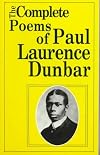
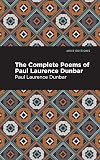
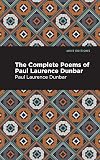
The Complete Poems of Paul Laurence Dunbar
by Paul Laurence Dunbar
On This Page
Description
A collection of the poems of Paul Laurence Dunbar, the first African-American writer to achieve an international reputation.Tags
Recommendations




















Member Reviews
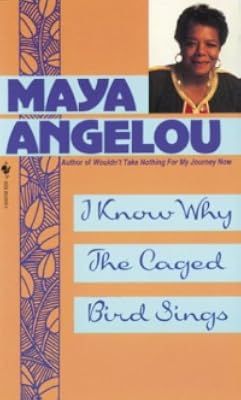
I received The Complete Poems of Paul Laurence Dunbar as an ARC, and my first reaction was, "what have I done to myself?" It's not a slim volume. Though he died early of tuberculosis at age 33, he left quite a legacy. An African-American, his poetry had the blessing of The New York Times and was popular as the 19th century turned into the 20th. He now appears to be mainly remembered for his powerful poem "Sympathy", from which Maya Angelou took the title of her classic memoir I Know Why the Caged Bird Sings:
I know what the caged bird feels, alas!
When the sun is bright on the upland slopes;
When the wind stirs soft through the springing grass,
And the river flows like a stream of glass;
When the first bird sings and the first bud opes,
And show more the faint perfume from its chalice steals—
I know what the caged bird feels!
I know why the caged bird beats his wing
Till its blood is red on the cruel bars;
For he must fly back to his perch and cling
When he fain would be on the bough a-swing;
And a pain still throbs in the old, old scars
And they pulse again with a keener sting—
I know why he beats his wing!
I know why the caged bird sings, ah me,
When his wing is bruised and his bosom sore,—
When he beats his bars and he would be free;
It is not a carol of joy or glee,
But a prayer that he sends from his heart’s deep core,
But a plea, that upward to Heaven he flings—
I know why the caged bird sings!
He invented his own way of conveying Negro dialect in poetry, and wrote many in that style. I found it easy enough to read, but somewhat discomfiting from a 21st century perspective. Maybe that's a good thing, as it's thought-provoking in looking back at his time. Here's a short example, excerpted from his poem, "A Banjo Song":
Now, de blessed little angels,
Up in heaben, we are told,
Don't do nothin' all dere lifetime
'Ceptin' play on ha'ps of gold.
Now I think heaben'd be mo' homelike
Ef we'd hyeah some music fall
F'om a real ol'-fashioned banjo,
Like dat one upon the wall.
He was observant and insightful about our frailties, hypocrisies and absurdities. I liked one of his called "The Lawyer's Way", which described first one lawyer who "smeared {the defendant's} reputation/ With the thickest kind of grime" and then the defendant's lawyer who assured us the opposite, that the defendant had "Every blessed human grace/Till i saw the light o' virtue/Fairly shinin' from his face," After this he concludes:
Then I own I was puzzled
How sich things could rightly be;
An' this aggervatin' question
Seems to keep a-puzzlin' me.
So, will someone please inform me,
An' this mystery unroll-
How an angel an' a devil
Can persess the same soul?
He is amusingly acerbic in several poems. Commenting on a lofty contemporary dilettante ("The Dilettante: A Modern Type") he says:
He looms above the sordid crowd -
At least through friendly lenses;
While his mamma looks pleased and proud,
And kindly pays expenses.
All in all, a sterling collection from a poet who deserves to be better-remembered. He'd probably tell us not to worry about that. From his poems it appears that he was a firm believer in God and the afterlife. This is his poem "When All is Done":
When all is done, and my last word is said,
And ye who loved me murmur, "He is dead,"
Let no one weep, for fear that I should know,
And sorrow too that ye should sorrow so.
When all is done and in the oozing clay,
Ye lay this cast-off hull of mine away,
Pray not for me, for, after long despair,
The quiet of the grave will be a prayer.
For I have suffered loss and grievous pain,
The hurts of hatred and the world's disdain,
And wounds so deep that love, well-tried and pure,
Had not the pow'r to ease them or to cure.
When all is done, say not my day is o'er,
And that thro' night I seek a dimmer shore:
Say rather that my morn has just begun,--
I greet the dawn and not a setting sun,
When all is done. show less
I know what the caged bird feels, alas!
When the sun is bright on the upland slopes;
When the wind stirs soft through the springing grass,
And the river flows like a stream of glass;
When the first bird sings and the first bud opes,
And show more the faint perfume from its chalice steals—
I know what the caged bird feels!
I know why the caged bird beats his wing
Till its blood is red on the cruel bars;
For he must fly back to his perch and cling
When he fain would be on the bough a-swing;
And a pain still throbs in the old, old scars
And they pulse again with a keener sting—
I know why he beats his wing!
I know why the caged bird sings, ah me,
When his wing is bruised and his bosom sore,—
When he beats his bars and he would be free;
It is not a carol of joy or glee,
But a prayer that he sends from his heart’s deep core,
But a plea, that upward to Heaven he flings—
I know why the caged bird sings!
He invented his own way of conveying Negro dialect in poetry, and wrote many in that style. I found it easy enough to read, but somewhat discomfiting from a 21st century perspective. Maybe that's a good thing, as it's thought-provoking in looking back at his time. Here's a short example, excerpted from his poem, "A Banjo Song":
Now, de blessed little angels,
Up in heaben, we are told,
Don't do nothin' all dere lifetime
'Ceptin' play on ha'ps of gold.
Now I think heaben'd be mo' homelike
Ef we'd hyeah some music fall
F'om a real ol'-fashioned banjo,
Like dat one upon the wall.
He was observant and insightful about our frailties, hypocrisies and absurdities. I liked one of his called "The Lawyer's Way", which described first one lawyer who "smeared {the defendant's} reputation/ With the thickest kind of grime" and then the defendant's lawyer who assured us the opposite, that the defendant had "Every blessed human grace/Till i saw the light o' virtue/Fairly shinin' from his face," After this he concludes:
Then I own I was puzzled
How sich things could rightly be;
An' this aggervatin' question
Seems to keep a-puzzlin' me.
So, will someone please inform me,
An' this mystery unroll-
How an angel an' a devil
Can persess the same soul?
He is amusingly acerbic in several poems. Commenting on a lofty contemporary dilettante ("The Dilettante: A Modern Type") he says:
He looms above the sordid crowd -
At least through friendly lenses;
While his mamma looks pleased and proud,
And kindly pays expenses.
All in all, a sterling collection from a poet who deserves to be better-remembered. He'd probably tell us not to worry about that. From his poems it appears that he was a firm believer in God and the afterlife. This is his poem "When All is Done":
When all is done, and my last word is said,
And ye who loved me murmur, "He is dead,"
Let no one weep, for fear that I should know,
And sorrow too that ye should sorrow so.
When all is done and in the oozing clay,
Ye lay this cast-off hull of mine away,
Pray not for me, for, after long despair,
The quiet of the grave will be a prayer.
For I have suffered loss and grievous pain,
The hurts of hatred and the world's disdain,
And wounds so deep that love, well-tried and pure,
Had not the pow'r to ease them or to cure.
When all is done, say not my day is o'er,
And that thro' night I seek a dimmer shore:
Say rather that my morn has just begun,--
I greet the dawn and not a setting sun,
When all is done. show less
 This review was written for LibraryThing Early Reviewers.
Disclaimer: I received a copy from the publisher via a Netgalley giveaway.
Prior to reading this collection, I read Dunbar before, his “Frederick Douglass” for instance. I hadn’t realized, however, how absolutely lovely and brilliant his nature poetry is. Or how snarky he can be.
Or how he even wrote a power about passion, love, and respect – “Passion and Love”, which is a somewhat strange read – sounding like forerunner for the #MeToo but contradictory to a degree considering his beating his wife nearly to death.
This collection is the complete poems. I hadn’t heard of Mint Editions before, but they are a no frills publisher of classics. So a no-frills edition – no introduction or footnotes. This edition is good, the show more copy is clean. There is a table of contents, but I do wish there was index. To be fair, this lack of an index seems to happen in various affordable imprints.
Dunbar is known for his use colloquial dialect. While this might make reading some of his poems difficult/harder. It is well worth it for the representation of a life that was.
His poems outside of the ones about nature or love, also deal with issues such as the Terror that occurred during Reconstruction, or about daily life (including eating possum). There are also several charming poems about plays and novels, in particular the connection of the two and the reader/viewer. His poems on love, and, in particular the cost of love are good as well.
But the nature poetry. He wrote a poem about a sparrow. A really good poem about sparrows.
There is also a poem that makes me think of an M. R. James story.
Then there is the poem about apples that works in Eden and Troy.
Dunbar should be more widely read, and this complete collection is an excellent and affordable place to start. show less
Prior to reading this collection, I read Dunbar before, his “Frederick Douglass” for instance. I hadn’t realized, however, how absolutely lovely and brilliant his nature poetry is. Or how snarky he can be.
Or how he even wrote a power about passion, love, and respect – “Passion and Love”, which is a somewhat strange read – sounding like forerunner for the #MeToo but contradictory to a degree considering his beating his wife nearly to death.
This collection is the complete poems. I hadn’t heard of Mint Editions before, but they are a no frills publisher of classics. So a no-frills edition – no introduction or footnotes. This edition is good, the show more copy is clean. There is a table of contents, but I do wish there was index. To be fair, this lack of an index seems to happen in various affordable imprints.
Dunbar is known for his use colloquial dialect. While this might make reading some of his poems difficult/harder. It is well worth it for the representation of a life that was.
His poems outside of the ones about nature or love, also deal with issues such as the Terror that occurred during Reconstruction, or about daily life (including eating possum). There are also several charming poems about plays and novels, in particular the connection of the two and the reader/viewer. His poems on love, and, in particular the cost of love are good as well.
But the nature poetry. He wrote a poem about a sparrow. A really good poem about sparrows.
There is also a poem that makes me think of an M. R. James story.
Then there is the poem about apples that works in Eden and Troy.
Dunbar should be more widely read, and this complete collection is an excellent and affordable place to start. show less
This review was written for LibraryThing Early Reviewers.The Complete Poems of Paul Lawrence Dunbar, by Paul Lawrence Dunbar
Encased in a sturdy and stylish paperback, The Complete Poems of Paul Lawrence Dunbar, by Paul Lawrence Dunbar, exhibit Mint Editions handling of an early African American poet. Dunbar (1872 – 1906) lived a brief life, “published his first collection of poems as a teenager. While working as an elevator operator, Dunbar released and personally distributed his works to earn extra money.” He died “at age 33 due to tuberculosis.” Like Rimbaud, his life was like a comet, briefly shining before being prematurely extinguished.
Complete Poems has many, many poems. These include the collections Lyrics of Lowly Life, Lyrics of the Hearthside, Humour and Dialect, Lyrics of show more Love and Laughter, Lyrics of Sunshine and Shadow, and ending with “Miscellaneous.” What Dunbar managed to do involved capturing his unique human experience and expressing it in several different voices. A good poet has a specific “voice.” An Allen Ginsberg poem sounds like an Allen Ginsberg poem. The same goes for poetry by Walt Whitman, Hart Crane, Algernon Swinburne, Charles Baudelaire, and many others. Other poets are multivocal, containing multitudes. Ezra Pound immediately comes to mind, with his poems and translations of Chinese poets, Provencal troubadours, and Old English seafarers. Dunbar’s poems contain many voices, from the lowly vernacular to the high-toned classical mythology.
In “If” he speaks of:
A barren, barren world were this
Without one saving gleam;
I’d only ask that with a kiss
You’d wake from the dream.
In contrast to this stately quatrain, he writes poetry in the African American dialect. They can be humorous and depict plantation life. Born in 1872, the Civil War and slavery would be fresh in the minds of recenly freed blacks. He would come of age as the Reconstruction Era fizzled and failed against Southern legislative obstructionism, terrorism, and lynch mob rule. Dunbar chronicled this life in his poetry.
An example of his “dialect poems” is “Temptation”:
I done shuk my fis’ at Satan, an’ I ’s gin de worl’ my back;
I do’ want no hendrin’ causes now a-both’rin’ my track;
Fu’ I ’s on my way to glory, an’ I feels too sho’ to miss.
Wy, dey ain’t no use in sinnin’ when ‘uligion ’s sweet ez dis.
It seems a bit strange on the page, but Dunbar’s poetry was meant to spoken. When said aloud, the dialect shines through. The unfamiliar can become familiar. Complete Poems has numerous poems written in dialect as well as many others in more refined registers. The collection provides an embarrassment of riches.
What makes Mint Editions different is that “books are only printed when a reader orders them, so natural resources are not wasted. […] [N]ever manufactured in excess and exist only in the exact quantity they need to be read and enjoyed.” Because of the present environmental crisis instigated by human activity, some companies have doubled down in the bad old ways while others have innovated. Innovation is always a risk, but Mint Editions have found a way to exploit the opportunities previous used by “print-on-demand” technology. Still used by self-published authors, print-on-demand usually showed its low-budget roots. The books, even by authors with the best intentions, remained cheap looking.
Judging a book by its cover is a cliché, but also very true. The consumer’s first impressions are everything. But this reviewer was impressed by Mint Edition’s production of Complete Poems. It managed to enact business practices which positively benefit the environment and look good doing it. Complete Poems is the full package: slick design, forward thinking business model, and wonderful poetry. My only quibble, albeit minor, is that the volume had a more in-depth introduction. The present volume has a paragraph of author biography. It seems scant, given Dunbar’s considerable output.
https://driftlessareareview.com/2021/06/19/the-complete-poems-of-paul-lawrence-d... show less
Encased in a sturdy and stylish paperback, The Complete Poems of Paul Lawrence Dunbar, by Paul Lawrence Dunbar, exhibit Mint Editions handling of an early African American poet. Dunbar (1872 – 1906) lived a brief life, “published his first collection of poems as a teenager. While working as an elevator operator, Dunbar released and personally distributed his works to earn extra money.” He died “at age 33 due to tuberculosis.” Like Rimbaud, his life was like a comet, briefly shining before being prematurely extinguished.
Complete Poems has many, many poems. These include the collections Lyrics of Lowly Life, Lyrics of the Hearthside, Humour and Dialect, Lyrics of show more Love and Laughter, Lyrics of Sunshine and Shadow, and ending with “Miscellaneous.” What Dunbar managed to do involved capturing his unique human experience and expressing it in several different voices. A good poet has a specific “voice.” An Allen Ginsberg poem sounds like an Allen Ginsberg poem. The same goes for poetry by Walt Whitman, Hart Crane, Algernon Swinburne, Charles Baudelaire, and many others. Other poets are multivocal, containing multitudes. Ezra Pound immediately comes to mind, with his poems and translations of Chinese poets, Provencal troubadours, and Old English seafarers. Dunbar’s poems contain many voices, from the lowly vernacular to the high-toned classical mythology.
In “If” he speaks of:
A barren, barren world were this
Without one saving gleam;
I’d only ask that with a kiss
You’d wake from the dream.
In contrast to this stately quatrain, he writes poetry in the African American dialect. They can be humorous and depict plantation life. Born in 1872, the Civil War and slavery would be fresh in the minds of recenly freed blacks. He would come of age as the Reconstruction Era fizzled and failed against Southern legislative obstructionism, terrorism, and lynch mob rule. Dunbar chronicled this life in his poetry.
An example of his “dialect poems” is “Temptation”:
I done shuk my fis’ at Satan, an’ I ’s gin de worl’ my back;
I do’ want no hendrin’ causes now a-both’rin’ my track;
Fu’ I ’s on my way to glory, an’ I feels too sho’ to miss.
Wy, dey ain’t no use in sinnin’ when ‘uligion ’s sweet ez dis.
It seems a bit strange on the page, but Dunbar’s poetry was meant to spoken. When said aloud, the dialect shines through. The unfamiliar can become familiar. Complete Poems has numerous poems written in dialect as well as many others in more refined registers. The collection provides an embarrassment of riches.
What makes Mint Editions different is that “books are only printed when a reader orders them, so natural resources are not wasted. […] [N]ever manufactured in excess and exist only in the exact quantity they need to be read and enjoyed.” Because of the present environmental crisis instigated by human activity, some companies have doubled down in the bad old ways while others have innovated. Innovation is always a risk, but Mint Editions have found a way to exploit the opportunities previous used by “print-on-demand” technology. Still used by self-published authors, print-on-demand usually showed its low-budget roots. The books, even by authors with the best intentions, remained cheap looking.
Judging a book by its cover is a cliché, but also very true. The consumer’s first impressions are everything. But this reviewer was impressed by Mint Edition’s production of Complete Poems. It managed to enact business practices which positively benefit the environment and look good doing it. Complete Poems is the full package: slick design, forward thinking business model, and wonderful poetry. My only quibble, albeit minor, is that the volume had a more in-depth introduction. The present volume has a paragraph of author biography. It seems scant, given Dunbar’s considerable output.
https://driftlessareareview.com/2021/06/19/the-complete-poems-of-paul-lawrence-d... show less
This review was written for LibraryThing Early Reviewers.The Complete Poems of Paul Laurence Dunbar was first published as a collection in 1913. That it has been republished now by Mint Editions is important on a number of different levels. Dunbar (1872-1906) is said to have written his first poem at six and, by the time of his death to tuberculosis at the age of 33, he was an important novelist, playwright, and poet. He was known as the poet laureate of the Negro race. For a young African American man, born of previously enslaved parents, to have left such a lasting legacy is a testament to his creative powers.
This particular edition is noteworthy as well. Mint Edition Books are printed (beautifully I might add) on demand, so only when a customer orders a book is it printed. No wasted paper, show more no wasted trees. Kudos to Mint Editions. Pick up a copy. Dunbar's poems will delight you for years to come. show less
This particular edition is noteworthy as well. Mint Edition Books are printed (beautifully I might add) on demand, so only when a customer orders a book is it printed. No wasted paper, show more no wasted trees. Kudos to Mint Editions. Pick up a copy. Dunbar's poems will delight you for years to come. show less
This review was written for LibraryThing Early Reviewers.Paul Laurence Dunbar was born in 1872 in Dayton, Ohio, to a Mother who had been a slave
and a Father who served in The Union Army.
Known widely as The Father of Black Poetry, he traveled extensively to give well-loved recitals.
His marriage to Alice moved from pure and compassionate and passionate love
to Alice nearly dying from being kicked by him.
She thankfully left, never to return or communicate with him,
learning of his death while reading a newspaper.
and a Father who served in The Union Army.
Known widely as The Father of Black Poetry, he traveled extensively to give well-loved recitals.
His marriage to Alice moved from pure and compassionate and passionate love
to Alice nearly dying from being kicked by him.
She thankfully left, never to return or communicate with him,
learning of his death while reading a newspaper.
Paul Laurence Dunbar, according to the introduction, was "the first poet of his race in our language."
Ratings
Members
- Recently Added By
Lists

Blue Pyramid 1,276 Best Books of All Time
1,248 works; 32 members

Well-Educated Mind
150 works; 3 members

Ambleside Year 5
55 works; 1 member
Author Information

59+ Works 1,204 Members
Paul Laurence Dunbar was born in June 27, 1872 in Dayton, Ohio. He was the son of ex-slaves and attended school at Dayton Central High School, the only African-American in his class. Dunbar was a member of the debating society, editor of the school paper and president of the school's literary society. He also wrote for Dayton community newspapers. show more He worked as an elevator operator in Dayton's Callahan Building until he established himself locally and nationally as a writer. He published an African-American newsletter in Dayton, the Dayton Tattler, with help from the Wright brothers. Dunbar was the first African-American to gain national eminence as a poet. Oak and Ivy, his first collection, was published in 1892. As his book gained fame, Dunbar was invited to recite at the World's Fair, in 1893 where he met Frederick Douglass. Dunbar's second book, Majors and Minors, propelled him to national fame. A New York publishing firm, Dodd Mead and Co., combined Dunbar's first two books and published them as Lyrics of a Lowly Life. Dunbar then took a job at the Library of Congress in Washington, D.C. He found the work tiresome, however, and the library's dust contributed to his worsening case of tuberculosis. He worked there for only a year before quitting to write and recite full time. Depression and declining health drove him to drink, which further damaged his health. He continued to write, however. He ultimately produced 12 books of poetry, four books of short stories, a play and five novels. His work appeared in Harper's Weekly, the Sunday Evening Post, the Denver Post, Current Literature and a number of other magazines and journals. He died there on Feb. 9, 1906 at the age of 33. (Bowker Author Biography) show less
All Editions
Some Editions
Series
Belongs to Publisher Series
Work Relationships
Is abridged in
Classifications
Statistics
- Members
- 160
- Popularity
- 204,822
- Reviews
- 6
- Rating
- (4.58)
- Languages
- English
- Media
- Paper, Audiobook, Ebook
- ISBNs
- 37
- ASINs
- 23