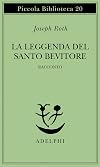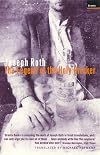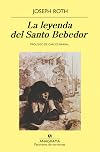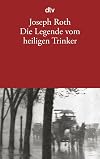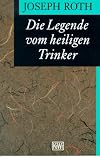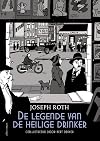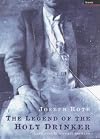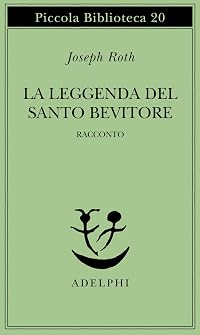
The Legend of the Holy Drinker
by Joseph Roth
On This Page
Description
A witty novel of 'sublime simplicity' about an alcoholic vagrant who has a series of lucky breaks that lift him briefly onto a different plane of existence.Tags
Recommendations


















Member Reviews
Resulta desconcertante que Joseph Roth al hablar de su última obra con su amigo Hermann Kesten le interpelase insistentemente: “¿No es divertida?”. Realmente es una historia triste, apabullantemente triste, fatalista; donde el protagonista es reo de su inercia, ni siquiera de su deseo. Éste se expresa en lo sublime de su intención pues se considera “un hombre de honor” pero es incapaz de desviarse de su deriva bebedora. Evidente sino del adicto. Apenas si bebe con alegría, ni tiene una ebria lucidez sino que el alcohol le embota la memoria y paraliza su propósito. Y sin embargo nada más alejado de una obra moralista que “La leyenda del Santo Bebedor”. Gracias a la absenta los milagros se suceden uno tras otro. La show more santa prodiga los favores al clochard aunque éste no cumpla sus promesas, que se acoge subconscientemente al dicho “con la intención basta”. No es un canto a Dionisos y sin embargo a su autor le parecía un relato divertido. Quizá la pregunta no fuese más que un escudo a su melancolía, a la certeza de verse reflejado en el clochard como en un espejo apenas deformado.
Es una narración interesante, mucho más ambiciosa que lo que el argumento aparenta presentar. show less
Es una narración interesante, mucho más ambiciosa que lo que el argumento aparenta presentar. show less
"Perché a nulla si abituano gli uomini più facilmente che ai miracoli, se si sono ripetuti una, due, tre volte. Sì! La natura degli uomini è tale che subito vanno in collera se non capita loro di continuo tutto quanto sembra aver loro promesso un destino casuale e passeggero."
Scusa, Joseph Roth, stai parlando a me?
Si parla di miracoli, di doni, di solitudini, di debolezze. Di tutti noi, insomma.
Un gioiellino.
Scusa, Joseph Roth, stai parlando a me?
Si parla di miracoli, di doni, di solitudini, di debolezze. Di tutti noi, insomma.
Un gioiellino.
This autobiographical novella reads like a 20th century fable. The protagonist, Andreas Karnak, is a Polish immigrant in Paris who has been through rough times and is now an alcoholic who lives on the streets. A stranger lends him two hundred francs, which he fails to return despite his best intentions. Andreas is a tragic and flawed yet dignified figure, who is a "saint" because he seems to live in the world without ever actually being part of it. His simplicity makes him appreciate "miracles" which more fortunate citizens simply miss.
This autobiographical novella reads like a 20th century fable. The protagonist, Andreas Karnak, is a Polish immigrant in Paris who has been through rough times and is now an alcoholic who lives on the streets. A stranger lends him two hundred francs, which he fails to return despite his best intentions. Andreas is a tragic and flawed yet dignified figure, who is a "saint" because he seems to live in the world without ever actually being part of it. His simplicity makes him appreciate "miracles" which more fortunate citizens simply miss.
You can see that Roth, nearing his watery end, put all of himself into this fable — almost a parable — about a down-and-out having a few weeks of unwonted tipsiness and then expiring. But it's very slight, the coda to a longer tale, a life. Don't read it by itself, or as I mistakenly did, as your first Roth.
Poco antes de morir (Como consecuencia de su dependencia del alcohol) Roth escribió esta narración sobre un alcohólico que tiene una misión que cumplir pero al que las circunstancias (y su dependencia) se lo impiden.
Supongo que esta obra se puede considerar el testamento literario de Roth (Posiblemente ya fuera consciente de que no le quedaba mucho tiempo) En cualquier caso es una historia absorbente y con todo el talento que era capaz de dar de si el autor. Mi favorita entre toda su obra.
Supongo que esta obra se puede considerar el testamento literario de Roth (Posiblemente ya fuera consciente de que no le quedaba mucho tiempo) En cualquier caso es una historia absorbente y con todo el talento que era capaz de dar de si el autor. Mi favorita entre toda su obra.
Esta pequeña novela (o cuento largo, como se prefiera) ha sido mi introducción a don Joseph Roth, y he quedado más que conforme.
El relato trata sobre Andreas, un borracho vagabundo, que, a pesar de tener a todo el universo conspirando a su favor, no puede dejar de procrastinar en favor de su vicio. Su objetivo se encuentra varias veces a mano, pero su (falta de) voluntad suele oponerse a la imagen que tiene de sí mismo de "hombre de palabra".
La historia es si es sencilla, con cierto tufillo a folklórico, si se quiere; es de esas que seguramente resistirían el paso del tiempo. Y, por lo que sugieren tanto la última frase del libro como el prólogo*, también tiene algo de autobiográfico.
Me ha dado ganas de leer más obras de show more este autor.
*Evítese el prólogo, o al menos léase después de la obra; ya que, al menos en mi edición, es bastante spoilerífico, por no mencionar lo falto de gracia (la misma persona que lo escribe se pregunta por qué le habrán pedido hacerlo...). show less
Members
- Recently Added By
Lists

Books featuring alcoholics
103 works; 18 members

Books Read in 2017
4,249 works; 129 members

Llibres que he llegit el 2015
34 works; 1 member

Books Read in 2019
4,052 works; 110 members

Canon de la narrativa universal del s. XX (cicutadry)
499 works; 3 members
Author Information

233+ Works 13,242 Members
Author and journalist Joseph Roth was born on September 2, 1894. During World War I, he served in the Austro-Hungarian army from 1916 to 1918. Afterwards, he worked as a journalist in Vienna and in Berlin. His best-known works are The Radetzky March and Job. He died in Paris on May 27, 1939 and is buried in Thiais Cemetery. (Bowker Author show more Biography) Joseph Roth is the author of such classics as The Radetzky March and The Emperor's Tomb. He died in Paris in 1939. (Publisher Provided) show less
All Editions
Some Editions
Awards and Honors
Series
Belongs to Publisher Series
Work Relationships
Common Knowledge
- Canonical title
- The Legend of the Holy Drinker
- Original title
- Die Legende vom heiligen Trinker
- Original publication date
- 1939
- People/Characters
- Andreas Kartak
- Related movies
- Die Legende vom heiligen Trinker (1963 | TV | IMDb); La leggenda del santo bevitore (1988 | IMDb)
- Epigraph*
- "Así soy realmente:maligno, borracho, pero lúcido". Joseph Roth
- First words*
- Una sera di primavera dell'anno 1934 un signore di età matura scese gli scalini di pietra che da uno dei ponti della Senna conducono alle rive del fiume.
- Last words*
- (Click to show. Warning: May contain spoilers.)Disse ancora: 'Presto le telefonerò...'.
- Original language
- German
*Some information comes from Common Knowledge in other languages. Click "Edit" for more information.
Classifications
Statistics
- Members
- 853
- Popularity
- 32,188
- Reviews
- 29
- Rating
- (3.71)
- Languages
- 15 — Catalan, Dutch, English, Estonian, Finnish, French, German, Galician, Greek, Italian, Norwegian (Bokmål), Portuguese, Spanish, Swedish, Turkish
- Media
- Paper, Audiobook, Ebook
- ISBNs
- 63
- ASINs
- 21