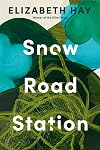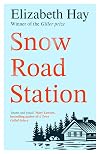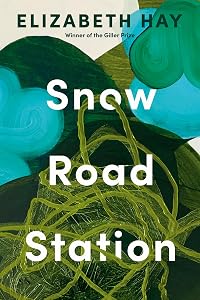
Snow Road Station
by Elizabeth Hay
On This Page
Description
"From the Giller Prize-winning author comes a novel, witty and wise, about thwarted ambition, unrealized dreams, the enduring bonds of female friendship, and love's capacity to surprise us at any age. In the winter of 2008, as snow falls without interruption, an actor in a Beckett play can't remember her lines. Fleeing the theatre, she beats a retreat into her past and arrives at Snow Road Station, a barely discernible dot on the map of Ontario. The actor is Lulu Blake, in her sixties now, a show more sexy, seemingly unfooled older woman well-versed in taking risks. Out of work and humiliated, she enters the last act of her life wondering what she can make of this diminished thing. In Snow Road Station she decides she is through with drama, but as it turns out, drama isn't through with her. She thinks she wants peace. It turns out she wants more. Looming in the background is that autumn's global financial meltdown, while in the foreground a cast of returning characters from His Whole Life animates a round of weddings, sap harvests, love affairs, and family turmoil. At the centre of it all is a friendship between Lulu and Nan. As the two women contemplate growing old together they surrender old ambitions and dreams, confronting the limits of the choices they made and the messy feelings that kept them apart for decades."-- show lessTags
Recommendations


















Member Recommendations
by JenMDB
Member Reviews
I thoroughly enjoyed this latest novel from Elizabeth Hay.
Lulu Blake, 62, has been an actor her entire life. Then in 2008, while starring in a Beckett play in Ottawa, she forgets her lines. Ashamed and panicked, she flees to Snow Road Station, a tiny village in eastern Ontario, where she stays with her best friend Nan. A family wedding and maple sugaring keep her occupied as she contemplates what she really wants to do with her life.
I was immediately drawn to the novel when I saw its title. Living in eastern Ontario, I know of the village. Also, having grown up in the 1960s and 70s only 20 kilometres away from Killaloe, I smiled at the description of some of its homesteaders: “draft dodgers . . . hippies from California who had made show more a new life for themselves in Canada.” I’m yearning for a BeaverTail!
After a crisis (snow), Snow Road Station gives Lulu a place to stop and rest (station) but also helps her move on (road). The author best explains the importance of the title: “The name is evocative, even poetic, with its three-part movement from snow to road to station—an arrival, a departure, a long wait—a place of rest, a stoppage, yet a road. That movement is mirrored in the novel, for not only did the name give me the book’s title, it gave me its three-part structure” (https://elizabethhay.com/snow-road-station/).
Acting has been central to Lulu’s life, “her religion, filling the emptiness in her.” Now, after forgetting her lines, she feels humiliated and unsure about how to proceed. Should she continue her career or surrender her long-held dreams? She asks herself, “What would it take? . . . Becoming who you’re meant to be, instead of turning into a major disappointment.” She has to learn who she really is, to follow the advice of Nan’s son who says it’s important, “’to know who you are and not be pretending to be somebody else – not trying too hard. Knowing who you are and being fine with that.’”
Of course such self-awareness is not easy; Lulu actually compares the process to picking wild blackberries, “bare-armed combat with long brambles that rake your skin, as hard to go backwards as forwards once you’ve worked your way into the patch.” Learning about what is most important and becoming our true selves is like taking maple sap and turning it into maple syrup, a process of refining forty litres to make one litre. As described in the novel, it takes a lot of work.
As expected, Lulu does experience personal growth. She realizes that she is like the village of Snow Road Station which has changed over the years, its “importance off to the side.” It is now “a place that must have had bigger plans for itself in the beginning [but]now seemed happy in its modesty – a field flower.” It is not important to justify or impress: “All you have to do . . . is put yourself in the way of beauty, put yourself into the incredible swing of it” and be “part of an orchestration of movement that had no end.”
Perhaps the secret is “paying attention to all the life around her that wasn’t paying the least regard to her.” Lulu discovers a world of peace and beauty which the author succeeds in describing so beautifully: “Colours not seen all winter reappeared in the sky – shades of pink that floated high and loose like Easter hats, like flowers. At dawn the snow was faint-pink as the sun rose, and the woods themselves were light-filled, yet full of long shadows and air in subtle motion. . . . Hemlock needles dusted the surface of the snow, as did beech leaves whitened by winter winds and only now letting go. Even when overcast, the woods were bright. It was like being inside an opal.”
The novel also examines relationships. There is more than one difficult relationship; for instance, Lulu and Nan didn’t see each other for 25 years. Because there is a lack of open communication, misunderstandings occur and connections suffer. Based on a comment Nan made years earlier, Lulu thinks Nan judged her harshly but the truth is that she spoke out of hurt and jealousy. All it takes to repair fractured relationships is an openness: “It takes so little. The smallest effort and barriers fall.”
There are so many reasons to like this book, though I was most drawn to its thematic depth and lyrical prose. Also I can identify with an older protagonist coming to terms with aging. I highly recommend it.
Note: I received a digital galley from the publisher via NetGalley.
Please check out my reader's blog (https://schatjesshelves.blogspot.com/) and follow me on Twitter (@DCYakabuski). show less
Lulu Blake, 62, has been an actor her entire life. Then in 2008, while starring in a Beckett play in Ottawa, she forgets her lines. Ashamed and panicked, she flees to Snow Road Station, a tiny village in eastern Ontario, where she stays with her best friend Nan. A family wedding and maple sugaring keep her occupied as she contemplates what she really wants to do with her life.
I was immediately drawn to the novel when I saw its title. Living in eastern Ontario, I know of the village. Also, having grown up in the 1960s and 70s only 20 kilometres away from Killaloe, I smiled at the description of some of its homesteaders: “draft dodgers . . . hippies from California who had made show more a new life for themselves in Canada.” I’m yearning for a BeaverTail!
After a crisis (snow), Snow Road Station gives Lulu a place to stop and rest (station) but also helps her move on (road). The author best explains the importance of the title: “The name is evocative, even poetic, with its three-part movement from snow to road to station—an arrival, a departure, a long wait—a place of rest, a stoppage, yet a road. That movement is mirrored in the novel, for not only did the name give me the book’s title, it gave me its three-part structure” (https://elizabethhay.com/snow-road-station/).
Acting has been central to Lulu’s life, “her religion, filling the emptiness in her.” Now, after forgetting her lines, she feels humiliated and unsure about how to proceed. Should she continue her career or surrender her long-held dreams? She asks herself, “What would it take? . . . Becoming who you’re meant to be, instead of turning into a major disappointment.” She has to learn who she really is, to follow the advice of Nan’s son who says it’s important, “’to know who you are and not be pretending to be somebody else – not trying too hard. Knowing who you are and being fine with that.’”
Of course such self-awareness is not easy; Lulu actually compares the process to picking wild blackberries, “bare-armed combat with long brambles that rake your skin, as hard to go backwards as forwards once you’ve worked your way into the patch.” Learning about what is most important and becoming our true selves is like taking maple sap and turning it into maple syrup, a process of refining forty litres to make one litre. As described in the novel, it takes a lot of work.
As expected, Lulu does experience personal growth. She realizes that she is like the village of Snow Road Station which has changed over the years, its “importance off to the side.” It is now “a place that must have had bigger plans for itself in the beginning [but]now seemed happy in its modesty – a field flower.” It is not important to justify or impress: “All you have to do . . . is put yourself in the way of beauty, put yourself into the incredible swing of it” and be “part of an orchestration of movement that had no end.”
Perhaps the secret is “paying attention to all the life around her that wasn’t paying the least regard to her.” Lulu discovers a world of peace and beauty which the author succeeds in describing so beautifully: “Colours not seen all winter reappeared in the sky – shades of pink that floated high and loose like Easter hats, like flowers. At dawn the snow was faint-pink as the sun rose, and the woods themselves were light-filled, yet full of long shadows and air in subtle motion. . . . Hemlock needles dusted the surface of the snow, as did beech leaves whitened by winter winds and only now letting go. Even when overcast, the woods were bright. It was like being inside an opal.”
The novel also examines relationships. There is more than one difficult relationship; for instance, Lulu and Nan didn’t see each other for 25 years. Because there is a lack of open communication, misunderstandings occur and connections suffer. Based on a comment Nan made years earlier, Lulu thinks Nan judged her harshly but the truth is that she spoke out of hurt and jealousy. All it takes to repair fractured relationships is an openness: “It takes so little. The smallest effort and barriers fall.”
There are so many reasons to like this book, though I was most drawn to its thematic depth and lyrical prose. Also I can identify with an older protagonist coming to terms with aging. I highly recommend it.
Note: I received a digital galley from the publisher via NetGalley.
Please check out my reader's blog (https://schatjesshelves.blogspot.com/) and follow me on Twitter (@DCYakabuski). show less
This was an audiobook, read by the author, that helped me make it though a couple of awful days sick with COVID. I couldn't have read a book to save my soul but this audiobook, "a sharp sweetness" as one review called it, was just what I needed.
Lulu Blake is a 62 year old actress. As most everyone knows, roles for women of "a certain age" are hard to come by. Lulu is the lead in Samuel Beckett's play "Happy Days" in a production in Ottawa and she feels lucky to have the part. And then she forgets her lines. It's the Easter long weekend and the play is taking a break so Lulu hopes it will give her time to recover. She is driving to the village of Snow Road Station where her oldest friend's son is getting married. Lulu grew up there as show more did her friend, Nan, but Lulu went away to become an actress and Nan stayed put, looking after the family farm which includes an extensive sugar bush. Nan's son, Blake, is actually Lulu's brother's son, a fact not acknowledged for many years. Instead of marrying Lulu's brother, Guy, she married John Sharpe who raised Blake as his own even after his marriage to Nan failed. For a small country wedding there seem to be quite a few people attending and, as is probably the norm with small country weddings, they all have history with each other. Lulu has interactions with three different men but the one she is really interested in, Hugh Shapiro, leaves the wedding reception early. Lulu takes a ride home with Nan's ex, John Sharpe, and it doesn't end well. Lulu "forgot" to let the theatre know where she was going to be and her cell phone can't get a signal so it isn't until she is about to return to Ottawa that she finds out the director called extra rehearsals and fired her when she didn't show up. This is the signal she needs to reappraise her life. It's time to try something else and if Hugh Shapiro fits into that then all the better.
Throughout the book the rhythms of nature, particularly the flowing of the sap in the maple trees, is a subtext. The writing is poetic at times and at other times, dramatic. I think it would be a lovely Canadian movie. show less
Lulu Blake is a 62 year old actress. As most everyone knows, roles for women of "a certain age" are hard to come by. Lulu is the lead in Samuel Beckett's play "Happy Days" in a production in Ottawa and she feels lucky to have the part. And then she forgets her lines. It's the Easter long weekend and the play is taking a break so Lulu hopes it will give her time to recover. She is driving to the village of Snow Road Station where her oldest friend's son is getting married. Lulu grew up there as show more did her friend, Nan, but Lulu went away to become an actress and Nan stayed put, looking after the family farm which includes an extensive sugar bush. Nan's son, Blake, is actually Lulu's brother's son, a fact not acknowledged for many years. Instead of marrying Lulu's brother, Guy, she married John Sharpe who raised Blake as his own even after his marriage to Nan failed. For a small country wedding there seem to be quite a few people attending and, as is probably the norm with small country weddings, they all have history with each other. Lulu has interactions with three different men but the one she is really interested in, Hugh Shapiro, leaves the wedding reception early. Lulu takes a ride home with Nan's ex, John Sharpe, and it doesn't end well. Lulu "forgot" to let the theatre know where she was going to be and her cell phone can't get a signal so it isn't until she is about to return to Ottawa that she finds out the director called extra rehearsals and fired her when she didn't show up. This is the signal she needs to reappraise her life. It's time to try something else and if Hugh Shapiro fits into that then all the better.
Throughout the book the rhythms of nature, particularly the flowing of the sap in the maple trees, is a subtext. The writing is poetic at times and at other times, dramatic. I think it would be a lovely Canadian movie. show less
Those familiar with Elizabeth Hay’s “His Whole Life” will recognize most of the characters in “Snow Road Station.” This story, however, is set in 2008, more than 10 years after the earlier novel. And its principal focus is the actress, Lulu Blake. Lulu is an aging actress whose career has been modest. It may now be coming to an end. On the pretext of a long weekend and a wedding invitation, she escapes Ottawa and her disappointing performance of Beckett’s “Happy Days,” and heads to the small town of Snow Road Station. There her brother still lives as well as her friend Nan. It is Nan’s son, Blake, who is due to get wed. But the situation is fraught. Old loves, simmering resentments, hopes and fears, and, yes, new loves show more make their way onto the stage.
Lulu is a wonderful character and well worth a novel of her own. She is radiant here, full of zest and fire. It’s impossible not to admire how she stands up for herself even in the face of some despicable men. (There are, however, some nice men present as well, which is a relief.) Hay is swift and incisive in capturing Lulu’s many moods, but she is perhaps more enamoured by the forests deep in snow during Lulu’s visit. Or perhaps she has difficulty deciding which she loves more. Fair enough.
It is easy to recommend this novel to readers familiar with Hay’s earlier work. But you will not be disappointed if this is your first encounter with Hay. It is not a mere sequel. Plus you’ll have the immense pleasure of looking forward to Elizabeth Hay’s entire back catalogue, which you will want to take up immediately. show less
Lulu is a wonderful character and well worth a novel of her own. She is radiant here, full of zest and fire. It’s impossible not to admire how she stands up for herself even in the face of some despicable men. (There are, however, some nice men present as well, which is a relief.) Hay is swift and incisive in capturing Lulu’s many moods, but she is perhaps more enamoured by the forests deep in snow during Lulu’s visit. Or perhaps she has difficulty deciding which she loves more. Fair enough.
It is easy to recommend this novel to readers familiar with Hay’s earlier work. But you will not be disappointed if this is your first encounter with Hay. It is not a mere sequel. Plus you’ll have the immense pleasure of looking forward to Elizabeth Hay’s entire back catalogue, which you will want to take up immediately. show less
Canadian Elizabeth Hay's latest, SNOW ROAD STATION (2023), revisits the characters from her earlier novel, HIS WHOLE LIFE (2015), this time spotlighting Lulu Blake, a never-married, aging actress whose minor star is fading and who is facing a crisis of confidence in her stage career. So she retreats from Ottawa to the tiny (title) Ontario village of her youth to reunite with her friend, Nan and Nan's two adult sons, Blake and Jim, and also her brother Guy, who runs a large sugar bush, making and bottling maple syrup. During her sojourn there, she attends Blake's wedding (the bride is pregnant), not a very happy event, especially after an ugly encounter with Nan's ex-husband, who offers Lulu a ride and then assaults her. But then there show more is Hugh, a gentle, transplanted Californian handyman who tunes pianos, and a mutually satisfactory relationship ensues. Set in 2008, during the world financial meltdown, which barely affects these characters, as they gradually settle into a kind of peaceful truce, family secrets revealed and forgiven, as they coalesce around Blake and Bethany's new baby - parents, grandparents, aunts and uncles. Filled with beautiful descriptions of the changing of the seasons and the harvesting and processing of the sap into syrup, there is a kind of soothing peacefulness here, a sense of both an ending and a beginning. I loved this (mostly) gentle story. But, full disclosure, I've loved everything she's written. Older folks will especially love this one. My very highest recommendation.
- Tim Bazzett, author of the memoir, BOOKLOVER show less
- Tim Bazzett, author of the memoir, BOOKLOVER show less
From the Giller Prize-winning author comes a novel, witty and wise, about thwarted ambition, unrealized dreams, the enduring bonds of female friendship, and love’s capacity to surprise us at any age. In the winter of 2008, as snow falls without interruption, an actor in a Beckett play blanks on her lines. Fleeing the theatre, she beats a retreat into her past and arrives at Snow Road Station, a barely discernible dot on the map of Ontario. The actor is Lulu Blake, in her sixties now, a sexy, seemingly unfooled woman well-versed in taking risks. Out of work, humiliated, she enters the last act of her life wondering what she can make of her diminished self. In Snow Road Station she decides she is through with drama—but drama, it turns show more out, isn’t through with her. She thinks she wants peace. It turns out she wants more. Looming in the background is that autumn’s global financial meltdown, while in the foreground family and friends animate a round of weddings, sap harvests, love affairs, and personal turmoil. At the centre of it all is the friendship between Lulu and Nan. As the two women contemplate growing old, they surrender certain long-held dreams and confront the limits of the choices they’ve made and the messy feelings that kept them apart for decades. show less
I think Ann-Marie MacDonald's blurb says it best: "An exquisitely etched coming-of-middle-age story."
Lulu Blake is a 62-year-old actor who begins to forget her lines on stage. She has a long weekend off and hopes to re-energize herself as she travels to Snow Road Station for the wedding of her best friend's son. And over the long weekend, we see Lulu examine her life and her goals as she comes to realizations to what is important to her at this stage of her life.
We also see the big and small drama of everyday life as Lulu visits with her best friend, Nan. Her brother Guy and his daughter live next door. Various other wedding guests bring in memories or the potential for new relationships.
All done with excellent writing and complex show more characters. A great read. show less
Lulu Blake is a 62-year-old actor who begins to forget her lines on stage. She has a long weekend off and hopes to re-energize herself as she travels to Snow Road Station for the wedding of her best friend's son. And over the long weekend, we see Lulu examine her life and her goals as she comes to realizations to what is important to her at this stage of her life.
We also see the big and small drama of everyday life as Lulu visits with her best friend, Nan. Her brother Guy and his daughter live next door. Various other wedding guests bring in memories or the potential for new relationships.
All done with excellent writing and complex show more characters. A great read. show less
I was finding this slow, but now I have got to a sentence which describes tapped maples 'peeing like pregnant women, flowing like nursing mothers, wet like a harem constantly aroused', and I feel ill and will have to stop.
Members
- Recently Added By
Lists

Maybe This Year? Books to Look Forward To
412 works; 9 members

Globe and Mail | Canadian Fiction: April 22, 2023
10 works; 1 member

Globe and Mail | Canadian Fiction: April 29, 2023
10 works; 1 member
Globe and Mail | Canadian Fiction: May 5, 2023
10 works; 1 member

Globe and Mail | Canadian Fiction: May 13, 2023
10 works; 1 member
Author Information

12+ Works 2,523 Members
Elizabeth Hay was born in Owen Sound, Ontario on October 22, 1951. She attended Victoria College, University of Toronto. She worked for Canadian Broadcasting Corporation radio for ten years as a host, interviewer, and documentary maker. She has written several books including Small Change, A Student of Weather, Garbo Laughs, and The Only Snow in show more Havana. She won the 2007 Scotiabank Giller Prize for Late Nights on Air. In 2002, she received the Marian Engel Award for her body of work, which includes novels, short fiction, and creative non-fiction. (Bowker Author Biography) show less
Common Knowledge
- Canonical title
- Snow Road Station
- People/Characters
- Lulu Blake; Nan; Guy; Ducky; Blake; Jim (show all 10); Bethany; Tony Lloyd; John Sharpe; Hugh Shapiro
- Important places
- Snow Road Station, Ontario
- Epigraph
- Grow accustomed to the desert
and the star
pounding down in its incandescent
rays, which are
just a lamp to guide the treasured
child who's late
Joseph Brodsky, "Lullaby" - Dedication
- with love and gratitude
Martha Kanya-Forstner
Christopher MacLehose - First words
- Fields go back to forest, first love runs to fat.
- Last words
- (Click to show. Warning: May contain spoilers.)Always what they are -- and so changed from what they were.
- Blurbers
- Lawson, Mary; MacDonald, Ann-Marie
Classifications
Statistics
- Members
- 82
- Popularity
- 389,529
- Reviews
- 7
- Rating
- (3.68)
- Languages
- English
- Media
- Paper, Audiobook, Ebook
- ISBNs
- 7
- ASINs
- 2