On This Page
Description
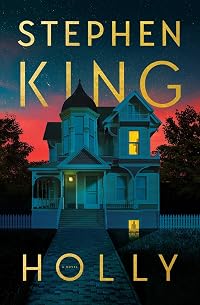
In this new novel, Holly once again claims the spotlight, and must face some of her most depraved adversaries yet. When Penny Dahl calls the Finders Keepers detective agency hoping for help locating her missing daughter, Holly is reluctant to accept the case. Her own mother has just died, and Holly is supposed to be taking time off. But something in Penny Dahl's desperate voice makes it impossible for Holly to turn her down. Mere blocks from where Bonnie Dahl disappeared live Professors show more Rodney and Emily Harris. They are the picture of bourgeois respectability: married octogenarians, devoted to each other, semi-retired lifelong academics. But they are harboring an unholy secret in their well-kept, book-lined home, one that may be related to Bonnie's disappearance. And it will prove nearly impossible to discover what they are up to: they are smart, they are patient, and they are ruthless. Holly must summon all her formidable talents to outhink and outmaneuver this brilliant and twisted pair in this chilling new masterwork from Stephen King. show lessTags
Recommendations

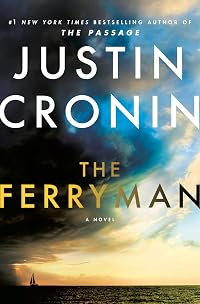
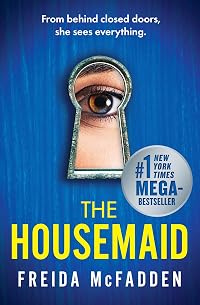
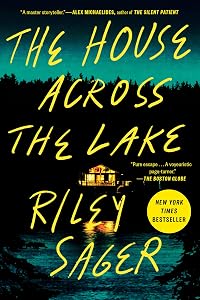
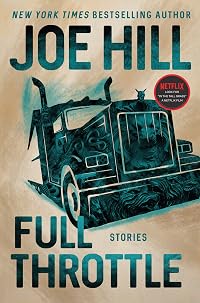
Member Reviews
Right, this is my final final final notice: I am definitely done with Stephen King. He went off the boil a long time ago - a lot like the crazy old oxygen thieves in this story - and his attempts to write about current events and relatable characters are laughable. I even borrowed rather than bought a copy, knowing full well I would be wasting my money, and boy, were my (low) expectations met.
First off, I don't care about 'soapboxing' in fiction when the ranting is relevant, but nothing dates a novel like Covid and Donald Trump (apart from maybe Minidisc players and iPods) - nobody cares or wants to read about the Lost Years now, and all the elbow bumping and 'are you vaxxed?' reverse nostalgia was even more cringeworthy than King's show more obsession with the 1950s.
Secondly, both the eponymous Holly and the undead oldies eating the neighbours were deeply fucking annoying. Holly with her 'poopy' aversion to swearing - just say the F-word, you'll feel better - and her weird exclamation of 'oough' grated on my nerves even before she started in with her warped health issues. She wishes someone dead at one point because they don't have Covid, which killed her mother - and that was actually a blessing in disguise - but then this throwaway line really pissed me off: 'Hearing of a non-smoker who's died of lung cancer always makes Holly feel a little better about her own [chain-smoking] habit.' Yes, that does make you a shitty person, Holly. I discovered after I started reading that there are two or three other books in the series, but I will not be filling in the gaps in this lifetime.
Lastly, the plot is ridiculous. I can understand the plot bunnies that King cobbled together to form the story but the execution - pardon the pun - requires more suspension of disbelief than I am apparently capable of. I would have welcomed a scene where they followed the 'process' through to the end, because I cannot believe it's that easy to dismember and dispose of a human body. 'Feed 'em through the woodchipper' is a lazy cop out. Also, why should we believe that the crazy old pair want to live forever - because they're college professors? Because they wuv each other? Anyone decaying at that rate absolutely should shuffle off the mortal coil. And did King really have an English professor misquote Hamlet for the yucks?
Finally - does King have grandchildren, or even great grandchildren? Because kids haven't behaved or talked like that since the 90s at the latest. Even the fact that Barbara is called Barbara in 2021 is bad enough. Stop now, old man, you're embarrassing yourself. show less
First off, I don't care about 'soapboxing' in fiction when the ranting is relevant, but nothing dates a novel like Covid and Donald Trump (apart from maybe Minidisc players and iPods) - nobody cares or wants to read about the Lost Years now, and all the elbow bumping and 'are you vaxxed?' reverse nostalgia was even more cringeworthy than King's show more obsession with the 1950s.
Secondly, both the eponymous Holly and the undead oldies eating the neighbours were deeply fucking annoying. Holly with her 'poopy' aversion to swearing - just say the F-word, you'll feel better - and her weird exclamation of 'oough' grated on my nerves even before she started in with her warped health issues. She wishes someone dead at one point because they don't have Covid, which killed her mother - and that was actually a blessing in disguise - but then this throwaway line really pissed me off: 'Hearing of a non-smoker who's died of lung cancer always makes Holly feel a little better about her own [chain-smoking] habit.' Yes, that does make you a shitty person, Holly. I discovered after I started reading that there are two or three other books in the series, but I will not be filling in the gaps in this lifetime.
Lastly, the plot is ridiculous. I can understand the plot bunnies that King cobbled together to form the story but the execution - pardon the pun - requires more suspension of disbelief than I am apparently capable of. I would have welcomed a scene where they followed the 'process' through to the end, because I cannot believe it's that easy to dismember and dispose of a human body. 'Feed 'em through the woodchipper' is a lazy cop out. Also, why should we believe that the crazy old pair want to live forever - because they're college professors? Because they wuv each other? Anyone decaying at that rate absolutely should shuffle off the mortal coil. And did King really have an English professor misquote Hamlet for the yucks?
Finally - does King have grandchildren, or even great grandchildren? Because kids haven't behaved or talked like that since the 90s at the latest. Even the fact that Barbara is called Barbara in 2021 is bad enough. Stop now, old man, you're embarrassing yourself. show less
'Holly' is the Stephen King book I didn't know I'd been waiting for. It has all the things I love about King's writing but with no supernatural elements. 'Holly' stands or falls by the quality of its writing, its plot and its characters and it's a roaring success.
It's a longish book (438 pages / 15 hours 24 minutes) that never drags and which kept me engaged to the last page.
'Holly' is a gripping story about how Holly, a recurring Stephen King character who runs the Finders Keepers Private Investigation company, takes a case that results in her slowly uncovering the evil wrought by a pair of serial killers who have managed to kill people secretly and with impunity for years.
I loved the way Stephen King placed evil at the centre of the show more story without having to rely on anything supernatural. In previous books ('The Outsider' and 'If It Bleeds') Holly has gone up against supernaturals whose success as predators depended partly on the fact that most people were unwilling to accept the possibility of their existence. This time the evil she's up against is entirely human in origin but still owes part of its success to people's inability to imagine that a couple of retired college professors might be killers.
I liked the book never glorifies the serial killers and never turns the investigation into a game played between the killers and the detective. Instead, he makes sure that we feel the full impact of the evil being committed. He shows us the victims both through the eyes of those whom they've left behind and by showing how they react to the terrible circumstance that they've been placed in. One victim's response is so brave and so dignified that it was both wonderful and heartbreaking to read. These killings have consequences: the grief and uncertainty of the bereft and the waste of the lives cut short.
Although the book isn't, strictly speaking, a horror story, I could feel my dread growing with each page. It wasn't because the baddies were bad (although they were irredeemable narcissistic entitlement made flesh) but because I was becoming increasingly invested in Holly and Barbara, both of whom seemed to be at risk. I knew that watching even one of them falling prey to the killers would be hard to take, even if they survived.
I was grateful that 'Holly' was relatively low on action because the action when it came was intense, brutal and memorable. I couldn't taken a lot of that.
Fortunately, a lot of the book was taken up with Holly's interviews with people as part of her investigation and with her discovery that her recently deceased mother had deceived her. I liked watching Holly work things out and I loved seeing her grow in confidence as she takes on her first major solo case. I enjoyed how Holly's interviews turned into brief character sketches of a variety of people, some nice, some terrible but all credible. It was an extra bonus that, as she was carrying out these interviews during COVID, part of the character sketch was achieved by the interviewee's opinions on whether mask-wearing made sense and whether COVID was a hoax.
One of my favourite threads in the book was watching eighteen-year-old Barbara's blossoming relationship with a nonagenarian poet who became her mentor. I loved their discussions on poetry and on their motivations for writing and what writing actually does and how it feels when you know that you've written a line that really works. I could have read those pieces as free-standing text and still enjoyed them. That Stephen King managed to use them to move the plot forward and to increase the sense of threat that I felt on Barbara's behalf is a sign of his skill as a storyteller.
Ageing is an important theme in this book. I loved the way Stephen King showed the empty vanity of struggling not to age and the dignity of accepting but not bowing to it.
I recommend the audiobook version of 'Holly'. Justine Lupe's narration is excellent. Click on the SoundCloud link below to hear a sample.
https://soundcloud.com/simonschuster/holly-audiobook-excerpt-2 show less
It's a longish book (438 pages / 15 hours 24 minutes) that never drags and which kept me engaged to the last page.
'Holly' is a gripping story about how Holly, a recurring Stephen King character who runs the Finders Keepers Private Investigation company, takes a case that results in her slowly uncovering the evil wrought by a pair of serial killers who have managed to kill people secretly and with impunity for years.
I loved the way Stephen King placed evil at the centre of the show more story without having to rely on anything supernatural. In previous books ('The Outsider' and 'If It Bleeds') Holly has gone up against supernaturals whose success as predators depended partly on the fact that most people were unwilling to accept the possibility of their existence. This time the evil she's up against is entirely human in origin but still owes part of its success to people's inability to imagine that a couple of retired college professors might be killers.
I liked the book never glorifies the serial killers and never turns the investigation into a game played between the killers and the detective. Instead, he makes sure that we feel the full impact of the evil being committed. He shows us the victims both through the eyes of those whom they've left behind and by showing how they react to the terrible circumstance that they've been placed in. One victim's response is so brave and so dignified that it was both wonderful and heartbreaking to read. These killings have consequences: the grief and uncertainty of the bereft and the waste of the lives cut short.
Although the book isn't, strictly speaking, a horror story, I could feel my dread growing with each page. It wasn't because the baddies were bad (although they were irredeemable narcissistic entitlement made flesh) but because I was becoming increasingly invested in Holly and Barbara, both of whom seemed to be at risk. I knew that watching even one of them falling prey to the killers would be hard to take, even if they survived.
I was grateful that 'Holly' was relatively low on action because the action when it came was intense, brutal and memorable. I couldn't taken a lot of that.
Fortunately, a lot of the book was taken up with Holly's interviews with people as part of her investigation and with her discovery that her recently deceased mother had deceived her. I liked watching Holly work things out and I loved seeing her grow in confidence as she takes on her first major solo case. I enjoyed how Holly's interviews turned into brief character sketches of a variety of people, some nice, some terrible but all credible. It was an extra bonus that, as she was carrying out these interviews during COVID, part of the character sketch was achieved by the interviewee's opinions on whether mask-wearing made sense and whether COVID was a hoax.
One of my favourite threads in the book was watching eighteen-year-old Barbara's blossoming relationship with a nonagenarian poet who became her mentor. I loved their discussions on poetry and on their motivations for writing and what writing actually does and how it feels when you know that you've written a line that really works. I could have read those pieces as free-standing text and still enjoyed them. That Stephen King managed to use them to move the plot forward and to increase the sense of threat that I felt on Barbara's behalf is a sign of his skill as a storyteller.
Ageing is an important theme in this book. I loved the way Stephen King showed the empty vanity of struggling not to age and the dignity of accepting but not bowing to it.
I recommend the audiobook version of 'Holly'. Justine Lupe's narration is excellent. Click on the SoundCloud link below to hear a sample.
https://soundcloud.com/simonschuster/holly-audiobook-excerpt-2 show less
Holly Gibney and her associates are on the case when a young woman goes missing and her mother is desperate to find her. As they investigate, it appears that this is not a solitary disappearance but a case of many different types of people suddenly vanishing. Is it possible they have uncovered a serial killer at work?
Stephen King may have created his creepiest villains yet, on par with Annie Wilkes, by virtue of being unfortunately all too possibly real. And, by being folks that most people would consider 'harmless,' they really prey on people's kindness before betraying them with horrific torture and violence. Although some readers did not seem to like this, I enjoyed the book bouncing around in time so that we the readers saw what the show more killers were up to long before Holly and her pals started connecting the dots.
A lot of the book takes place shortly after the COVID-19 pandemic hit worldwide, so there's lots in here about masking, vaccinating, getting ill, dealing with grief, etc. It's handled well (as long as you agree with King's politics; if not, well, you probably gave up on reading him a while ago anyway), but it felt all too real. That's not a bad thing per se, just a warning that this book won't take you out of present concerns very much.
The audiobook version is read by Justine Lupe, who is just fine. I guess with a female protagonist, the powers that be felt it was necessary to have a female narrator. However, every other time that Holly was featured in a Stephen King work, Will Patton was the audiobook narrator and not having him now felt wrong -- like when a TV show recasts an actor mid-series and we're all just supposed to pretend the character always looked and sounded like this.
Overall, I'm glad to have another installment of Holly's adventures and hope that King will find other worthy cases for her to investigate in the future. show less
Stephen King may have created his creepiest villains yet, on par with Annie Wilkes, by virtue of being unfortunately all too possibly real. And, by being folks that most people would consider 'harmless,' they really prey on people's kindness before betraying them with horrific torture and violence. Although some readers did not seem to like this, I enjoyed the book bouncing around in time so that we the readers saw what the show more killers were up to long before Holly and her pals started connecting the dots.
A lot of the book takes place shortly after the COVID-19 pandemic hit worldwide, so there's lots in here about masking, vaccinating, getting ill, dealing with grief, etc. It's handled well (as long as you agree with King's politics; if not, well, you probably gave up on reading him a while ago anyway), but it felt all too real. That's not a bad thing per se, just a warning that this book won't take you out of present concerns very much.
The audiobook version is read by Justine Lupe, who is just fine. I guess with a female protagonist, the powers that be felt it was necessary to have a female narrator. However, every other time that Holly was featured in a Stephen King work, Will Patton was the audiobook narrator and not having him now felt wrong -- like when a TV show recasts an actor mid-series and we're all just supposed to pretend the character always looked and sounded like this.
Overall, I'm glad to have another installment of Holly's adventures and hope that King will find other worthy cases for her to investigate in the future. show less
Holly is the latest novel by Stephen King, and it follows one of my favorite characters from his Mr. Mercedes series. I will also say it is probably one of his darkest stories in recent years because there is nothing otherworldly about it. In Holly, the villains are human, albeit despicable, vile ones.
One of the things I loved about Holly is the fact that while Holly Gibney is the hero, and she is a recurring character, you could consider it to be a standalone novel. While there are references to the goings-on of the Mr. Mercedes series and the other two novels that make up the Holly Gibney series, it has nothing to do with what is happening in this story. In other words, you don't miss anything by not understanding those references.
I show more was not prepared for Holly to be as gruesome as it was. There is one particular scene that nauseated me, and I usually have an iron stomach when it comes to disgusting scenes. The odd thing is that it isn't a particularly bloody scene either. It's just that Mr. King does an excellent job describing in detail exactly what the character is experiencing, and it is anything but pleasant.
Holly takes place during the pandemic, just after the world started opening back up and people were questioning whether we should continue masking or not. It still feels surreal to read stories set during 2020 - 2021 because it was such a weird time. However, it is a comfort to recognize that the characters also feel odd about the entire situation - much like we all did then.
For the audiobook, Simon & Schuster Audio and Stephen King opted to have Justine Lupe narrate Holly. Since she is the actress who played Holly Gibney in the Mr. Mercedes television series, it is the perfect choice. While not everyone can make the transition to audio narration, Ms. Lupe has no such issues. She brings to her performance the same anxiety and self-doubt that are Holly's biggest faults. In many ways, Ms. Lupe's performance is a welcome homecoming to such a lovable character. show less
One of the things I loved about Holly is the fact that while Holly Gibney is the hero, and she is a recurring character, you could consider it to be a standalone novel. While there are references to the goings-on of the Mr. Mercedes series and the other two novels that make up the Holly Gibney series, it has nothing to do with what is happening in this story. In other words, you don't miss anything by not understanding those references.
I show more was not prepared for Holly to be as gruesome as it was. There is one particular scene that nauseated me, and I usually have an iron stomach when it comes to disgusting scenes. The odd thing is that it isn't a particularly bloody scene either. It's just that Mr. King does an excellent job describing in detail exactly what the character is experiencing, and it is anything but pleasant.
Holly takes place during the pandemic, just after the world started opening back up and people were questioning whether we should continue masking or not. It still feels surreal to read stories set during 2020 - 2021 because it was such a weird time. However, it is a comfort to recognize that the characters also feel odd about the entire situation - much like we all did then.
For the audiobook, Simon & Schuster Audio and Stephen King opted to have Justine Lupe narrate Holly. Since she is the actress who played Holly Gibney in the Mr. Mercedes television series, it is the perfect choice. While not everyone can make the transition to audio narration, Ms. Lupe has no such issues. She brings to her performance the same anxiety and self-doubt that are Holly's biggest faults. In many ways, Ms. Lupe's performance is a welcome homecoming to such a lovable character. show less
I've read most of King's books and, while much of his early and middle works are scary and entertaining, I find his more recent work much more satisfying. Part of this is personal preference - I enjoy mysteries and thrillers more than pure horror - but it's also that he's embraced his ability to build characters and frame his plots around those characters rather than twisting the characters to fit the plot. The difference in this integration is particularly evident if you compare a book like Insomnia to one like Holly. Insomnia is a masterful piece of character-driven storytelling. The horror elements, though, are forced. The story would actually be better without them. But in Holly, the horror element takes its shape from the show more characters. It's still coherent with King's evolution of Lovecraftian horror, but it fits better in the story. In many ways, that makes it more frightening because it's more believable.
The antagonists in Holly are truly disturbing and strangely familiar - not so much in what they do (which is no crazier than the actions of real-life serial killers), but in the way they think, which is merely an extension of a lot of the rhetoric we all get to hear these days.
I've seen complaints about King's "political agenda" in Holly. King makes no secret of his political and social views, as anyone with access to the platform formerly known as Twitter knows. More importantly, though, nothing he writes here is imposed on the story. If anything, he's reporting the conditions during the pandemic as they were. In an era when wearing a mask was (still is?) seen as a political statement, everyday public interactions inevitably touched on political topics. And frankly, King portrays characters on the other side of the political spectrum with remarkable kindness. The bad guys, of course, are the extreme logical extension of certain current political beliefs, and are not likeable at all, but even there, King shows them as people who can be both loving and cruel, not one-dimensional comic book villains.
Holly herself is the best part of the book, of course. I've complained in the past about King's ability to write women, but here he's created a really believable female protagonist who is rounded and whole and imperfect and deeply appealing. Perhaps I'm partial to Holly because the damage she must navigate to live is familiar, perhaps because that damage manifests in ways similar to the experience of being on the spectrum. I don't know if KIng meant to write an autistic character, but he succeeded. It's nice to see a character like this who isn't presented as being too disabled to function in the world, but whose difficulties are not downplayed.
Like most of King's work, Holly is the sort of book you shouldn't pick up unless you have a lot of time in the next day or two. When the audiobook came up in my Libby queue, I set aside my current reading to start it, thinking I'd dip in and out over the next week. That was less than twenty-four hours ago. I've had next to no sleep. I bought the physical book this morning so I could read it during my down time and listen to the audiobook from the library while I drove and did chores. It's not even noon of the second day and I've finished. I've no regrets about buying the book, though, as I will have to reread it more carefully. This reading was a gulp, lol. show less
The antagonists in Holly are truly disturbing and strangely familiar - not so much in what they do (which is no crazier than the actions of real-life serial killers), but in the way they think, which is merely an extension of a lot of the rhetoric we all get to hear these days.
I've seen complaints about King's "political agenda" in Holly. King makes no secret of his political and social views, as anyone with access to the platform formerly known as Twitter knows. More importantly, though, nothing he writes here is imposed on the story. If anything, he's reporting the conditions during the pandemic as they were. In an era when wearing a mask was (still is?) seen as a political statement, everyday public interactions inevitably touched on political topics. And frankly, King portrays characters on the other side of the political spectrum with remarkable kindness. The bad guys, of course, are the extreme logical extension of certain current political beliefs, and are not likeable at all, but even there, King shows them as people who can be both loving and cruel, not one-dimensional comic book villains.
Holly herself is the best part of the book, of course. I've complained in the past about King's ability to write women, but here he's created a really believable female protagonist who is rounded and whole and imperfect and deeply appealing. Perhaps I'm partial to Holly because the damage she must navigate to live is familiar, perhaps because that damage manifests in ways similar to the experience of being on the spectrum. I don't know if KIng meant to write an autistic character, but he succeeded. It's nice to see a character like this who isn't presented as being too disabled to function in the world, but whose difficulties are not downplayed.
Like most of King's work, Holly is the sort of book you shouldn't pick up unless you have a lot of time in the next day or two. When the audiobook came up in my Libby queue, I set aside my current reading to start it, thinking I'd dip in and out over the next week. That was less than twenty-four hours ago. I've had next to no sleep. I bought the physical book this morning so I could read it during my down time and listen to the audiobook from the library while I drove and did chores. It's not even noon of the second day and I've finished. I've no regrets about buying the book, though, as I will have to reread it more carefully. This reading was a gulp, lol. show less
I may be off on the count, but I believe this is my 89th King book and—as I very much feared once I heard the title months ago—it falls firmly into that broad swath of "middle" books.
It can't touch his best—those first dozen, plus a smattering of others—but it's nowhere near as bad as his worst—Tommyknockers, The Eyes of the Dragon, Sleeping Beauties, The Institute, Fairy Tale anyone?
King does an awful lot of meandering setup in the first half of this novel that, shockingly, is quite boring. I've read a lot of King stuff I wasn't overly fond of, but I've rarely found him boring. Sadly, this novel and the one that preceded it committed that sin, which bothers me a lot.
And while I've never been as enamoured of Holly Gibney as show more King has been, I didn't mind her quirky character. She was interesting.
Unfortunately, this book seems to jettison much of what made Holly so much fun and made her seem...is average the right word? I'm not sure, but I didn't find her as quirky or as interesting. Maybe, much like when Thomas Harris had Hannibal Lecter as a side character, he was fascinating, but as soon as the spotlight was turned fully on Lecter, I lost all interest in Harris's subsequent novels. It could be the same thing is happening here...too much Holly.
But it's more than that. King used to be able to create wonderfully real characters that you loved and cared for and then also create a menacing, terrifying opposition that would just keep coming and coming, filling me, as a reader, with dread.
Now, King creates rather cozy characters who, while they still suffer—in this case, Holly's feeling the triple whammy of covid, the death of her mother, and the realization that she'd been lied to for years—but these are such common things that they don't carry much weight. We've all suffered the death of a family member. The entire world experienced covid. We've all been lied to and betrayed. So, this stuff? It's cozy, not soul crushing. At least, not in the manner that King delivers it in this novel.
And the menacing opposition? Somewhat toothless, to my mind. Yes, this is very much a cat and mouse story, but King makes a couple of decisions with the story—that I will not spoil—that immediately lower the stakes and take away that common, yet oh-so-effective plot device, the ticking clock.
He also makes the odd decision to hide much of the inherent horror in his story until the very end, where it's fed to the reader (pardon the pun...which you'll get once you read the novel) in a series of info dumps during wrap up.
Overall, I feel like, in the hands of a Joe R. Lansdale, or an S.A. Cosby, this book would have been structured far different, and the heat would have turned up a lot higher. Instead, what we got was lukewarm leftovers out of the microwave instead of the sizzling steak, grilled to perfection that we're used to with King.
I love Stephen King's writing a lot, however—and it pains me to say this—he's not the spellbinding, dangerous writer he used to be. He has his flashes of brilliance still, and when he does, I rejoice in those novels, but overall, where I used to be absolutely pumped to hear of a new release, now it's often met with, god, I hope it's better than the last one.
And that sucks. show less
It can't touch his best—those first dozen, plus a smattering of others—but it's nowhere near as bad as his worst—Tommyknockers, The Eyes of the Dragon, Sleeping Beauties, The Institute, Fairy Tale anyone?
King does an awful lot of meandering setup in the first half of this novel that, shockingly, is quite boring. I've read a lot of King stuff I wasn't overly fond of, but I've rarely found him boring. Sadly, this novel and the one that preceded it committed that sin, which bothers me a lot.
And while I've never been as enamoured of Holly Gibney as show more King has been, I didn't mind her quirky character. She was interesting.
Unfortunately, this book seems to jettison much of what made Holly so much fun and made her seem...is average the right word? I'm not sure, but I didn't find her as quirky or as interesting. Maybe, much like when Thomas Harris had Hannibal Lecter as a side character, he was fascinating, but as soon as the spotlight was turned fully on Lecter, I lost all interest in Harris's subsequent novels. It could be the same thing is happening here...too much Holly.
But it's more than that. King used to be able to create wonderfully real characters that you loved and cared for and then also create a menacing, terrifying opposition that would just keep coming and coming, filling me, as a reader, with dread.
Now, King creates rather cozy characters who, while they still suffer—in this case, Holly's feeling the triple whammy of covid, the death of her mother, and the realization that she'd been lied to for years—but these are such common things that they don't carry much weight. We've all suffered the death of a family member. The entire world experienced covid. We've all been lied to and betrayed. So, this stuff? It's cozy, not soul crushing. At least, not in the manner that King delivers it in this novel.
And the menacing opposition? Somewhat toothless, to my mind. Yes, this is very much a cat and mouse story, but King makes a couple of decisions with the story—that I will not spoil—that immediately lower the stakes and take away that common, yet oh-so-effective plot device, the ticking clock.
He also makes the odd decision to hide much of the inherent horror in his story until the very end, where it's fed to the reader (pardon the pun...which you'll get once you read the novel) in a series of info dumps during wrap up.
Overall, I feel like, in the hands of a Joe R. Lansdale, or an S.A. Cosby, this book would have been structured far different, and the heat would have turned up a lot higher. Instead, what we got was lukewarm leftovers out of the microwave instead of the sizzling steak, grilled to perfection that we're used to with King.
I love Stephen King's writing a lot, however—and it pains me to say this—he's not the spellbinding, dangerous writer he used to be. He has his flashes of brilliance still, and when he does, I rejoice in those novels, but overall, where I used to be absolutely pumped to hear of a new release, now it's often met with, god, I hope it's better than the last one.
And that sucks. show less
Members
- Recently Added By
Lists

FAB 2023
13 works; 1 member

READ in 2023
244 works; 1 member

Books Read in 2023
5,638 works; 147 members

LoanStars | Adult List: September 2023
10 works; 1 member

Fiction Published in 2023
17 works; 2 members

Everand 2023
53 works; 1 member

Goodreads Choice Award 2023
26 works; 1 member

2023 Christmas Gifts
39 works; 11 members

I Love Horror
29 works; 3 members

Books With Trees and Plants in the Title
27 works; 2 members

Stephen King books
81 works; 1 member
Author Information

Stephen King was born in Portland, Maine, on September 21, 1947. After graduating with a Bachelor's degree in English from the University of Maine at Orono in 1970, he became a teacher. His spare time was spent writing short stories and novels. King's first novel would never have been published if not for his wife. She removed the first few show more chapters from the garbage after King had thrown them away in frustration. Three months later, he received a $2,500 advance from Doubleday Publishing for the book that went on to sell a modest 13,000 hardcover copies. That book, Carrie, was about a girl with telekinetic powers who is tormented by bullies at school. She uses her power, in turn, to torment and eventually destroy her mean-spirited classmates. When United Artists released the film version in 1976, it was a critical and commercial success. The paperback version of the book, released after the movie, went on to sell more than two-and-a-half million copies. Many of King's other horror novels have been adapted into movies, including The Shining, Firestarter, Pet Semetary, Cujo, Misery, The Stand, and The Tommyknockers. Under the pseudonym Richard Bachman, King has written the books The Running Man, The Regulators, Thinner, The Long Walk, Roadwork, Rage, and It. He is number 2 on the Hollywood Reporter's '25 Most Powerful Authors' 2016 list. King is one of the world's most successful writers, with more than 100 million copies of his works in print. Many of his books have been translated into foreign languages, and he writes new books at a rate of about one per year. In 2003, he received the National Book Foundation Medal for Distinguished Contribution to American Letters. In 2012 his title, The Wind Through the Keyhole made The New York Times Best Seller List. King's title's Mr. Mercedes and Revival made The New York Times Best Seller List in 2014. He won the Edgar Allan Poe Award in 2015 for Best Novel with Mr. Mercedes. King's title Finders Keepers made the New York Times bestseller list in 2015. Sleeping Beauties is his latest 2017 New York Times bestseller. (Bowker Author Biography) Stephen King is the author of more than thirty books, all of them worldwide bestsellers. Among his most recent are "Hearts in Atlantis", "The Girl Who Loved Tom Gordon", "Bag of Bones", & "The Green Mile". "On Writing" is his first book of nonfiction since "Danse Macabre", published in 1981. He served as a judge for Prize Stories: The Best of 1999, The O. Henry Awards. He lives in Bangor, Maine with his wife, novelist Tabitha King. King's book, The Bazaar of Bad Dreams: Stories, made the 2015 New York Times bestseller list. (Publisher Provided) show less
Awards and Honors
Series

Common Knowledge
- Canonical title
- Holly
- Original title
- Holly
- Original publication date
- 2023-09
- People/Characters
- Holly Gibney; Jorge Castro; Emily Harris; Rodney Harris; Barbara Robinson; Jerome Robinson (show all 38); Isabelle "Izzy" Jaynes; Althea Haverty; Andy Vickers; Bonnie Rae Dahl; Cary Dressler; Charlotte Gibney; Edith Brookings; Ellen Craslow; Emilio Herrera; Emily Harris (née Dingman); George Rafferty; Henry Sirois; Herbert Beale; Hugh Clippard; Imani McGuire; Lakeisha Stone; Margaret Brenner; Marie Duchamp; Midge Clippard; Olivia Kingsbury; Penelope "Penny" Dahl; Peter "Stinky" Steinman; Peter "Pete" Huntley; Randy Holsten; Richie Glenman; Ronnie Swidrowski; Stella Lacey; Tommy Edison; Vera Steinman; Yardley McGuire; Albert Tantleff; Curtis Rogan
- Epigraph
- « Parfois, l'univers vous lance une corde. »
Bill Hodges
"Sometimes the universe throws you a rope." -Bill Hodges - Dedication
- This is for Chuck Verrill;
Editor, agent, and most of all, friend.
1951–2022
Thanks, Chuck. - First words
- C'est une vieille ville qui n'est plus au mieux de sa forme, à l'image du lac au bord duquel elle a été construite, mais il reste quelques quartiers bien conservés.
October 17, 2012 It's an old city, and no longer in very good shape, nor is the lake beside which it has been built, but there are parts of it that are still pretty nice. Longtime residents would probably agree that the... (show all) nicest section in Sugar Heights, and the nicest street running through it is Ridge Road, which makes a gentle downhill curve from Bell College of Arts and Sciences to Deerfield Park, two miles below. On its way, Ridge Road passes many fine houses, some of which belong to college faculty and some to the city's more successful businesspeople - doctors, lawyers, bankers, and top-of-the-pyramid business executives. Most of these homes are Victorians, with impeccable paintjobs, bow windows, and lots of gingerbread trim. -Chapter 1 - Quotations*
- C'est le poème qui doit parler, pas le poète [...]
- Last words
- (Click to show. Warning: May contain spoilers.)"Hello, this is Holly Gibney. How can I help?"
- Original language
- English
- Canonical DDC/MDS
- 813.54
- Canonical LCC
- PS3561.I483
*Some information comes from Common Knowledge in other languages. Click "Edit" for more information.
Classifications
Statistics
- Members
- 3,887
- Popularity
- 4,074
- Reviews
- 100
- Rating
- (3.90)
- Languages
- 16 — Danish, Dutch, English, Finnish, French, German, Hungarian, Italian, Polish, Portuguese, Romanian, Croatian, Slovak, Slovenian, Spanish, Swedish
- Media
- Paper, Audiobook, Ebook
- ISBNs
- 56
- ASINs
- 13