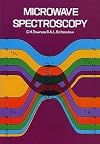
Microwave Spectroscopy
by Charles H. Townes, A.L. Schawlow
On This Page
Description
Two Nobel Laureates present a systematic, comprehensive account of the theory, techniques, experimental data, and interpretation involved in the study of microwave spectroscopy-a subject relevant to nuclear physics, molecular structure, chemical kinetics, quantum electrodynamics, and astronomy. The material in this volume is discussed critically, systematically, and in the simplest form. The simplicity of the wording and mathematics makes most of the contents accessible to those with a very show more elementary knowledge of quantum mechanics and atomic physics. Although the treatment is continuously developed, each of the 18 chapters is self-contained. Nearly 200 tables and figures augment the text. Appendixes supply most of the background for research and interpretation of microwave spectra; they also contain extensive data on nuclear and molecular constants, including essentially all those determined by microwave techniques. ""Equally suitable for use as a fundamental reference or advanced textbook."" - U.S. Quarterly Book Review. show lessTags
Recommendations












Member Reviews
Members
- Recently Added By
Author Information

7+ Works 68 Members
Charles Townes was born in Greenville, South Carolina, and attended Furman University. After graduate study at Duke University and the California Institute of Technology, he spent the years from 1939 to 1947 at the Bell Telephone Laboratories designing radar-controlled bombing systems. Townes then joined the physics department of Columbia show more University. In 1951, while sitting on a park bench, the idea for the maser (microwave amplification by stimulated emission of radiation) occurred to him as a way to produce high-intensity microwaves. In 1953 the first maser became operational. In a maser, ammonia (NH3) molecules are raised to an excited vibrational state and then fed into a resonant cavity, where (as in a laser) they stimulated part of the spectrum. "Atomic clocks" of great accuracy are based on this concept, and solid-state maser amplifiers are used in radioastronomy. In 1964 Townes and two Soviet laser pioneers, Aleksander Prokhorov and Nikolai Basov, shared the Nobel Prize. Since 1966 Townes has been at the University of California, Berkeley. (Bowker Author Biography) show less
1 Work 21 Members
Classifications
Statistics
- Members
- 21
- Popularity
- 1,236,025
- Reviews
- 1
- Rating
- (4.00)
- Languages
- English
- Media
- Paper, Ebook
- ISBNs
- 2
- ASINs
- 2