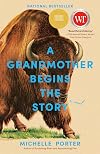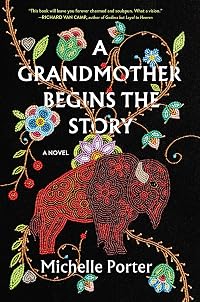
A Grandmother Begins the Story
by Michelle Porter
On This Page
Description
"The story of the unrivaled desire for healing and the power of familial bonds across five generations of Métis women and the land and bison that surround them"--Tags
Recommendations
















Member Reviews
ETA: This book is a journey of great importance for me and, I believe, for so many that I will buy more copies to pass on. It demonstrates some phrases that I've heard for years & tried to grow into: We are all relatives. It is the time for the Seventh Generation to come into their strength.
The copy I read was an ARC, tho not given to me by the publisher/author. I hope the final version includes a family tree because it was very confusing for me to keep everyones connections in order.
>>I want to write down some thoughts/feelings even tho I haven't finished the book because the writing is so strong. Even now I have lost some of the essence. It is about how we live, the pathway from one birth to the next. How life is a dying but more show more importantly a being aware.
We've all heard the buzzphrase 'generational trauma', but it is meaningless until you see it playing out in people's lives. The stories of 5 generations of Metis women alternates with that of a buffalo. So far we don't really know what the original trauma for the women was, tho we can guess. We see the daughters trying to forget the comfort/support/love/teachings they weren't able to get from their mothers. Gen is finally trying to break her alcoholism so she can make a clean death. Her mother, already dead, is still looking to make the final crossing in the spirit world. Her sister, also dead, is held by her need for performance/adulation. The great-granddaughter is escaping from her bio mom she has just found, stuck in feeling unwanted & numb from "her boobs upward".
The story of the buffalo is more direct: the herds were decimated, the calves left to die of starvation but they wander, calling, until a farm woman gathers them in, fencing and providing. Most learn and adapt to the new boundaries, and share the stories about how life is lived, but some were transferred from a different place where the teachings did not survive. There comes a generation when one feels the call of freedom and leaves her bawling calf behind. And that calf, Dee, grows to be obssessed by Jay, a bull who only has attention for her during rutting season. And now her son, Tell, seeking his mother despite her rejection, protected by a grandmother, follows thru the break in the fence, moving toward an uncertain future.
Even the grassland has a voice, which speaks loudly to me because of the prairie I am nurturing on my farm. "I wait for the fires and then I let them take everything I have...I'm getting old. The next fire will give me that get up and grow, feed my dirt. Used to be the people took charge of this. The setting of fires....I can do some good with it. Make stronger relations between me and the other ones who live with me herre, the grasses that root me, the birds who come to nest and to dance, all the furry ones that use the earth for dens, all of them...buffalo...you come in after the fire, help with the healing, make the grass grow...The treaties tell us there has to be burning. There's some that act as if the treaties expired. As if forgetting about them means you got no responsibility for them. That's its own fire, and not the burn-it-down-so-we-can-regenerate kind of fire....I was so impatient to feel the roots of the echincacea and the fireweed and all the other things that grow after a fire. I wanted to feel them creep around my mineral joints and fungal tendons and ease the aches and pains. It was hard on my dirt to try to give what all the flowers and grasses around here need, not without a good fire now and then. When you're a giver, you've got to take the time to care for yourself....Used to be there was an agreement with the humans who belong to this land, your people, and me. If they burned the prairie one season, I'd grow so much beautiful new grass in the ash that all your people would come to me and ask to eat. I'm like a mother in that way." (p.49-51)
I am elderly and have been feeling that I myself am traveling towards my death, and seeking the work I need to finish before that takes me. This book gives me a different perspective on what we come to after we die. I'm sure for younger people a different lesson shows itself. show less
The copy I read was an ARC, tho not given to me by the publisher/author. I hope the final version includes a family tree because it was very confusing for me to keep everyones connections in order.
>>I want to write down some thoughts/feelings even tho I haven't finished the book because the writing is so strong. Even now I have lost some of the essence. It is about how we live, the pathway from one birth to the next. How life is a dying but more show more importantly a being aware.
We've all heard the buzzphrase 'generational trauma', but it is meaningless until you see it playing out in people's lives. The stories of 5 generations of Metis women alternates with that of a buffalo. So far we don't really know what the original trauma for the women was, tho we can guess. We see the daughters trying to forget the comfort/support/love/teachings they weren't able to get from their mothers. Gen is finally trying to break her alcoholism so she can make a clean death. Her mother, already dead, is still looking to make the final crossing in the spirit world. Her sister, also dead, is held by her need for performance/adulation. The great-granddaughter is escaping from her bio mom she has just found, stuck in feeling unwanted & numb from "her boobs upward".
The story of the buffalo is more direct: the herds were decimated, the calves left to die of starvation but they wander, calling, until a farm woman gathers them in, fencing and providing. Most learn and adapt to the new boundaries, and share the stories about how life is lived, but some were transferred from a different place where the teachings did not survive. There comes a generation when one feels the call of freedom and leaves her bawling calf behind. And that calf, Dee, grows to be obssessed by Jay, a bull who only has attention for her during rutting season. And now her son, Tell, seeking his mother despite her rejection, protected by a grandmother, follows thru the break in the fence, moving toward an uncertain future.
Even the grassland has a voice, which speaks loudly to me because of the prairie I am nurturing on my farm. "I wait for the fires and then I let them take everything I have...I'm getting old. The next fire will give me that get up and grow, feed my dirt. Used to be the people took charge of this. The setting of fires....I can do some good with it. Make stronger relations between me and the other ones who live with me herre, the grasses that root me, the birds who come to nest and to dance, all the furry ones that use the earth for dens, all of them...buffalo...you come in after the fire, help with the healing, make the grass grow...The treaties tell us there has to be burning. There's some that act as if the treaties expired. As if forgetting about them means you got no responsibility for them. That's its own fire, and not the burn-it-down-so-we-can-regenerate kind of fire....I was so impatient to feel the roots of the echincacea and the fireweed and all the other things that grow after a fire. I wanted to feel them creep around my mineral joints and fungal tendons and ease the aches and pains. It was hard on my dirt to try to give what all the flowers and grasses around here need, not without a good fire now and then. When you're a giver, you've got to take the time to care for yourself....Used to be there was an agreement with the humans who belong to this land, your people, and me. If they burned the prairie one season, I'd grow so much beautiful new grass in the ash that all your people would come to me and ask to eat. I'm like a mother in that way." (p.49-51)
I am elderly and have been feeling that I myself am traveling towards my death, and seeking the work I need to finish before that takes me. This book gives me a different perspective on what we come to after we die. I'm sure for younger people a different lesson shows itself. show less
4.5⭐️
A Grandmother Begins the Story by Michelle Porter is an evocative novel that will stay with you long after you have finished reading. A multigenerational family saga that follows five Métis women, whose distinct voices tell a poignant tale of generational trauma, neglect, abuse, loss, grief, broken relationships, resilience, identity and legacy. Interspersed throughout the narrative are the perspectives of canine friends and the story of a bison calf and her offspring both of which enrich the narrative, emphasizing the deep connection between all living beings, those we have lost and the world we inhabit.
Carter, a recently separated mother of one, is struggling to pick up the pieces when she hears from her maternal grandmother show more Lucie, whom she never met. Lucie requests her assistance to pass on to the Afterlife. Given up for adoption by her biological mother, Allie, with whom she has recently reconnected, Carter has a strained relationship with her adoptive mother and is intrigued by her grandmother’s request. We also meet the aging Genevieve, haunted by her memories and unable to let go of her deceased sibling in whose presence and influence she finds the strength to rebuild her life despite her failing health after a lifetime of loss and addiction. Mamé, observes all of her descendants from the Afterlife and strives to move on from her connections to the living world but knows that she also has a part to play to enable all these women to move on from the trauma they have individually endured and all that is holding them back from a brighter future.
“It’s not about me, not anymore. It’s not like that. Up here the stories are us and we are the stories, every single one of them. Took me a long time to make my way here and now it’s almost my turn to be the stories—or to tell the stories, as we used to say before we passed.”
Beautifully written and thought-provoking with a blend of lore and magical realism, this is an immersive, albeit slower-paced novel. Initially, the narrative might seem a tad disjointed, but the author deftly weaves the multiple threads of this story into a coherent narrative. Each of these characters and their stories will strike a chord in your heart. Please note that this is an emotionally heavy read touching upon several sensitive topics, including the death of a loved one, abuse, addiction and domestic violence, among others.
Overall, I found this novel to be a compelling read that I wouldn’t hesitate to recommend to those who would be interested in character-driven indigenous fiction. This was my first time reading Michelle Porter, but it surely won't be my last.
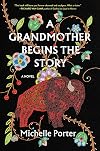
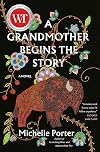
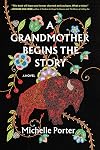
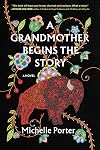
Finally, that cover art deserves all the stars!
“But regret is worth nothing because you can’t be walking all the paths or you wouldn’t be walking any path at all."
Many thanks to Algonquin Books for the digital review copy via NetGalley. All opinions expressed in this review are my own. show less
A Grandmother Begins the Story by Michelle Porter is an evocative novel that will stay with you long after you have finished reading. A multigenerational family saga that follows five Métis women, whose distinct voices tell a poignant tale of generational trauma, neglect, abuse, loss, grief, broken relationships, resilience, identity and legacy. Interspersed throughout the narrative are the perspectives of canine friends and the story of a bison calf and her offspring both of which enrich the narrative, emphasizing the deep connection between all living beings, those we have lost and the world we inhabit.
Carter, a recently separated mother of one, is struggling to pick up the pieces when she hears from her maternal grandmother show more Lucie, whom she never met. Lucie requests her assistance to pass on to the Afterlife. Given up for adoption by her biological mother, Allie, with whom she has recently reconnected, Carter has a strained relationship with her adoptive mother and is intrigued by her grandmother’s request. We also meet the aging Genevieve, haunted by her memories and unable to let go of her deceased sibling in whose presence and influence she finds the strength to rebuild her life despite her failing health after a lifetime of loss and addiction. Mamé, observes all of her descendants from the Afterlife and strives to move on from her connections to the living world but knows that she also has a part to play to enable all these women to move on from the trauma they have individually endured and all that is holding them back from a brighter future.
“It’s not about me, not anymore. It’s not like that. Up here the stories are us and we are the stories, every single one of them. Took me a long time to make my way here and now it’s almost my turn to be the stories—or to tell the stories, as we used to say before we passed.”
Beautifully written and thought-provoking with a blend of lore and magical realism, this is an immersive, albeit slower-paced novel. Initially, the narrative might seem a tad disjointed, but the author deftly weaves the multiple threads of this story into a coherent narrative. Each of these characters and their stories will strike a chord in your heart. Please note that this is an emotionally heavy read touching upon several sensitive topics, including the death of a loved one, abuse, addiction and domestic violence, among others.
Overall, I found this novel to be a compelling read that I wouldn’t hesitate to recommend to those who would be interested in character-driven indigenous fiction. This was my first time reading Michelle Porter, but it surely won't be my last.
Finally, that cover art deserves all the stars!
“But regret is worth nothing because you can’t be walking all the paths or you wouldn’t be walking any path at all."
Many thanks to Algonquin Books for the digital review copy via NetGalley. All opinions expressed in this review are my own. show less
Magical realism is not tops on my genre list, but in this unusual novel, the talking grasslands, bison, and family from the Spirit World all make this a unique experience. Seven generations of Metis (French Canadian/Native Americans parentage) women, living and gone, watch out for each other and try to make amends for unforgiveable behavior. The sixth generation Mame, stuck between two worlds, awaits the actions of her offspring to help her to move on. A family tree would have been invaluable, but some of the joy is in learning who gave up their daughter for adoption, who plays piano beautifully from her alcohol rehab facility, and whose grandmother asked her granddaughter to provide enough drugs for an assisted suicide. The Spirit show more World seems like a fine place for the bison, Dee and Jay and their child Tell, to find their way to, but they need the assistance of human rescuers. And will Gen's two dogs be released from the pound where she left them, although they are having big fun organizing a doggo choir? And what about Gen's ancient car, Bets? This is a rollicking ride through a very imaginative and sometime harsh territory. show less
Buffalo Gals
Review of the Algonquin Books hardcover edition (November 7, 2023).
I wish I had loved this more, especially after the glowing 5-star reviews from GR Friends Jodi and ShirleyNature. Partly it was the confusion of the five generations of women told in very brief vignettes and trying to sort out who is who. Be sure to read the synopsis first and you’ll likely have less confusion with that (I had plunged right in without it). The human stories were interspersed with those of dogs and buffalos. Then it gets into magic realism, with women either turning into buffalos or perhaps reincarnated as buffalos. You just gotta roll with it.
I was also (perhaps unnecessarily) somewhat distressed about the possible fates of the animals show more involved, especially when they’re portrayed as anthropomorphic (i.e. thinking like humans). Dogs are abandoned at the kennel/pound and I kept wondering if they would be euthanized. The buffalos are subject to possible hunting or other deprivations. Most of those situations turned out reasonably well, but the tension of it was with me throughout. I have a tendency to really turn on a book when it seems animals are unnecessarily exploited. That wasn’t the case here, but I was dreading it for the longest time.
Still, the ambition and the sheer scope of it makes it a 4-star read regardless. My enjoyment of the associated music (see below) being a huge bump-up factor.
Soundtrack
I had the most fun on the soundtrack for this book, searching for various versions of the Red River Jig, the tune & dance which is mentioned throughout the novel. My favourites were the one with Derek Dick (dance) and Caitlin Armstrong (fiddle) and the Instruction Video at the Surrey Fusion Festival. show less
Review of the Algonquin Books hardcover edition (November 7, 2023).
I wish I had loved this more, especially after the glowing 5-star reviews from GR Friends Jodi and ShirleyNature. Partly it was the confusion of the five generations of women told in very brief vignettes and trying to sort out who is who. Be sure to read the synopsis first and you’ll likely have less confusion with that (I had plunged right in without it). The human stories were interspersed with those of dogs and buffalos. Then it gets into magic realism, with women either turning into buffalos or perhaps reincarnated as buffalos. You just gotta roll with it.
I was also (perhaps unnecessarily) somewhat distressed about the possible fates of the animals show more involved, especially when they’re portrayed as anthropomorphic (i.e. thinking like humans). Dogs are abandoned at the kennel/pound and I kept wondering if they would be euthanized. The buffalos are subject to possible hunting or other deprivations. Most of those situations turned out reasonably well, but the tension of it was with me throughout. I have a tendency to really turn on a book when it seems animals are unnecessarily exploited. That wasn’t the case here, but I was dreading it for the longest time.
Still, the ambition and the sheer scope of it makes it a 4-star read regardless. My enjoyment of the associated music (see below) being a huge bump-up factor.
Soundtrack
I had the most fun on the soundtrack for this book, searching for various versions of the Red River Jig, the tune & dance which is mentioned throughout the novel. My favourites were the one with Derek Dick (dance) and Caitlin Armstrong (fiddle) and the Instruction Video at the Surrey Fusion Festival. show less
Heard an interview with the author on NPR and was fascinated with the notion of 5 generations of Métis women, a few dogs, and buffalo all tell their stories, which are woven int a rich and wonderful tapestry. What kept me reading was that I underestimated how perfectly the author did this, and how beautifully told the tales were. It is a book to be savored. Also, A+ on the cover. .
Award-winning author Michelle Porter makes her fiction debut with an enchanting and original story of the unrivaled desire for healing and the power of familial bonds across five generations of Métis women and the land and bison that surround them.
Written like a crooked Métis jig, A Grandmother Begins the Story follows five generations of women and bison as show more they reach for the stories that could remake their worlds and rebuild their futures. show less
Award-winning author Michelle Porter makes her fiction debut with an enchanting and original story of the unrivaled desire for healing and the power of familial bonds across five generations of Métis women and the land and bison that surround them.
Written like a crooked Métis jig, A Grandmother Begins the Story follows five generations of women and bison as show more they reach for the stories that could remake their worlds and rebuild their futures. show less
3.5
All I know to say is we’ve got to play our music no matter who leaves us and no matter who fails us, no matter the memories prey on us in the small hours of the night. from A Grandmother Begins the Story by Michelle Porter
A chorus of voices merge together to tell the story of five generations of First Person and Metis women. Even the prairie grasslands and the bison and the pet dogs and an old car have voices, each with their unique perspective.
The jumping from chapter to chapter of first person narratives made it too easy to set this book down. It lost the propulsion that gets me turning pages. But when I got to the end of the story I had an emotional reaction of heartache and hope.
Mame begins the story with her wandering journey show more in the afterlife. Her daughter Lucie seeks to end her life. She is estranged from her daughter Allie, but contacts her granddaughter Carter to ask for her help.
Carter was adopted. Her mother Allie “lives like she beads, as if the tighter she tacked those beads down the longer she’d keep away the bad things, the mess, anything that wasn’t good.” Until she met her birth mother, she had not known that she was Metis, her mother First People and father white. Carter is separated from a white man and has a son, Tucker.
So my grandmother–my grandmother who I never met, by the way, because my birth mom refused to get us together, saying her mother is a piece of work–called me up to ask if I’d help her kill herself. Carter in A Grandmother Begins the Story by Michelle Porter
Mame’s daughter Genevieve at eighty-one decides to address her alcoholism, leaving her dogs at a shelter and driving Bes to the rehab center. In detox, she sees her deceased sister Velma, who died long ago. Genevieve was a pianist and Velma played the fiddle, their musical gifts inherited from their father. The sisters discuss their messy lives, “Just a typical Metis story”.
Each generation of women are estranged from children who were hurt by their mother’s problems and issues. They married wrong, their husbands separating them from their heritage and people. Their mistakes haunt them.
Paralleling the human story is Dee, a bison who falls in love with Jay, and pursues him, even abandoning their calf Tell in her search. Dee’s mother had broke out of the preserve for the open prairie, and so has Jay. But freedom comes at a cost.In the end, the story offers closure and healing.
Thanks to the publisher for a free book through NetGalley. show less
All I know to say is we’ve got to play our music no matter who leaves us and no matter who fails us, no matter the memories prey on us in the small hours of the night. from A Grandmother Begins the Story by Michelle Porter
A chorus of voices merge together to tell the story of five generations of First Person and Metis women. Even the prairie grasslands and the bison and the pet dogs and an old car have voices, each with their unique perspective.
The jumping from chapter to chapter of first person narratives made it too easy to set this book down. It lost the propulsion that gets me turning pages. But when I got to the end of the story I had an emotional reaction of heartache and hope.
Mame begins the story with her wandering journey show more in the afterlife. Her daughter Lucie seeks to end her life. She is estranged from her daughter Allie, but contacts her granddaughter Carter to ask for her help.
Carter was adopted. Her mother Allie “lives like she beads, as if the tighter she tacked those beads down the longer she’d keep away the bad things, the mess, anything that wasn’t good.” Until she met her birth mother, she had not known that she was Metis, her mother First People and father white. Carter is separated from a white man and has a son, Tucker.
So my grandmother–my grandmother who I never met, by the way, because my birth mom refused to get us together, saying her mother is a piece of work–called me up to ask if I’d help her kill herself. Carter in A Grandmother Begins the Story by Michelle Porter
Mame’s daughter Genevieve at eighty-one decides to address her alcoholism, leaving her dogs at a shelter and driving Bes to the rehab center. In detox, she sees her deceased sister Velma, who died long ago. Genevieve was a pianist and Velma played the fiddle, their musical gifts inherited from their father. The sisters discuss their messy lives, “Just a typical Metis story”.
Each generation of women are estranged from children who were hurt by their mother’s problems and issues. They married wrong, their husbands separating them from their heritage and people. Their mistakes haunt them.
Paralleling the human story is Dee, a bison who falls in love with Jay, and pursues him, even abandoning their calf Tell in her search. Dee’s mother had broke out of the preserve for the open prairie, and so has Jay. But freedom comes at a cost.In the end, the story offers closure and healing.
Thanks to the publisher for a free book through NetGalley. show less
Five women, five generations of a Métis family who deal with life, love, loss, and hope.
Carter, the youngest of the five, is struggling and tentatively starting a relationship with her birth mom, Allie, when her grandmother Lucie contacts her with a strange request. Geneviéve checks herself into rehab, and Mamé looks down on her family from the place she went after death. Then there's also the story of the bison, including Dee, who falls in love with Jay and can't seem to stop even when that relationship hurts her. Exploring intergenerational trauma not just between people but with the earth itself, the interweaving stories are presented in poetic, short chapters from a chorus of voices - not just the women, but the bison, the show more grassland, two dogs, and even a car. It's a beautifully written debut novel (Porter previously wrote two memoirs and a book of poetry) infused with hope and healing. show less
Carter, the youngest of the five, is struggling and tentatively starting a relationship with her birth mom, Allie, when her grandmother Lucie contacts her with a strange request. Geneviéve checks herself into rehab, and Mamé looks down on her family from the place she went after death. Then there's also the story of the bison, including Dee, who falls in love with Jay and can't seem to stop even when that relationship hurts her. Exploring intergenerational trauma not just between people but with the earth itself, the interweaving stories are presented in poetic, short chapters from a chorus of voices - not just the women, but the bison, the show more grassland, two dogs, and even a car. It's a beautifully written debut novel (Porter previously wrote two memoirs and a book of poetry) infused with hope and healing. show less
Members
- Recently Added By
Lists

Globe and Mail | Canadian Fiction: May 20, 2023
10 works; 1 member

At the Library
217 works; 1 member

Indigenous Peoples: Nonfiction & Fiction
50 works; 1 member
Author Information
8 Works 246 Members
Awards and Honors
Distinctions
Notable Lists
Common Knowledge
- Canonical title
- A Grandmother Begins the Story
- Original publication date
- 2023
- Epigraph
- Light the smjdge, breathe deep, from this sacred tobacco, cedar, sweetgrass, and sage, burn all jealousy and hatred from this earth. O sacred smoke, make the world and us whole again; we women, this is what we do: sew and sm... (show all)udge, make the ugly, beautiful.
--from the "Mending the Violence of Men" aria, Li Keur: Riel's Heart of the North, by S.M. Steele - First words
- I had my choice down there, didn't I? Eve, she chose the apple.
- Last words
- (Click to show. Warning: May contain spoilers.)Celestial Jig.
Finally. They're here.
Star's Reel.
Oh, and I am here. - Blurbers
- Moore, Lisa; Van Camp, Richard; Baker, Carleigh; Cariou, Warren; Harrison, Richard
Classifications
Statistics
- Members
- 222
- Popularity
- 147,044
- Reviews
- 12
- Rating
- (4.00)
- Languages
- English
- Media
- Paper, Audiobook, Ebook
- ISBNs
- 9
- ASINs
- 2