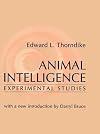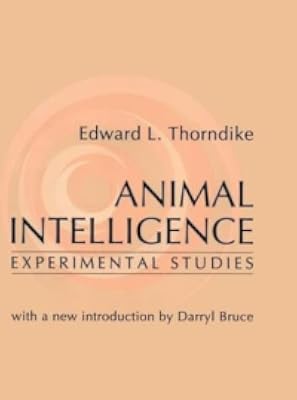
Animal Intelligence
by Edward L. Thorndike
On This Page
Description
"Animal Intelligence is a consolidated record of Edward L. Thorndike's theoretical and empirical contributions to the comparative psychology of learning. Thorndike's approach is systematic and comprehensive experimentation using a variety of animals and tasks, all within a laboratory setting. When this book first appeared, it set a compelling example, and helped make the study of animal behavior very much an experimental laboratory science.This landmark study in the investigation of animal show more intelligence illustrates Thorndike's thinking on the evolution of the mind. It includes his formal statement of the influential law of effect, which had a significant impact on other behaviorists. Hull's law of primary reinforcement was closely related to the law of effect and Skinner acknowledged that the process of operant conditioning was probably that described in the law of effect.The new introduction by Darryl Bruce is an in-depth study of Thorndike's legacy to comparative psychology as well as a thorough retrospective review of Animal Intelligence. He includes a biographical introduction of the behaviorist and then delves into his theories and work. Among the topics Bruce covers with respect to Thorndike's studies are the nature of animal intelligence, the laws of learning and connectionism, implications for comparative psychology, and relation to theories of other behaviorists. Animal Intelligence is an intriguing analysis that will be of importance to psychologists and animal behaviorists."--Provided by publisher. show lessTags
Members
- Recently Added By
Lists

Psicología - Clásicos
165 works; 2 members
Author Information

63 Works 962 Members
Educational psychologist and author of the intelligence test bearing his name, Edward L. Thorndike also is known for his work in educational statistics. He studied under William James (see also Vol. 4) at Harvard University and carried out experiments on animal intelligence with some chickens that he kept in the basement of James's house---his show more landlady having refused to let him keep them in his room. Thorndike's first papers were on "The Psychology of Fishes" and "The Mental Life of Monkeys" When he received his doctorate from Columbia University in 1898, the statistical treatment of test results in psychology was experimental. He became an instructor in genetic psychology at Teachers College in 1899. He believed that "everything that exists exists in quantity" and could be measured as a key to scientific progress in education. He devised scales for measuring excellence in reading, English composition, handwriting, and drawing, as well as intelligence tests for various grade levels. The former dean of Teachers College James E. Russell said of him: "His service to pedagogical procedure has revolutionized educational administration." Thorndike's "Law of Effect," which had its origin in his early tests on animals, was strengthened by his later experiments on human learning. He concluded that the important factors in learning are repetition and reward. His techniques of animal experimentation and his methods of psychological measurement were important advances in U.S. psychology before World War I, and he often is thought of as the founder of modern educational psychology. (Bowker Author Biography) show less
Common Knowledge
- Canonical title
- Animal Intelligence
Classifications
Statistics
- Members
- 12
- Popularity
- 1,885,248
- Languages
- English
- Media
- Paper, Ebook
- ISBNs
- 9