
Shakespeare as Literary Dramatist
by Lukas Erne
On This Page
Description
Now in a new edition, Lukas Erne's groundbreaking study argues that Shakespeare, apart from being a playwright who wrote theatrical texts for the stage, was also a literary dramatist who produced reading texts for the page. Examining the evidence from early published playbooks, Erne argues that Shakespeare wrote many of his plays with a readership in mind and that these 'literary' texts would have been abridged for the stage because they were too long for performance. The variant early texts show more of Romeo and Juliet, Henry V and Hamlet are shown to reveal important insights into the different media for which Shakespeare designed his plays. This revised and updated edition includes a new and substantial preface that reviews and intervenes in the controversy the study has triggered and lists reviews, articles and books which respond to or build on the first edition. show lessTags
Recommendations













Member Reviews
The World is a Page: "Shakespeare as Literary Dramatist" by Lukas Erne Published 2013 (2nd Edition).
Table of Contents:
Preface to the second edition
Introduction
Part I. Publication:
The legitimation of printed playbooks in Shakespeare’s time
The making of ‘Shakespeare’
Shakespeare and the publication of his plays (I): the late sixteenth century
Shakespeare and the publication of his plays (II): the early seventeenth century
The players’ alleged opposition to print
Part II. Texts:
Why size matters: ‘the two hours’ traffic of our stage’ and the length of Shakespeare’s plays
Editorial policy and the length of Shakespeare’s plays
‘Bad quartos’ and their origins: Romeo and Juliet, Henry V, and Hamlet
Theatricality, show more literariness, and the texts of Romeo and Juliet, Henry V, and Hamlet
Appendix A: The plays of Shakespeare and his contemporaries in print, 1584–1623
Appendix B: Heminge and Condell’s ‘Stolne, and surreptitious copies’ and the Pavier quartos
Appendix C: Shakespeare and the circulation of dramatic manuscripts
“Whose Shakespeare? Does he belong to the theater or to the academy, is he of the stage or of the page, should we watch him or read him? These are false dichotomies, but the realization that they are false does not mean we can easily escape them. [ ] I argue that the long play texts Shakespeare wrote for many of his tragedies and histories are significantly different from and longer than the play texts spoken by the actors on stage, and that Shakespeare knew so as he was writing them. To call the shorter version “theatrical” and the longer “literary,” as I do in Shakespeare as a Literary Dramatist, is right in that “theatrical” and “literary” refer to the two institutions in which Shakespeare saw his plays materialize, the public theatre and the book trade.”
With this extremely simple statement at the beginning of his book, I was hooked, line and sinker!
[...]
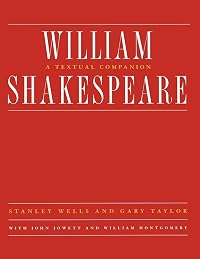
On a side note, Erne’s hypothesis is strangely absent from Wells’ and Taylor’s Textual Companion (through ThemisAthena's courtesy I was made aware of this volume, and what a wonderful edition it was to my Shakespeare's library).
The rest of this review can be read elsewhere. show less
Table of Contents:
Preface to the second edition
Introduction
Part I. Publication:
The legitimation of printed playbooks in Shakespeare’s time
The making of ‘Shakespeare’
Shakespeare and the publication of his plays (I): the late sixteenth century
Shakespeare and the publication of his plays (II): the early seventeenth century
The players’ alleged opposition to print
Part II. Texts:
Why size matters: ‘the two hours’ traffic of our stage’ and the length of Shakespeare’s plays
Editorial policy and the length of Shakespeare’s plays
‘Bad quartos’ and their origins: Romeo and Juliet, Henry V, and Hamlet
Theatricality, show more literariness, and the texts of Romeo and Juliet, Henry V, and Hamlet
Appendix A: The plays of Shakespeare and his contemporaries in print, 1584–1623
Appendix B: Heminge and Condell’s ‘Stolne, and surreptitious copies’ and the Pavier quartos
Appendix C: Shakespeare and the circulation of dramatic manuscripts
“Whose Shakespeare? Does he belong to the theater or to the academy, is he of the stage or of the page, should we watch him or read him? These are false dichotomies, but the realization that they are false does not mean we can easily escape them. [ ] I argue that the long play texts Shakespeare wrote for many of his tragedies and histories are significantly different from and longer than the play texts spoken by the actors on stage, and that Shakespeare knew so as he was writing them. To call the shorter version “theatrical” and the longer “literary,” as I do in Shakespeare as a Literary Dramatist, is right in that “theatrical” and “literary” refer to the two institutions in which Shakespeare saw his plays materialize, the public theatre and the book trade.”
With this extremely simple statement at the beginning of his book, I was hooked, line and sinker!
[...]
On a side note, Erne’s hypothesis is strangely absent from Wells’ and Taylor’s Textual Companion (through ThemisAthena's courtesy I was made aware of this volume, and what a wonderful edition it was to my Shakespeare's library).
The rest of this review can be read elsewhere. show less
Ratings
Members
- Recently Added By
Lists

Books Read in 2025
4,128 works; 98 members
Author Information
11+ Works 121 Members
Common Knowledge
- Canonical title
- Shakespeare as Literary Dramatist
- Original publication date
- 2013 (2nd edition) (2nd edition); 2003 (1st edition) (1st edition)
- Dedication
- For Katrin
Classifications
Statistics
- Members
- 43
- Popularity
- 690,053
- Reviews
- 1
- Rating
- (4.50)
- Languages
- English
- Media
- Paper, Ebook
- ISBNs
- 11
- ASINs
- 1