On This Page
Description
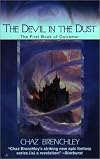
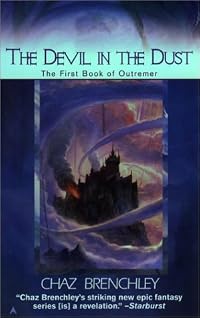
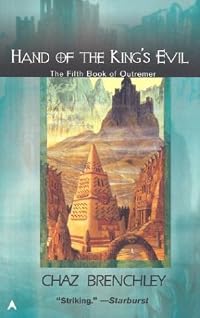
Marron, a young knight in training to become a Knight of Ransomer, and Julianne, the daughter of the Kings Shadow, embark on a perilous journey to Roq de Rancon, the stronghold of the Order of the Knights Ransomer, where they are drawn into a dangerous conflict that will forge Outremers destiny.Tags
Recommendations








Member Reviews
Chaz Brenchley's Outremer series is an alternate-Crusades story set in a world where magic is real. As the story opens, the land of Outremer is a place where recent settlers have successfully imposed their religion and way of life upon those who were there before. But Outremer faces challenges from both without and within, and a military religious order grows ever more fanatical in its attempts to enforce the religious law.
The main characters in the novel show the diversity of opinion and culture within Outremer. The major plotline in this book follows two of the men in the Ransomer order. Marron is a young man who joined the Ransomer brothers out of idealism, but has seen the dark side of the order in his journey to the castle of Roq show more de Rancon where he will undergo training; Marron has true faith but his experience of a religious dictatorship leaves him disillusioned and in pain. He finds something worth believing in with Sieur Anton d'Escrivey, the Knight Ransomer who takes him on as squire, but d'Escrivey has problems of his own.
Julianne de Rance, daughter of the King's Shadow, is a child of the court, a woman used to having status and power but now on her way to a political marriage in a culture where women are expected to go veiled. She's temporarily trapped by circumstance in the Roc, along with Elisande, a young women she has picked up along the way. Elisande has little to say about herself, but it's clear that there's a good deal she could say if she chose to.
Their interactions with each other and those around them make for superb characterisation and worldbuilding, and Brenchley creates a vivid picture of his world without forgetting to tell a story. This is not an easy tale of good and evil, but a world where people have mixed loyalties and may have to make harsh choices as to who they serve.
This is the first part of the US edition of the Outremer series -- I note this because the series was originally published as a trilogy in the UK, but for the American edition it was split into six volumes, with some rewriting. As such, The Devil In The Dust should really be read together with Tower of the King's Daughter (also the title of the original UK volume 1 comprising the material in 1&2 of the US edition).
That said, this volume works well as a standalone segment within a larger story arc. The book introduces characters and sets up several plotlines for the series, but provides a satisfactory resolution for part of the storyline within the book, rather than leaving the reader with a cliffhanger. It pulls off the difficult trick of being a satisfying read in its own right while being an enticement to read the rest of the story. An excellent start to what looks from this sample to be an excellent series. show less
The main characters in the novel show the diversity of opinion and culture within Outremer. The major plotline in this book follows two of the men in the Ransomer order. Marron is a young man who joined the Ransomer brothers out of idealism, but has seen the dark side of the order in his journey to the castle of Roq show more de Rancon where he will undergo training; Marron has true faith but his experience of a religious dictatorship leaves him disillusioned and in pain. He finds something worth believing in with Sieur Anton d'Escrivey, the Knight Ransomer who takes him on as squire, but d'Escrivey has problems of his own.
Julianne de Rance, daughter of the King's Shadow, is a child of the court, a woman used to having status and power but now on her way to a political marriage in a culture where women are expected to go veiled. She's temporarily trapped by circumstance in the Roc, along with Elisande, a young women she has picked up along the way. Elisande has little to say about herself, but it's clear that there's a good deal she could say if she chose to.
Their interactions with each other and those around them make for superb characterisation and worldbuilding, and Brenchley creates a vivid picture of his world without forgetting to tell a story. This is not an easy tale of good and evil, but a world where people have mixed loyalties and may have to make harsh choices as to who they serve.
This is the first part of the US edition of the Outremer series -- I note this because the series was originally published as a trilogy in the UK, but for the American edition it was split into six volumes, with some rewriting. As such, The Devil In The Dust should really be read together with Tower of the King's Daughter (also the title of the original UK volume 1 comprising the material in 1&2 of the US edition).
That said, this volume works well as a standalone segment within a larger story arc. The book introduces characters and sets up several plotlines for the series, but provides a satisfactory resolution for part of the storyline within the book, rather than leaving the reader with a cliffhanger. It pulls off the difficult trick of being a satisfying read in its own right while being an enticement to read the rest of the story. An excellent start to what looks from this sample to be an excellent series. show less
This novel takes place in a land on the brink of holy war, mainly in the Roq de Rancon, a fortress with strategical importance because of it's placement, and also some other mysteries within it. At the start, the two main characters are headed there. Marron, a young man who has become a sort of warrior-monk to follow in the footsteps of his father, rather traumatized by the barbaric slaughter of heritics he is called to take part in for the apparent service of his religion, and Julianne, the daughter of the Kings' Shadow, on her way to an arranged marriage with a man she doesn't know.
This novel is the first in a series of six (or for the original UK version, this would be the first half of the first novel in a series of three ^_^;), and show more as far as what looks to be the main conflict for the series as a whole, barely anything happens, and what does happen seems to be more a foreboding warning of things to come than anything hugely consequential. There is a lot of background set up, though, which I was very impressed with till I found out the whole thing is based off the Crusades and not (entirely) a creation of the author's mind. Still, it's presented interestingly, if a little too vaguely at times (maybe they're assuming their reader is a little more familiar with the Crusades than I am?)
If overall-plot-wise this book had more of a complete story to tell I do think it would be better, but it's absence is not a huge blow since eventually this book seems to be more about the personal journey of Marron, which is indeed a story of its own, and a good and interesting one, and one that has a nice closing point here while still giving the feeling of more directions to go in future volumes.
What is Marron's personal journey? Well, basically, he's serving in a religion with some good things about it but also a lot of bad corrupt nasty stuff. You know, intolerance of other religions, strict rules, crazy morally corrupt officials, torture, killing babies by swinging them till their brains explode against walls, stuff like that. So you can pretty much guess the general direction things are going to go here. Admittedly, some of the characters and situations surrounding Marron are a little too obviously black and white, good and bad. Still, the conflict within Marron, the inner musings we hear dealing with how he feels about his faith and about the things it has made him do, his fear and confusion since thinking such things as he has could very well be a sin, rings psychologically realistic to me, so much I could somewhat overlook some of the less realistic things outside Marron.
Still, with such interesting exchanges going on within Marrons' mind, I would hope for interesting exchanges between him and the other characters as well. Unfortunately, as previously mentioned, all of those surrounding Marron are considerably less complex than he is. The main offenders I suppose are Fra' Piet, a sort of leader I guess (don't know too much about religion ^_^) for Marron's band of brothers (evil, corrupt, vicious man), Marron's childhood friend Aldo (not actually there that much so we can't exactly fault him, but Marron dwelled on their flagging friendship enough that by the end I definitely felt like we should have been given a more in-depth idea of their former relationship than the goody-sweet-dedicated-BFF portrayal we got), and Anton, a knight who makes Marron his squire and sort of takes him under his wing.
I'd say the growing bond between Marron and Anton is the main focus as far as character relationships go. On one hand the presence of Anton is a relief as so much of everything else Marron deals with feels so stifling and tainted. On the other hand, I'm not sure I've seen a character so much like a stereotypical yaoi seme outside of manga. For those that have not clue what I'm talking about, Anton is mysterious and sometimes slightly abusive, amazing with his sword, attractive, smart, witty, pretty much always knows what's best, has an angsty past, ostensibly respects Marron but we feel more than a hint of condescension in his attitude toward him.
This hint of something less than perfect in a rather too perfect character might be nice, only I'm not sure we're SUPPOSED to feel like Anton's attitude toward Marron is wrong. Or that Marron's hero worship of him is not completely healthy. What makes this frustrating is that I think there is a romance springing up between these two. This is definitely personal preference, but I really dislike romances with this kind of relationship. Anton seems to keep Marron as a sort of attractive toy, with some but not nearly enough attachment to things like, oh, say, Marron's personality. His appreciation/respect for Marron seems more like the respect a grownup might have for a very talented child. Marron feels utterly at Anton's mercy, mind and body. That kind of relationship is just unwholesome when you try to put romance in it. But of course people read that kind of thing in yaoi all the time, so it's definitely personal taste. (Though the fact that Anton's character is rather too simplistic to play opposite Marron still remains.)
And here's where you're wondering why I haven't mentioned the female main character Julianne, especially since the chapters alternate evenly between their point of views. This is because Julianne's chapters...don't sum up to much. She makes a mysterious friend on the road, gets mixed up with a dijinni, sits around bored in the castle, socializes with Anton and Marron. I'm willing to bet Julianne's plot had more of a conclusion in the original UK version of the book when the 'first' and 'second' books were one. Still, here it is, at best, set up with no building feeling of tension, and at worst just two girls sitting around bored. Julianne has no big personal conflict besides disliking the whole marriage idea, either. She's not as annoying as a lot of fantasy heroines, neither a stupid helpless doormat or a exaggeratedly perky/able/feminist wonder woman, but she's not much else. I feel like she was made to be unoffensive, which I don't exactly mind, only then she wasn't expanded upon with anything much else. The times her chapters are most interesting is when she's around Anton and Marron, since we get to see them from a different perspective.
Still, Julianne's chapters aren't horrible by any means. Most of them are still very readable. As tirelessly as I've gone after my main quibbles with this book, all of it is. The prose has a nice style to it (unlike so many fantasy novels that don't have any style at all in their writing), and Marron's inner struggle, while slow to start, really is good enough to sort of permeate the whole book and make it interesting, lack of bigger plot and somewhat simplistic, not-overly-likable characters regardless. It's one of the best fantasies I've read in a while, and just knowing the author can write inner struggle so well (especially in an area like realizing the less-wholesome sides of one's religion, where too many story tellers see too much from the eyes of one who already sees rather than the person who is supposedly figuring things out) makes me want to try the rest of the books. Lack of engaging character relationships might weigh me down and tire me out of this eventually, if that area doesn't improve, but so far, I'm looking forward to the next book. show less
This novel is the first in a series of six (or for the original UK version, this would be the first half of the first novel in a series of three ^_^;), and show more as far as what looks to be the main conflict for the series as a whole, barely anything happens, and what does happen seems to be more a foreboding warning of things to come than anything hugely consequential. There is a lot of background set up, though, which I was very impressed with till I found out the whole thing is based off the Crusades and not (entirely) a creation of the author's mind. Still, it's presented interestingly, if a little too vaguely at times (maybe they're assuming their reader is a little more familiar with the Crusades than I am?)
If overall-plot-wise this book had more of a complete story to tell I do think it would be better, but it's absence is not a huge blow since eventually this book seems to be more about the personal journey of Marron, which is indeed a story of its own, and a good and interesting one, and one that has a nice closing point here while still giving the feeling of more directions to go in future volumes.
What is Marron's personal journey? Well, basically, he's serving in a religion with some good things about it but also a lot of bad corrupt nasty stuff. You know, intolerance of other religions, strict rules, crazy morally corrupt officials, torture, killing babies by swinging them till their brains explode against walls, stuff like that. So you can pretty much guess the general direction things are going to go here. Admittedly, some of the characters and situations surrounding Marron are a little too obviously black and white, good and bad. Still, the conflict within Marron, the inner musings we hear dealing with how he feels about his faith and about the things it has made him do, his fear and confusion since thinking such things as he has could very well be a sin, rings psychologically realistic to me, so much I could somewhat overlook some of the less realistic things outside Marron.
Still, with such interesting exchanges going on within Marrons' mind, I would hope for interesting exchanges between him and the other characters as well. Unfortunately, as previously mentioned, all of those surrounding Marron are considerably less complex than he is. The main offenders I suppose are Fra' Piet, a sort of leader I guess (don't know too much about religion ^_^) for Marron's band of brothers (evil, corrupt, vicious man), Marron's childhood friend Aldo (not actually there that much so we can't exactly fault him, but Marron dwelled on their flagging friendship enough that by the end I definitely felt like we should have been given a more in-depth idea of their former relationship than the goody-sweet-dedicated-BFF portrayal we got), and Anton, a knight who makes Marron his squire and sort of takes him under his wing.
I'd say the growing bond between Marron and Anton is the main focus as far as character relationships go. On one hand the presence of Anton is a relief as so much of everything else Marron deals with feels so stifling and tainted. On the other hand, I'm not sure I've seen a character so much like a stereotypical yaoi seme outside of manga. For those that have not clue what I'm talking about, Anton is mysterious and sometimes slightly abusive, amazing with his sword, attractive, smart, witty, pretty much always knows what's best, has an angsty past, ostensibly respects Marron but we feel more than a hint of condescension in his attitude toward him.
This hint of something less than perfect in a rather too perfect character might be nice, only I'm not sure we're SUPPOSED to feel like Anton's attitude toward Marron is wrong. Or that Marron's hero worship of him is not completely healthy. What makes this frustrating is that I think there is a romance springing up between these two. This is definitely personal preference, but I really dislike romances with this kind of relationship. Anton seems to keep Marron as a sort of attractive toy, with some but not nearly enough attachment to things like, oh, say, Marron's personality. His appreciation/respect for Marron seems more like the respect a grownup might have for a very talented child. Marron feels utterly at Anton's mercy, mind and body. That kind of relationship is just unwholesome when you try to put romance in it. But of course people read that kind of thing in yaoi all the time, so it's definitely personal taste. (Though the fact that Anton's character is rather too simplistic to play opposite Marron still remains.)
And here's where you're wondering why I haven't mentioned the female main character Julianne, especially since the chapters alternate evenly between their point of views. This is because Julianne's chapters...don't sum up to much. She makes a mysterious friend on the road, gets mixed up with a dijinni, sits around bored in the castle, socializes with Anton and Marron. I'm willing to bet Julianne's plot had more of a conclusion in the original UK version of the book when the 'first' and 'second' books were one. Still, here it is, at best, set up with no building feeling of tension, and at worst just two girls sitting around bored. Julianne has no big personal conflict besides disliking the whole marriage idea, either. She's not as annoying as a lot of fantasy heroines, neither a stupid helpless doormat or a exaggeratedly perky/able/feminist wonder woman, but she's not much else. I feel like she was made to be unoffensive, which I don't exactly mind, only then she wasn't expanded upon with anything much else. The times her chapters are most interesting is when she's around Anton and Marron, since we get to see them from a different perspective.
Still, Julianne's chapters aren't horrible by any means. Most of them are still very readable. As tirelessly as I've gone after my main quibbles with this book, all of it is. The prose has a nice style to it (unlike so many fantasy novels that don't have any style at all in their writing), and Marron's inner struggle, while slow to start, really is good enough to sort of permeate the whole book and make it interesting, lack of bigger plot and somewhat simplistic, not-overly-likable characters regardless. It's one of the best fantasies I've read in a while, and just knowing the author can write inner struggle so well (especially in an area like realizing the less-wholesome sides of one's religion, where too many story tellers see too much from the eyes of one who already sees rather than the person who is supposedly figuring things out) makes me want to try the rest of the books. Lack of engaging character relationships might weigh me down and tire me out of this eventually, if that area doesn't improve, but so far, I'm looking forward to the next book. show less
Ratings
Members
- Recently Added By
Author Information

61+ Works 1,667 Members
Some Editions
Series

Work Relationships
Is contained in
Common Knowledge
- Canonical title
- The Devil in the Dust
- Original publication date
- 1998
- Epigraph
- Cher a tort unt ses fieuz saiziz;
Bien en devums aveir dolur,
Cher la fud Deu primes servi
E reconnu pur segnuur.
- Crusader song,
Anon, c. 1143 - Dedication
- Best things come in big packages.
The start of something this big,
it has to be for Ian. - First words
- Despite what the church claimed and the people believed, this was still a Kingdom born of younger sons, the land-hungry and the dispossessed.
- Last words
- (Click to show. Warning: May contain spoilers.)And saw the knight some few paces off, standing waiting for him.
Classifications
Statistics
- Members
- 142
- Popularity
- 229,720
- Reviews
- 2
- Rating
- (3.63)
- Languages
- English, German
- Media
- Paper, Ebook
- ISBNs
- 5
- ASINs
- 1