On This Page
Description
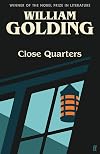
Sequel to: Rites of passage. Recounts the further adventures of the eighteenth-century fighting ship, converted at the close of the Napoleonic War to carry passengers and cargo from England to Australia.Tags
Recommendations


























Member Reviews
Precise control of tone.
On page 66 someone asks “And who is Miss Chumley?”, but it’s not until page 87 that Miss Chumley makes her appearance in these terms:
‘The lightning that struck the top of the mizzenmast ran down, and melted the conductor into white hot drops. The mast split and flinders shot every way into the mist. The deckhead burst open and the electrical fluid destroyed me. It surrounded the girl who stood before me with a white line of light.’
This is only a page after we’ve met the teeth-grittingly awful Lady Somerset which I’ll edit down as we don’t have all day:
‘...she broke from him, insinuated herself in my direction, gazed earnestly up into my eyes as if we were present at an occasion of most moving show more importance, then insinuated herself back to our captain and murmured in a deep contralto voice, “Such pleasure!” … I was lifting my hand towards hers when with a movement like that of weed in water she swung both hands in the other direction and moaned again.
“Dearest, valuable Janet!”
There was little doubt about the nature of valuable Janet.’
Yet later when Talbot goes down into the bowels of the ship and speaks to the Purser and then Summers and Benét the tone becomes sinister and ominous.
Other sights to enjoy as you read are how the ship appears to take on a supernatural aspect, like she’s something alive and responsive. Talbot and the ship appear to be linked in some way. He is injured as she is damaged; she comes to close quarters with the other ship as Talbot comes to close quarters with Miss Chumley; Talbot is torn from Miss Chumley as the ship begins to fall apart. The ship seems to respond to Talbot, sometimes in sympathy and sometimes in revolt.
The novel’s a lot of fun. Highly readable, funny and sinister by turns. Hope Golding writes a third part. show less
On page 66 someone asks “And who is Miss Chumley?”, but it’s not until page 87 that Miss Chumley makes her appearance in these terms:
‘The lightning that struck the top of the mizzenmast ran down, and melted the conductor into white hot drops. The mast split and flinders shot every way into the mist. The deckhead burst open and the electrical fluid destroyed me. It surrounded the girl who stood before me with a white line of light.’
This is only a page after we’ve met the teeth-grittingly awful Lady Somerset which I’ll edit down as we don’t have all day:
‘...she broke from him, insinuated herself in my direction, gazed earnestly up into my eyes as if we were present at an occasion of most moving show more importance, then insinuated herself back to our captain and murmured in a deep contralto voice, “Such pleasure!” … I was lifting my hand towards hers when with a movement like that of weed in water she swung both hands in the other direction and moaned again.
“Dearest, valuable Janet!”
There was little doubt about the nature of valuable Janet.’
Yet later when Talbot goes down into the bowels of the ship and speaks to the Purser and then Summers and Benét the tone becomes sinister and ominous.
Other sights to enjoy as you read are how the ship appears to take on a supernatural aspect, like she’s something alive and responsive. Talbot and the ship appear to be linked in some way. He is injured as she is damaged; she comes to close quarters with the other ship as Talbot comes to close quarters with Miss Chumley; Talbot is torn from Miss Chumley as the ship begins to fall apart. The ship seems to respond to Talbot, sometimes in sympathy and sometimes in revolt.
The novel’s a lot of fun. Highly readable, funny and sinister by turns. Hope Golding writes a third part. show less
This, the second book in Golding's late sea trilogy, is a wise, warm and witty book. Edmund Talbot, his bumptious and naive narrator, is the very fallible heart of the novel, increasingly coming to terms with his imperfections, but still self consciously on his dignity in the most unprepossessing of circumstances. A cast of sharply drawn characters surrounds him, portrayed through Talbot's distorting self regard, but also showing themselves in variegated colours - through Golding's clever and sympathetic pen. And of course the sea and the boat exist as a microcosm, a real fragile world of mystery, threat and transformation.
In the poor light of an early morning in July 1967, William Golding’s yacht “Tenacious”, a cutter-rigged traditional wooden barge, crossing the English Channel, had a collision with the Japanese freighter Heian Maru. As the Maru disappeared in the morning fog, the “Tenacious” was left alone, sinking.
“They clouted our stern, holed us, and disappeared into the mist. Our wooden stern was stove in and we started sinking very quickly”
On the yacht, besides Golding, were his wife and daughter and some close friends. During the next 45 minutes, the bewildered crew considered the ludicrous options to escape their fate: a plastic sound-horn, a hand held emergency torch, a small inflatable raft.
For Golding, an ex Navy officer, well show more aware of the odds, these 45 minutes must have been truly traumatic.
But the crew of the Maru had luckily been aware of the collision and were able to steer back to the place of the contact, with the help of the radar that had initially failed to spot the yacht and the British pilot who was still on board. Golding and his loved one’s where saved " in extremis".
The “Tenacious” unfortunately was lost
Golding never did get another boat, or ever sailed again far from shore. The “Tenace” disaster had a lasting effect on the writer’s confidence and self-esteem.
That this experience kept haunting Golding is proven by that threatening background atmosphere, that rumble sense of menace, that pervades Golding’s novel “Close Quarters”: Drama at sea does not come necessarily with high waves and strong winds; sometimes the horror engulfs the luckless sailor on a calm sea and windless day.
Close Quarters, written in 1987, is the middle part of the Sea-trilogy “To the Ends of the Earth”. It follows “Rites of Passage”( reviewed earlier) and precedes “Fire down Below”. Nevertheless, there is a remarkable style breach in comparaison with the previous book. “Rites of Passage” was an impressive dark allegory and this follow-up is completely different. It is lighter in tone, there seem to be no allegoric intentions, it is no mirror of what a reader called: “the horrific testimony to humankind’s propensity to evil”.
But ofcourse it remains an excellent piece of fiction writing.
The still unnamed old warship, after being blown aback in a nasty gale by the negligence of the officer on watch ( Lieutenant Deverel), has got one blow to many and seems to be damaged in her very structure and appears to be sinking slowly. The Foremast is damaged and has to be brought down. This considerably slows down the old ship.
Why then, if the conditions on board remain critical, this lighter style?
According to Golding’s biographer, the major reason lies in the fact that “Close Quarters” was written in one of the happiest moments of Golding’s life. The writer was by now enjoying his Noble –prize status and he moved to his new home, a splendid Georgian Manor named Tullimaar. Golding was also enjoying a happy time with his wife, when they were finally able to make their dream voyage through Canada.
“Close Quarters” is a real "middle book", unlike “Rites of Passage” it is not a self-contained novel and to fully enjoy it, one needs some knowledge of its predecessor. The reader has to understand the characters presented in the first book, to fully appreciate what happens in the second.
Like the first part, the book is presented as a journal, albeit this time a personal one, well structured and organized. Our friend, young Edmund Talbot, still that mixture of charm and unconscious arrogance, starts the narrative by telling how he bumped his head ( twice ) quiet badly and in my opinion after that he becomes an unreliable narrator, “par excellence”.
Unreliable , because the things Talbot narrates are never what they seem. The threatening French Man O’war turns out to be the British HMS Alcyone, announcing the end of war, Napoleon’s abdication and his exile to Elba. When Talbot , during an investigation in the very bowels of the ship, clearly hears surging water inside the boat, nobody can confirm if the sounds come from within the sinking ship. His servant Wheeler, who was lost overboard, is back! A new officer appears on board, another vanishes. Thickets of weeds, engulf the old ship, and seem to turn into a sea-monster slowly dragging the boat to a complete halt.
The biggest trick of course is the two boats meeting each other in the middle of the ocean and the sea being so calm (very unlikely), that the two becalmed ships are attached to each other to celebrate the victory over the French in a Victorian ball organized on deck! Talbot gets the opportunity to dance with a young woman, a passenger of the Alcyon, beautiful Miss Chumley, with whom he has fallen in love, head over heels. No doubt, the reader will enjoy this infatuation, as much as young Talbot does!
Besides the Love affair of our friend Talbot, Golding still brings up the same issues of privilege, class, hope, he tackled in the first book. The initiation, like the voyage, is far from being over...
Golding’s summer read, while composing “Close Quarters” was N.A.M. Rodger’s “ the Wooden World: An Anatomy of the Georgian Navy. Golding had accepted to review it for a newspaper.
Rodger defended the Navy against the popular assumption that it’s motive forces were in Churchill’s words “ Rum, Sodomy and the lash” Golding, as an ex Naval officer agreed that flogging captains were fiction, and that alcohol consumption was never so as too endanger the boat and crew, but he did not agree with Rodgers that sodomy did not take place. Golding argued: “There is vast oral evidence in naval speech, custom and lore that where men are cooped up in a wooden world for weeks and months at a time, unnatural acts take the place of natural ones”. Golding’s affirmation ( without judgment) brings to mind the reaction of Bruce Chatwin’s parents, when confronted with the possible cause of theirs son’s HIV infection. Bruce’s mother is shocked, but his father, a Navy officer with a tough reputation, strangely accepts his son’s homosexuality more easily than his wife.
Talbot might be in love with Miss Chumley, but others might be ( never is anything sure in this book ) in love with Edmund ! “Close Quarters” therefore in treating the issue of homosexuality as an undercurrent theme, follows in this the mood set by “Rites of Passage” which ended with Reverend Colley’s “dying of shame”. Colley’s unhappy ghost still lingers between the pages. His hutch for instance remains empty as the superstitious crewmembers and passengers avoid that damned place. Edmund, who himself is fearless, in attempt to lure his Miss Chumley to his bunk, frees his own hutch and moves to the mirror hutch on the other side: Colley’s hutch, which incidently will claim another victim ! A suicide of someone, who has just confessed to Talbot, that he is in hell!
Once more Golding has managed to write a very entertaining and interesting book. It really is a page turner. And now he has even instilled in us a curiosity about Talbot’s further adventures. Will they all reach Australia? What shall be the outcome of the encounter with lovely Miss Chumley? What shall be the fate of the wallowing old ship?
The impatient reader has to wait till Golding, our own pilot through the mists of our dark conscience, picks us up and bring us back to safety.
( after rereading )
The first book I tackled while on holiday was Golding’s “Close Quarters”. In fact it was a second reading for I was not really satisfied with my first review and I felt I had to go back to CQ for a better comprehension of its content, especially before tackling the last part of the trilogy “Fire down below”.
“This voyage will be the making of you, Mr. Talbot” prophesizes one of the ship’s officers and so it is. We witness in the 17 chapters of the book (of which only one bears a title) the further development of our friend, young Edmund Talbot.
We are still on the un – named ship on which Talbot and his fellow passengers, crew and immigrants, hope to reach Australia on the other side of the world. The ship has freed itself from the calms and the heat of the doldrums in the middle of the Atlantic, and is now making way south to reach the prevailing east – ward winds.
On rereading CQ, I discern now three identifiable parts, each a stage in our hero’s development and understanding of the world around him. As Talbot celebrates his birthday on page one, I think Golding hints at this “development” structure. In each part Edmund Talbot has to confront new feelings and take emotional hurdles which will lead ultimately, we hope, to responsible adulthood.
Part one takes about 5 chapters and I would label it ironically “Courage under fire”. Indeed Talbot has to prove and does valiantly prove his courage in two incidents that badly shake the community on board of the old warship. First there is the incident whereby the boat gets severely damaged when taken aback, an incident caused by a grave neglect of responsibility by Lieutenant Deverel who has left his watch to have a drink. The incident is important as it sets in motion the final destruction of the old ship which is now literally falling apart after “one blow too many”. Also the conflict between Captain Anderson and Lieutenant Deverel starts now to build up towards its climax and thirdly Talbot gets in that incident an opportunity to show that in a crisis he has the right attitude, even though it is to no avail and he gets seriously knocked for his intention.
The second happening in which Talbot can prove his courage is the appearance of a threatening sail at the horizon and everybody, passengers included, prepare for the battle. Here too Talbot, although seriously damaged in previous incidents, shows his courage by putting himself on the first row of the “entering – party”. Edmund has really become more of a man during this voyage. In the first book “Rites of passage”, Talbot could still be (mis-)used by Captain Anderson in a cover-up scheme but this time he courageously stands up to him. When the Captain orders that he should be a witness in an incident with Deverel, Talbot refuses with a: “I do not wish to interfere in a service matter” – rebuke. Edmund has clearly learnt his lesson.
The Second distinctive part of the book, which I would call “ Love and Passion” starts with the exceptionally titled chapter six “The great day”, which sees Edmund fall in love “head over heels” with lovely Marion Chumley, a passenger on the other boat. With Love come all the undesirable by-effects: passion, (self) doubt, jealousy, suspicion and separation. The amorous behavior of Edmund makes up for the funniest scenes of the book. So “madly” is young Talbot in Love that he has to be dragged away and locked up in his hutch to protect himself against his uncontrollable passion. This part ends with the “she is gone” end-phrase of chapter eight but unhappily lingers trough the next two chapters.
The third and more difficult part is tricky to label. It could be called “Truth and Responsibility”, but too much happens to label it accurately at this point of my reading of the trilogy. It starts off with a “descent in to Hell” in chapter eleven and end runs until the end of the book.
Two things trigger this haunted last part of the book: Edmund has moved into the “cursed” hutch of the late reverend Colley and Wheeler, the servant of Talbot, who fell over board in the previous book, reappears, like a real “revenant”, a ghost back from the underworld!
Talbot’s descent into hell is of course a descent into the inner world of that huge hulk of a wooden warship. The crippled ship moves wildly, the inside of the boat is a dark confusion of noise and smells. The first “gate-keeper” Talbot meets is the satanically depicted master – gunner Mr. Askew (ask you?), enveloped in a disgusting smoke cloud and a face reddened by the glow of his pipe. In a quite venomous conversation, he confronts Talbot with false and not so false (crew) opinions. For instance Askew challenges Edmund with the fact that he enjoys the title “Lord” even though he is not a peer. He accuses Talbot’s lofty attitude at moments he could have sided with the common people. He criticizes Edmund’s naïveté for not knowing how the real world functions – for instance that officers will never attack other officers in public. “It’s what comes from not knowing the rules where you are sir”. He confronts him with social issues of which Talbot is not even aware of and finally mocks Talbot’s friendship: “I am surprised you never heard, seeing he was such a friend of yours.”
Talbot flees deeper into the boat, and finds Jones, the mysterious purser, who makes it clear that if the boat will sink, and there being not enough life-rafts, it will not be woman and children first, but the fittest who will make it. Jones, to the astonishment of Talbot even develops the idea: not only the physically fit but also those who like himself have financially secured a “life-insurance”. Money can buy you security, also far out at sea.
Finally Talbot arrives at the central spot of the boat, where she endures the least movement and where the chronometers are kept. He finds there Lt Benét and the first Lt Charles Summers who are debating the question of the boat’s safety and the measures to take to reach Australia before the ship goes to pieces. Summers and Benét are becoming more and more competitors to each other. Summers is a more conservative experienced sea-dog, while Benét, the dashing young risk taker, with the blessing of the Captain, advocates a risky drag rope action to clean the hull and gain some speed. This action is not without risk, especially in open sea. (Pieces of the old boat might be scraped off together with the encrusted weed or coral).
Edmund Talbot, his head spinning with all the “Truth’s” he has heard, flees back to the safety of the deck.
In a dramatic finale of the book: three, nearly simultaneous “coup de theatre”, happen. All three are of major importance to our hero but I will not spoil them for you. There is a possible sighting of a Sea-Monster, a ghastly suicide, and a reconciliation with an old friend. Typically Golding, these occurrences stir up more new questions than that they bring answers.
But as the reader knows, we are not yet in Australia and the final book of the trilogy has yet to come.
Two strands in Golding’s nautical yarn surface time and again in the different pages and make up for the (at moments) darker mood of the novel although the general tone of CQ is lighter, more happy, than “Rites of Passage”
First there is the “coming apart” of the ship which is described as if that huge inanimate wooden hulk slowly turns into something alive. This disintegration mirrors the general coming apart of each and every passenger on the boat. This whole fantasy of the ship coming alive is triggered when the drunken carpenter Gibb, who on an inspection round of the structure of the boat spooks Talbot with a yarn. He tells him how, when he was still a young shipmate on another boat, he found a bud growing on one of the wooden knees of the ship and in a nightmare saw the bud turn into a twig, the twig getting leaves and the boat starting to turn into a green living organism. Talbot, who has already noticed the green weed growing, like hair, on the hull, feels even before he sees that the boat has indeed acquired an awkward movement. Losing its rigidity the central part of the ship starts to “hogg” on the crests of the waves and “sagg” in the troughs. At a certain moment it seems to Edmund that the boat has really come alive: “There was a strange feeling in my naked feet…” observes Talbot….”It was true, good God, the planking was alive! There was a creeping and almost muscular movement! It was a realization even more disconcerting than the brutally uneven movement of the whole ship as the wave passed under her”
The second element that accounts for a more uncanny feeling throughout the novel is the return of that creepy figure Wheeler, or is it Wheeler’s ghost, which is back. Talbot’s lost servant has come back from the world of the death! For really, one cannot imagine how someone who is washed overboard can accidently be picked up by another ship in the middle of the ocean. Says Talbot addressing his spectral servant: “You was a lucky dog, you know. It must have been a chance in a million! It would be proper to give thanks, you know”. Then as if blasphemy was just spoken: “An extraordinary shudder shook the man from head to foot”. Wheeler does later confess “I am in Hell Sir” and seems to be even more afraid than before. He sticks to Talbot, haunting him like a shadow and keeping close to the evil hutch in which Colley died earlier. Although he explains hesitatingly to Talbot, that he just slipped and fell overboard he explains later that the crew bears him a grudge for revealing some matters in the Colley affaire. Talbot forces him to confess what exactly happened to Colley, but we are not informed for says Talbot: “the information was of such a nature that I do not propose to commit it to this journal”.
Once more a truly good book: easy to read, a fascinating recreation of a fictive world and food for thought served as a six course meal. A sure recommendation! show less
“They clouted our stern, holed us, and disappeared into the mist. Our wooden stern was stove in and we started sinking very quickly”
On the yacht, besides Golding, were his wife and daughter and some close friends. During the next 45 minutes, the bewildered crew considered the ludicrous options to escape their fate: a plastic sound-horn, a hand held emergency torch, a small inflatable raft.
For Golding, an ex Navy officer, well show more aware of the odds, these 45 minutes must have been truly traumatic.
But the crew of the Maru had luckily been aware of the collision and were able to steer back to the place of the contact, with the help of the radar that had initially failed to spot the yacht and the British pilot who was still on board. Golding and his loved one’s where saved " in extremis".
The “Tenacious” unfortunately was lost
Golding never did get another boat, or ever sailed again far from shore. The “Tenace” disaster had a lasting effect on the writer’s confidence and self-esteem.
That this experience kept haunting Golding is proven by that threatening background atmosphere, that rumble sense of menace, that pervades Golding’s novel “Close Quarters”: Drama at sea does not come necessarily with high waves and strong winds; sometimes the horror engulfs the luckless sailor on a calm sea and windless day.
Close Quarters, written in 1987, is the middle part of the Sea-trilogy “To the Ends of the Earth”. It follows “Rites of Passage”( reviewed earlier) and precedes “Fire down Below”. Nevertheless, there is a remarkable style breach in comparaison with the previous book. “Rites of Passage” was an impressive dark allegory and this follow-up is completely different. It is lighter in tone, there seem to be no allegoric intentions, it is no mirror of what a reader called: “the horrific testimony to humankind’s propensity to evil”.
But ofcourse it remains an excellent piece of fiction writing.
The still unnamed old warship, after being blown aback in a nasty gale by the negligence of the officer on watch ( Lieutenant Deverel), has got one blow to many and seems to be damaged in her very structure and appears to be sinking slowly. The Foremast is damaged and has to be brought down. This considerably slows down the old ship.
Why then, if the conditions on board remain critical, this lighter style?
According to Golding’s biographer, the major reason lies in the fact that “Close Quarters” was written in one of the happiest moments of Golding’s life. The writer was by now enjoying his Noble –prize status and he moved to his new home, a splendid Georgian Manor named Tullimaar. Golding was also enjoying a happy time with his wife, when they were finally able to make their dream voyage through Canada.
“Close Quarters” is a real "middle book", unlike “Rites of Passage” it is not a self-contained novel and to fully enjoy it, one needs some knowledge of its predecessor. The reader has to understand the characters presented in the first book, to fully appreciate what happens in the second.
Like the first part, the book is presented as a journal, albeit this time a personal one, well structured and organized. Our friend, young Edmund Talbot, still that mixture of charm and unconscious arrogance, starts the narrative by telling how he bumped his head ( twice ) quiet badly and in my opinion after that he becomes an unreliable narrator, “par excellence”.
Unreliable , because the things Talbot narrates are never what they seem. The threatening French Man O’war turns out to be the British HMS Alcyone, announcing the end of war, Napoleon’s abdication and his exile to Elba. When Talbot , during an investigation in the very bowels of the ship, clearly hears surging water inside the boat, nobody can confirm if the sounds come from within the sinking ship. His servant Wheeler, who was lost overboard, is back! A new officer appears on board, another vanishes. Thickets of weeds, engulf the old ship, and seem to turn into a sea-monster slowly dragging the boat to a complete halt.
The biggest trick of course is the two boats meeting each other in the middle of the ocean and the sea being so calm (very unlikely), that the two becalmed ships are attached to each other to celebrate the victory over the French in a Victorian ball organized on deck! Talbot gets the opportunity to dance with a young woman, a passenger of the Alcyon, beautiful Miss Chumley, with whom he has fallen in love, head over heels. No doubt, the reader will enjoy this infatuation, as much as young Talbot does!
Besides the Love affair of our friend Talbot, Golding still brings up the same issues of privilege, class, hope, he tackled in the first book. The initiation, like the voyage, is far from being over...
Golding’s summer read, while composing “Close Quarters” was N.A.M. Rodger’s “ the Wooden World: An Anatomy of the Georgian Navy. Golding had accepted to review it for a newspaper.
Rodger defended the Navy against the popular assumption that it’s motive forces were in Churchill’s words “ Rum, Sodomy and the lash” Golding, as an ex Naval officer agreed that flogging captains were fiction, and that alcohol consumption was never so as too endanger the boat and crew, but he did not agree with Rodgers that sodomy did not take place. Golding argued: “There is vast oral evidence in naval speech, custom and lore that where men are cooped up in a wooden world for weeks and months at a time, unnatural acts take the place of natural ones”. Golding’s affirmation ( without judgment) brings to mind the reaction of Bruce Chatwin’s parents, when confronted with the possible cause of theirs son’s HIV infection. Bruce’s mother is shocked, but his father, a Navy officer with a tough reputation, strangely accepts his son’s homosexuality more easily than his wife.
Talbot might be in love with Miss Chumley, but others might be ( never is anything sure in this book ) in love with Edmund ! “Close Quarters” therefore in treating the issue of homosexuality as an undercurrent theme, follows in this the mood set by “Rites of Passage” which ended with Reverend Colley’s “dying of shame”. Colley’s unhappy ghost still lingers between the pages. His hutch for instance remains empty as the superstitious crewmembers and passengers avoid that damned place. Edmund, who himself is fearless, in attempt to lure his Miss Chumley to his bunk, frees his own hutch and moves to the mirror hutch on the other side: Colley’s hutch, which incidently will claim another victim ! A suicide of someone, who has just confessed to Talbot, that he is in hell!
Once more Golding has managed to write a very entertaining and interesting book. It really is a page turner. And now he has even instilled in us a curiosity about Talbot’s further adventures. Will they all reach Australia? What shall be the outcome of the encounter with lovely Miss Chumley? What shall be the fate of the wallowing old ship?
The impatient reader has to wait till Golding, our own pilot through the mists of our dark conscience, picks us up and bring us back to safety.
( after rereading )
The first book I tackled while on holiday was Golding’s “Close Quarters”. In fact it was a second reading for I was not really satisfied with my first review and I felt I had to go back to CQ for a better comprehension of its content, especially before tackling the last part of the trilogy “Fire down below”.
“This voyage will be the making of you, Mr. Talbot” prophesizes one of the ship’s officers and so it is. We witness in the 17 chapters of the book (of which only one bears a title) the further development of our friend, young Edmund Talbot.
We are still on the un – named ship on which Talbot and his fellow passengers, crew and immigrants, hope to reach Australia on the other side of the world. The ship has freed itself from the calms and the heat of the doldrums in the middle of the Atlantic, and is now making way south to reach the prevailing east – ward winds.
On rereading CQ, I discern now three identifiable parts, each a stage in our hero’s development and understanding of the world around him. As Talbot celebrates his birthday on page one, I think Golding hints at this “development” structure. In each part Edmund Talbot has to confront new feelings and take emotional hurdles which will lead ultimately, we hope, to responsible adulthood.
Part one takes about 5 chapters and I would label it ironically “Courage under fire”. Indeed Talbot has to prove and does valiantly prove his courage in two incidents that badly shake the community on board of the old warship. First there is the incident whereby the boat gets severely damaged when taken aback, an incident caused by a grave neglect of responsibility by Lieutenant Deverel who has left his watch to have a drink. The incident is important as it sets in motion the final destruction of the old ship which is now literally falling apart after “one blow too many”. Also the conflict between Captain Anderson and Lieutenant Deverel starts now to build up towards its climax and thirdly Talbot gets in that incident an opportunity to show that in a crisis he has the right attitude, even though it is to no avail and he gets seriously knocked for his intention.
The second happening in which Talbot can prove his courage is the appearance of a threatening sail at the horizon and everybody, passengers included, prepare for the battle. Here too Talbot, although seriously damaged in previous incidents, shows his courage by putting himself on the first row of the “entering – party”. Edmund has really become more of a man during this voyage. In the first book “Rites of passage”, Talbot could still be (mis-)used by Captain Anderson in a cover-up scheme but this time he courageously stands up to him. When the Captain orders that he should be a witness in an incident with Deverel, Talbot refuses with a: “I do not wish to interfere in a service matter” – rebuke. Edmund has clearly learnt his lesson.
The Second distinctive part of the book, which I would call “ Love and Passion” starts with the exceptionally titled chapter six “The great day”, which sees Edmund fall in love “head over heels” with lovely Marion Chumley, a passenger on the other boat. With Love come all the undesirable by-effects: passion, (self) doubt, jealousy, suspicion and separation. The amorous behavior of Edmund makes up for the funniest scenes of the book. So “madly” is young Talbot in Love that he has to be dragged away and locked up in his hutch to protect himself against his uncontrollable passion. This part ends with the “she is gone” end-phrase of chapter eight but unhappily lingers trough the next two chapters.
The third and more difficult part is tricky to label. It could be called “Truth and Responsibility”, but too much happens to label it accurately at this point of my reading of the trilogy. It starts off with a “descent in to Hell” in chapter eleven and end runs until the end of the book.
Two things trigger this haunted last part of the book: Edmund has moved into the “cursed” hutch of the late reverend Colley and Wheeler, the servant of Talbot, who fell over board in the previous book, reappears, like a real “revenant”, a ghost back from the underworld!
Talbot’s descent into hell is of course a descent into the inner world of that huge hulk of a wooden warship. The crippled ship moves wildly, the inside of the boat is a dark confusion of noise and smells. The first “gate-keeper” Talbot meets is the satanically depicted master – gunner Mr. Askew (ask you?), enveloped in a disgusting smoke cloud and a face reddened by the glow of his pipe. In a quite venomous conversation, he confronts Talbot with false and not so false (crew) opinions. For instance Askew challenges Edmund with the fact that he enjoys the title “Lord” even though he is not a peer. He accuses Talbot’s lofty attitude at moments he could have sided with the common people. He criticizes Edmund’s naïveté for not knowing how the real world functions – for instance that officers will never attack other officers in public. “It’s what comes from not knowing the rules where you are sir”. He confronts him with social issues of which Talbot is not even aware of and finally mocks Talbot’s friendship: “I am surprised you never heard, seeing he was such a friend of yours.”
Talbot flees deeper into the boat, and finds Jones, the mysterious purser, who makes it clear that if the boat will sink, and there being not enough life-rafts, it will not be woman and children first, but the fittest who will make it. Jones, to the astonishment of Talbot even develops the idea: not only the physically fit but also those who like himself have financially secured a “life-insurance”. Money can buy you security, also far out at sea.
Finally Talbot arrives at the central spot of the boat, where she endures the least movement and where the chronometers are kept. He finds there Lt Benét and the first Lt Charles Summers who are debating the question of the boat’s safety and the measures to take to reach Australia before the ship goes to pieces. Summers and Benét are becoming more and more competitors to each other. Summers is a more conservative experienced sea-dog, while Benét, the dashing young risk taker, with the blessing of the Captain, advocates a risky drag rope action to clean the hull and gain some speed. This action is not without risk, especially in open sea. (Pieces of the old boat might be scraped off together with the encrusted weed or coral).
Edmund Talbot, his head spinning with all the “Truth’s” he has heard, flees back to the safety of the deck.
In a dramatic finale of the book: three, nearly simultaneous “coup de theatre”, happen. All three are of major importance to our hero but I will not spoil them for you. There is a possible sighting of a Sea-Monster, a ghastly suicide, and a reconciliation with an old friend. Typically Golding, these occurrences stir up more new questions than that they bring answers.
But as the reader knows, we are not yet in Australia and the final book of the trilogy has yet to come.
Two strands in Golding’s nautical yarn surface time and again in the different pages and make up for the (at moments) darker mood of the novel although the general tone of CQ is lighter, more happy, than “Rites of Passage”
First there is the “coming apart” of the ship which is described as if that huge inanimate wooden hulk slowly turns into something alive. This disintegration mirrors the general coming apart of each and every passenger on the boat. This whole fantasy of the ship coming alive is triggered when the drunken carpenter Gibb, who on an inspection round of the structure of the boat spooks Talbot with a yarn. He tells him how, when he was still a young shipmate on another boat, he found a bud growing on one of the wooden knees of the ship and in a nightmare saw the bud turn into a twig, the twig getting leaves and the boat starting to turn into a green living organism. Talbot, who has already noticed the green weed growing, like hair, on the hull, feels even before he sees that the boat has indeed acquired an awkward movement. Losing its rigidity the central part of the ship starts to “hogg” on the crests of the waves and “sagg” in the troughs. At a certain moment it seems to Edmund that the boat has really come alive: “There was a strange feeling in my naked feet…” observes Talbot….”It was true, good God, the planking was alive! There was a creeping and almost muscular movement! It was a realization even more disconcerting than the brutally uneven movement of the whole ship as the wave passed under her”
The second element that accounts for a more uncanny feeling throughout the novel is the return of that creepy figure Wheeler, or is it Wheeler’s ghost, which is back. Talbot’s lost servant has come back from the world of the death! For really, one cannot imagine how someone who is washed overboard can accidently be picked up by another ship in the middle of the ocean. Says Talbot addressing his spectral servant: “You was a lucky dog, you know. It must have been a chance in a million! It would be proper to give thanks, you know”. Then as if blasphemy was just spoken: “An extraordinary shudder shook the man from head to foot”. Wheeler does later confess “I am in Hell Sir” and seems to be even more afraid than before. He sticks to Talbot, haunting him like a shadow and keeping close to the evil hutch in which Colley died earlier. Although he explains hesitatingly to Talbot, that he just slipped and fell overboard he explains later that the crew bears him a grudge for revealing some matters in the Colley affaire. Talbot forces him to confess what exactly happened to Colley, but we are not informed for says Talbot: “the information was of such a nature that I do not propose to commit it to this journal”.
Once more a truly good book: easy to read, a fascinating recreation of a fictive world and food for thought served as a six course meal. A sure recommendation! show less
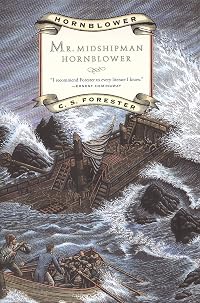
One should never ignore any nautical fiction – or non-fiction for that matter. There are so many classics. William Golding (of [book:Lord of the Flies] fame) won all sorts of prizes including the prestigious English Booker Prize for [book:Rites Of Passage], I stumbled across its sequel, entitled Close Quarters in a bibliography of books about the sea. Both books recreate life aboard a nineteenth century sailing vessel as seen through the eyes of Edmund Talbot, a passenger on his way to the Antipodes. Rites and Close Quarters are narrated in the form of his journal. Rites ends with the mysterious death of Robert Collev, a clergyman on board, Ironically, Close Quarters, the sequel, begins with Talbot's qualification that he no
longer has show more any story to tell. Wrong.
The ship is severely damaged during a freak squall because of the inaction of a drunken mate. Becalmed after the storm, they drift close to another British ship bound for India whose captain reports that the war with France (subject of all those O'Brian and Forester novels) is over. The crews and passengers use the ships' proximity and lack of momentum to celebrate the end of the war with a dance. Talbot
falls in love with one of the other ship's passengers, momentarily causing him to contemplate abandoning his prospective career in the Antipodes. That momentary love affair colors his actions for the rest of the voyage.
Wind arrives suddenly and the ships must continue on their way. Golding must have done his research, for the setting rings true. Eighteenth century ships were micro-universes, at the mercy of the sea, waves and wind. There is a vivid scene as Talbot makes his way below decks toward the bow, inthe darkness of the hold, the only light supplied by swinging lanterns providing tiny beacons as the ship
rolls wildly, its motion intensified by the damaged masts. Much shorter from the wind damage, they increased the rocking motion of the ship, much as the oscillations of a pendulum are much quicker, the shorter the pendulum. A completely dismasted ship "can have a roll so brief there is no living within it," explains one of the crew.
Soon Talbot's philosophical speculations become intertwined with seasickness, sloping decks and the realization that the ship is in danger of sinking. The ship's carpenter poking around, looking for spreading planks does not increase his confidence. Nor does the movement of the deck as the waves slide under the keel. The lieutenants reveal they no longer are able to sail before the wind and must rely on the currents to drift them "downhill" (as he is told to reassure the other passengers) until they reach Australia. Unfortunately, how they get there Golding postpones to the third volume. Creep! show less
longer has show more any story to tell. Wrong.
The ship is severely damaged during a freak squall because of the inaction of a drunken mate. Becalmed after the storm, they drift close to another British ship bound for India whose captain reports that the war with France (subject of all those O'Brian and Forester novels) is over. The crews and passengers use the ships' proximity and lack of momentum to celebrate the end of the war with a dance. Talbot
falls in love with one of the other ship's passengers, momentarily causing him to contemplate abandoning his prospective career in the Antipodes. That momentary love affair colors his actions for the rest of the voyage.
Wind arrives suddenly and the ships must continue on their way. Golding must have done his research, for the setting rings true. Eighteenth century ships were micro-universes, at the mercy of the sea, waves and wind. There is a vivid scene as Talbot makes his way below decks toward the bow, inthe darkness of the hold, the only light supplied by swinging lanterns providing tiny beacons as the ship
rolls wildly, its motion intensified by the damaged masts. Much shorter from the wind damage, they increased the rocking motion of the ship, much as the oscillations of a pendulum are much quicker, the shorter the pendulum. A completely dismasted ship "can have a roll so brief there is no living within it," explains one of the crew.
Soon Talbot's philosophical speculations become intertwined with seasickness, sloping decks and the realization that the ship is in danger of sinking. The ship's carpenter poking around, looking for spreading planks does not increase his confidence. Nor does the movement of the deck as the waves slide under the keel. The lieutenants reveal they no longer are able to sail before the wind and must rely on the currents to drift them "downhill" (as he is told to reassure the other passengers) until they reach Australia. Unfortunately, how they get there Golding postpones to the third volume. Creep! show less
Golding is famed for his 'Lord of the Flies' but his Sea Trilogy is a greater achievement, putting you right in the action and perfectly recreating the trials of travelling by sea from England to Australia.
Vocab gathered during my first reading of this book, in 2012:
> tunbelly (8) – a potbelly
> truculence (31) – aggressiveness, defiance
> bathos (75) – ludicrous descent from the elevated to the ordinary in writing or speech
> emollient (?) – soothing, softening – (n.) ointment or other softening application
> embonpoint (84, 238) – French – excessive plumpness or stoutness (lit. “in good condition”)
> peroration (115) – concluding part of an oration
> cachinnation (130) (FDB 105) – loud or immoderate laughter [caccini – Italian singer and composer; cachinnate – laugh loudly or immoderately]
> inimical (146) (FDB 180) – unfavorable (to); unfriendly; hostile
> glissade (146) – sliding or gliding step (dance); show more skilled glide over snow or ice in descending a mountain, as on skis or a toboggan [what the heck?]
> onge (229) – leave-taking, farewell; permission to depart; dismissal; bow or obeisance
> ichor (245) – an ethereal fluid supposed to flow in the veins of the gods; an acrid, watery discharge, as from an ulcer or wound [um, aren't these contradictory?]
> catenaries (256) – relating to a chain or linked series
> firkin (281) – small cask, 1/4 barrel
> medlar (281) – small tree with fruit like a crab apple that is inedible until the early stages of decay; the fruit of these trees show less
> tunbelly (8) – a potbelly
> truculence (31) – aggressiveness, defiance
> bathos (75) – ludicrous descent from the elevated to the ordinary in writing or speech
> emollient (?) – soothing, softening – (n.) ointment or other softening application
> embonpoint (84, 238) – French – excessive plumpness or stoutness (lit. “in good condition”)
> peroration (115) – concluding part of an oration
> cachinnation (130) (FDB 105) – loud or immoderate laughter [caccini – Italian singer and composer; cachinnate – laugh loudly or immoderately]
> inimical (146) (FDB 180) – unfavorable (to); unfriendly; hostile
> glissade (146) – sliding or gliding step (dance); show more skilled glide over snow or ice in descending a mountain, as on skis or a toboggan [what the heck?]
> onge (229) – leave-taking, farewell; permission to depart; dismissal; bow or obeisance
> ichor (245) – an ethereal fluid supposed to flow in the veins of the gods; an acrid, watery discharge, as from an ulcer or wound [um, aren't these contradictory?]
> catenaries (256) – relating to a chain or linked series
> firkin (281) – small cask, 1/4 barrel
> medlar (281) – small tree with fruit like a crab apple that is inedible until the early stages of decay; the fruit of these trees show less
Segunda novela, tras Ritos de paso, de la llamada "Trilogía del mar", en "Cuerpo a cuerpo" el caballero Edmund Talbot, reemprende la escritura de su diario a bordo del baqueteado navío que, en medio del calor, de la quietud y de las calimas tropicales, prosigue su larga travesía hacia Australia en la época de las guerras napoleónicas. Nuevas experiencias, como son el peligro inminente y el descubrimiento del amor como revelación deslumbradora, sirven a William Golding -autor de "El Señor de las Moscas"- para seguir forjando este magistral relato de aprendizaje y prodigiosa recreación histórica que se desarrolla a través de tres novelas ("Ritos de paso", "Cuerpo a cuerpo" y "Fuego en las entrañas"), las cuales, pese a integrar show more una unidad, admiten cada una de por sí una lectura independiente. show less
Mar 27, 2023Spanish
Members
- Recently Added By
Lists

Novels Published in 1987
81 works; 19 members

SHOULD Read Books!
354 works; 9 members

Books Read in 2002
197 works; 8 members
Author Information

76+ Works 68,696 Members
William Golding was born in Cornwall, England on September 19, 1911. Although educated to be a scientist at the request of his father, he developed an interest in literature. At Oxford University, he studied natural science for two years and then transferred to a program for English literature and philosophy. He eventually became a schoolmaster at show more Bishop Wordsworth's School in Salisbury. During World War II, he joined the Royal Navy and was involved in the sinking of the German battleship Bismarck. After the war, he returned to Bishop Wordsworth's School and taught there until 1962. His first novel, Lord of the Flies, was published in 1954 and was made into a film in 1963. His other novels include The Inheritors, Free Fall, The Spire, The Pyramid, The Paper Men, Close Quarters, and Fire down Below. He won the Booker Prize for Rites of Passage in 1980 and the Nobel Prize for Literature in 1983. He also wrote plays, essays, and short stories. He was knighted by Queen Elizabeth II in 1988. He died on June 19, 1993. (Bowker Author Biography) show less
Series

Belongs to Publisher Series
Gallimard, Folio (3682)
Work Relationships
Is contained in
Common Knowledge
- Canonical title*
- Coup de semonce
- Original title
- Close Quarters
- Original publication date
- 1987
- Related movies
- To the Ends of the Earth (2005 | IMDb)
- Original language*
- Inglés
*Some information comes from Common Knowledge in other languages. Click "Edit" for more information.
Classifications
Statistics
- Members
- 405
- Popularity
- 76,648
- Reviews
- 7
- Rating
- (3.88)
- Languages
- 12 — Danish, English, Finnish, French, Hungarian, Italian, Norwegian (Bokmål), Norwegian, Polish, Spanish, Swedish, Turkish
- Media
- Paper, Audiobook, Ebook
- ISBNs
- 30
- ASINs
- 14