On This Page
Description
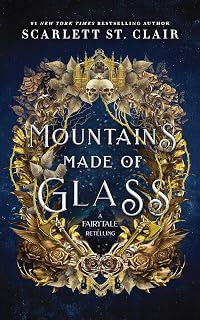
"Could you love me?" he whispered. The question stole my breath and burned my lungs in the silence that followed. I wanted to answer, to whisper yes into the space between us, but I was afraid. All Gesela's life, her home village of Elk has been cursed. And it isn't a single curse-it is one after another, each to be broken by a villager, each with devastating consequences. When Elk's well goes dry, it is Gesela's turn to save her town by killing the toad that lives at the bottom. Except . . show more . the toad is not a toad at all. He is an Elven prince under a curse of his own, and upon his death, his brothers come for Gesela, seeking retribution. As punishment, the princes banish Gesela to live with their seventh brother, the one they call the beast. Gesela expects to be the prisoner of a hideous monster, but the beast turns out to be exquisitely beautiful, and rather than lock her in a cell, he offers Gesela a deal. If she can guess his true name in seven days, she can go free. Gesela agrees, but there is a hidden catch-she must speak his name with love in order to free him, too. But can either of them learn to love in time? Contains mature themes. show lessTags
Recommendations






Member Reviews
Gesela, who has a bit of fae blood, is scorned and isolated in her village of Elk. She is believed to have been cursed, and thus villagers are just waiting for an excuse to get rid of her. In particular, Sheriff Roland of Elk wants revenge because Gesela has repeatedly rejected his sexual advances. Thus when the town needs a “sacrifice” to break the curse of the well having run dry, Gesela is “chosen.” She has to kill the toad at the bottom of the well, but it turns out the toad is an Elven prince under a curse of his own, and his brothers - there were originally seven in all - want retribution after she does the deed.
Five of the brothers take Gesela and banish her to live with the remaining brother, whom they call The Beast. show more The Beast, whose human name is Casamir, was cursed by the Glass Mountains. He only has five more days for someone to guess his real name, or he will forget it, and then he will cease to exist. Moreover, the person who guesses it has to be in love with him. And if he ceases to exist, Gesela will never be free, so their fates are tied together.
At first, Gesela detests Casamir. Or at least, she claims she hates him. She also feels irresistible lust for him, only enhanced after he repeatedly sexually harasses her. Under his heated gaze and with his heated thrusting into her, she feels like “someone.” But can she grow to love him and guess his name in time? Can he love her? After all, neither of them has known love in their lives - only loss and cruelty.
Well, we can see where this is going. But all that lust and angst and tension keeps us turning the pages anyway.
On the one hand, this is a mash-up of fairytale retellings and a very hot romance, with explicit details. But to my mind, and more importantly, it is a stereotypical story from pre-Me-Too days of the appeal of the rapey bad boy.
Typically such plots involve a Byronic hero who is powerful and attractive, yet flawed in ways most notably exemplified in the life and writings of Lord Byron. This hero (often a vampire, but an Elven Lord works as well) is moody, dark, cynical, independent, masterful, and has a mysterious past that not only gives him much pain but has made “love” almost impossible for him. But he is also absolutely magnetic and sexually irresistible. He can be cruel, too, but who can blame him, given all the grief festering inside him? Not we readers, surely!
Furthermore, we know that only a very extraordinary woman [such as each of us secretly is] can get this guy to open up to her and let himself feel love. [The fact that the young woman is usually surly and obnoxious but beautiful adds to her appeal for the Bad Boy.]
This woman has the potential to pull such a hero out of the abyss in which he passes his days and long nights, falling in love with him in spite of his stern demeanor, dark past, and sexual abuse. The reward? She is needed by him, more than she has ever been needed by anyone. And she thereby is “someone.”
Look at what this fantasy says about the women who find it appealing:
1. We may want agency and importance, but these desires pale besides the attractiveness of enticing otherwise recalcitrant men and then wallowing in sexual submission to their uncontrollable desires;
2. Besides, then we not only realize the triumph of having broken through the man’s supposedly impenetrable barriers, but we also have power conferred upon us by being his woman (and the one who finally conquered him!);
3. We find his sexual violation, especially if it involves “ravishment,” erotic and irresistable rather than traumatic and horrific (adding to and reflecting the cultural acceptance of the rape defense of "Hey, don't blame me! She wanted it!");
4. Only we can provide redemption for this tortured man.
Gesela is not the weak, fainting sort, and yet clearly there is in this book the association of sexual arousal with her subordination. At one point, we have the somewhat startling passage:
“As much as I hated to surrender to this creature, lying beneath him right now, it only seemed right. ‘Choke me,’ I said. He did not need encouragement. . . I thought I might die from the rush of pleasure that blossomed throughout my body, only growing in intensity as he continued to press on either side of my neck.”
After this fiery encounter, Gesela asks (or rather, “moans”) “What kind of magic is this?” “This is not magic,” he responds, “This is need." She thinks, “If this was need, I had never known it before, but I was certain I could not live without it . . . .”
Gesela understood Casamir was "demanding my complete submission. I was ready for it."
There is a long history of men promulgating male privilege and sexual dominance, but this book was written by a woman. That isn’t a mystery; androcentric media has affected women on both conscious and subconscious levels, influencing what they have grown to believe is romantic and/or erotic, and what they define as "success" in life. Thus male domination is a turn-on for *both* men and women. [The dynamic is aided by women wearing sheer, revealing clothing (featured aplenty in this book) and assuming physical positions of submission.] Men can’t resist these women (no matter how surly), and other women want to emulate them. Being “hot” is equated with success and self-esteem, just as Gesela feels being ravished by Casamir makes her “someone.”
What about the fact that these women almost always have unpleasant personalities, being rebellious, stubborn, and often insufferable? I would guess this is the author’s way of establishing the “independence” of the woman, as well as giving the male hero more of a challenge to “conquer.”
Evaluation: Fairytale retellings are generally appealing; after all, there is a reason they have remained part of culture for so long. And if you are looking for hot sex and have never been sexually abused or harassed in any way so you aren’t offended by the social dynamics of the story, you will find this story entertaining. show less
Five of the brothers take Gesela and banish her to live with the remaining brother, whom they call The Beast. show more The Beast, whose human name is Casamir, was cursed by the Glass Mountains. He only has five more days for someone to guess his real name, or he will forget it, and then he will cease to exist. Moreover, the person who guesses it has to be in love with him. And if he ceases to exist, Gesela will never be free, so their fates are tied together.
At first, Gesela detests Casamir. Or at least, she claims she hates him. She also feels irresistible lust for him, only enhanced after he repeatedly sexually harasses her. Under his heated gaze and with his heated thrusting into her, she feels like “someone.” But can she grow to love him and guess his name in time? Can he love her? After all, neither of them has known love in their lives - only loss and cruelty.
Well, we can see where this is going. But all that lust and angst and tension keeps us turning the pages anyway.
On the one hand, this is a mash-up of fairytale retellings and a very hot romance, with explicit details. But to my mind, and more importantly, it is a stereotypical story from pre-Me-Too days of the appeal of the rapey bad boy.
Typically such plots involve a Byronic hero who is powerful and attractive, yet flawed in ways most notably exemplified in the life and writings of Lord Byron. This hero (often a vampire, but an Elven Lord works as well) is moody, dark, cynical, independent, masterful, and has a mysterious past that not only gives him much pain but has made “love” almost impossible for him. But he is also absolutely magnetic and sexually irresistible. He can be cruel, too, but who can blame him, given all the grief festering inside him? Not we readers, surely!
Furthermore, we know that only a very extraordinary woman [such as each of us secretly is] can get this guy to open up to her and let himself feel love. [The fact that the young woman is usually surly and obnoxious but beautiful adds to her appeal for the Bad Boy.]
This woman has the potential to pull such a hero out of the abyss in which he passes his days and long nights, falling in love with him in spite of his stern demeanor, dark past, and sexual abuse. The reward? She is needed by him, more than she has ever been needed by anyone. And she thereby is “someone.”
Look at what this fantasy says about the women who find it appealing:
1. We may want agency and importance, but these desires pale besides the attractiveness of enticing otherwise recalcitrant men and then wallowing in sexual submission to their uncontrollable desires;
2. Besides, then we not only realize the triumph of having broken through the man’s supposedly impenetrable barriers, but we also have power conferred upon us by being his woman (and the one who finally conquered him!);
3. We find his sexual violation, especially if it involves “ravishment,” erotic and irresistable rather than traumatic and horrific (adding to and reflecting the cultural acceptance of the rape defense of "Hey, don't blame me! She wanted it!");
4. Only we can provide redemption for this tortured man.
Gesela is not the weak, fainting sort, and yet clearly there is in this book the association of sexual arousal with her subordination. At one point, we have the somewhat startling passage:
“As much as I hated to surrender to this creature, lying beneath him right now, it only seemed right. ‘Choke me,’ I said. He did not need encouragement. . . I thought I might die from the rush of pleasure that blossomed throughout my body, only growing in intensity as he continued to press on either side of my neck.”
After this fiery encounter, Gesela asks (or rather, “moans”) “What kind of magic is this?” “This is not magic,” he responds, “This is need." She thinks, “If this was need, I had never known it before, but I was certain I could not live without it . . . .”
Gesela understood Casamir was "demanding my complete submission. I was ready for it."
There is a long history of men promulgating male privilege and sexual dominance, but this book was written by a woman. That isn’t a mystery; androcentric media has affected women on both conscious and subconscious levels, influencing what they have grown to believe is romantic and/or erotic, and what they define as "success" in life. Thus male domination is a turn-on for *both* men and women. [The dynamic is aided by women wearing sheer, revealing clothing (featured aplenty in this book) and assuming physical positions of submission.] Men can’t resist these women (no matter how surly), and other women want to emulate them. Being “hot” is equated with success and self-esteem, just as Gesela feels being ravished by Casamir makes her “someone.”
What about the fact that these women almost always have unpleasant personalities, being rebellious, stubborn, and often insufferable? I would guess this is the author’s way of establishing the “independence” of the woman, as well as giving the male hero more of a challenge to “conquer.”
Evaluation: Fairytale retellings are generally appealing; after all, there is a reason they have remained part of culture for so long. And if you are looking for hot sex and have never been sexually abused or harassed in any way so you aren’t offended by the social dynamics of the story, you will find this story entertaining. show less
Mountains Made of Glass is the first book in Scarlett St. Clair's newest series, Fairy Tale Retelling. As the series title lets you know, it is all about fairy tales but with Ms. St. Clair's spin on them. In this first book, she tackles Beauty and the Beast.
Ms. St. Clair does not just retell the tale as old as time. In Mountains Made of Glass, she also plays around with the story of Rumpelstiltskin. And she doesn't stop there. Showcasing her love of all things mythical and fantastic, you will also see Slavic and Irish creatures appear throughout the story. When Ms. St. Clair retells a fairy tale, she makes it uniquely hers.
The essential Beauty and the Beast story remains intact in Mountains Made of Glass. A young woman must stay in the show more mansion of the Beast until he releases her. There are no talking teapots, but we do have a magic mirror and a delightfully snarky brownie named Naeve. The Beast has to make the girl fall in love with him to break a curse. Yada, yada, yada.
The changes Ms. St. Clair brings to the tale add a layer of complexity to this simple tale. For one, the Beast in Mountains Made of Glass is an elven prince. Except, one could make the argument that the Beast could also be the heroine, Gesela. Both are fiery, fiercely independent, easily angered, and downright nasty around other humans. Both are beautiful, and both are beastly. More importantly, they both need something from the other to escape their individual curses.
It wouldn't be a novel by Scarlett St. Clair if it weren't spicy, and here too, Ms. St. Clair does not disappoint. In fact, I think she has a lot of fun torturing her two characters in that regard, as both are too proud to cede any iota of control to the other. What I appreciate the most, however, is not the sensual torture but the fact that no matter how desperate they are to have at each other, they both take the time to obtain consent. It's a little thing, but it means so much in the battle against rape culture.
At 219 pages, Mountains Made of Glass is a fast and fun read. I found it particularly fun to see the changes Ms. St. Clair wrought in this famous tale while maintaining some of the humor from the Beast learning what it is to be human and feel something other than anger. After whipping through this first book and thoroughly enjoying myself, I look forward to seeing what other fairy tales Ms. St. Clair plans to retell in this series. show less
Ms. St. Clair does not just retell the tale as old as time. In Mountains Made of Glass, she also plays around with the story of Rumpelstiltskin. And she doesn't stop there. Showcasing her love of all things mythical and fantastic, you will also see Slavic and Irish creatures appear throughout the story. When Ms. St. Clair retells a fairy tale, she makes it uniquely hers.
The essential Beauty and the Beast story remains intact in Mountains Made of Glass. A young woman must stay in the show more mansion of the Beast until he releases her. There are no talking teapots, but we do have a magic mirror and a delightfully snarky brownie named Naeve. The Beast has to make the girl fall in love with him to break a curse. Yada, yada, yada.
The changes Ms. St. Clair brings to the tale add a layer of complexity to this simple tale. For one, the Beast in Mountains Made of Glass is an elven prince. Except, one could make the argument that the Beast could also be the heroine, Gesela. Both are fiery, fiercely independent, easily angered, and downright nasty around other humans. Both are beautiful, and both are beastly. More importantly, they both need something from the other to escape their individual curses.
It wouldn't be a novel by Scarlett St. Clair if it weren't spicy, and here too, Ms. St. Clair does not disappoint. In fact, I think she has a lot of fun torturing her two characters in that regard, as both are too proud to cede any iota of control to the other. What I appreciate the most, however, is not the sensual torture but the fact that no matter how desperate they are to have at each other, they both take the time to obtain consent. It's a little thing, but it means so much in the battle against rape culture.
At 219 pages, Mountains Made of Glass is a fast and fun read. I found it particularly fun to see the changes Ms. St. Clair wrought in this famous tale while maintaining some of the humor from the Beast learning what it is to be human and feel something other than anger. After whipping through this first book and thoroughly enjoying myself, I look forward to seeing what other fairy tales Ms. St. Clair plans to retell in this series. show less
The book is a retelling of Beauty and the Beast, and the closest comparison I have to it is ACOTAR. Shocking, right? Our main character, Ela, has absolutely no one in the world. Her sister and her parents are dead, and the village seems to fear her family and the woods surrounding them. A curse claims a villager every year, egged on, of course, by the more powerful sacrificing the weaker ones, and this year it’s Ela’s turn.
Instead of kissing the frog (I loved the inclusion of that tale), Ela has to kill it, which she does. But the frog has six elven brothers ready to avenge him, with five of them appearing to send her to their brother, the beast of the story, as a slave. Ela can either be free in a week if she guesses his name show more right, or he’ll forget his name and fade into oblivion, but she doesn’t know that for the most part.
We know how the story will go; this is a fairy tale retelling; there is a happy ending. But there is a reason why we read and don’t use those stupid book summary apps; we enjoy the path the author takes to get us there. St Clair builds a good worldbuilder! She grounds it things we’ve heard about and then takes it away from there to something magical and horrible at the same time. Wolf is the only decent thing there; everyone wants something and is constantly bartering to get it, whether that is the selkie or even the prince. Nothing is gentle and pretty; beautiful things are cruel, as is expected of them.
The fairy tale elements keep coming in with a sentient magic mirror and the beast’s acquaintances that remind him that the way to win a woman’s heart is probably not just through cruelty; you need to be gentle and have tact and patience and a bunch of other things. In that regard, I also felt for the prince and his role in this fairytale; a prisoner trying to return to a princess he does not love.
Fundamentally, Mountains Made of Glass is the adult version of Beauty and the Beast and is done well enough for me to understand this author’s hype. I thoroughly recommend it, and I’m leaving it four stars out of five, and I will try to start A Touch of Darkness soon! show less
Instead of kissing the frog (I loved the inclusion of that tale), Ela has to kill it, which she does. But the frog has six elven brothers ready to avenge him, with five of them appearing to send her to their brother, the beast of the story, as a slave. Ela can either be free in a week if she guesses his name show more right, or he’ll forget his name and fade into oblivion, but she doesn’t know that for the most part.
We know how the story will go; this is a fairy tale retelling; there is a happy ending. But there is a reason why we read and don’t use those stupid book summary apps; we enjoy the path the author takes to get us there. St Clair builds a good worldbuilder! She grounds it things we’ve heard about and then takes it away from there to something magical and horrible at the same time. Wolf is the only decent thing there; everyone wants something and is constantly bartering to get it, whether that is the selkie or even the prince. Nothing is gentle and pretty; beautiful things are cruel, as is expected of them.
The fairy tale elements keep coming in with a sentient magic mirror and the beast’s acquaintances that remind him that the way to win a woman’s heart is probably not just through cruelty; you need to be gentle and have tact and patience and a bunch of other things. In that regard, I also felt for the prince and his role in this fairytale; a prisoner trying to return to a princess he does not love.
Fundamentally, Mountains Made of Glass is the adult version of Beauty and the Beast and is done well enough for me to understand this author’s hype. I thoroughly recommend it, and I’m leaving it four stars out of five, and I will try to start A Touch of Darkness soon! show less
[bc:Mountains Made of Glass|84354929|Mountains Made of Glass (Fairy Tale Retelling, #1)|Scarlett St. Clair|https://i.gr-assets.com/images/S/compressed.photo.goodreads.com/books/1674837828l/84354929._SY75_.jpg|108897074]
I do not even know where to start, this book had me by the throat and would not let go until I finished it. If I am being honest it still has a hold one me. I absolutely loved Casamir and Gesela. This fairytale retelling felt like no fairytale I had ever read before while at the same time bringing with it a sense of familiarity as it wove together bits and pieces of so many beloved tales.
We meet Gesela shortly before she is sent to break a curse that has befallen her village, one of many, however each curse broken comes show more with consequences for the one who broke it. The consequences for having broken the curse that has befallen the village this time finds Gesela face to face with five Elven Princes, the brothers of the cursed prince she killed in order to break the curse. As punishment for killing their brother she is sent to be the prisoner of the seventh brother. But, to earn her freedom she must speak his name within in seven days. However, there is a catch...
She must speak his name in love in order to set him free as well.
This story was so beautiful, it had me wanting to smack Casamir for being an idiot but loving him in the same breath. I love Gesela, watching her struggle with her feelings for Casamir and slowly realizing everything he gave her or was willing to do for her so that she never need know pain again. Not only were Casamir and Gesela beautifully written but this book is also full of amazing side characters some you will love and others that you will love to hate. Each though brings something to the story that drives it forward and makes the ending all the more beautiful.
The spice in this story was just perfect and it never felt forced. I loved that it was in these moments that saw the characters growing closer that they also struggled with what that meant for them. That while they could appreciate the passion, desire and longing that they felt for each other that they were still hesitant to admit that those feelings may actually be the product of something far stronger growing between them.
There is so much I want to say about this book but I am terrible at telling people all of my favorite parts so that they will read a book, so I shall stop here to avoid any spoilers. Just know that this book is the beautiful beginning of something far larger. show less
I do not even know where to start, this book had me by the throat and would not let go until I finished it. If I am being honest it still has a hold one me. I absolutely loved Casamir and Gesela. This fairytale retelling felt like no fairytale I had ever read before while at the same time bringing with it a sense of familiarity as it wove together bits and pieces of so many beloved tales.
We meet Gesela shortly before she is sent to break a curse that has befallen her village, one of many, however each curse broken comes show more with consequences for the one who broke it. The consequences for having broken the curse that has befallen the village this time finds Gesela face to face with five Elven Princes, the brothers of the cursed prince she killed in order to break the curse. As punishment for killing their brother she is sent to be the prisoner of the seventh brother. But, to earn her freedom she must speak his name within in seven days. However, there is a catch...
She must speak his name in love in order to set him free as well.
This story was so beautiful, it had me wanting to smack Casamir for being an idiot but loving him in the same breath. I love Gesela, watching her struggle with her feelings for Casamir and slowly realizing everything he gave her or was willing to do for her so that she never need know pain again. Not only were Casamir and Gesela beautifully written but this book is also full of amazing side characters some you will love and others that you will love to hate. Each though brings something to the story that drives it forward and makes the ending all the more beautiful.
The spice in this story was just perfect and it never felt forced. I loved that it was in these moments that saw the characters growing closer that they also struggled with what that meant for them. That while they could appreciate the passion, desire and longing that they felt for each other that they were still hesitant to admit that those feelings may actually be the product of something far stronger growing between them.
There is so much I want to say about this book but I am terrible at telling people all of my favorite parts so that they will read a book, so I shall stop here to avoid any spoilers. Just know that this book is the beautiful beginning of something far larger. show less
This book is SMUT-y. SMUT-y is this book.
From start to finish it had me hooked and I had to force myself to slow down and enjoy it. It’s dark romance ~ red flags everywhere, obsessive and possessive, smut on smut, and I enjoyed every second of it.
The chemistry is explosive, the emotions are intense, and while yes… they fall madly in love in seven days (a bit much), it still worked for me. The whole thing was wild, over the top, and absolutely entertaining. It gave me everything I wanted and left me smiling by the end.
♡◜✧˖°*:・゚✧
Cassimere & Gesela
Overall Rating:
⭐️: 4.5/5 🔥: 4.5/5
From start to finish it had me hooked and I had to force myself to slow down and enjoy it. It’s dark romance ~ red flags everywhere, obsessive and possessive, smut on smut, and I enjoyed every second of it.
The chemistry is explosive, the emotions are intense, and while yes… they fall madly in love in seven days (a bit much), it still worked for me. The whole thing was wild, over the top, and absolutely entertaining. It gave me everything I wanted and left me smiling by the end.
♡◜✧˖°*:・゚✧
Cassimere & Gesela
Overall Rating:
⭐️: 4.5/5 🔥: 4.5/5
Saw this novella in B&N and after reading the cover summary, I knew I had to read this, and I am happy I did. This is a wonderful original story, mixing in elements of many classic fairytales including those from Hans Christian Andersen & the Grimm Brothers, such as Snow White, Rumplestiltskin, The Bell, and The Seven Ravens. The number seven is a constant theme throughout the book, whether it is the number of elven princes, the number of days, number of letters, etc. For those who love a good twisted and dark romantic fairytale retelling, Mountains Made of Glass is a quick read with a HEA, which will have you flipping through the pages as you follow Gesela's quest to figure out the Beast's real name in time. I'm intrigued to continue show more the future books as Scarlett St. Clair digs into the tales of each brother, including Eero, whose life met an unfortunate end by Gesela's hand.
Lots of steam, lots of fairytale references, many interesting fae characters, and two very stubborn lead characters. Casamir, aka Beast, has only ever had to care about himself and wants his curse to end. While the curse requires his true love to lovingly speak his true name, he does not think he needs to return the love to Gesela. Gesela has had a hard life, shunned by the village and viewed as being no better than a living curse as everyone she loves dies. The two are occasionally aggressive with each other as they spit words of hate, but neither can deny the sexual tension between them. The story is a wonderful reminder that love is learned and not immediate. While we love our insta-love stories, that isn't usually what happens in life. Love is learned, both on a platonic and romantic level. show less
Lots of steam, lots of fairytale references, many interesting fae characters, and two very stubborn lead characters. Casamir, aka Beast, has only ever had to care about himself and wants his curse to end. While the curse requires his true love to lovingly speak his true name, he does not think he needs to return the love to Gesela. Gesela has had a hard life, shunned by the village and viewed as being no better than a living curse as everyone she loves dies. The two are occasionally aggressive with each other as they spit words of hate, but neither can deny the sexual tension between them. The story is a wonderful reminder that love is learned and not immediate. While we love our insta-love stories, that isn't usually what happens in life. Love is learned, both on a platonic and romantic level. show less
I loved this. So so cheesy and so so good. The way that St. Clair incorporated so many Fairy Tale stereotypes humorously was so fun. Can't wait to read the next one.
Members
- Recently Added By
Author Information

33 Works 21,993 Members
Some Editions
Series

Common Knowledge
- Canonical title
- Mountains Made of Glass
Classifications
Statistics
- Members
- 645
- Popularity
- 44,865
- Reviews
- 14
- Rating
- (3.78)
- Languages
- English, German, Spanish
- Media
- Paper, Audiobook, Ebook
- ISBNs
- 7
- ASINs
- 3