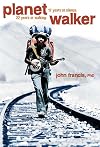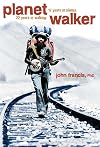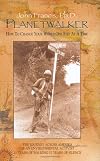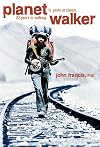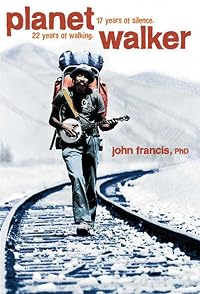
Planetwalker
by John Francis Ph.D.
On This Page
Description
When the struggle to save oil-soaked birds and restore blackened beaches left him feeling frustrated and helpless, John Francis decided to take a more fundamental and personal stand-he stopped using all forms of motorized transportation. Soon after embarking on this quest that would span two decades and two continents, the young man took a vow of silence that endured for 17 years. It began as a silent environmental protest, but as a young African-American man, walking across the country in show more the early 1970s, his idea of "the environmen" expanded beyond concern about pollution and loss of habitat to include how we humans treat each other and how we can better communicate and work together to benefit the earth. Through his silence and walking, he learned to listen, and along the way, earned college and graduate degrees in science and environmental studies. The United Nations appointed him goodwill ambassador to the world's grassroots communities and the U.S. government recruited him to help address the Exxon Valdez disaster. Was he crazy? How did he live and earn all those degrees without talking? An amazing human-interest story, with a vital message, Planetwalker is also a deeply personal and engaging coming-of-age odyssey-the positive experiences, the challenging times, the characters encountered, and the learning gained along the way.-Publisher description. show lessTags
Recommendations











Member Reviews
Although I generally abhor "inspirational" literature, I found this book to truly be so. I have often thought that if I could just keep walking, everything troubling me on both a personal and planetary plane would sort itself out. Well, John Francis actually accomplished my fantasy, adding to it a 17-year vow of silence and a more than 20-year practice of not using any form of motorized transportation. Along the way, traveling from place to place on foot, he earned a Bachelor's degree in Oregon, a Master's degree from the U of Montana, and a Doctoral degree from the U of Wisconsin, Madison. He also became a U.N. Goodwill Ambassador and an expert on oil spills. I am particularly struck by his journey from Montana to Wisconsin across the show more Dakotas. He had intended to spend the winter in Minneapolis, once he realized that he would not reach Madison before the weather became prohibitive. However, he either overestimated how fast he could travel or underestimated the weather, since he was forced to spend the winter in Watertown, North Dakota. How he transformed this set back into a positive experience is emblematic of his entire journey. show less
I had extremely high expectations, and I have to say that this book lived up to them. I’m not, as a rule, someone who is easily swept away by the inspirational, and I like to think that living in Ithaca as long as I did gave me a nose for self-serving liberal do-gooder rhetoric. But I was inspired by this book, and moved. You can’t accuse Francis of being a trust-fund hippie. He continually acknowledges and reevaluates his own motives and the difficulties that his choices cause for others, avoiding self-righteousness. He describes natural beauty and human goodness without being precious....
More here.
More here.
 This review was written for LibraryThing Early Reviewers.
John Francis stopped using motorized transportation after witnessing a 1971 oil spill in the San Francisco Bay. He stopped talking several months later. As the subtitle says, 22 years of walking, 17 years of silence.
The book I read was the Advance Reader's Edition, published in 2008 by the National Geographic Society.
There's another book by the same name and the same author but a different publisher (Elephant Mountain Press). It was published in 2005 and based on what I found on Amazon, the beginning of the first chapter is the same in both. So, I don't know if I read the same book, a slightly different book or what.
This book is a conundrum.
I found it provocative. As I was reading it, it provided fodder for several interesting show more conversations, for example, as we took a roadtrip to Moab or as I considered Rachel's Vow of Silence day.
Francis is very matter of fact throughout the book. He readily acknowledges his detractors and his own doubts but then just moves on to the next topic. The book appears to be largely drawn from his journals so at times there are disconcerting gaps in time and places where the narrative simply fades away.
I found myself struggling with the question of how much is enough as Francis allows people to transport his pack for him on his treks and sends gear ahead via mail. Francis touches on these questions later in the book, in the form of recognizing but not resolving the issue.
Francis never pretends to have the answers but reading about an individual who managed to earn a bachelor's degree, a master's degree and a Ph.D. at three different universities, all while walking across the country and not talking, provides for some very thought provoking opportunities to question one's own journey. show less
The book I read was the Advance Reader's Edition, published in 2008 by the National Geographic Society.
There's another book by the same name and the same author but a different publisher (Elephant Mountain Press). It was published in 2005 and based on what I found on Amazon, the beginning of the first chapter is the same in both. So, I don't know if I read the same book, a slightly different book or what.
This book is a conundrum.
I found it provocative. As I was reading it, it provided fodder for several interesting show more conversations, for example, as we took a roadtrip to Moab or as I considered Rachel's Vow of Silence day.
Francis is very matter of fact throughout the book. He readily acknowledges his detractors and his own doubts but then just moves on to the next topic. The book appears to be largely drawn from his journals so at times there are disconcerting gaps in time and places where the narrative simply fades away.
I found myself struggling with the question of how much is enough as Francis allows people to transport his pack for him on his treks and sends gear ahead via mail. Francis touches on these questions later in the book, in the form of recognizing but not resolving the issue.
Francis never pretends to have the answers but reading about an individual who managed to earn a bachelor's degree, a master's degree and a Ph.D. at three different universities, all while walking across the country and not talking, provides for some very thought provoking opportunities to question one's own journey. show less
This review was written for LibraryThing Early Reviewers.After witnessing an oil spill in 1971, the author gave up all forms of motorized transportation (even public transportation). Shortly thereafter, on his 27th birthday, he took a vow of silence. The book is an account of his personal journey, both internal and actual, for the next 22 years. It is largely drawn from the daily journal he kept while walking.
When I read over my first draft of my review, I realized I had talked more about my feelings of his actions, and my opinions of his opinions than reviewing the actual book. I guess that can be taken as a sign of a successful book - any work of non-fiction that creates debate and discussion seems to me to be by definition a sucess.
As far as the book goes, I would have liked it to tell show more more about the author's personal life and backround. But maybe I'm just nosey.
In the margins of the book are line drawings and sketchs from his journal, which I found charming. I would like to see some of his works in color. Also in an aside, about once in each chapter, are a few sentences of advice - for example "Painting or drawing a scene or a landscape helps us experience where we are more fully. You can begin with a small sketchpad or blank bound book and watercolors. Don't be discouraged by you first attempts. Tomorrow is another day. Turn the page, walk, and remember to have fun. You will be amazed at where you find yourself." Also occassionally in the margins of the book were what seemed to be to be a random sentence from that page of the book - a printing practice that annoyed me - let me be the judge of which sentence is worth reading twice, not the editor or even the author.
I'm curious about the timing of the book - it covers the period roughly from 1971 thru 1991, with an epilogue covering a few years after, Did he try to publish it earlier? Was it prompted by the current gas/oil situation?
Overall I like reading the book - I like almost every memoir I read because I find it interesting to "meet" people I would otherwise not have the chance to know, and the topic of environmental awareness is always interesting too. So I would encourage anyone to read this book. show less
When I read over my first draft of my review, I realized I had talked more about my feelings of his actions, and my opinions of his opinions than reviewing the actual book. I guess that can be taken as a sign of a successful book - any work of non-fiction that creates debate and discussion seems to me to be by definition a sucess.
As far as the book goes, I would have liked it to tell show more more about the author's personal life and backround. But maybe I'm just nosey.
In the margins of the book are line drawings and sketchs from his journal, which I found charming. I would like to see some of his works in color. Also in an aside, about once in each chapter, are a few sentences of advice - for example "Painting or drawing a scene or a landscape helps us experience where we are more fully. You can begin with a small sketchpad or blank bound book and watercolors. Don't be discouraged by you first attempts. Tomorrow is another day. Turn the page, walk, and remember to have fun. You will be amazed at where you find yourself." Also occassionally in the margins of the book were what seemed to be to be a random sentence from that page of the book - a printing practice that annoyed me - let me be the judge of which sentence is worth reading twice, not the editor or even the author.
I'm curious about the timing of the book - it covers the period roughly from 1971 thru 1991, with an epilogue covering a few years after, Did he try to publish it earlier? Was it prompted by the current gas/oil situation?
Overall I like reading the book - I like almost every memoir I read because I find it interesting to "meet" people I would otherwise not have the chance to know, and the topic of environmental awareness is always interesting too. So I would encourage anyone to read this book. show less
This review was written for LibraryThing Early Reviewers.This was a Library Thing Early Reviewers book, and although it took me a while to get into it, I liked it and recommend it. When I first started it, there was a lot else going on in my life and I could not connect with it. I put it down and picked it up again on vacation and really enjoyed it. John Francis has a minimalist writing style and I found myself looking for more about him and his philosophy, but this is the story of his journey and he is true to that. He is not proselytizing or expecting others to emulate his decisions. He simply tells his story – How he stopped riding in cars, how he stopped talking, and how he managed his journey under those conditions. The glimpses of his travels are sparse, but telling. The style is show more journalistic, and I expect relies heavily on his journals- all present tense, and briefly descriptive. It is illustrated with his sketches ( I wish they could be larger), and punctuated with quotations from the text. The historical perspective is interesting and a nice juxtaposition to the current trend of paying attention to Carbon Footprints and our personal responsibility to the environment – Francis was 30 years ahead. The story of how his simple decisions (albeit with complex implications for his life) led him to significant accomplishments and allowed him to make a real difference in the world is a good lesson about the impact we each have, or could have. If you are interested in Environmental Studies, travel stories, or personal journeys, give it a try- Don't be surprised if it starts slow- it is worth the effort to stay with it. Francis has a good story and I'm glad I read it. show less
This review was written for LibraryThing Early Reviewers.After an oil spill in San Francisco in the late 1970s, Francis decides to do something about it in a personal way and gives up travel in motorized vehicles. Later, he decides to remain silent. This is a remarkable story of someone committed to his principles who has to find a new and different way to get along in the world. Francis eventually gets a Ph.D. in environmental sciences, wins an award as the best discussion leader (he doesn't speak!), and walks across America. Werner Hertzog said in a lecture that the best way to learn about something was to "travel on foot". Francis puts that idea to the test. It's tough to distill 22 years of walking into a book like this. Francis does a pretty good job of creating an interesting and show more thought provoking book. show less
I have to admit that it took a while for this book to really grab ahold of my interest. From an inspirational point of view, the book impressed me quite a bit. A man who undertook a personal journey and lifestyle change to give up motorized travel and walk around the world due to a catastrophic incident in his life is monumental. I was particularly impressed that Dr. Francis earned his undergraduate, graduate and doctorate all while adhering to a vow of silence. The people he met and the friends he made during his walk across the United States is entertaining. His descriptions are vivid, however at times I felt they were too descriptive causing my attention to wander. I also don't understand why the book touts Dr. Francis' "22 years of show more walking" but the book certainly does not cover that entire time period. I was also left a bit disappointed at the end when Dr. Francis suddenly decided to again use motorized conveyances. All in all though I enjoyed the book for being an example of dedication, spirituality and environmental responsibility. show less
This review was written for LibraryThing Early Reviewers.Members
- Recently Added By
Lists

Adventure Travel & Exploration In North America
12 works; 5 members
Author Information
2 Works 281 Members
Common Knowledge
- Canonical title
- Planetwalker
- Original publication date
- 2005
- Epigraph
- The geographical pilgrimage is the symbolic acting out of an inner journey.The inner journey is the interpolation of the meaning and signs of the outer pilgramage, one can have one without the other. It's best to have both.... (show all)
-Thomas Merton, 1964 - Dedication
- For John and La Java
for John and La Java - First words
- On January 17, 1971, I witnessed a crude oil spill of nearly a half-million gallons in the waters near the Golden Gate Bridge.
- Last words
- (Click to show. Warning: May contain spoilers.)This will be the quest that inspires the next generation of planetwalkers.
(Click to show. Warning: May contain spoilers.)I leave the highway to find a quieter road.
Classifications
Statistics
- Members
- 240
- Popularity
- 135,368
- Reviews
- 14
- Rating
- (3.72)
- Languages
- English
- Media
- Paper, Audiobook, Ebook
- ISBNs
- 7
- ASINs
- 2