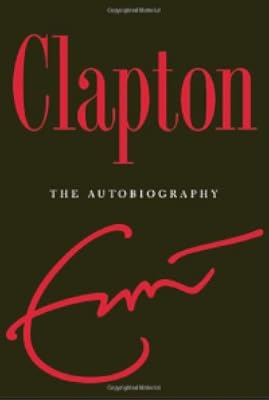
Clapton: The Autobiography
by Eric Clapton
On This Page
Description
The legendary guitarist recounts the story of his life and his career, recalling his work with the Yardbirds, Cream, and as a solo artist; years of drug and alcohol abuse; failed marriage to Patti Boyd; and the accidental death of his young son.Tags
Recommendations






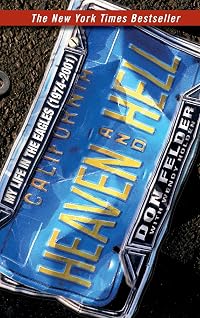
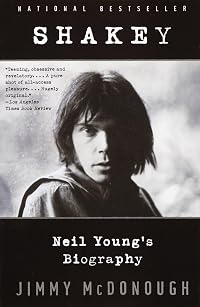
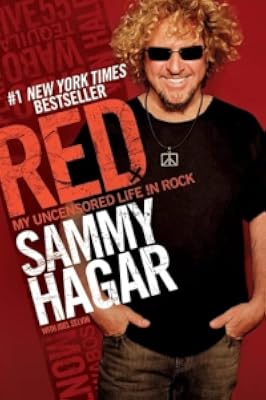

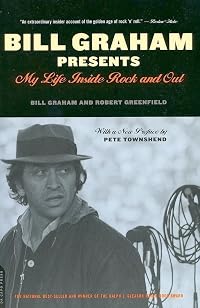



Member Recommendations

Member Reviews
One of my earliest and fondest memories as a child is listening to the song, "Layla" on cassette with my brother over and over again. We would play it and rewind it so many times until we finally busted the cassette. It was our Dad's and he was really mad, but it was one of the first songs that introduced me to Eric Clapton. My love of his guitar playing was born then, and has never ceased since. Clapton is brutally honest in this memoir and leaves no stone unturned. Even though many consider him a music god (me included), it is safe to say that Clapton is a very troubled and controversial figure. There were many times during the book where I couldn't contain my anger towards him, especially when he discussed his various addictions and show more the way he treated the women in his life. Nevertheless, the music is what I keep coming back to, and what ultimately save his life in the end as well. This is definitely and eye-opening read and a true treasure for all rock fans. I am thankful that this man instilled within me a love of blues rock and made my childhood music experience as great as it was. Now excuse me while I listen to his nasty guitar solos on "Crossroads" yet again! show less
https://msarki.tumblr.com/post/166875778683/clapton-the-autobiography-by-eric-cl...
Eric Clapton takes no shortcuts in his debunking of any possible popular myth that he was in any way special or of good character. His deftness on the guitar came from countless hours of practice and his talent was revered by many involved in the music business. Fans such as myself considered Clapton a better man than he was simply based on the quality of the music he produced and the rock god he portrayed so elegantly on the stage. In page after page Clapton proves how despicable he truly was while in the throes of decades of drug and alcohol addiction. Several hard years laboring to acquire a quality sobriety insisted Clapton make an honest assessment show more of himself and to make appropriate amends. It helps the reader of this autobiography to be himself a recovering drug addict or alcoholic to fully appreciate the brutal and unrelenting exposure of the truth behind the life of Eric Clapton, and the countless and perhaps tiresome confessions he employs in this revealing book. I would imagine it might be too much for those who have no understanding of addiction and recovery, and thus perhaps it becomes a negative reading experience. For me, as disturbing as it is to read my guitar hero confess his often deplorable sins, it is also an instructive and mesmerizing read, as well as joyful to engage in this experience.
Old bandmate Carl Radle, one of rock’s greatest base payers of all time, was another struggling addict who died through substance abuse. Clapton still feels responsible for Radle’s death. It was Carl Radle who first helped Eric Clapton when he needed it most, and when Radle needed someone to lean on Clapton was not available. Same thing happened to me, and you never recover from this guilt. I was early into my own recovery when my cousin John called long distance from Michigan for help. He asked to come to Louisville and learn firsthand how I was staying sober. I was barely hanging on, and particularly selfish to the degree I believed would insure my own survival. It was, for me at least, every man for himself. Soon after that call for help my thirty-two year old lifetime friend died in a tragic auto accident due to his purported inebriation as he fell into a relapsed use of alcohol and cocaine.
Clapton’s tale is quite ugly. It seems as if he felt he had to confess every wrong he ever committed. His list of sins is unimaginable. All the adulteries reported and the mean and awful pranks he played on loved ones portrays him as a very lost soul with an extremely flawed character. The book for me was often painful to read. But he was not bragging about his numerous dalliances as others are wont to do. Clapton judiciously proves again and again how human he is, but he never asks for our forgiveness. He comes clean for himself, knowing he can never make up for what he has missed or the harm he has caused others. In light of the many wasted days and nights in the throes of his active addiction and initial fitful recovery, Clapton still managed to produce some of the greatest music rock and blues aficionados have ever heard. And for this we should be grateful.
In Clapton’s later years he has obviously become extremely appreciative of his friends and family. Perhaps misconstrued as being a bit sentimental at times, he refrains from becoming sanctimonious. Expressed and ebullient gratitude is often too much to bear for the more somber ones among us. But addicts who have regained a strong foothold in life seem to be overwhelmingly relieved and satisfied that their misery is behind them. And the wake never ends. show less
Eric Clapton takes no shortcuts in his debunking of any possible popular myth that he was in any way special or of good character. His deftness on the guitar came from countless hours of practice and his talent was revered by many involved in the music business. Fans such as myself considered Clapton a better man than he was simply based on the quality of the music he produced and the rock god he portrayed so elegantly on the stage. In page after page Clapton proves how despicable he truly was while in the throes of decades of drug and alcohol addiction. Several hard years laboring to acquire a quality sobriety insisted Clapton make an honest assessment show more of himself and to make appropriate amends. It helps the reader of this autobiography to be himself a recovering drug addict or alcoholic to fully appreciate the brutal and unrelenting exposure of the truth behind the life of Eric Clapton, and the countless and perhaps tiresome confessions he employs in this revealing book. I would imagine it might be too much for those who have no understanding of addiction and recovery, and thus perhaps it becomes a negative reading experience. For me, as disturbing as it is to read my guitar hero confess his often deplorable sins, it is also an instructive and mesmerizing read, as well as joyful to engage in this experience.
Old bandmate Carl Radle, one of rock’s greatest base payers of all time, was another struggling addict who died through substance abuse. Clapton still feels responsible for Radle’s death. It was Carl Radle who first helped Eric Clapton when he needed it most, and when Radle needed someone to lean on Clapton was not available. Same thing happened to me, and you never recover from this guilt. I was early into my own recovery when my cousin John called long distance from Michigan for help. He asked to come to Louisville and learn firsthand how I was staying sober. I was barely hanging on, and particularly selfish to the degree I believed would insure my own survival. It was, for me at least, every man for himself. Soon after that call for help my thirty-two year old lifetime friend died in a tragic auto accident due to his purported inebriation as he fell into a relapsed use of alcohol and cocaine.
Clapton’s tale is quite ugly. It seems as if he felt he had to confess every wrong he ever committed. His list of sins is unimaginable. All the adulteries reported and the mean and awful pranks he played on loved ones portrays him as a very lost soul with an extremely flawed character. The book for me was often painful to read. But he was not bragging about his numerous dalliances as others are wont to do. Clapton judiciously proves again and again how human he is, but he never asks for our forgiveness. He comes clean for himself, knowing he can never make up for what he has missed or the harm he has caused others. In light of the many wasted days and nights in the throes of his active addiction and initial fitful recovery, Clapton still managed to produce some of the greatest music rock and blues aficionados have ever heard. And for this we should be grateful.
In Clapton’s later years he has obviously become extremely appreciative of his friends and family. Perhaps misconstrued as being a bit sentimental at times, he refrains from becoming sanctimonious. Expressed and ebullient gratitude is often too much to bear for the more somber ones among us. But addicts who have regained a strong foothold in life seem to be overwhelmingly relieved and satisfied that their misery is behind them. And the wake never ends. show less
I've never been a fan of blues music but I once read that Clapton was the best guitarist ever. That's questionable. His memoir is little more than a resume, a list of bands he played with, guitars he bought, albums he made, money he made, women he shagged. It's honest, as far as can be remembered through an alcoholic haze, but reveals him as shallow and selfish. If you are looking for a book about just how drunk a person can get, or how stoned, destructive, arrogant, abusive they can be, then this is for you.
It's difficult to rate this, Clapton was such an insufferable person making the vacuous content of little value, but the unremarkable writing (co-written by Clapton's friend Christopher Sykes) pushes it up to 2.5 stars.
It's difficult to rate this, Clapton was such an insufferable person making the vacuous content of little value, but the unremarkable writing (co-written by Clapton's friend Christopher Sykes) pushes it up to 2.5 stars.
This is a book I bought for my birthday and am just now getting around to reading it. I am enjoying it very much. We like listening to music in the evenings and frequently the Clapton CDs are among our favorites. His blues albums are among our favorites.
When I went to pick the book up from a local second hand store it wasn't the copy they had before and I was slightly disappointed. Turned out to be a winning situation as the other book was a Clapton biography and this is an autobiography, his own thoughts on events.
The book starts with Clapton's recollection of his early childhood and discovering his position in the family. At age seven he discovered his mum and dad, Jack and Rose, were in fact his grandparents. The way his birth mother show more treated him was appalling to me and the maternal side of me wanted to hug this confused and rejected child.
As we get into the musical introduction of the book I found I couldn't put it down. He discusses the first guitar he owned, school and the introduction into playing for the public. Those chapters cover the Yardbirds, John Mayall, Cream, Blind Faith and Derek and the Dominos. You also read first hand accounts of his friendships and musical collaborations with the Beatles, Jimi Hendrix and his friendship with George Harrison, Ginger Baker, Steve Winwood among others.
I knew the song Layla was written to woo George Harrison's wife Patti as he was completely besotted with her but I did not know the inspiration for the song name. Layla and Majnun is narrative poem composed by Persian poet Niẓāmi Ganjavi. Layla is the equivalent of Juliet, forbidden love. Huh.
I'm about to finish the part where he talks about the substance abuse and his son Conor. That's a heart breaker. The parts where Clapton talks about his love for George Harrison's wife Patti was a turn off. He describes his behavior, and other musicians in that era, as having loose morals and that was accepted. Drug addiction, deaths, strong musical ethics, recovery and family.
As it turns out he was extremely unsure of himself and music was an outlet. The rejection of his mother affected him forever and while it seems a rock icon such as Clapton thrived on attention, it was just the opposite. Note the cover of the album below. He refused to look up and read the comic Beano while the photos were being taken. (this was discussed in the book). Also, with Derek and the Dominos no one knew that Derek was actually Clapton. He wanted to play anonymously and reveled in the fact that the band played for small groups of 50 or in festivals and no one knew it was Clapton guitar. Until that news leaked out so......they broke up.
My favorite parts are reading about the fabulous musical talents of that era and how they collaborated. If you are a Clapton fan you may like this book. He makes no apologies for his behavior, he reminisces abut the good, the bad and inspirations. Overall I like this book. show less
When I went to pick the book up from a local second hand store it wasn't the copy they had before and I was slightly disappointed. Turned out to be a winning situation as the other book was a Clapton biography and this is an autobiography, his own thoughts on events.
The book starts with Clapton's recollection of his early childhood and discovering his position in the family. At age seven he discovered his mum and dad, Jack and Rose, were in fact his grandparents. The way his birth mother show more treated him was appalling to me and the maternal side of me wanted to hug this confused and rejected child.
As we get into the musical introduction of the book I found I couldn't put it down. He discusses the first guitar he owned, school and the introduction into playing for the public. Those chapters cover the Yardbirds, John Mayall, Cream, Blind Faith and Derek and the Dominos. You also read first hand accounts of his friendships and musical collaborations with the Beatles, Jimi Hendrix and his friendship with George Harrison, Ginger Baker, Steve Winwood among others.
I knew the song Layla was written to woo George Harrison's wife Patti as he was completely besotted with her but I did not know the inspiration for the song name. Layla and Majnun is narrative poem composed by Persian poet Niẓāmi Ganjavi. Layla is the equivalent of Juliet, forbidden love. Huh.
I'm about to finish the part where he talks about the substance abuse and his son Conor. That's a heart breaker. The parts where Clapton talks about his love for George Harrison's wife Patti was a turn off. He describes his behavior, and other musicians in that era, as having loose morals and that was accepted. Drug addiction, deaths, strong musical ethics, recovery and family.
As it turns out he was extremely unsure of himself and music was an outlet. The rejection of his mother affected him forever and while it seems a rock icon such as Clapton thrived on attention, it was just the opposite. Note the cover of the album below. He refused to look up and read the comic Beano while the photos were being taken. (this was discussed in the book). Also, with Derek and the Dominos no one knew that Derek was actually Clapton. He wanted to play anonymously and reveled in the fact that the band played for small groups of 50 or in festivals and no one knew it was Clapton guitar. Until that news leaked out so......they broke up.
My favorite parts are reading about the fabulous musical talents of that era and how they collaborated. If you are a Clapton fan you may like this book. He makes no apologies for his behavior, he reminisces abut the good, the bad and inspirations. Overall I like this book. show less
I would listen to my father's copy of Slowhand over and over growing up. I still love listening to it today. Recently I read an article about Eric Clapton's surprising to me anti-vax stance, even though he's reportedly had the vaccine, and his history of racist rants. This all came as a bit of a shock ... Clapton is a racist anti-vaxxer? Remembering I had his autobiography on the shelf upstairs I pulled it down and dove in.
The writing, well, let's just say you can feel the different parts of the book which were written in the same period. And of course he barely touched on his 1976 racist rant. Coupled with his current defense of Enoch Powell and his anti-vax stance ... today Clapton is God might read Clapton is a bigoted anti-vaxxer ...
The writing, well, let's just say you can feel the different parts of the book which were written in the same period. And of course he barely touched on his 1976 racist rant. Coupled with his current defense of Enoch Powell and his anti-vax stance ... today Clapton is God might read Clapton is a bigoted anti-vaxxer ...
I never belonged to the "Clapton is God" cult but I have always respected him as one of the best blues musicians alive, which is actually saying quite a bit given the folks whose careers overlap with Clapton's. He doesn't write elegant prose, but I found myself learning to like the man behind the guitar as I read his autobiography. His single-minded devotion to playing music as well as he can comes through very clearly. As does the basically good human being behind the guitar.
Eric Clapton's autobiography should have been fascinating, mysterious, and deeply insightful. After all, along with Jimi Hendrix, he was considered a rock guitar "god." So it is with some degree of disappointment that you learn how pedestrian a life can be--shorn of all the drugs, alcohol, girls, fame, and money--when the guitar god in question doesn't appear to understand or appreciate his own gifts.
It's not that Eric Clapton's life was dull--far from it. Or that he's not honest about his trials and triumphs. It's just that you hope for something rare and wonderful to be revealed in the life of a man who achieved such artistic excellence. You want to believe that artistic genius somehow permeates the life of the individual as much as show more what he creates. Here is the short version of Clapton's book: He is born into a working class family. He learns, at age nine, that he is really the illegitimate child of a woman now living happily in Canada. When she first comes back into his life, she demurs when he asks if he can call her "Mum." He feels lost, alone, and different from other people. He discovers the guitar. Soon, he is recognized as a great guitarist. He drifts in and out of several bands, eventually unhappy with all of them. He drifts in and out of several affairs, eventually unhappy with all of them. He becomes addicted to drugs and alcohol. He behaves abominably. He finally hits rock bottom. He marries a very young woman. He finds peace, of a sort.
Eric, is there nothing more that you can tell us about playing so well? Is there something else that we can learn about someone with such an incredible gift? Or is that all there is? I'm sorry, Eric. I wanted to be more in awe of you. Perhaps that's the problem with all gods, guitar and otherwise. They tend to disappoint their followers. show less
It's not that Eric Clapton's life was dull--far from it. Or that he's not honest about his trials and triumphs. It's just that you hope for something rare and wonderful to be revealed in the life of a man who achieved such artistic excellence. You want to believe that artistic genius somehow permeates the life of the individual as much as show more what he creates. Here is the short version of Clapton's book: He is born into a working class family. He learns, at age nine, that he is really the illegitimate child of a woman now living happily in Canada. When she first comes back into his life, she demurs when he asks if he can call her "Mum." He feels lost, alone, and different from other people. He discovers the guitar. Soon, he is recognized as a great guitarist. He drifts in and out of several bands, eventually unhappy with all of them. He drifts in and out of several affairs, eventually unhappy with all of them. He becomes addicted to drugs and alcohol. He behaves abominably. He finally hits rock bottom. He marries a very young woman. He finds peace, of a sort.
Eric, is there nothing more that you can tell us about playing so well? Is there something else that we can learn about someone with such an incredible gift? Or is that all there is? I'm sorry, Eric. I wanted to be more in awe of you. Perhaps that's the problem with all gods, guitar and otherwise. They tend to disappoint their followers. show less
Members
- Recently Added By
Lists

Rock Bios
50 works; 3 members

Books Read By artturnerjr - 2016
30 works; 1 member
Author Information

290+ Works 4,341 Members
Eric Patrick Clapton (born March 30, 1945) is an English musician, singer-songwriter and guitarist. He is the only three-time inductee to the Rock and Roll Hall of Fame: once as a solo artist and separately as a member of the Yardbirds and Cream. Clapton has been referred to as one of the most important and influential guitarists of all time. show more Because of this, he was also coined with the nickname "Clapton is God" in graffiti on the wall at an Islington Underground station in 1967. The phrase began to appear in other areas throughout the mid-1960s. Clapton grew up with his grandparents in Surrey, England. He studied at the Kingston College of Art but was dismissed because his focus was more on music than art. At age 17 he began playing with bands. Two of his most popular recordings were "Layla", recorded while he was a member of band Derek and the Dominos; and Robert Johnson's "Crossroads", recorded by band Cream. Following the freak accident which killed his son Conor in 1991, Clapton's grief was expressed in the song "Tears in Heaven", which featured in his Unplugged album. Clapton has been the recipient of 18 Grammy Awards, and the Brit Award for Outstanding Contribution to Music. In 2004, he was awarded a CBE at Buckingham Palace for services to music. In 1998, Clapton, a recovering alcoholic and drug addict, founded the Crossroads Centre on Antigua, a medical facility for recovering substance abusers. Clapton was awarded a Grammy Lifetime Achievement Award in 2006 as a member of the rock group, Cream. In 2015, Clapton's autobiography (entitled Clapton: The Autobiography) became listed on the New York Times bestseller list. It was originally published in 2007. (Bowker Author Biography) show less
Some Editions
Awards and Honors
Distinctions
Common Knowledge
- Canonical title
- Clapton: The Autobiography
- Original publication date
- 2007
- People/Characters
- Eric Clapton
- Dedication
- This book is dedicated to my Grandmother Rose Amelia Clapp, and to my beloved wife Melia, and my children Ruth, Julie, Ella and Sophie.
- First words
- Early in my childhood, when I was about six or seven, I began to get the feeling that there was something different about me.
- Quotations
- (p44) It was at the Marquee that I first came across John Mayall, ... playing in a trio with bassist Jack Bruce and drummer Ginger Baker. (not dated in book, but follows on from previous paragraph with date 25 July 1963 for h... (show all)is first band, The Roosters, final gig at the Marquee)
(p50) (1964) On my guitar, I used light-gauge strings, with a very thin first string, which made it easier to bend the notes, and it was not uncommon, during the most frenetic bits of playing, for me to break at least ... (show all)one string. During the pause while I was changing my strings, the frenzied audience would often break into a slow handclap, inspiring Giorgio (Gomelsky - proprietor of the Crawdaddy Club and The Yardbirds' manager) to dream up the nickname of 'Slowhand' Clapton.
(p71) Returning to England in late October 1965, I found that my place in the Bluesbreakers had been filled by a brilliant guitarist called Peter Green, ... He was not happy to see me, as it meant rather a sudden end to what ... (show all)had obviously been a good gig for him. One change that didn't particularly surprise me was to find that (John) McVie had finally been given the boot, and had been replaced by Jack Bruce. He stayed for only a few weeks before moving on to join Manfred Mann ... but doing those few gigs, we had a chance to take stock of one another.
(p76 - 81) Though I was happy with the Bluesbreakers, I was also beginning to get restless, nurturing somewhere inside me thoughts of being a frontman, ... So when Ginger Baker, the drummer from the Graham Bond Organisation, ... (show all)came to see me and talked about forming a new band, I knew exactly what I wanted to do. The Bluesbreakers were playing a gig in Oxford when Ginger first came to see me. I'd seen him down at the Marquee, ... but didn't know much about him. ... I was very flattered that he was interested in me. ... That night, after the gig, (March 1966 - date unconfirmed) he offered me a lift back to London. ... He told me he was thinking of forming a band, and asked if I'd be interested in joining. I said I'd think about it, but that I'd only be really interested if Jack Bruce was involved. He almost crashed the car. ... He agreed to go away and have a think about it. ... the very first time that the three of us got together, in March 1966, in the front room of Ginger's house in Neasden, they (Ginger and Jack) started arguing right away. ... But when we started to play together, it all just turned to magic. ... we all looked at each other and grinned. ... Over the next few months we continued to rehearse secretly, ... Then (in 11 June 1966 issue) Ginger let the cat out of the bag by giving an interview to Chris Welch of Melody Maker ... Our next step was to think of a name for the band, and I came up with Cream, for the very simple reason that in all our minds we were the cream of the crop, the elite in our respective domains. ... our first proper gig, at my old stamping ground, the Twisted Wheel in Manchester, was on 29 July, the night before the (1966 World Cup) final.
(p97) (Sept/Oct 1967 - New York) ... Ahmet said to me, 'I want you to go in there and play on this song,' ... I felt so nervous, because I couldn't read music, ... Aretha (Franklin) came in and sang a song ... ... (show all)and I played lead guitar.
(p101) (about May 1968)... we were stuck, and I wanted out (of Cream). (and p106) On 26 November, 1968, Cream played their final two shows at the Royal Albert Hall in London.
(p215) (after more than 10 years of drugs and alcohol) ... Roger ... booked me into Hazelden, which was then said to be the best treatment centre for alcoholics in the world. ... in January 1982 (and p218) Once it was ... (show all)considered that I could stand on my own two feet, I was given tasks to do, the simplest being to make my own bed, which I'd never done before, ...
(p246) (Autumn / Winter 1985) I was like a candle in the wind, being blown all over the place, with no concern for other people's feelings or for the consequences of my actions. (and p253) Conor was born on 21 August, ... (show all)1986, at St. Mary's, Paddington. As soon as I heard that Lori had gone into labour, I rushed to the hospital, ...
(p256) I called Roger and told him to book me into Hazelden again, and on 21 November, 1987, I went back into treatment.
... This time I had no reservations about why I was there, I had tried to control my drinking and fai... (show all)led, ... Also my life had become very complicated and completely unmanageable during my relapse. I now had two children, ... a broken marriage, assorted bewildered girlfriends and a career, which although it was still ticking over, had lost its direction. I was a mess.
(and p257 still in Hazelden) Then one day, as my visit drew to an end, a panic hit me, and I realised in fact that nothing had changed in me, ... almost of their own accord, my legs gave way and I fell to my knees. In the privacy of my room I begged for help. ... Within a few days ... From that day until this, I have never failed to pray in the morning, on my knees, asking for help, and at night, to express gratitude for my life and most of all, for my sobriety.
(p266) (20 March 1991) At about 11.00 a.m. the phone rang, and it was Lori. She was hysterical, screaming that Conor was dead.
(p359) As I write this, I am sixty-two years old, twenty years sober and busier than I have ever been. ... I am virtually deaf, but refuse to wear a hearing-aid because I like the way things sound naturally, even if I can har... (show all)dly hear them. I am lazy, refusing to do any exercise, and as a result, am completely unfit. I am a complete curmudgeon and proud of it. I know who I am these days, ... It is (early) 2007, ... - Last words
- (Click to show. Warning: May contain spoilers.)It has always found me, and with God's blessing and permission, it always will.
- Original language
- English
Classifications
- Genres
- Music, Biography & Memoir, General Nonfiction, Nonfiction
- DDC/MDS
- 787.87166092 — Arts & recreation Music Stringed instruments (Chordophones) Plucked Lute Family Guitar General principles, musical forms, instruments Traditions of guitar music Rock guitar music
- LCC
- ML419 .C58 .A3 — Music Literature on music Literature on music History and criticism Biography
- BISAC
Statistics
- Members
- 1,810
- Popularity
- 12,062
- Reviews
- 39
- Rating
- (3.58)
- Languages
- 14 — Czech, Danish, Dutch, English, Estonian, Finnish, French, German, Italian, Polish, Romanian, Spanish, Swedish, Portuguese (Portugal)
- Media
- Paper, Audiobook, Ebook
- ISBNs
- 54
- UPCs
- 3
- ASINs
- 12