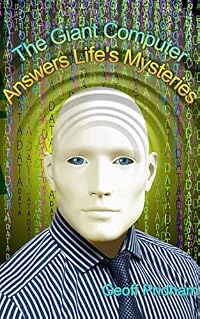
The Giant Computer Answers Life's Mysteries
by Geoff Pridham 
On This Page
Description
One day we will be able to build a computer big enough and smart enough to be able to take all the world's knowledge and use it to calculate the best possible answers for us. But that day still seems far away. Why wait? Geoff Pridham has short-circuited the journey and worked out what this Giant Computer from the future would be likely to say. It's all here in this book. Politics, truth, philosophy, religion, morality, who we really are... all these topics and more are answered by Pridham's show more Giant Computer. Not only does the Giant Computer answer our questions, it also tells illustrative stories to help us understand what it meant. What sounded complex becomes clear. Take a look inside and see what you think of the Giant Computer's answers to life's mysteries! show lessTags
Member Reviews
First of all I must give my sincere apologies to the author as when I requested the book I ignored his warning about the contents of the book. I allowed my interests in IT, as an IT professional of some 50+ years, to make me think that I would be able to absorb the subject, thinking it would be very IT, albeit AI related.
As an IT Consultant and with society in the throes of the AI debate this book appealed to me and therefore my review is made from those perspectives. It is also made from the perspective of little or no knowledge of the philosophical or psychological aspects so please do take that on board as you read my review.
The book is much more about the philosophy and psychology of AI in relation to how its ultimate incarnation show more might respond to philosophical questions. It also addresses how it might develop. Interesting no doubt but way beyond my skills.
That said it does, to my simple mind, have a flaw in that the computer which has “all the knowledge we have ever known” can only answer questions where that knowledge can be utilised to derive an answer. Therefore, if we have never accumulated a particular piece of knowledge will the computer be able to establish that knowledge for itself. The best example of this conundrum I have seen is that AI is not going to be able to create something that did not exist before, e.g., while it can generate new Van Gogh paintings by utilising all the existing paintings as a basis, it would not be able to generate a Van Gogh painting at all, that is it could not be creative.
All I can say it that the book has therefore got me thinking and I commend it for that.
If the predictions for the effects of AI on humanity are made reality this book may provide some insight into those effects and maybe even a potential solution. show less
As an IT Consultant and with society in the throes of the AI debate this book appealed to me and therefore my review is made from those perspectives. It is also made from the perspective of little or no knowledge of the philosophical or psychological aspects so please do take that on board as you read my review.
The book is much more about the philosophy and psychology of AI in relation to how its ultimate incarnation show more might respond to philosophical questions. It also addresses how it might develop. Interesting no doubt but way beyond my skills.
That said it does, to my simple mind, have a flaw in that the computer which has “all the knowledge we have ever known” can only answer questions where that knowledge can be utilised to derive an answer. Therefore, if we have never accumulated a particular piece of knowledge will the computer be able to establish that knowledge for itself. The best example of this conundrum I have seen is that AI is not going to be able to create something that did not exist before, e.g., while it can generate new Van Gogh paintings by utilising all the existing paintings as a basis, it would not be able to generate a Van Gogh painting at all, that is it could not be creative.
All I can say it that the book has therefore got me thinking and I commend it for that.
If the predictions for the effects of AI on humanity are made reality this book may provide some insight into those effects and maybe even a potential solution. show less
 This review was written for LibraryThing Early Reviewers.
The Giant Computer Answers Life’s Mysteries by Geoff Pridham is a non-fiction book and is a conversation between a human and a computer. The author states that his goal in writing this book was to inform the reader about truth and the ultimate way. The computer which has “all the knowledge we have ever known” makes statements and the humans “task is to ask the right questions” in order to get the best understanding of the issues. The covered topics are extensive and include ethics, politics, religion and philosophy, and evolution to list a few. It is very informational. I was distracted by the lecture style the author used. Otherwise, for those interested in the covered topics, it is an easy to read way for teaching these show more concepts. show less
This review was written for LibraryThing Early Reviewers.I found this very thought provoking however I got a bit confused as to who was talking throughout the book. Overall, it was a good read.
This review was written for LibraryThing Early Reviewers.This is a book that should be read having it in your hands, in paper version and not digital as I did. The reason is soon said. The digital reading travels on the surface, takes different directions, extends and disperses, turns and turns, retreats and advances, stops and gets bogged down, resumes its journey without remembering the trace it left. The scheme is clear, the book deludes yourself, you think that you have it in front of you, on the screen of your smartphone, it seems in your possession, clearly evident how it came out of the mind of whoever wrote it. Fifteen chapters, very stinging themes. The truth, good and evil, racism and discrimination, pragmatism and politics, spirit, matter and history, animal and human intelligence, show more intelligence and the unknown, rich and poor, socialism and individualism, peoples and religions. All this formless matter, human, concrete and abstract, mixed and mixed between bits and bytes, served by a human being on a digital tray to a giant computer in the form of questions and answers. At the end of each chapter, the poor reader is served a long bibliographic slew of books for confirmation, comparison and insights. And it doesn't end there. It also follows the opinion of an unidentified superior entity, a "supreme being" who comments on what has been said on the various topics addressed by man and proposed to the computer. The poor reader understands that he has to deal with three different points of view: that of the man, himself, who interacts with the computer, then expecting the decisive opinion of the higher body. I read the book alternating reading on the PC, the Fire tablet and the smartphone. A struggle indeed. For this reason I recommend having the paper version in your hands. Only in this way, with the book as the container object of all this formless matter, magma of hybrid and complex knowledge, page after page, back and forth, will he be able to try to navigate not on the surface but vertically. Only when the horizontal line of the digital will meet with the vertical one, the reader will be able to ensure that great amount of knowledge that the author wanted to convey. Congratulations to Jeoff Pridham who wrote it, dividing himself into three different realities, inviting the reader to enter them.
-----
Questo è un libro che va letto avendolo tra le mani, in versione cartacea e non digitale come ho fatto io. La ragione è presto detta. La lettura digitale viaggia in superficie, prende direzioni diverse, si distende e si disperde, svolta e si rigira, indietreggia e avanza, si ferma e si impantana, riprende il cammino senza ricordare la traccia lasciata. Lo schema è chiaro, il libro ti illudi di averlo davanti, sullo schermo del tuo smartphone, sembra in tuo possesso, chiaro evidente come è uscito dalla mente di chi l'ha scritto. Quindici capitoli, temi quanto mai urticanti. La verità, il bene e il male, razzismo e discriminazione, pragmatismo e politica, spirito, materia e storia, intelligenza animale e umana, intelligenza e incognito, ricchi e poveri, socialismo e individualismo, popoli e religioni. Tutta questa materia informe, umana, concreta e astratta, mescolata e miscelata tra bits e bytes, servita da un umano su un vassoio digitale ad un computer gigante in forma domande e risposte. Alla fine di ogni capitolo, al povero lettore viene servita una lunga sfilza bibliografica fatta di libri per conferme, confronti e approfondimenti. E non finisce qui. Segue anche il parere di un non meglio identificato ente superiore, un "supreme being" che commenta quanto è stato detto sui vari temi affrontati dall'uomo e proposti al computer. Il povero lettore capisce che deve confrontarsi con tre diversi punti di vista: quello dell'uomo, lui stesso, che interagisce col computer, aspettandosi poi l'opinione decisiva dell'ente superiore. Ho letto il libro alternando la lettura al PC, al tablet Fire e allo smartphone. Una fatica davvero. Per questa ragione consiglio di avere tra le mani la versione cartacea. Soltanto in questa maniera, con il libro oggetto contenitore di tutta questa materia informe, magma di conoscenze ibride e complesse, pagina dopo pagina, avanti e indietro potrà cercare di navigare non in superficie ma in verticale. Soltanto quando la linea orizzontale del digitale si incontrerà con quella verticale, chi legge potrà assicurarsi quella grande mole di conoscenza che l'autore ha voluto trasmettere. Complimenti a Jeoff Pridham che l'ha scritto, dividendosi in tre diverse realtà, invitando il lettore ad entrarci. show less
-----
Questo è un libro che va letto avendolo tra le mani, in versione cartacea e non digitale come ho fatto io. La ragione è presto detta. La lettura digitale viaggia in superficie, prende direzioni diverse, si distende e si disperde, svolta e si rigira, indietreggia e avanza, si ferma e si impantana, riprende il cammino senza ricordare la traccia lasciata. Lo schema è chiaro, il libro ti illudi di averlo davanti, sullo schermo del tuo smartphone, sembra in tuo possesso, chiaro evidente come è uscito dalla mente di chi l'ha scritto. Quindici capitoli, temi quanto mai urticanti. La verità, il bene e il male, razzismo e discriminazione, pragmatismo e politica, spirito, materia e storia, intelligenza animale e umana, intelligenza e incognito, ricchi e poveri, socialismo e individualismo, popoli e religioni. Tutta questa materia informe, umana, concreta e astratta, mescolata e miscelata tra bits e bytes, servita da un umano su un vassoio digitale ad un computer gigante in forma domande e risposte. Alla fine di ogni capitolo, al povero lettore viene servita una lunga sfilza bibliografica fatta di libri per conferme, confronti e approfondimenti. E non finisce qui. Segue anche il parere di un non meglio identificato ente superiore, un "supreme being" che commenta quanto è stato detto sui vari temi affrontati dall'uomo e proposti al computer. Il povero lettore capisce che deve confrontarsi con tre diversi punti di vista: quello dell'uomo, lui stesso, che interagisce col computer, aspettandosi poi l'opinione decisiva dell'ente superiore. Ho letto il libro alternando la lettura al PC, al tablet Fire e allo smartphone. Una fatica davvero. Per questa ragione consiglio di avere tra le mani la versione cartacea. Soltanto in questa maniera, con il libro oggetto contenitore di tutta questa materia informe, magma di conoscenze ibride e complesse, pagina dopo pagina, avanti e indietro potrà cercare di navigare non in superficie ma in verticale. Soltanto quando la linea orizzontale del digitale si incontrerà con quella verticale, chi legge potrà assicurarsi quella grande mole di conoscenza che l'autore ha voluto trasmettere. Complimenti a Jeoff Pridham che l'ha scritto, dividendosi in tre diverse realtà, invitando il lettore ad entrarci. show less
This review was written for LibraryThing Early Reviewers. May 27, 2023Italian
1
Members
- Recently Added By
Author Information

8 Works 36 Members
Geoff Pridham is a LibraryThing Author, an author who lists their personal library on LibraryThing.
Classifications
- Genres
- Philosophy, General Nonfiction
Statistics
- Members
- 7
- Popularity
- 2,730,231
- Reviews
- 4
- Rating
- (3.50)
- Languages
- English
- Media
- Paper, Ebook
- ISBNs
- 1
- ASINs
- 2