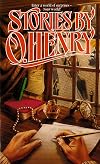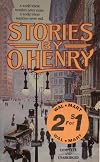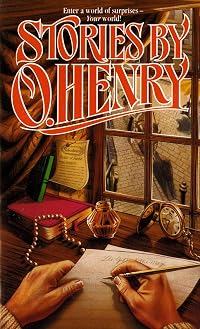
Stories by O'Henry
by O. Henry
On This Page
Description
Tor Classics are affordably-priced editions designed to attract the young reader. Original dynamic cover art enthusiastically represents the excitement of each story. Appropriate "reader friendly" type sizes have been chosen for each title-- offering clear, accurate, and readable text. All editions are complete and unabridged, and feature Introductions and Afterwords. Tales of laughter and tears, love and loss... Tales of old and young, rich and poor, the best and the worst... Tales of lies show more and truth, selfishness and sacrifice, loyalty and betrayal... O'Henry's stories are set in mansions and slums, teeming cities and desolate frontiers. Stories of grand adventure, thrilling romance, gripping suspense, hilarious comedy. Stories about turns of fate, twists of destiny, accidents of chance...and always. always, endless surprises! The tales of O'Henry--stories as surprising..as life itself. show lessTags
Recommendations

















Member Reviews
Don't read these all in one go!
But do read them, and reread at least a few. I've always loved the ideas, not just Magi, or Ransom of Red Chief, or the Cop and the Anthem... but this time around I was able to pay more attention to the style, the vocabulary, the craftsmanship. And the ideas within the main ideas. For example, The Furnished Room is more than a horror story; it's also a commentary on the segment of society that used boarding houses, both the women who would let the rooms and the men who would tenant them.
From 'The Trimmed Lamp'
"We often hear 'shop-girls' spoken of. No such persons exist. There are girls who work in shops. They make their living that way. But why turn their occupation into an adjective? Let us be fair. We show more do not refer to the girls who live on Fifth Avenue as 'marriage-girls.'"
(A near perfect commentary on the issue of political correctness, if you ask me.)
From 'Compliments of the Season'
"There are no more Christmas stories to write....
"As for the children, no one understands them except old maids, hunchbacks, and shepherd dogs."
Ok, to modern sensibilities that's a bit off. But read it from the pov of your great-grandfather.... show less
But do read them, and reread at least a few. I've always loved the ideas, not just Magi, or Ransom of Red Chief, or the Cop and the Anthem... but this time around I was able to pay more attention to the style, the vocabulary, the craftsmanship. And the ideas within the main ideas. For example, The Furnished Room is more than a horror story; it's also a commentary on the segment of society that used boarding houses, both the women who would let the rooms and the men who would tenant them.
From 'The Trimmed Lamp'
"We often hear 'shop-girls' spoken of. No such persons exist. There are girls who work in shops. They make their living that way. But why turn their occupation into an adjective? Let us be fair. We show more do not refer to the girls who live on Fifth Avenue as 'marriage-girls.'"
(A near perfect commentary on the issue of political correctness, if you ask me.)
From 'Compliments of the Season'
"There are no more Christmas stories to write....
"As for the children, no one understands them except old maids, hunchbacks, and shepherd dogs."
Ok, to modern sensibilities that's a bit off. But read it from the pov of your great-grandfather.... show less
To fulfill a challenge to read a book of short stories, I picked The Stories of O. Henry from a collection of Heritage Press titles I have. The book is handsome, the text is comfortably readable, and it is embellished with pen-and-ink sketches, some in color, by John Groth. Forty stories are reproduced.
O. Henry is a name familiar to most readers. He's a short-story author, famous for his most anthologized stories, "The Gift of the Magi" and "The Ransom of Red Chief." We read them in school, maybe middle school. Beyond that, what do we know of this gifted story-teller? According to the introduction, the first story by "O. Henry" was published in 1898. William Sidney Porter, the real writer behind the false one, picked his pen name on a show more whim from a phone directory. When really pressed by an insistent editor, Porter came up with Oliver as the name "O" abbreviated.
Porter's most productive period began in 1902. By 1910, he was dead.
The stories in this collection are generally good. Many have the surprise endings for which O. Henry was known. They tell about ordinary folks, working low-wage jobs, seeking love, seeking their fortunes, seeking fulfillment, the ideal scam, escape. The stories often are conveyed in the vernacular of the setting and characters, a slang and a cadence Porter worked hard to reproduce accurately. He reviled "the eastern story-paper kind" of slang. What was important was character. As Bob Tidball tells his cohort Shark Dodson in "The Roads We Take," "It ain't the roads we take; it's what's inside us that makes us turn out the way we do." show less
O. Henry is a name familiar to most readers. He's a short-story author, famous for his most anthologized stories, "The Gift of the Magi" and "The Ransom of Red Chief." We read them in school, maybe middle school. Beyond that, what do we know of this gifted story-teller? According to the introduction, the first story by "O. Henry" was published in 1898. William Sidney Porter, the real writer behind the false one, picked his pen name on a show more whim from a phone directory. When really pressed by an insistent editor, Porter came up with Oliver as the name "O" abbreviated.
Porter's most productive period began in 1902. By 1910, he was dead.
The stories in this collection are generally good. Many have the surprise endings for which O. Henry was known. They tell about ordinary folks, working low-wage jobs, seeking love, seeking their fortunes, seeking fulfillment, the ideal scam, escape. The stories often are conveyed in the vernacular of the setting and characters, a slang and a cadence Porter worked hard to reproduce accurately. He reviled "the eastern story-paper kind" of slang. What was important was character. As Bob Tidball tells his cohort Shark Dodson in "The Roads We Take," "It ain't the roads we take; it's what's inside us that makes us turn out the way we do." show less
Like many people, the only O. Henry story I'd read before, or was in any way familiar with, was "The Gift of the Magi," which I had as assigned reading in school (and would have known by sheer osmosis anyway, even if I hadn't). Interested to sample his stuff beyond that, I picked this volume up at a library sale a while back.
If you've read "The Gift of the Magi," you probably have a fairly good idea what this collection in general is like: very short stories, generally with some little ironic twist, although some of them are much twistier than others. Which is a story structure I rather like, if it's done well. And some of the stories here are indeed entertainingly constructed, while others just seem a bit pointless or silly. I did find show more I enjoyed them less as I went on, which I think is an indication that this sort of thing is best taken in smallish doses.
I also think that, through no fault of the author's, these haven't necessarily aged all that well. The style is mostly very light and humorous, with lots of playing around with dialog and narrative, mixing fancy and casual speech and peppering in malapropisms and things, and lots of little references to various cultural and, I think, pop-cultural things. Which I'm sure was all lots of fun at the time it was written, and is still sometimes kind of fun, but some of it is opaque enough, a century and change later, that I had to stop cold and take time to parse it, which does rather kill the momentum and the dimisnish the amusement value.
Anyway. I'm not sorry I've sampled these, but I think it's probably enough O. Henry to last me.
I do have to add, though, that the introduction to this 1989 volume, which features a lot of obnoxious ranting at some straw man Fancy College Professor who mocks O. Henry's supposed lack of literary value, does not do the man or his writing any favors, and certainly didn't help to put me in the right mindset for what I was about to read. show less
If you've read "The Gift of the Magi," you probably have a fairly good idea what this collection in general is like: very short stories, generally with some little ironic twist, although some of them are much twistier than others. Which is a story structure I rather like, if it's done well. And some of the stories here are indeed entertainingly constructed, while others just seem a bit pointless or silly. I did find show more I enjoyed them less as I went on, which I think is an indication that this sort of thing is best taken in smallish doses.
I also think that, through no fault of the author's, these haven't necessarily aged all that well. The style is mostly very light and humorous, with lots of playing around with dialog and narrative, mixing fancy and casual speech and peppering in malapropisms and things, and lots of little references to various cultural and, I think, pop-cultural things. Which I'm sure was all lots of fun at the time it was written, and is still sometimes kind of fun, but some of it is opaque enough, a century and change later, that I had to stop cold and take time to parse it, which does rather kill the momentum and the dimisnish the amusement value.
Anyway. I'm not sorry I've sampled these, but I think it's probably enough O. Henry to last me.
I do have to add, though, that the introduction to this 1989 volume, which features a lot of obnoxious ranting at some straw man Fancy College Professor who mocks O. Henry's supposed lack of literary value, does not do the man or his writing any favors, and certainly didn't help to put me in the right mindset for what I was about to read. show less
This is a great collection of stories for one who has little time to read. They are short, often humorous, and written in a folksy language that is far easier for the modern reader (or at least me) to parse than many other stories from the same era. If you liked The Gift of the Magi, you'll probably like the rest of the stories. I don't know what took me so long to read this.
Ratings
Members
- Recently Added By
Author Information

707+ Works 18,484 Members
O. Henry is the pen name of William Sidney Porter, who was born on September 11, 1862 in Greensboro, North Carolina. Porter was a licensed pharmacist and worked on a sheep ranch in Texas. He was a draftsman for the General Land Office and a teller for the First National Bank of Texas. He was convicted of embezzlement and eventually served five show more years in prison. While in prison, he began writing short stories under his pseudonym and eventually wrote over 300. As O. Henry, Porter is one of America's best known writers, and his stories, such as "The Gift of the Magi" and "The Ransom of Red Chief", are still taught in schools. In 1918, the O. Henry Awards, an annual anthology of short stories, was established in his honor. Porter died on June 5, 1910. (Bowker Author Biography) show less
All Editions
Some Editions
Series
Belongs to Publisher Series
Work Relationships
Contains
Common Knowledge
- Canonical title
- Stories by O'Henry
- Original publication date
- 1907-1910
- Canonical LCC
- PS2649 .P5
Classifications
Statistics
- Members
- 479
- Popularity
- 63,735
- Reviews
- 5
- Rating
- (3.74)
- Languages
- English
- Media
- Paper, Ebook
- ISBNs
- 9
- ASINs
- 18