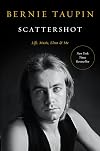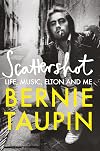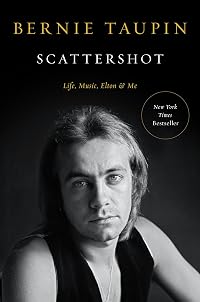
Scattershot: Life, Music, Elton, and Me
by Bernie Taupin
On This Page
Description
An evocative, clear-eyed, and revealing memoir by Bernie Taupin, the lyrical master and long-time collaborator of Elton John"I loved writing, I loved chronicling life and every moment I was cogent, sober, or blitzed, I was forever feeding off my surroundings, making copious notes as ammunition for future compositions. . . . The thing is good, bad, or indifferent I never stopped writing, it was as addictive as any drug."
This is the memoir music fans have been waiting for. Half of one of the show more greatest creative partnerships in popular music, Bernie Taupin is the man who wrote the lyrics for Elton John, who conceived the ideas that spawned countless hits, and sold millions and millions of records. Together, they were a duo, a unit, an immovable object. Their extraordinary, half-century-and-counting creative relationship has been chronicled in biopics (like 2019's Rocketman) and even John's own autobiography, Me. But Taupin, a famously private person, has kept his own account of their adventures close to his chest, until now.
Written with honesty and candor, Scattershot allows the reader to witness events unfolding from Taupin's singular perspective, sometimes front and center, sometimes from the edge, yet always described vibrantly, with an infectious energy that only a vivid songwriter's prose could offer. From his childhood in the East Midlands of England whose imagination was sparked and forever informed by the distinctly American mythopoetics of country music and cowboy culture, to the glittering, star-studded fishbowl of '70s and '80s Beverly Hills, Scattershot is simultaneously a Tom Jones-like picaresque journey across a landscape of unforgettable characters, as well as a striking, first-hand account of a creative era like no other and one man's experience at the core of it.
An exciting, multi-decade whirlwind told in a non-linear yet grounded narrative, Scattershot whizzes around the world as we ride shotgun with Bernie on his extraordinary life. We visit Los Angeles with him and Elton on the cusp of global fame. We spend time with him in Australia almost in residency at an infamous rock 'n' roll hotel in an endless blizzard of drugs. And we spend late, late night hours with John Lennon, with Bob Marley, and hanging with Frank Sinatra. And beyond the world of popular music, we witness memorable encounters with writers like Graham Greene, painters like Andy Warhol and Salvador Dali, and scores of notable misfits, miscreants, eccentrics, and geniuses, known and unknown. Even if they're not famous in their own right, they are stars on the page, and we discover how they inspired the indelible lyrics to songs such as "Tiny Dancer," "Candle in the Wind," "Bennie and The Jets," and so many more.
Unique and utterly compelling, Scattershot will transport the reader across the decades and around the globe, along the way meeting some of the greatest creative minds of the 20th century, and into the vivid imaginings of one of music's most legendary lyricists. show less
Tags
Recommendations





Member Reviews
Scattershot has left me divided, nonplussed and exasperated.
On the one hand, Bernie Taupin has a deep knowledge of musical history, enormous respect for his antecedents and friends, a treasure trove of anecdotes, and – especially – limitless affection and admiration for his musical collaborator, Elton John.
He wrote some truly magical song lyrics and made a great deal of money out of them. He shows here that he knows a lot of big words and sometimes strings them together quite adeptly in this “not a proper memoir”.
On the other hand, he also reveals himself to be pretentious, arrogant, self-indulgent, delusional, cynical, and – worst of all – semi-literate. He’s the kind of bloke who calls out misogyny in other men, while show more cheating on each of his first three wives – two of whom he doesn’t even respect enough to refer to by name. Not even the one he wrote “Tiny Dancer” about.
Taupin spends way too much time talking about his wealth, alcohol, drugs, real estate and horses, and not nearly enough about songwriting. Even then, he’s mostly dismissive of his own work. “Your Song”? Dashed off in 10 minutes. “Don’t Go Breaking My Heart”? Also 10 minutes work while on a mad bender in Barbados.
It’s halfway through the book before he talks about a song in any depth, and then it’s to reveal that he was originally going to write “Candle in the Wind” about Montgomery Clift, but decided Marilyn Monroe was a better known, more vulnerable and decidedly more commercial subject.
To be fair, his accounts of meeting Graham Greene, Salvador Dali and Frank Sinatra are (almost) worth the price of admission. There is a truckload of musical history and personal trivia, some extremely surprising. And there are passages where his writing flows beautifully, as lyrical as … well, his best lyrics.
His editors, however, have totally let him down and revealed that he has a very fragile grasp of the English language. A short list of instances where he mixed up his words:
illicit instead of elicit
payed instead of paid
alludes instead of eludes
emersion instead of immersion
florescent instead of fluorescent
chartered instead of charted
carneys instead of carnies
bought instead of brought
capitol instead of capital
ingenious instead of ingenuous
stationary instead of stationery
immanent instead of imminent
invariably instead of inevitably
poured instead of pored
Good Lord, this is laughable, schoolboy stuff! The man is adored as a poet but there’s no licence for this.
Yes, I’m being mean but not nearly as mean as he is to anyone who isn’t one of his drunken, drug-addled mates. I mean, really, is there any single word more pretentious than “unbeknownst”?
Granted, he details his willing and determined Americanisation, so maybe that excuses writing “gunnel” instead of “gunwale”. But anyone who’s had a passing acquaintance with Romeo and Juliet knows that “wherefore” means “why”, not “where”. Apparently not modern pop music’s greatest lyricist. And mis-spelling the names of both Carole King and Cary Grant is careless, to say the least.
I suppose he gets some points for being very open – indeed, extremely descriptive – about his massive over-indulgence in drugs and alcohol, but how self-centred and unaware do you have to be to bemoan the fact that drug cartels have ruined the previously “magical land” of Mexico? That would be the very cartels that brought your cocaine to Los Angeles, Bernie. And abandoning best buddy Alice Cooper because his drug-taking became too serious was a pretty low act.
His travels around the world are entertaining, if never wholesome – including to Australia, that “sun-drenched land in the Indian Ocean”. Clearly, making your money from publishing has definite benefits. And, of course, there’s the obligatory “I turned my life around” ending with his fourth wife, even as Elton also finds happiness and self-worth.
Look, I came to this book as a Bernie Taupin fan. 15 year old me loved Captain Fantastic and the Brown Dirt Cowboy when it came out, complete with comic book bio-history, poster and gorgeous double gatefold. The idea of making a living out of writing song lyrics was unutterably attractive (I swear, all I needed was an Elton John).
But, frankly, if that kind of a career results in a life of this kind of wankery, I’m glad I didn’t get to go there, regardless of the obvious financial benefits.
Recommended only if you don’t mind seeing a hero knock himself off his own pedestal. show less
On the one hand, Bernie Taupin has a deep knowledge of musical history, enormous respect for his antecedents and friends, a treasure trove of anecdotes, and – especially – limitless affection and admiration for his musical collaborator, Elton John.
He wrote some truly magical song lyrics and made a great deal of money out of them. He shows here that he knows a lot of big words and sometimes strings them together quite adeptly in this “not a proper memoir”.
On the other hand, he also reveals himself to be pretentious, arrogant, self-indulgent, delusional, cynical, and – worst of all – semi-literate. He’s the kind of bloke who calls out misogyny in other men, while show more cheating on each of his first three wives – two of whom he doesn’t even respect enough to refer to by name. Not even the one he wrote “Tiny Dancer” about.
Taupin spends way too much time talking about his wealth, alcohol, drugs, real estate and horses, and not nearly enough about songwriting. Even then, he’s mostly dismissive of his own work. “Your Song”? Dashed off in 10 minutes. “Don’t Go Breaking My Heart”? Also 10 minutes work while on a mad bender in Barbados.
It’s halfway through the book before he talks about a song in any depth, and then it’s to reveal that he was originally going to write “Candle in the Wind” about Montgomery Clift, but decided Marilyn Monroe was a better known, more vulnerable and decidedly more commercial subject.
To be fair, his accounts of meeting Graham Greene, Salvador Dali and Frank Sinatra are (almost) worth the price of admission. There is a truckload of musical history and personal trivia, some extremely surprising. And there are passages where his writing flows beautifully, as lyrical as … well, his best lyrics.
His editors, however, have totally let him down and revealed that he has a very fragile grasp of the English language. A short list of instances where he mixed up his words:
illicit instead of elicit
payed instead of paid
alludes instead of eludes
emersion instead of immersion
florescent instead of fluorescent
chartered instead of charted
carneys instead of carnies
bought instead of brought
capitol instead of capital
ingenious instead of ingenuous
stationary instead of stationery
immanent instead of imminent
invariably instead of inevitably
poured instead of pored
Good Lord, this is laughable, schoolboy stuff! The man is adored as a poet but there’s no licence for this.
Yes, I’m being mean but not nearly as mean as he is to anyone who isn’t one of his drunken, drug-addled mates. I mean, really, is there any single word more pretentious than “unbeknownst”?
Granted, he details his willing and determined Americanisation, so maybe that excuses writing “gunnel” instead of “gunwale”. But anyone who’s had a passing acquaintance with Romeo and Juliet knows that “wherefore” means “why”, not “where”. Apparently not modern pop music’s greatest lyricist. And mis-spelling the names of both Carole King and Cary Grant is careless, to say the least.
I suppose he gets some points for being very open – indeed, extremely descriptive – about his massive over-indulgence in drugs and alcohol, but how self-centred and unaware do you have to be to bemoan the fact that drug cartels have ruined the previously “magical land” of Mexico? That would be the very cartels that brought your cocaine to Los Angeles, Bernie. And abandoning best buddy Alice Cooper because his drug-taking became too serious was a pretty low act.
His travels around the world are entertaining, if never wholesome – including to Australia, that “sun-drenched land in the Indian Ocean”. Clearly, making your money from publishing has definite benefits. And, of course, there’s the obligatory “I turned my life around” ending with his fourth wife, even as Elton also finds happiness and self-worth.
Look, I came to this book as a Bernie Taupin fan. 15 year old me loved Captain Fantastic and the Brown Dirt Cowboy when it came out, complete with comic book bio-history, poster and gorgeous double gatefold. The idea of making a living out of writing song lyrics was unutterably attractive (I swear, all I needed was an Elton John).
But, frankly, if that kind of a career results in a life of this kind of wankery, I’m glad I didn’t get to go there, regardless of the obvious financial benefits.
Recommended only if you don’t mind seeing a hero knock himself off his own pedestal. show less
It's interesting how much hate and anger I'm seeing about this book and Taupin's writing style in the reviews. How the readers "just want to know how he came up with the songs!" and "where's Elton?" and blah blah blah writing style blah blah blah.
And, to quote the author, it's a little bit funny. Because, quite often, Taupin discusses a person, a place, an event, and then indicates how this ultimately ended up as these verses in this song. But there's also a lot of times when, if you're paying attention, he's telling you in between the lines too.
And where's Elton? Elton's all through this. His ghost is on many of the pages, but Taupin's also aware that his songwriting partner also just put out a biography not long before he did, so much show more of the ground is covered there, why tread the same paths? One could also cynically ask "Where's Bernie?" when reading much of Elton's book as well. They're partners, but they truly are their own men, as well, with their own very rich—and often very weird—and definitely very different lives.
As for the writing style? You know what? Words are this guy's living. Turns of phrase have padded his bank account. And personally, I loved the way he wrote his adventures. His narrative style and the way he bounced around in time was, for me, at least, a refreshing change from the standard, "this happened, then this, then this, then this" style of biography.
I loved this book. show less
And, to quote the author, it's a little bit funny. Because, quite often, Taupin discusses a person, a place, an event, and then indicates how this ultimately ended up as these verses in this song. But there's also a lot of times when, if you're paying attention, he's telling you in between the lines too.
And where's Elton? Elton's all through this. His ghost is on many of the pages, but Taupin's also aware that his songwriting partner also just put out a biography not long before he did, so much show more of the ground is covered there, why tread the same paths? One could also cynically ask "Where's Bernie?" when reading much of Elton's book as well. They're partners, but they truly are their own men, as well, with their own very rich—and often very weird—and definitely very different lives.
As for the writing style? You know what? Words are this guy's living. Turns of phrase have padded his bank account. And personally, I loved the way he wrote his adventures. His narrative style and the way he bounced around in time was, for me, at least, a refreshing change from the standard, "this happened, then this, then this, then this" style of biography.
I loved this book. show less
I have been an Elton John/Bernie Taupin fan all my life with Goodbye Yellow Brick Road being my first foray into their music. I permanently borrowed it from my sister in 1973 and still have it on the shelf along with most of the other albums they created together.
I read Elton's memoir last year (a rollicking tour through the life of an entertainer) and treated myself to Bernie's in hardcover during a bookstore buying spree on a recent vacation. I follow Taupin on Instagram so know a bit about his current state of happiness with a lovely wife and daughters. In fact, in the memoir, he comments that it took a long time, but both he and John found happiness in family and home.
I didn't know much else about him. Rather than a strict show more chronology, Taupin told stories and, as you might imagine, entranced us with detailed, beautifully crafted prose. It could be over the top sometimes, even florid, but often just wonderful like this description of trail riding near his ranch in California:
Red-tailed hawks gliding on the thermals, solitarily swooping, their flame-like tail feathers catching the sun, their predatory nature intercepted intermittently by blackbirds and crows that dive-bombed them impressively, bravely strafing their aggressive attempts to pick off their young. In a melancholy rain, the murmur of the wind sang softly through the live oaks and drummed the leaves above our heads, the rhythmic tattoo of the heavy late summer drops playing into the fantasy of the fine line drawn between who I once was and who I wanted to be.
Scattershot, p. 322
But, as the heading suggests, my main takeaway was how mean he could be. This, from a man who always seemed so quiet and gentle compared to his flamboyant friend. The book contains more than a few lengthy put downs that sing even more for the figuratively rich language in which they were delivered. It isn't enough to say that the Playboy Mansion was run down. Here's Taupin's description of his visit to the famed estate:
What a dump. Popular folklore might have built it up to be a louche Mecca preeminent in sensual sophistication, but I can assure you it was none of that and a lot less. Like a miniature House of Usher, it was a gray collision of Tudor and Gothic, all faux turrets, battlements, and way too busy in its attempt to be anything more than a kitsch architectural mess...Even glitzed up and lit like Knott's Berry Farm at night, it wasn't hard to tell that maintenance was not a priority and that the efficiency of cleaning crews was lacking. The place was like a courtier in the Palace of Versailles, constantly powered and perfumed to mask the unpleasant odor underneath. The place simply had no style or character, the furniture looked old and ugly, the alcoves were murky, and the carpets were balding and frayed.
scattershot, p. 216
Daggers thrown with skilled syntax and, presumably, delivered in a withering British accent. There were several scattered throughout the book, all delivered with the same snooty tone and, in some cases, was funny despite being mean. I suppose one function of memoir is to air some grievances so Taupin is all ready for Festivus this year. That being said, he could be just as profusive with his praise and self-deprecating about his own talent (he is a songwriter, not a poet he assures us several times) and past reckless, irresponsible behaviors and actions.
I enjoyed the walk down memory lane and can recommend both memoirs. Be warned: There was lots of explicit talk about sex and drugs and, of course, rock and roll in both books. show less
I read Elton's memoir last year (a rollicking tour through the life of an entertainer) and treated myself to Bernie's in hardcover during a bookstore buying spree on a recent vacation. I follow Taupin on Instagram so know a bit about his current state of happiness with a lovely wife and daughters. In fact, in the memoir, he comments that it took a long time, but both he and John found happiness in family and home.
I didn't know much else about him. Rather than a strict show more chronology, Taupin told stories and, as you might imagine, entranced us with detailed, beautifully crafted prose. It could be over the top sometimes, even florid, but often just wonderful like this description of trail riding near his ranch in California:
Red-tailed hawks gliding on the thermals, solitarily swooping, their flame-like tail feathers catching the sun, their predatory nature intercepted intermittently by blackbirds and crows that dive-bombed them impressively, bravely strafing their aggressive attempts to pick off their young. In a melancholy rain, the murmur of the wind sang softly through the live oaks and drummed the leaves above our heads, the rhythmic tattoo of the heavy late summer drops playing into the fantasy of the fine line drawn between who I once was and who I wanted to be.
Scattershot, p. 322
But, as the heading suggests, my main takeaway was how mean he could be. This, from a man who always seemed so quiet and gentle compared to his flamboyant friend. The book contains more than a few lengthy put downs that sing even more for the figuratively rich language in which they were delivered. It isn't enough to say that the Playboy Mansion was run down. Here's Taupin's description of his visit to the famed estate:
What a dump. Popular folklore might have built it up to be a louche Mecca preeminent in sensual sophistication, but I can assure you it was none of that and a lot less. Like a miniature House of Usher, it was a gray collision of Tudor and Gothic, all faux turrets, battlements, and way too busy in its attempt to be anything more than a kitsch architectural mess...Even glitzed up and lit like Knott's Berry Farm at night, it wasn't hard to tell that maintenance was not a priority and that the efficiency of cleaning crews was lacking. The place was like a courtier in the Palace of Versailles, constantly powered and perfumed to mask the unpleasant odor underneath. The place simply had no style or character, the furniture looked old and ugly, the alcoves were murky, and the carpets were balding and frayed.
scattershot, p. 216
Daggers thrown with skilled syntax and, presumably, delivered in a withering British accent. There were several scattered throughout the book, all delivered with the same snooty tone and, in some cases, was funny despite being mean. I suppose one function of memoir is to air some grievances so Taupin is all ready for Festivus this year. That being said, he could be just as profusive with his praise and self-deprecating about his own talent (he is a songwriter, not a poet he assures us several times) and past reckless, irresponsible behaviors and actions.
I enjoyed the walk down memory lane and can recommend both memoirs. Be warned: There was lots of explicit talk about sex and drugs and, of course, rock and roll in both books. show less
I love the singer-songwriting partnership of Elton John and Bernie Taupin, and I enjoyed both Elton's autobiography and biopic, but Bernie's story was somehow not the last piece of the puzzle I was expecting. Maybe because, apart from the early days when the duo were working and living together, the two men live very separate lives and Elton rarely features in Bernie's book. There's a lot of name dropping - Freddie Mercury and Ringo Starr were the only two I focused on - and descriptions of places and pastimes that lyricists load up their free time with, with a few anecdotes about Elton and origins of famous lyrics thrown in. I just didn't care, sadly, and started skim-reading the chapters on American football and horses and 'art' show more towards the end.
I'd like to make a point here. For those who might assume that I was simply coasting on a wave of Elton's tour dollars and flaunting around as if I was owed this luxury by way of my lyrical contributions, take note.
Also, I get that Bernie writes the words and his contribution to Elton's songs is important, but the constant use of the royal 'we' when referring to Elton and the band really started to bug me. Elton is a talented singer and musician without the lyrics, but where would Bernie be without Elton's music? That and the American spelling and perspective of the writing bugged me throughout - Bernie even feels the need to explain who Tommy Cooper was at one point. I get that Bernie is now an American citizen with an American family, but come on! Don't patronise your English readers.
Too long and not very interesting, I'm afraid, although you can certainly tell that Bernie is a wordsmith of longstanding! show less
I'd like to make a point here. For those who might assume that I was simply coasting on a wave of Elton's tour dollars and flaunting around as if I was owed this luxury by way of my lyrical contributions, take note.
Also, I get that Bernie writes the words and his contribution to Elton's songs is important, but the constant use of the royal 'we' when referring to Elton and the band really started to bug me. Elton is a talented singer and musician without the lyrics, but where would Bernie be without Elton's music? That and the American spelling and perspective of the writing bugged me throughout - Bernie even feels the need to explain who Tommy Cooper was at one point. I get that Bernie is now an American citizen with an American family, but come on! Don't patronise your English readers.
Too long and not very interesting, I'm afraid, although you can certainly tell that Bernie is a wordsmith of longstanding! show less
I am enormously grateful to have received the audio version of Scattershot written by lyricist and self admitted “story-telller’, Bernie Taupin. What a fun read!
Taupin, as most will know, is and has been the guy whose words Elton John has put to music for the past 50 years. It’s no surprise that it is well written and Taupin mentioned in a recent interview that he wrote it without the assistance of a ghost writer.
This memoir contains many amusing, informative and down right laugh out loud episodes in his life. Name dropping? Well sure. Taupin’s life is the music business, why not share the memorable moments experienced with other artists such as John Lennon, Salvador Dali and Cher, just to name a few.
As Elton’s lyricist, show more Taupin has certainly lived a charmed life. To find your life’s work, using your passion for writing at the age of 17 is utterly remarkable and somewhat inspiring.
Thank you NetGalley, the publisher and author for affording me the opportunity of listening to the ARC on audio. Narrator, John Lee was outstanding and the author’s note read by Taupin himself was a welcome addition. show less
Taupin, as most will know, is and has been the guy whose words Elton John has put to music for the past 50 years. It’s no surprise that it is well written and Taupin mentioned in a recent interview that he wrote it without the assistance of a ghost writer.
This memoir contains many amusing, informative and down right laugh out loud episodes in his life. Name dropping? Well sure. Taupin’s life is the music business, why not share the memorable moments experienced with other artists such as John Lennon, Salvador Dali and Cher, just to name a few.
As Elton’s lyricist, show more Taupin has certainly lived a charmed life. To find your life’s work, using your passion for writing at the age of 17 is utterly remarkable and somewhat inspiring.
Thank you NetGalley, the publisher and author for affording me the opportunity of listening to the ARC on audio. Narrator, John Lee was outstanding and the author’s note read by Taupin himself was a welcome addition. show less
This memoir by Elton John's accomplished lyricist begins, as one might expect, with a hundred pages or so describing his hardscrabble youth and the duo's meeting and rise to fame. A long middle narrates the adventures of a rakehell loosed among the jetsetters of the seventies and eighties, and is also interesting, if a mite disturbing, but contained next to no musical content. The book's final third makes the book too long by half and mostly consists of tangents such as the floorplan of his home, his rodeo and art careers, his religious beliefs, and his daughters' accomplishments, which were of minimal interest, at least to me, and should have been excised at some point. Taupin's celebrity anecdotes are quite interesting if you care for show more jetset tittle-tattle, but insight into his songwriting process is sparse. and what little there is concerns itself mostly with Elton's output this century, which relatively few will have heard. The author is gracious and liberal with his praise for most of the actors and musicians he encounters, though a couple of them will wish that he had kept quiet. This disappointed as far as insight into songwriting, but if shortened would have been a totally enjoyable read. show less
Just because I wrote it doesn’t mean I know what it’s about.
. . .
Writing songs and making music is always either partly cloudy or completely uncollectable. Why this is I’m not completely sure, but I imagine it has something to do with the concentration involved and the mental fatigue that follows. {…} The meaning of it, if not obvious, should be open to interpretation without any explanation from me. It’s like abstract art: you stand in front of it and use your imagination.
So yes, there is less about the music than I'd hoped for. Mostly, it’s a scattershot (of the title) of his life, largely outside music and largely outside Elton John. In a sense, his authorial voice is chatty; but who chats floridly (in complete opposite show more of the excerpts above), with so many adjectives and thesaurus-level words?! I skimmed bits. show less
. . .
Writing songs and making music is always either partly cloudy or completely uncollectable. Why this is I’m not completely sure, but I imagine it has something to do with the concentration involved and the mental fatigue that follows. {…} The meaning of it, if not obvious, should be open to interpretation without any explanation from me. It’s like abstract art: you stand in front of it and use your imagination.
So yes, there is less about the music than I'd hoped for. Mostly, it’s a scattershot (of the title) of his life, largely outside music and largely outside Elton John. In a sense, his authorial voice is chatty; but who chats floridly (in complete opposite show more of the excerpts above), with so many adjectives and thesaurus-level words?! I skimmed bits. show less
Members
- Recently Added By
Lists

Books Read in 2023
5,638 works; 147 members
Author Information

17+ Works 360 Members
Common Knowledge
- Original publication date
- 2023
Classifications
- Genres
- Music, Biography & Memoir, Nonfiction
- DDC/MDS
- 782.42166092 — Arts & recreation Music Vocal music Secular forms of vocal music Songs General principles and musical forms Traditions of secular songs {genres} Rock songs modified standard subdivisions History, geographic treatment, biography Biography
- LCC
- ML410 .T38 .S33 — Music Literature on music Literature on music History and criticism Biography
- BISAC
Statistics
- Members
- 143
- Popularity
- 229,769
- Reviews
- 9
- Rating
- (3.22)
- Languages
- English
- Media
- Paper, Audiobook, Ebook
- ISBNs
- 13
- ASINs
- 2