On This Page
Description
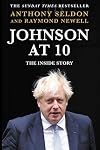
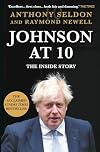
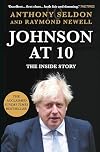
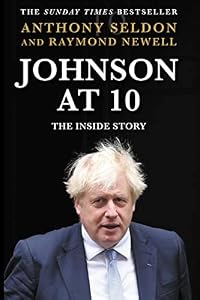
This book, authored by Sir Anthony Seldon and Raymond Newell, offers a detailed account of Boris Johnson's tenure as the Prime Minister of the United Kingdom, drawing parallels with historical figures such as David Lloyd George. It explores key political events and challenges during Johnson's leadership, including Brexit, the COVID-19 pandemic, and the Northern Ireland crisis. The authors analyze Johnson's political strategies, his attempts to 'level up' the country, and his eventual show more downfall, highlighting his complex relationship with his party and the public. The book targets readers interested in contemporary British politics, providing insights into the dynamics of political power and leadership. show lessTags
Recommendations







Member Reviews
This isn’t really history, as it is too recent, but considered reportage. However, it is fascinating for reminding one of the intricacies of the contemporary UK politics that I had forgotten when looking back, especially Gove standing for prime minister in 2016, so that Johnson didn’t. (Page 45 et seq)
The almost complete infighting within No 10 is captured by the authors’ comment that Johnson’ No 10 was like William Golding’s Lord of the Flies had been transported to Downing Street.
The book hasn’t provided any new insights into the weak and morally bankrupt Johnson, but rather has confirmed my existing opinions. However it does very usefully bring these opinions back into focus and remind me of the evidence of Johnson’s show more many failures. show less
The almost complete infighting within No 10 is captured by the authors’ comment that Johnson’ No 10 was like William Golding’s Lord of the Flies had been transported to Downing Street.
The book hasn’t provided any new insights into the weak and morally bankrupt Johnson, but rather has confirmed my existing opinions. However it does very usefully bring these opinions back into focus and remind me of the evidence of Johnson’s show more many failures. show less
https://fromtheheartofeurope.eu/johnson-at-10-the-inside-story-by-anthony-seldon...
Tantalised by the reviews and published snippets, and searching for something very different to read after finishing the Clarke submissions, I gave in and coughed up $11 (on American Amazon) for this much discussed book about the dreadful mess of Boris Johnson’s term as Prime Minister of the United Kingdom. It’s not just, or not even a matter of policy; he was quite simply a very bad prime minister.
I think readers will be aware that I was never Johnson’s biggest fan. He cynically supported Brexit because he thought (correctly) that it would make him Prime Minister (though he screwed up on the first attempt in 2016), building on a career of lies show more about Europe and about his personal life. In office as Foreign Secretary, he displayed casual incompetence to the point where he endangered the life of a British citizen held captive in Iran. He endorsed Theresa May’s Brexit deal with the EU, before deciding that it would be more convenient to resign in protest, disrupting and upstaging a Balkans conference in London that the UK had laboured on for months. From then on, it was only a matter of time before he got to Number 10.
Seldon and Newell have interviewed hundreds of people who worked in the Johnson government, mostly but not all off the record, to build a comprehensive picture of how and why it was such a disaster. And the answer is pretty clear. Like Lloyd George a hundred years before, Johnson came into the office distrusted by large parts of the political system and with a chaotic personal life distracting him. But Lloyd George was good at surrounding himself with other strong figures and listening to them, and also had a vision for what he wanted to achieve, which enabled him to achieve it.
Johnson filled his cabinet with mediocrities and created a team in Number 10, including his partner/wife, whose main job was sniping at each other. (His mayorship of London had been supported by a strong team of advisers, most of whom refused to work with him again in Number 10.) His vision did not exist, beyond winning the 2019 election and “getting Brexit done”. But most of all, his personality is so flawed that he is unable to exercise leadership. He says one thing before a meeting, another in the meeting and something else entirely after it is over. He hates making decisions. He doesn’t really like or understand people in general. He has no idea how government works, and is therefore incapable of governing.
Seldon and Newell have arranged their book thematically rather than chronologically. This is sometimes a little confusing as events come out of order, but probably for the best overall. They look at Johnson’s rise, Brexit, the 2019 election, the (lack of) agenda, COVID, Cummings, domestic policy, foreign policy, the shifting cast of characters in Number 10 and the eventual collapse. The Cummings chapter is the longest, at 69 pages, and his gaunt shadow looms over most of the rest. At the end the authors ask which of the many possible culprits was most responsible for Johnson losing office, and the answer is clear: it was Johnson himself.
There are a couple of points to be said in Johnson’s favour. He did win an election with a clear majority, which is a notable achievement even in the supposedly decisive British system (helped of course by the incompetence at the time of Labour and the Lib Dems). He was seriously committed to Net Zero, and was ready to argue the toss on climate with sceptics in his own party, though less good at doing the preparatory legwork for the Glasgow COP meeting. He came in early and strong on Ukraine’s side in the war, and helped consolidate the G7 and NATO in support. (Though there too, the UK is a smaller player compared to the US and the EU.)
But otherwise there is nothing much to be said for him as a prime minister. His Brexit deal was deeply deficient; I wish the authors had gone a bit more into the Northern Ireland Protocol, though I must admit they may be right to leave that to the specialists. His flagship “levelling-up” agenda got nowhere because he was unable and unwilling to give it leadership. His reluctance to lock down earlier in the COVID waves cost thousands of lives. He allowed Cummings to erode the structures of the constitution, and tolerated unethical behaviour by his allies to beyond the breaking point of government standards. He learned nothing, and forgot nothing. (Also, he seriously thought you could build a bridge/tunnel between Northern Ireland and Scotland.)
None of this can come as any surprise. Johnson’s character flaws were obvious, and widely reported by those who had previously attempted to work with him, going back to his days as a schoolboy at Eton. I have some sympathy for those who joined his team after the event, hoping to make the best of a bad job. But nobody who supported Johnson’s rise to power deserves to have their political judgement trusted on anything else. (And that includes Rishi Sunak, whose late endorsement during the leadership campaign was an important moment.)
This is already long enough, but I was interested in personal glimpses of two people who I know a little and a third who I am fascinated by. I knew Martin Reynolds, the Principal Private Secretary to Johnson, when he was a mid-level diplomat in Brussels fifteen years ago. He is more capable than most officials, but was nonetheless out of his depth in the sheer awfulness of trying to manage the Johnson system. On the other hand, John Bew, Johnson’s main foreign policy advisor, is one of the few people to come out of the book looking good; he gave sound advice and wrote a substantive paper on UK global strategy post-Brexit. His father was a colleague of my father’s; I last saw John when he was about ten years old, and I’m glad he is doing well.
The third person of interest is the late Queen Elizabeth II. Although manipulated by Johnson into proroguing Parliament, she did him a massive favour during the pandemic by giving him permission to jog in the grounds of Buckingham Palace – a nice human gesture, at palatial scale. Much more importantly, it’s strongly hinted that the crucial breakthrough in the Brexit negotiations, when Johnson and Leo Varadkar spoke on the afternoon of 8 October 2019 (after a disastrous conversation between Johnson and Merkel), was directly suggested to Johnson by the Queen. It’s certainly difficult to identify anyone else who could have made the suggestion and that he would have listened to, and impossible to imagine him thinking of it on his own. If so, it’s one of the most consequential personal political interventions of her reign.
The acknowledgements include this peculiar back-hander:
"We would like to thank Isaac Farnworth and John Paton, but cannot for the life of us remember what you did to help.
This is not a great book. The writing style is breathless and occasionally out of breath, sometimes repetitive, sometimes clunky. The trees get a lot of attention, the forest as a whole not so much and the outside world very little. I can really recommend it only to fascinated spectators of slow-motion political train crashes (though I admit that I am one, and there are a lot of us around). show less
Tantalised by the reviews and published snippets, and searching for something very different to read after finishing the Clarke submissions, I gave in and coughed up $11 (on American Amazon) for this much discussed book about the dreadful mess of Boris Johnson’s term as Prime Minister of the United Kingdom. It’s not just, or not even a matter of policy; he was quite simply a very bad prime minister.
I think readers will be aware that I was never Johnson’s biggest fan. He cynically supported Brexit because he thought (correctly) that it would make him Prime Minister (though he screwed up on the first attempt in 2016), building on a career of lies show more about Europe and about his personal life. In office as Foreign Secretary, he displayed casual incompetence to the point where he endangered the life of a British citizen held captive in Iran. He endorsed Theresa May’s Brexit deal with the EU, before deciding that it would be more convenient to resign in protest, disrupting and upstaging a Balkans conference in London that the UK had laboured on for months. From then on, it was only a matter of time before he got to Number 10.
Seldon and Newell have interviewed hundreds of people who worked in the Johnson government, mostly but not all off the record, to build a comprehensive picture of how and why it was such a disaster. And the answer is pretty clear. Like Lloyd George a hundred years before, Johnson came into the office distrusted by large parts of the political system and with a chaotic personal life distracting him. But Lloyd George was good at surrounding himself with other strong figures and listening to them, and also had a vision for what he wanted to achieve, which enabled him to achieve it.
Johnson filled his cabinet with mediocrities and created a team in Number 10, including his partner/wife, whose main job was sniping at each other. (His mayorship of London had been supported by a strong team of advisers, most of whom refused to work with him again in Number 10.) His vision did not exist, beyond winning the 2019 election and “getting Brexit done”. But most of all, his personality is so flawed that he is unable to exercise leadership. He says one thing before a meeting, another in the meeting and something else entirely after it is over. He hates making decisions. He doesn’t really like or understand people in general. He has no idea how government works, and is therefore incapable of governing.
Seldon and Newell have arranged their book thematically rather than chronologically. This is sometimes a little confusing as events come out of order, but probably for the best overall. They look at Johnson’s rise, Brexit, the 2019 election, the (lack of) agenda, COVID, Cummings, domestic policy, foreign policy, the shifting cast of characters in Number 10 and the eventual collapse. The Cummings chapter is the longest, at 69 pages, and his gaunt shadow looms over most of the rest. At the end the authors ask which of the many possible culprits was most responsible for Johnson losing office, and the answer is clear: it was Johnson himself.
There are a couple of points to be said in Johnson’s favour. He did win an election with a clear majority, which is a notable achievement even in the supposedly decisive British system (helped of course by the incompetence at the time of Labour and the Lib Dems). He was seriously committed to Net Zero, and was ready to argue the toss on climate with sceptics in his own party, though less good at doing the preparatory legwork for the Glasgow COP meeting. He came in early and strong on Ukraine’s side in the war, and helped consolidate the G7 and NATO in support. (Though there too, the UK is a smaller player compared to the US and the EU.)
But otherwise there is nothing much to be said for him as a prime minister. His Brexit deal was deeply deficient; I wish the authors had gone a bit more into the Northern Ireland Protocol, though I must admit they may be right to leave that to the specialists. His flagship “levelling-up” agenda got nowhere because he was unable and unwilling to give it leadership. His reluctance to lock down earlier in the COVID waves cost thousands of lives. He allowed Cummings to erode the structures of the constitution, and tolerated unethical behaviour by his allies to beyond the breaking point of government standards. He learned nothing, and forgot nothing. (Also, he seriously thought you could build a bridge/tunnel between Northern Ireland and Scotland.)
None of this can come as any surprise. Johnson’s character flaws were obvious, and widely reported by those who had previously attempted to work with him, going back to his days as a schoolboy at Eton. I have some sympathy for those who joined his team after the event, hoping to make the best of a bad job. But nobody who supported Johnson’s rise to power deserves to have their political judgement trusted on anything else. (And that includes Rishi Sunak, whose late endorsement during the leadership campaign was an important moment.)
This is already long enough, but I was interested in personal glimpses of two people who I know a little and a third who I am fascinated by. I knew Martin Reynolds, the Principal Private Secretary to Johnson, when he was a mid-level diplomat in Brussels fifteen years ago. He is more capable than most officials, but was nonetheless out of his depth in the sheer awfulness of trying to manage the Johnson system. On the other hand, John Bew, Johnson’s main foreign policy advisor, is one of the few people to come out of the book looking good; he gave sound advice and wrote a substantive paper on UK global strategy post-Brexit. His father was a colleague of my father’s; I last saw John when he was about ten years old, and I’m glad he is doing well.
The third person of interest is the late Queen Elizabeth II. Although manipulated by Johnson into proroguing Parliament, she did him a massive favour during the pandemic by giving him permission to jog in the grounds of Buckingham Palace – a nice human gesture, at palatial scale. Much more importantly, it’s strongly hinted that the crucial breakthrough in the Brexit negotiations, when Johnson and Leo Varadkar spoke on the afternoon of 8 October 2019 (after a disastrous conversation between Johnson and Merkel), was directly suggested to Johnson by the Queen. It’s certainly difficult to identify anyone else who could have made the suggestion and that he would have listened to, and impossible to imagine him thinking of it on his own. If so, it’s one of the most consequential personal political interventions of her reign.
The acknowledgements include this peculiar back-hander:
"We would like to thank Isaac Farnworth and John Paton, but cannot for the life of us remember what you did to help.
This is not a great book. The writing style is breathless and occasionally out of breath, sometimes repetitive, sometimes clunky. The trees get a lot of attention, the forest as a whole not so much and the outside world very little. I can really recommend it only to fascinated spectators of slow-motion political train crashes (though I admit that I am one, and there are a lot of us around). show less
I wanted to read this book as soon as I heard about it. This book is a classic and I would recommend it to anyone. During my life, I`ve met Boris Johnson twice In Henley on Thames. Then he was the MP for Henley on Thames.
But this book describes Boris Johnson's political life in Number 10, the home of the Prime Minister. This book covers his political rise to power and his interesting personal life. But it also shines a light onto the man, and how he dealt with Covid and Brexit, which is turning out to be a disaster for the UK. This book confirmed my many suspicions about how Boris thinks and his personal political goals. This book is excellent in every area, but it also should be a one-off as the UK and the world couldn't cope with a show more sequel.
https://marcjohnstone.com/johnson-at-10-book-review/ show less
But this book describes Boris Johnson's political life in Number 10, the home of the Prime Minister. This book covers his political rise to power and his interesting personal life. But it also shines a light onto the man, and how he dealt with Covid and Brexit, which is turning out to be a disaster for the UK. This book confirmed my many suspicions about how Boris thinks and his personal political goals. This book is excellent in every area, but it also should be a one-off as the UK and the world couldn't cope with a show more sequel.
https://marcjohnstone.com/johnson-at-10-book-review/ show less
Ratings
Members
- Recently Added By
Lists

Wishlist
99 works; 1 member
Author Information

44+ Works 949 Members
2 Works 116 Members
Series

Classifications
- Genres
- Nonfiction, Politics and Government, General Nonfiction, History, Biography & Memoir
- DDC/MDS
- 941.0861092 — History & geography History of Europe British Isles Historical periods of British Isles 1837- Period of Victoria and House of Windsor 2000-
- LCC
- DA591 .J66 .S45 — History of Europe, Asia, Africa and Oceania Great Britain History of Great Britain England History By period Modern, 1485- 20th century
- BISAC
Statistics
- Members
- 88
- Popularity
- 362,654
- Reviews
- 3
- Rating
- (3.97)
- Languages
- English
- Media
- Paper, Audiobook, Ebook
- ISBNs
- 5
- ASINs
- 4