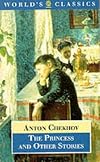
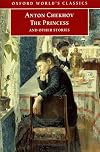
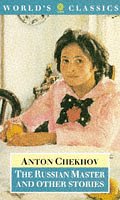
The Princess and Other Stories (Oxford World's Classics)
by Anton Chekhov
On This Page
Description
A practising doctor, Chekhov was an acute observer of Russian society's moral, as well as physical sickness. Joining The Russian Master, Ward Number Six, and A Woman's Kingdom in the World's Classics series, this collection, including `The Party', `After the Theatre', and `A Case History',again poses his recurrent literary quandary of whether to moralize, hoping to reform these ailments, or simply to entertain. The solution is to be found in the stories themselves, which, like his plays, show more offer no easy answers, but pinpoint the anguish, tedium, or downright evil of his characters withan irony that makes them both poignant and truthful. show lessTags
Recommendations






















Member Reviews
People in different classes of 19th century Russian society interact, and none of them are the good guy. Still, a touch of romanticism pervades. Chekov haunts me. On rereading this five years after the first read, I'm struck by how often medical complaints, the plight of the prols, and romance/love come up. After knowing more Russians, this makes sense. I love how he goes in the heads of multiple characters in a story but still retains a strong overall POV.
Ratings
Members
- Recently Added By
Author Information

2,642+ Works 44,749 Members
Anton Pavlovich Chekhov was born in the provincial town of Taganrog, Ukraine, in 1860. In the mid-1880s, Chekhov became a physician, and shortly thereafter he began to write short stories. Chekhov started writing plays a few years later, mainly short comic sketches he called vaudvilles. The first collection of his humorous writings, Motley show more Stories, appeared in 1886, and his first play, Ivanov, was produced in Moscow the next year. In 1896, the Alexandrinsky Theater in St. Petersburg performed his first full- length drama, The Seagull. Some of Chekhov's most successful plays include The Cherry Orchard, Uncle Vanya, and Three Sisters. Chekhov brought believable but complex personalizations to his characters, while exploring the conflict between the landed gentry and the oppressed peasant classes. Chekhov voiced a need for serious, even revolutionary, action, and the social stresses he described prefigured the Communist Revolution in Russia by twenty years. He is considered one of Russia's greatest playwrights. Chekhov contracted tuberculosis in 1884, and was certain he would die an early death. In 1901, he married Olga Knipper, an actress who had played leading roles in several of his plays. Chekhov died in 1904, spending his final years in Yalta. (Bowker Author Biography) show less
All Editions
Classifications
- Genres
- Fiction and Literature, General Fiction
- DDC/MDS
- 891.733 — Literature & rhetoric Asian Literature East Indo-European and Celtic literatures Russian and East Slavic languages Russian fiction 1800–1917
- LCC
- PG3456 .A15 .H56 — Language and Literature Slavic languages and literatures. Baltic languages. Albanian language Slavic. Baltic. Albanian Russian literature Individual authors and works 1870-1917 Chekhov
- BISAC
Statistics
- Members
- 57
- Popularity
- 536,781
- Reviews
- 1
- Rating
- (4.17)
- Languages
- English
- Media
- Paper
- ISBNs
- 2