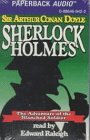
The Adventure of the Blanched Soldier (short story)
by Arthur Conan Doyle 
The Case-Book of Sherlock Holmes - short stories 1921-1927 {Conan Doyle} (2)
On This Page
Description
After some cajoling on the part of Watson, Sherlock Holmes takes pen in hand to write about one of his investigations. Watson, who at the time had selfishly deserted Holmes to take a wife, has no notes on this particular case, so we're privileged to hear, in the great detective's own words, the accounting of one of his strangest adventures.. Suspense. Fiction. Mystery.
Tags
Recommendations




















Member Reviews
In this story, in January 1903, at Baker Street, James M. Dodd sees Holmes about a missing friend, Godfrey Emsworth. Dodd and Emsworth served together in the Imperial Yeomanry in South Africa during the Second Boer War, which has only just ended. Emsworth was wounded. Dodd has not seen him since the report of his injury, and "not a word for six months and more". Since Emsworth has always been such a good friend, Dodd believes something is amiss.
Dodd tried writing to Colonel Emsworth, Godfrey's father. He had to write twice before he got an answer, and then was told in a terse letter that Godfrey was not at home; he had gone on a voyage around the world. Dodd was not satisfied with this explanation — he was sure that Godfrey would not show more simply go off around the world without telling his old army friend.
Next, Dodd went to the Emsworth family home, Tuxbury Old Park, near Bedford. There were four people there — the Colonel and his wife; and an old butler and his wife. The Colonel was something less than a gracious host. He repeated the story about his son's world voyage, implied that Dodd was lying about even knowing Godfrey, and seemed irritated at Dodd's suggestion that he provide information that would allow him to send Godfrey a letter. This the Colonel would not do.
Dodd was still determined to ascertain Godfrey's fate. That evening, in the ground-floor bedroom, Dodd talked to the butler, Ralph, when he came to deliver some coal. When Ralph mentioned Godfrey in the past tense, Dodd began to suspect that his friend was dead. Ralph indicated that no, he wasn't, but that it might be better that way.
If the butler's words had deepened the mystery, Godfrey's appearance at the bedroom window made it utterly bottomless. There he was, with his nose pressed against the glass, but looking ghastly pale. He ran off when he saw that Dodd was looking straight at him. Dodd opened the window and climbed out, thinking to go after him and put an end to this mystery. In the pathways of the park, he could not see where Godfrey had gone, but heard a door slam somewhere ahead of him, not back at the house.
Dodd contrived to stay another day at Tuxbury Old Park, and went looking about the property. He saw a well-dressed man leaving an outbuilding, whose suspicion was aroused somewhat, as Dodd was aware that he was watching him. The outbuilding seemed empty enough, but he was sure that it was where Godfrey had gone the previous evening.
After nightfall, he crept out of the bedroom window again and stole down to the outbuilding. Finding a crack in the shutters, he looked in, saw the man he had seen earlier in the day, and another figure who he was sure was Godfrey, although he could not see him clearly.
At this point came the tap on his shoulder. It was Colonel Emsworth, beside himself with rage, and he made it plain to Dodd that he was to leave on the first available train.
Dodd comes straight to Holmes to relate the story, and Holmes, as is often the case, finds the matter quite elementary. There are, after all, only a few reasons why a family would shut one of its members in an outbuilding. Holmes needs only to ask about the publication that the man with Godfrey was reading, and although Dodd cannot be absolutely sure of it, Holmes seems satisfied with the answer. Only one piece of evidence is missing.
Holmes has his missing clue that same day when he and Dodd visit Tuxbury Old Park, much to the Colonel's fury. The clue comes in the form of a tarry smell from the leather gloves that Ralph has just removed. The Colonel threatens to summon the police if Dodd and Holmes do not leave, but Holmes points out that involving the police would bring about the very catastrophe that the Colonel wishes to avoid.
Holmes makes it known that he has deduced that the mystery can be summed up in one word: leprosy. Upon visiting the outbuilding, Holmes and Dodd hear Godfrey's story right from his own lips. The night he was wounded in South Africa, he found his way to a house and slept in a bed there. When he woke up in the morning, he found himself surrounded by lepers. The doctor there told him that he was in a leper hospital, and would likely contract the disease after sleeping in a leper's bed. The doctor helped heal his wounds, and once Godfrey got back to England, the dreaded symptoms began to appear. His family's fear of their son's seclusion in an institution, and possibly the stigma attached to leprosy, have forced them to keep his presence secret.
The story ends happily, however. Holmes has brought with him Sir James Saunders, a famous dermatologist from London. Sir James determines that Godfrey in fact has pseudo-leprosy, or ichthyosis, something quite treatable.
Another entertaining story, I recommend this one to all readers that enjoy a well written mystery case, mainly featuring Mr. Sherlock Holmes and his friend Dr. Watson. show less
Dodd tried writing to Colonel Emsworth, Godfrey's father. He had to write twice before he got an answer, and then was told in a terse letter that Godfrey was not at home; he had gone on a voyage around the world. Dodd was not satisfied with this explanation — he was sure that Godfrey would not show more simply go off around the world without telling his old army friend.
Next, Dodd went to the Emsworth family home, Tuxbury Old Park, near Bedford. There were four people there — the Colonel and his wife; and an old butler and his wife. The Colonel was something less than a gracious host. He repeated the story about his son's world voyage, implied that Dodd was lying about even knowing Godfrey, and seemed irritated at Dodd's suggestion that he provide information that would allow him to send Godfrey a letter. This the Colonel would not do.
Dodd was still determined to ascertain Godfrey's fate. That evening, in the ground-floor bedroom, Dodd talked to the butler, Ralph, when he came to deliver some coal. When Ralph mentioned Godfrey in the past tense, Dodd began to suspect that his friend was dead. Ralph indicated that no, he wasn't, but that it might be better that way.
If the butler's words had deepened the mystery, Godfrey's appearance at the bedroom window made it utterly bottomless. There he was, with his nose pressed against the glass, but looking ghastly pale. He ran off when he saw that Dodd was looking straight at him. Dodd opened the window and climbed out, thinking to go after him and put an end to this mystery. In the pathways of the park, he could not see where Godfrey had gone, but heard a door slam somewhere ahead of him, not back at the house.
Dodd contrived to stay another day at Tuxbury Old Park, and went looking about the property. He saw a well-dressed man leaving an outbuilding, whose suspicion was aroused somewhat, as Dodd was aware that he was watching him. The outbuilding seemed empty enough, but he was sure that it was where Godfrey had gone the previous evening.
After nightfall, he crept out of the bedroom window again and stole down to the outbuilding. Finding a crack in the shutters, he looked in, saw the man he had seen earlier in the day, and another figure who he was sure was Godfrey, although he could not see him clearly.
At this point came the tap on his shoulder. It was Colonel Emsworth, beside himself with rage, and he made it plain to Dodd that he was to leave on the first available train.
Dodd comes straight to Holmes to relate the story, and Holmes, as is often the case, finds the matter quite elementary. There are, after all, only a few reasons why a family would shut one of its members in an outbuilding. Holmes needs only to ask about the publication that the man with Godfrey was reading, and although Dodd cannot be absolutely sure of it, Holmes seems satisfied with the answer. Only one piece of evidence is missing.
Holmes has his missing clue that same day when he and Dodd visit Tuxbury Old Park, much to the Colonel's fury. The clue comes in the form of a tarry smell from the leather gloves that Ralph has just removed. The Colonel threatens to summon the police if Dodd and Holmes do not leave, but Holmes points out that involving the police would bring about the very catastrophe that the Colonel wishes to avoid.
Holmes makes it known that he has deduced that the mystery can be summed up in one word: leprosy. Upon visiting the outbuilding, Holmes and Dodd hear Godfrey's story right from his own lips. The night he was wounded in South Africa, he found his way to a house and slept in a bed there. When he woke up in the morning, he found himself surrounded by lepers. The doctor there told him that he was in a leper hospital, and would likely contract the disease after sleeping in a leper's bed. The doctor helped heal his wounds, and once Godfrey got back to England, the dreaded symptoms began to appear. His family's fear of their son's seclusion in an institution, and possibly the stigma attached to leprosy, have forced them to keep his presence secret.
The story ends happily, however. Holmes has brought with him Sir James Saunders, a famous dermatologist from London. Sir James determines that Godfrey in fact has pseudo-leprosy, or ichthyosis, something quite treatable.
Another entertaining story, I recommend this one to all readers that enjoy a well written mystery case, mainly featuring Mr. Sherlock Holmes and his friend Dr. Watson. show less
Ratings
Members
- Recently Added By
Author Information

3,999+ Works 169,712 Members
The most famous fictional detective in the world is Arthur Conan Doyle's Sherlock Holmes. However, Doyle was, at best, ambivalent about his immensely successful literary creation and, at worst, resentful that his more "serious" fiction was relatively ignored. Born in Edinburgh, Doyle studied medicine from 1876 to 1881 and received his M.D. in show more 1885. He worked as a military physician in South Africa during the Boer War and was knighted in 1902 for his exceptional service. Doyle was drawn to writing at an early age. Although he attempted to enter private practice in Southsea, Portsmouth, in 1882, he soon turned to writing in his spare time; it eventually became his profession. As a Liberal Unionist, Doyle ran, unsuccessfully, for Parliament in 1903. During his later years, Doyle became an avowed spiritualist. Doyle sold his first story, "The Mystery of the Sasassa Valley," to Chambers' Journal in 1879. When Doyle published the novel, A Study in Scarlet in 1887, Sherlock Holmes was introduced to an avid public. Doyle is reputed to have used one of his medical professors, Dr. Joseph Bell, as a model for Holmes's character. Eventually, Doyle wrote three additional Holmes novels and five collections of Holmes short stories. A brilliant, though somewhat eccentric, detective, Holmes employs scientific methods of observation and deduction to solve the mysteries that he investigates. Although an "amateur" private detective, he is frequently called upon by Scotland Yard for assistance. Holmes's assistant, the faithful Dr. Watson, provides a striking contrast to Holmes's brilliant intellect and, in Doyle's day at least, serves as a character with whom the reader can readily identify. Having tired of Holmes's popularity, Doyle even tried to kill the great detective in "The Final Problem" but was forced by an outraged public to resurrect him in 1903. Although Holmes remained Doyle's most popular literary creation, Doyle wrote prolifically in other genres, including historical adventure, science fiction, and supernatural fiction. Despite Doyle's sometimes careless writing, he was a superb storyteller. His great skill as a popular author lay in his technique of involving readers in his highly entertaining adventures. (Bowker Author Biography) show less
Arthur Conan Doyle has a Legacy Library. Legacy libraries are the personal libraries of famous readers, entered by LibraryThing members from the Legacy Libraries group.
Series

Work Relationships
Is contained in
Sherlock Holmes: Complete (56) Stories (Adventures, Memoirs, Return, His Last Bow, & The Case-Book) by Arthur Conan Doyle (indirect)
The Complete Sherlock Holmes: All 4 Novels and 56 Short Stories by Sir Arthur Conan Doyle (indirect)
Sherlock Holmes: The Complete Novels and Stories Volume II (of 2; Bantam) by Sir Arthur Conan Doyle (indirect)
Sherlock Holmes: The Complete Novels and Stories, Vol. 1 and 2 (Bantam) by Arthur Conan Doyle (indirect)
EL REGRESO DE SHERLOCK HOLMES - SU ÚLTIMO SALUDO - EL ARCHIVO DE SHERLOCK HOLMES by Arthur Conan Doyle (indirect)
Sherlock Holmes - Edição Completa Romances & Contos (Em Portuguese do Brasil) by Arthur Conan Doyle (indirect)
THE COMPLETE SHERLOCK HOLMES and THE COMPLETE TALES OF TERROR AND MYSTERY by Sir Arthur Conan Doyle (indirect)
Sherlock Holmes - volume 2 : La Vallée de la peur ; Le Chien des Baskerville ; Les Archives de Sherlock Holmes ; Son dernier coup d'archet ; Les Exploits de Sherlock Holmes by Arthur Conan Doyle (indirect)
Las Aventuras de Sherlock Holmes ; Sherlock Holmes sigue en pie ; El archivo de Sherlock Holmes by Sir Arthur Conan Doyle (indirect)
Estudio en Escarlata, Sherlock Holmes sigue en pie, el archivo de Sherlock Holmes by Arthur Conan Doyle (indirect)
Common Knowledge
- Canonical title
- The Adventure of the Blanched Soldier (short story) (short story)
- Original title
- Sherlock Holmes and the Blanched Soldier
- Original publication date
- 1926
- People/Characters
- Sherlock Holmes; James M. Dodd; Godfrey Emsworth; Colonel Emsworth; Mrs. Emsworth; Ralph (Emsworth's butler) (show all 8); Mr. Kent; James Saunders
- Important places
- 221B Baker Street, London, England, UK; Tuxbury Old Park, Bedford, Bedfordshire, England, UK; Tuxbury Old Hall, Tuxbury Old Park, Bedford, Bedfordshire, England, UK
- Important events
- Boer War
- Original language
- English
Classifications
Statistics
- Members
- 35
- Popularity
- 817,245
- Reviews
- 1
- Rating
- (3.50)
- Languages
- English, German
- ISBNs
- 7
- ASINs
- 1