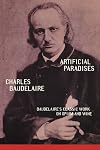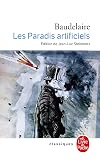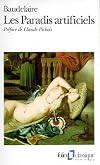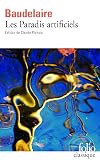
Artificial Paradises
by Charles Baudelaire
On This Page
Description
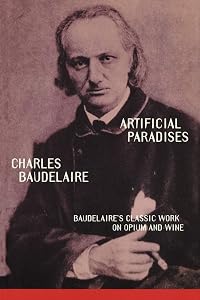
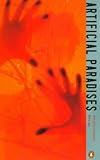
At the time of its release in 1860, Charles Baudelaire's Artificial Paradises (Les Paradis Artificiels) met with immediate praise. One of the most important French symbolists, Baudelaire led a debauched, violent, and ultimately tragic life, dying an opium addict in 1867. This book, a response to Thomas De Quincey's Confessions of an Opium Eater, serves as a memoir of Baudelaire's last years. In this beautifully wrought portrait of the effects of wine, opium, and hashish on the mind, show more Baudelaire captures the dreamlike visions he experienced during his narcotic trances. These hallucinations, sometimes exquisite, sometimes disturbing, and the delusions of grandeur that often accompanied them, constitute the Paradis Artificiels, the gorgeous yet false worlds of ecstasy that eventually led to his ruin. Contrasting the effects of hashish and opium with those of wine, Baudelaire concludes that "wine exalts the will, hashish destroys it" and makes idlers of all those who use it. show lessTags
Recommendations
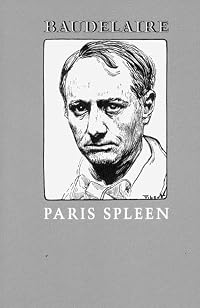
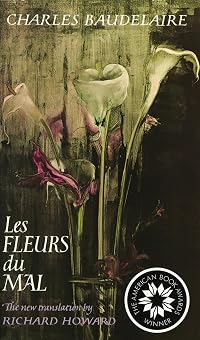
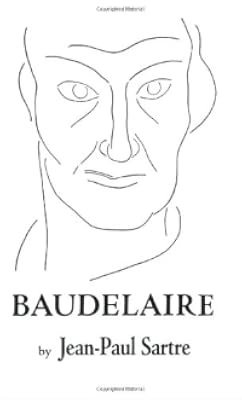
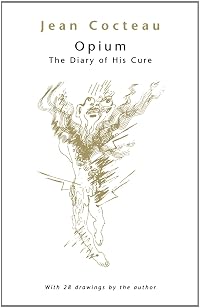









Member Recommendations

Member Reviews
At the time of its release in 1860, Charles Baudelaire's "Artificial Paradises (Les Paradis Artificiels)" met with immediate praise. One of the most important French symbolists, Baudelaire led a debauched, violent, and ultimately tragic life, dying an opium addict in 1867. This book, a response to Thomas De Quincey's Confessions of an Opium Eater, serves as a memoir of Baudelaire's last years.In this beautifully wrought portrait of the effects of wine, opium, and hashish on the mind, Baudelaire captures the dreamlike visions he experienced during his narcotic trances. These hallucinations, sometimes exquisite, sometimes disturbing, and the delusions of grandeur that often accompanied them, constitute the Paradis Artificiels, the show more gorgeous yet false worlds of ecstasy that eventually led to his ruin. Contrasting the effects of hashish and opium with those of wine, Baudelaire concludes that "wine exalts the will, hashish destroys it" and makes idlers of all those who use it.This new translation of a controversial book provides fascinating reading as well as a key to the mind of a great writer. show less
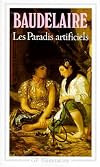
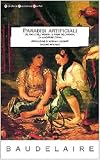
Edition adorned with miniatures taken from oriental manuscripts relating to opium & hashish.
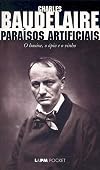
tradução de J Saramago
French literature. Rehearsals. Translation by
Según Michel Butor, este libro que Baudelaire escribió sobre las drogas, el hachís y el opio, ocupa un lugar muy preciso en el conjunto de su obra. Además de las consideraciones sociales que establece sobre los resultados de la drogadicción, y tras estudiar la "multiplicación de la individualidad" producida por el hachís y el opio, que le interesa como artista, Baudelaire convierte Los paraísos en "su obra fundamental sobre la naturaleza de la poesía, y los productos en cuestión desempeñan en ellos el papel de dos grandes imágenes a las que podrá primero compararla y luego oponerla".
Aug 15, 2011Spanish
1
JB-8
Jan 15, 2025Catalan
Members
- Recently Added By
Author Information

759+ Works 19,315 Members
Charles Baudelaire, 1821 - 1867 Charles Baudelaire had perhaps had an immeasurable impact on modern poetry. He was born on April 9, 1821, to Joseph-Francois Baudelaire and Caroline Archimbaut Dufays in Paris. He was educated first at a military boarding school and then the College Louis-le-Grand, where he was later expelled in 1839. Baudelaire show more then began to study law, at the Ecole de Droit in Paris, but devoted most of his time to debauchery. After an abortive trip to the East, he settled in Paris and lived on an inheritance from his much despised step father, while he wrote poetry. During this period he met Jeanne Duval, a mulatto with whom he fell in love with and who became the "Black Venus," the muse behind some of his most powerful erotic verse. Baudelaire strove to portray sensual experiences and moods through complex imagery and classical form, avoiding sentimentality and objective description. Thus he profoundly influenced the later French symbolist writers, including Mallarme and Rimbaud, and such English-language poets as Yeats, Eliot, and Stevens. With much of his inheritance squandered, Baudelaire turned to journalism, especially art and literary criticism, the first of which were "Les Salons". Here he discovered the work of Edgar Allan Poe, which became an influence on his own poetry. While continuing to write unpublished verse, Baudelaire became famous as critic and translator of Poe. This reputation enabled Baudelaire to publish his most famous collection of poetry, "Les Fleurs du Mal" (The Flowers of Evil) in 1857. The result was an obscenity trial and the banning of six of the poems. Though he continued to write journalism with some success, he became increasingly depressed and pessimistic. Baudelaire attempted suicide in 1845, an attempt to get attention, and became minorly involved in the French Revolution. Today Baudelaire's work is considered the "last brilliant summation of romanticism, precursor of symbolism and the first expression of modern techniques". It was his originality that set him apart and ultimately proved to be his end. Baudelaire died, apparently from complications of syphilis, on August 31, 1867, in Paris. (Bowker Author Biography) show less
Some Editions
Awards and Honors
Notable Lists
Series
Belongs to Publisher Series
Work Relationships
Common Knowledge
- Canonical title
- Artificial Paradises
- Original title
- Les paradis artificiels
- Alternate titles
- Paraísos artificiais (PT) (PT)
- Original publication date
- 1860
- Original language*
- Français
*Some information comes from Common Knowledge in other languages. Click "Edit" for more information.
Classifications
Statistics
- Members
- 710
- Popularity
- 40,006
- Reviews
- 7
- Rating
- (3.98)
- Languages
- 13 — Catalan, Czech, Dutch, English, French, German, Hungarian, Italian, Polish, Portuguese, Romanian, Spanish, Swedish
- Media
- Paper, Audiobook, Ebook
- ISBNs
- 74
- ASINs
- 29