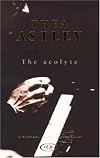
The Acolyte
by Thea Astley
On This Page
Description
Thea Astley won the coveted Miles Franklin Award for the third time with this powerful, bitterly funny novel, her favourite among her own works. Many lives orbit around the radiant genius of Jack Holberg - including wife, lover, child and acolyte - all slowly destroyed by their devotion to the blind musician.Tags
Recommendations


















Member Reviews
Paul Vesper is in the thralls of composer Jack Holberg, they come together in a ragtag town called Grogbusters, and what follows is a dissection of relationships and power over several decades.
Astley has created some of the most selfish, eccentric, unlikable, horrid, shallow and plain awful characters you can ever imagine on the page. If you are a reader who likes to relate to the main character then steer clear for this is brutal in the way Astley lays bear the most terrible aspects. Not all the characters act in an appalling way but those moments are rare. I mean it takes a remarkable author to make you want to read about the most flawed of human beings. Astley has mastered that here. The women in this novel are, well they just go show more through the most traumatic of experiences, yet they are continually expected to just 'soldier on'. Some of the incidents involving the women are the hardest to read as there is no sugar coating. Astley really just tells it like it is.
Why do people remain with a genius who is self-centered, treats people with disdain and is ever so demanding, may be the central question in this novel.
It is not a long book, but you need to take time as a reader to digest the cleverness of words and phrases, as Astley is quite vivid but sparse in her use of words. There is some wonderful phrasing and descriptions. show less
Astley has created some of the most selfish, eccentric, unlikable, horrid, shallow and plain awful characters you can ever imagine on the page. If you are a reader who likes to relate to the main character then steer clear for this is brutal in the way Astley lays bear the most terrible aspects. Not all the characters act in an appalling way but those moments are rare. I mean it takes a remarkable author to make you want to read about the most flawed of human beings. Astley has mastered that here. The women in this novel are, well they just go show more through the most traumatic of experiences, yet they are continually expected to just 'soldier on'. Some of the incidents involving the women are the hardest to read as there is no sugar coating. Astley really just tells it like it is.
Why do people remain with a genius who is self-centered, treats people with disdain and is ever so demanding, may be the central question in this novel.
It is not a long book, but you need to take time as a reader to digest the cleverness of words and phrases, as Astley is quite vivid but sparse in her use of words. There is some wonderful phrasing and descriptions. show less
Unusual. A 4-star book that I do not want to read again, and so will not be kept in my collection. Why?
The writing is beautiful. It is densely ornate, almost to the point of being sickening, and yet somehow, brilliantly, readable and evocative. The imagery is striking and unique: "The slumped corners of his mouth held little rivulets of suspicious hollandaise--as well they might." "The afternoon began to lean over in great blocks of lilac shadow." "It is eighty-seven degrees on the veranda of my flat, humidity ninety, and I receive a wave of such cold the surprised eyes of my heart widen. They widen and flutter." At times there is a brief moment of lovely, direct honesty: "My mother once told me, moved by too much dry sherry, the poet show more in her, that when I was fifteen or so she had been working downstairs and heard me in my room singing in a voice crumbling and cracking on the uncertain edges of manhood, and she was so overcome by the shattering distillation of parenthood and tenderness for this product of her blood, that she kept smiling like a fool into the dinner-time pie." So that's not the problem.
Perhaps there are a few things at play for me here.
Firstly, this is, I guess, a parable of sorts. I say "I guess" because I don't enjoy analogies/parables--that's one of the reasons I found the two 19th century lit units I did at uni (American and French) so irritating--and I persist in trying to read everything literally, so the message doesn't really sink in. I don't want it to. I don't want to go there; I find it boring and contrived and, in the words of the first person narrator, Paul Vesper: "I can sort no sense from any of it".
Another thing is the characters, who are basically either cynical arseholes (most of the males) or completely pathetic (most of the females). I know I'm supposed to have my heartstrings pulled by the terrible tragedy and emotional dichotomy etc etc, but it just doesn't work for me. I don't believe these characters deserve sympathy.
Lastly, and it's perhaps a little thing but I think it contributed to my overall negative impression, I am not a Catholic, lapsed or active, and so there are many references that soar well and truly over my head.
I want to read more Thea Astley based on the quality of the writing, but I really hope she doesn't specialise in this kind of parable story-line. If so, despite my admiration for her technical ability as a writer, I shan't bother. show less
The writing is beautiful. It is densely ornate, almost to the point of being sickening, and yet somehow, brilliantly, readable and evocative. The imagery is striking and unique: "The slumped corners of his mouth held little rivulets of suspicious hollandaise--as well they might." "The afternoon began to lean over in great blocks of lilac shadow." "It is eighty-seven degrees on the veranda of my flat, humidity ninety, and I receive a wave of such cold the surprised eyes of my heart widen. They widen and flutter." At times there is a brief moment of lovely, direct honesty: "My mother once told me, moved by too much dry sherry, the poet show more in her, that when I was fifteen or so she had been working downstairs and heard me in my room singing in a voice crumbling and cracking on the uncertain edges of manhood, and she was so overcome by the shattering distillation of parenthood and tenderness for this product of her blood, that she kept smiling like a fool into the dinner-time pie." So that's not the problem.
Perhaps there are a few things at play for me here.
Firstly, this is, I guess, a parable of sorts. I say "I guess" because I don't enjoy analogies/parables--that's one of the reasons I found the two 19th century lit units I did at uni (American and French) so irritating--and I persist in trying to read everything literally, so the message doesn't really sink in. I don't want it to. I don't want to go there; I find it boring and contrived and, in the words of the first person narrator, Paul Vesper: "I can sort no sense from any of it".
Another thing is the characters, who are basically either cynical arseholes (most of the males) or completely pathetic (most of the females). I know I'm supposed to have my heartstrings pulled by the terrible tragedy and emotional dichotomy etc etc, but it just doesn't work for me. I don't believe these characters deserve sympathy.
Lastly, and it's perhaps a little thing but I think it contributed to my overall negative impression, I am not a Catholic, lapsed or active, and so there are many references that soar well and truly over my head.
I want to read more Thea Astley based on the quality of the writing, but I really hope she doesn't specialise in this kind of parable story-line. If so, despite my admiration for her technical ability as a writer, I shan't bother. show less
My third Astley Miles Franklin winner. I'm a little puzzled at her success. This one is probably the best of the group - less gratuitous affairs, and a little more character develoment. But the precept is a little odd - a blind country town orphan in post WW2 Australia becomes a piano playing, and composing, prodigy, and attracts a coterie of acolytes (there's the title!) who support and subvert and basically screw around among themselves.
Nice writing, odd plot, and I wasn't sorry to move on to a new book at the end.
Nice writing, odd plot, and I wasn't sorry to move on to a new book at the end.
What a pleasure it is to read this witty, intelligent book! I’ve read a bit of dross lately, for one reason and another, and observant readers of this blog may have noticed a couple of titles in my ‘currently reading’ menu box have never made it to a blog post. Well, why bother bagging very popular books, eh? What would be the point?
The Acolyte, however, is a treasure. It won the Miles Franklin in 1972, Thea Astley’s third win and (according to the book blurb) her favourite of her own books. The Well-Dressed Explorer won in 1962, The Slow Natives in 1965, and I have those to look forward to on the TBR as well, and quite a few others which I found mostly for a song at Brotherhood Books.
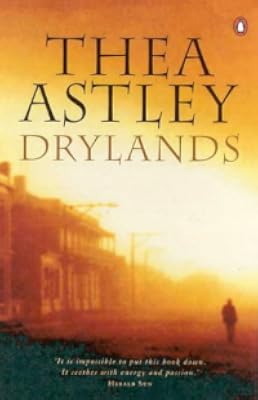
The only other Astley I have read is show more Drylands, a powerful, angry book, written in 1999 and her last. It is fiercely critical of Australian anti-intellectualism; cynical about justice for victims of white-collar crime; scornful about attempts to import ‘culture’ in the form of writing groups and a branch library to the backblocks of Queensland; and contemptuous about small-town life and society. There are no concessions: Astley expected her readers to be literate and she peppered the book with allusions to William Faulkner, Teilhard de Chardin, Hemingway’s The Old Man and the Sea, Belloc’s Tarantella, and many others, including composers less well-known. Her characters engage in one tirade after another, and although I have learned from Rosa Cappiello not to mistake the wild extravagant voice of the character for the opinion of the author, nevertheless, Astley can’t have made herself many friends in Queensland with this confronting book.
My favourite quotation from Drylands (as you would expect from a blogger who’s had a sporting bypass) is this one, from the character Joss:
"I do wish the sporting blah blah would stop stop stop…this country is round the bend over jumping and kicking and running all in the name of winning. It isn’t about sport any more. It’s about power. And money. And politics. And it’s boring. My God, it’s boring.’ "" (p249)[1]
The Acolyte is quite different in style and tone. It is bitter and cynical, but the anger is directed inwards, not so much at the society in which her characters live
To see the rest of my review please visit http://anzlitlovers.com/2009/12/28/the-acolyte-by-thea-astley/ show less
The Acolyte, however, is a treasure. It won the Miles Franklin in 1972, Thea Astley’s third win and (according to the book blurb) her favourite of her own books. The Well-Dressed Explorer won in 1962, The Slow Natives in 1965, and I have those to look forward to on the TBR as well, and quite a few others which I found mostly for a song at Brotherhood Books.
The only other Astley I have read is show more Drylands, a powerful, angry book, written in 1999 and her last. It is fiercely critical of Australian anti-intellectualism; cynical about justice for victims of white-collar crime; scornful about attempts to import ‘culture’ in the form of writing groups and a branch library to the backblocks of Queensland; and contemptuous about small-town life and society. There are no concessions: Astley expected her readers to be literate and she peppered the book with allusions to William Faulkner, Teilhard de Chardin, Hemingway’s The Old Man and the Sea, Belloc’s Tarantella, and many others, including composers less well-known. Her characters engage in one tirade after another, and although I have learned from Rosa Cappiello not to mistake the wild extravagant voice of the character for the opinion of the author, nevertheless, Astley can’t have made herself many friends in Queensland with this confronting book.
My favourite quotation from Drylands (as you would expect from a blogger who’s had a sporting bypass) is this one, from the character Joss:
"I do wish the sporting blah blah would stop stop stop…this country is round the bend over jumping and kicking and running all in the name of winning. It isn’t about sport any more. It’s about power. And money. And politics. And it’s boring. My God, it’s boring.’ "" (p249)[1]
The Acolyte is quite different in style and tone. It is bitter and cynical, but the anger is directed inwards, not so much at the society in which her characters live
To see the rest of my review please visit http://anzlitlovers.com/2009/12/28/the-acolyte-by-thea-astley/ show less
Ratings
Members
- Recently Added By
Lists

Australian Classics: Fifty Great Writers and Their Celebrated Works
43 works; 1 member
Author Information

20+ Works 1,273 Members
Thea Astley was born in Brisbane in 1925. She attended the University of Queensland before teaching in both Queensland and New South Wales. She was on the staff at Macquarie University in Sydney from 1968 to 1980. Astley has won the Miles Franklin Award four times: The Well Dressed Explorer in 1962, The Slow Natives in 1965, The Acolyte in 1972, show more and Drylands in 2000. Astley's novel, The Multiple Effects of Rainshadow, was nominated in 1997 for the Miles Franklin Award. Thea Astley is featured on the Albert Street (Brisbane) literary trail, which commemorates authors who have used Brisbane as a locale. (Bowker Author Biography) show less
Awards and Honors
Awards
Classifications
Statistics
- Members
- 73
- Popularity
- 432,164
- Reviews
- 4
- Rating
- (3.55)
- Languages
- English
- Media
- Paper, Ebook
- ISBNs
- 5
- ASINs
- 2