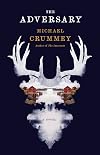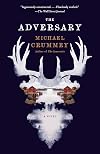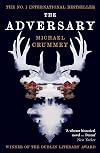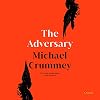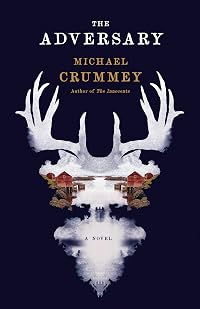
The Adversary
by Michael Crummey
On This Page
Description
"In an isolated outport on Newfoundland's northern coastline, Abe Strapp is about to marry the daughter of a rival merchant to cement his hold on the shore when the Widow Caines arrives to throw the wedding and Abe's plans into chaos. That ruthless act of sabotage is the opening salvo in a battle between the man and woman who own Mockbeggar's largest mercantile firms, each fighting for the scarce resources of the north Atlantic fishery, each seeking a measure of revenge on the person they show more despise most in the world. As their unshakeable animosity spirals further each year into vendettas and violence, the community is increasingly divided and even the innocents in Mockbeggar find themselves forced to take sides, with devastating consequences. Through merciless seasons of uncertainty and want, through predatory storms and pandemics and marauding privateers, it is the human heart that reveals itself to be the most formidable and unpredictable adversary for each person drawn, inevitably and helplessly, into that endless feud."-- show lessTags
Recommendations





Member Reviews
It was the kind of brutal winter day it seems only Newfoundland can produce. Only funerals had been held in the church that winter some two hundred years ago, but now a small group were gathered to witness the marriage of a fourteen year old girl to a drunken but well off man, “not so much hungover as still in his altitudes”.
The dread demand about impediments to the marriage was asked. Stunning those gathered there, a person in a man’s green velvet jacket and striped waistcoat with the voice of a woman stepped forward with her objection. It was the Widow Caines. Her objection was recognised. The marriage did not go through, and the alliance of the two biggest enterprises on the shore did not happen.
What followed was a lifetime of show more ruthless scheming, animosity, and treachery, tearing the small community of Mockbeggar apart. The Widow, and Abe Strapp the erstwhile bridegroom, were locked in an economic mortal combat until death or bankruptcy should intervene. No one who lived in or visited the outport was spared.
There were a few innocents in the community, a trio of teenagers who tried to stay as honest as they could, and their story is intimately involved with that of the two main protagonists. As for the rest, they did what they could to survive. Foremost among these was the Beadle, a character Dickens himself would have been proud to create.
Crummey’s language marvellously captures the time and the weather; the times definitely improved now, the winter only marginally so. He says he used the 1811 Dictionary of the Vulgar Tongue for some of the more arcane words. Anyone who has lived in Newfoundland for any time though will recognise the dexterity of wit and language employed here. The dictionary only augments it.
This was a strange reading experience. I could have sworn as I read along that I had read it before, but I knew that definitely wasn’t the case. Perhaps it was a result of the numerous author interviews and readings I had heard on the radio. No matter. It was an excellent book, yet one more in Michael Crummey’s oeuvre. I’d be happy to read it again, knowing this time I actually had read it. show less
The dread demand about impediments to the marriage was asked. Stunning those gathered there, a person in a man’s green velvet jacket and striped waistcoat with the voice of a woman stepped forward with her objection. It was the Widow Caines. Her objection was recognised. The marriage did not go through, and the alliance of the two biggest enterprises on the shore did not happen.
What followed was a lifetime of show more ruthless scheming, animosity, and treachery, tearing the small community of Mockbeggar apart. The Widow, and Abe Strapp the erstwhile bridegroom, were locked in an economic mortal combat until death or bankruptcy should intervene. No one who lived in or visited the outport was spared.
There were a few innocents in the community, a trio of teenagers who tried to stay as honest as they could, and their story is intimately involved with that of the two main protagonists. As for the rest, they did what they could to survive. Foremost among these was the Beadle, a character Dickens himself would have been proud to create.
Crummey’s language marvellously captures the time and the weather; the times definitely improved now, the winter only marginally so. He says he used the 1811 Dictionary of the Vulgar Tongue for some of the more arcane words. Anyone who has lived in Newfoundland for any time though will recognise the dexterity of wit and language employed here. The dictionary only augments it.
This was a strange reading experience. I could have sworn as I read along that I had read it before, but I knew that definitely wasn’t the case. Perhaps it was a result of the numerous author interviews and readings I had heard on the radio. No matter. It was an excellent book, yet one more in Michael Crummey’s oeuvre. I’d be happy to read it again, knowing this time I actually had read it. show less
I always look forward to a new book from Michael Crummey. And again I have not been disappointed; this one, like his others, is a compulsive read.
Abe Strapp and Widow Caines are the owners of the largest mercantile firms in the isolated outport of Mockbeggar in northern Newfoundland. They fight for dominance in the North Atlantic fishery. They despise each other: “They each saw in the other the antithesis and obstacle of all they valued and wanted from the world.” Their machinations end up drawing in everyone into their endless feud because “Abe Strapp and the Widow Caines viewed the world as a glass to their own visage and nothing within their sight was granted a life independent. Every creature beyond themselves existed only to show more serve their designs and appetites.”
At a funeral, the officiant warns that “’Strife . . . begets strife. In the death of this innocent, God implores us to lay aside wrath and malice and revenge and to put on the bowels of compassion one toward another. Otherwise we are lost.’” From the beginning it is obvious that neither of the two is able to take this advice so tragedy is certain to follow. It is just a matter of time so as I read I found myself dreading what would happen to more innocents.
Though Abe and the Widow are enemies, they are equally unlikeable and very similar. Abe is a truly vile man; some of his actions left me stunned in horror. Even his father recognizes his son’s “pernicious appetites, his vanity, his incurious scorn.” He never takes responsibility for his actions, instead spending his time listing “many grievances . . . and the larger forces at work in the world to keep him from the heights he felt himself heir to.” He is very proud and his pride is easily injured; when it is, he will take revenge. Whether a person is guilty or innocent matters not. He has a “relish for the world’s puerile and transient pleasures.” In the course of the novel, he is shown guilty of all the seven deadly sins: pride, greed, wrath, envy, lust, gluttony, and sloth.
Widow Caines is more subtle, “quicksilver and inscrutable, impossible to pin down and herd.” One man describes her as possessing “the Dark One’s cunning and subtlety.” She wears her father’s suit whenever in public and she is described as possessing a “masculine arrogance”; people believe “something essential to a woman’s station was lacking in her.” She states, however, that she doesn’t want to be like a man; she just wishes she had their choices and options not available to her as a woman: she has “a disgust for the circumstances she was born into, for the cockeyed rules that governed the world’s standards and proceedings and transactions, setting one thing over another against all sensible measure.” She, like Abe, is consumed with getting what she wants regardless of the consequences to anyone else: “A curt, self-satisfied dismissal of everything but her own way in the world, a willingness to follow that light into whatever darkness might come to meet it.” She is a consummate manipulator, taking advantage of people: “It was his goodness she’d been drawn to from the beginning, his incorruptible decency. His loneliness. Things she felt she might some day leverage to her own ends.”
Three times, the Widow is described as someone who would eat her own children. By the end of the book, I was convinced of this assertion. The same would apply to Abe. The book blurb states that the novel is about “the corruption of power and the power of corruption.” That is indeed a focus. So many good people suffer because of the actions of those in power. My sympathy was for those who are unwitting pawns used in the power games played by Abe and the Widow and their enablers, enablers who are often also in love with power and are corrupted by it.
This book captured my attention from the beginning and never lost it. Storms, disease, and hunger plague the residents of Mockbeggar. There is danger also from marauding privateers. And then there is the suspense about what the merciless adversaries will do next and who will suffer as a consequence. There are some surprise twists, but what is not a shock is that the good and innocent are the ones most affected. (Readers of Crummey’s novel The Innocents will recognize the references to the Best orphans.)
There is so much to dissect in this novel; for instance, an entire essay could be written about the author’s word choices. This is a book that will definitely go on my To Re-Read pile!
Note: I received an eARC from the publisher via NetGalley.
Please check out my reader's blog (https://schatjesshelves.blogspot.com/) and follow me on Twitter (https://twitter.com/DCYakabuski). show less
Abe Strapp and Widow Caines are the owners of the largest mercantile firms in the isolated outport of Mockbeggar in northern Newfoundland. They fight for dominance in the North Atlantic fishery. They despise each other: “They each saw in the other the antithesis and obstacle of all they valued and wanted from the world.” Their machinations end up drawing in everyone into their endless feud because “Abe Strapp and the Widow Caines viewed the world as a glass to their own visage and nothing within their sight was granted a life independent. Every creature beyond themselves existed only to show more serve their designs and appetites.”
At a funeral, the officiant warns that “’Strife . . . begets strife. In the death of this innocent, God implores us to lay aside wrath and malice and revenge and to put on the bowels of compassion one toward another. Otherwise we are lost.’” From the beginning it is obvious that neither of the two is able to take this advice so tragedy is certain to follow. It is just a matter of time so as I read I found myself dreading what would happen to more innocents.
Though Abe and the Widow are enemies, they are equally unlikeable and very similar. Abe is a truly vile man; some of his actions left me stunned in horror. Even his father recognizes his son’s “pernicious appetites, his vanity, his incurious scorn.” He never takes responsibility for his actions, instead spending his time listing “many grievances . . . and the larger forces at work in the world to keep him from the heights he felt himself heir to.” He is very proud and his pride is easily injured; when it is, he will take revenge. Whether a person is guilty or innocent matters not. He has a “relish for the world’s puerile and transient pleasures.” In the course of the novel, he is shown guilty of all the seven deadly sins: pride, greed, wrath, envy, lust, gluttony, and sloth.
Widow Caines is more subtle, “quicksilver and inscrutable, impossible to pin down and herd.” One man describes her as possessing “the Dark One’s cunning and subtlety.” She wears her father’s suit whenever in public and she is described as possessing a “masculine arrogance”; people believe “something essential to a woman’s station was lacking in her.” She states, however, that she doesn’t want to be like a man; she just wishes she had their choices and options not available to her as a woman: she has “a disgust for the circumstances she was born into, for the cockeyed rules that governed the world’s standards and proceedings and transactions, setting one thing over another against all sensible measure.” She, like Abe, is consumed with getting what she wants regardless of the consequences to anyone else: “A curt, self-satisfied dismissal of everything but her own way in the world, a willingness to follow that light into whatever darkness might come to meet it.” She is a consummate manipulator, taking advantage of people: “It was his goodness she’d been drawn to from the beginning, his incorruptible decency. His loneliness. Things she felt she might some day leverage to her own ends.”
Three times, the Widow is described as someone who would eat her own children. By the end of the book, I was convinced of this assertion. The same would apply to Abe. The book blurb states that the novel is about “the corruption of power and the power of corruption.” That is indeed a focus. So many good people suffer because of the actions of those in power. My sympathy was for those who are unwitting pawns used in the power games played by Abe and the Widow and their enablers, enablers who are often also in love with power and are corrupted by it.
This book captured my attention from the beginning and never lost it. Storms, disease, and hunger plague the residents of Mockbeggar. There is danger also from marauding privateers. And then there is the suspense about what the merciless adversaries will do next and who will suffer as a consequence. There are some surprise twists, but what is not a shock is that the good and innocent are the ones most affected. (Readers of Crummey’s novel The Innocents will recognize the references to the Best orphans.)
There is so much to dissect in this novel; for instance, an entire essay could be written about the author’s word choices. This is a book that will definitely go on my To Re-Read pile!
Note: I received an eARC from the publisher via NetGalley.
Please check out my reader's blog (https://schatjesshelves.blogspot.com/) and follow me on Twitter (https://twitter.com/DCYakabuski). show less
MC is Canada's CM
Review of the Knopf Canada hardcover (September 26, 2023) with reference to the simultaneously released Knopf Canada Kindle eBook.
OK, we didn't go onto Goodreads in order to be shy about our opinions right? So when I say that Michael Crummey's The Adversary reminded me of no less than Cormac McCarthy's Blood Meridian, or, the Evening Redness in the West (1985), just bear with me for a bit.
The Adversary takes place in the fictional Newfoundland fishing port town of Mockbeggar*, sometime in the early 19th century as near as I can show more figure**. The main business rivals of the town are the Caines and the Strapp families. The specific main adversaries are the Widow Caines and Abe Strapp. The book title alludes to the frequent Biblical euphemism of the "Adversary" used in place of Satan. The human adversaries and their proxies work to undermine each other's businesses and lives with the other people of the town as pawns.
There is a relentless, inexorable pace to the proceedings which leads to the community being on the verge of decimation through plagues, starvation, fires and the often random deaths from murder or disease. The life is bleak and brutal even if at the end there is a rather slim glimmer of the "meek inheriting the earth."
I don't want to go into too much spoilerish detail, but I found The Adversary to be a remorseless and unforgettable read. It is somewhat of an expanded universe to the author's previous book The Innocents (2019) with several characters reappearing in various major and minor roles or cameo mentions.
Some of the flavour of the book is captured in my status updates (read below the review) or my Kindle highlights. Although I read the hardcopy, there were so many quotable passages that I used the benefit of a Kindle Deal of the Day from December 16, 2023 to save myself the work of transcription.
Footnote
* Mockbeggar Plantation is a historic site near modern day Bonavista, Newfoundland.
** There is a reference to an American vessel being taken by the British Navy, presumably during the War of 1812. One old man is said to have lived in the town since the time of the Seven Years' War (1756-1763).
Soundtrack
See album cover at https://i.discogs.com/ukUy8Y0okWPBz0yzdAoTJ_v_cCY-Xw2aMogNcAcbe0c/rs:fit/g:sm/q:...
There isn't a specific song, but the album title Rum Sodomy & the Lash (1985) by the Pogues fits this book perfectly. Listen to the entire album at this YouTube playlist.
Trivia and Links
Read about some of the historical background to The Adversary at Michael Crummey’s Grim but Compelling Historical Novel by Eric Volmers, Timmins Daily Press, October 5, 2023.
The author acknowledges the use of G.M. Story's Dictionary of Newfoundland English (1982) in his Afterword. If you don't have access to that physical book, you may be able to find the definition of some words used in The Adversary at the dictionary's Online Version. For instance, the definition of "livyer" is here. show less
Review of the Knopf Canada hardcover (September 26, 2023) with reference to the simultaneously released Knopf Canada Kindle eBook.
“The whole constitution of the town,” the petition said, “is corrupted into debauchery, drunkenness, whoring, gaming, profuseness, and the most foolish, sottish prodigality imaginable.”
OK, we didn't go onto Goodreads in order to be shy about our opinions right? So when I say that Michael Crummey's The Adversary reminded me of no less than Cormac McCarthy's Blood Meridian, or, the Evening Redness in the West (1985), just bear with me for a bit.
The Adversary takes place in the fictional Newfoundland fishing port town of Mockbeggar*, sometime in the early 19th century as near as I can show more figure**. The main business rivals of the town are the Caines and the Strapp families. The specific main adversaries are the Widow Caines and Abe Strapp. The book title alludes to the frequent Biblical euphemism of the "Adversary" used in place of Satan. The human adversaries and their proxies work to undermine each other's businesses and lives with the other people of the town as pawns.
There is a relentless, inexorable pace to the proceedings which leads to the community being on the verge of decimation through plagues, starvation, fires and the often random deaths from murder or disease. The life is bleak and brutal even if at the end there is a rather slim glimmer of the "meek inheriting the earth."
I don't want to go into too much spoilerish detail, but I found The Adversary to be a remorseless and unforgettable read. It is somewhat of an expanded universe to the author's previous book The Innocents (2019) with several characters reappearing in various major and minor roles or cameo mentions.
Some of the flavour of the book is captured in my status updates (read below the review) or my Kindle highlights. Although I read the hardcopy, there were so many quotable passages that I used the benefit of a Kindle Deal of the Day from December 16, 2023 to save myself the work of transcription.
Footnote
* Mockbeggar Plantation is a historic site near modern day Bonavista, Newfoundland.
** There is a reference to an American vessel being taken by the British Navy, presumably during the War of 1812. One old man is said to have lived in the town since the time of the Seven Years' War (1756-1763).
Soundtrack
See album cover at https://i.discogs.com/ukUy8Y0okWPBz0yzdAoTJ_v_cCY-Xw2aMogNcAcbe0c/rs:fit/g:sm/q:...
There isn't a specific song, but the album title Rum Sodomy & the Lash (1985) by the Pogues fits this book perfectly. Listen to the entire album at this YouTube playlist.
Trivia and Links
Read about some of the historical background to The Adversary at Michael Crummey’s Grim but Compelling Historical Novel by Eric Volmers, Timmins Daily Press, October 5, 2023.
The author acknowledges the use of G.M. Story's Dictionary of Newfoundland English (1982) in his Afterword. If you don't have access to that physical book, you may be able to find the definition of some words used in The Adversary at the dictionary's Online Version. For instance, the definition of "livyer" is here. show less
***** Caution! Spoiler alert!*****
Set in Newfoundland somewhere in those difficult times when England was the mother country and ships had to wait for the ice to thaw before sailing into or out of harbours with illogical names such as Mockbegger and Nonsuch, this book begins with the widow Caines contesting a marriage between Abe Strapp (who we later discover his her hated brother) and a young girl who is the daughter of business rival, Mr Purchase (AKA The Jerseyman).
Abe’s premise is by marrying the young woman, he will strengthen his business. The widow’s attempt at thwarting the marriage is to prevent her brother’s business (which he inherited from their father and is much influential than her own) from becoming too formidable show more an opposition.
And that’s what lies at the bottom of this book. The widow had always been the one with the acumen and business savvy. And yet her ignorant, clueless and always-drunk brother is the one who owns the most successful commercial operation in the area.
And it’s the Beadle (the business consigliere to Abe Strapp’s father) who has to patiently watch over a spiteful Abe so that he doesn’t wreck the family business.
This book, so bloody well written it makes you want to cry, does a great job of describing the hard, difficult and even barbaric conditions that people lived under. Death was a constant, illness rampant and wicked superstitions and rituals a part of everyday life.
And the book adds true-to-life supporting characters such as Solemn and Bride Lambe (who both work for the Widow after her bother Abe shoots their father). And then there’s Anna Morels, the unfortunate servant-girl who The Widow tricks into marrying Abe; and Mary Oram who is the town’s mysterious and mostly-feared “witch doctor,” and also John Deady the captain of the raider-ship The Moriah who, along with his crew, slips into Mockbeggar and threatens to kill everyone if the town leaders don’t pay an obscene ransom (until the Widow suggests that perhaps one of Abe’s best ships would make an even better prize).
All in all this is a fantastic read, and I look forward to reading more of Michael Crummey’s novels. show less
Set in Newfoundland somewhere in those difficult times when England was the mother country and ships had to wait for the ice to thaw before sailing into or out of harbours with illogical names such as Mockbegger and Nonsuch, this book begins with the widow Caines contesting a marriage between Abe Strapp (who we later discover his her hated brother) and a young girl who is the daughter of business rival, Mr Purchase (AKA The Jerseyman).
Abe’s premise is by marrying the young woman, he will strengthen his business. The widow’s attempt at thwarting the marriage is to prevent her brother’s business (which he inherited from their father and is much influential than her own) from becoming too formidable show more an opposition.
And that’s what lies at the bottom of this book. The widow had always been the one with the acumen and business savvy. And yet her ignorant, clueless and always-drunk brother is the one who owns the most successful commercial operation in the area.
And it’s the Beadle (the business consigliere to Abe Strapp’s father) who has to patiently watch over a spiteful Abe so that he doesn’t wreck the family business.
This book, so bloody well written it makes you want to cry, does a great job of describing the hard, difficult and even barbaric conditions that people lived under. Death was a constant, illness rampant and wicked superstitions and rituals a part of everyday life.
And the book adds true-to-life supporting characters such as Solemn and Bride Lambe (who both work for the Widow after her bother Abe shoots their father). And then there’s Anna Morels, the unfortunate servant-girl who The Widow tricks into marrying Abe; and Mary Oram who is the town’s mysterious and mostly-feared “witch doctor,” and also John Deady the captain of the raider-ship The Moriah who, along with his crew, slips into Mockbeggar and threatens to kill everyone if the town leaders don’t pay an obscene ransom (until the Widow suggests that perhaps one of Abe’s best ships would make an even better prize).
All in all this is a fantastic read, and I look forward to reading more of Michael Crummey’s novels. show less
This is a story of sibling rivalry -- a rivalry that draws in and affects everyone in the isolated hamlet where Abe Strapp and his sister the widow Caines, live. I found myself drawn into the story by the excellent writing and the sheer audacity of the main characters. At first, I was on the side of the widow, but it became apparent that she was at least as evil and manipulative as her brother, and that is saying a lot! Reading about them induced a morbid fascination.
Upon reflection, I think there was not enough of a story to carry the book. And the motivations for the characters were not well developed; nor were most of the characters. Abe, for example, is bad: vindictive, cruel and fairly stupid. The widow is sociopathic. No nuances show more to either of them, or to anyone else for that matter. show less
Upon reflection, I think there was not enough of a story to carry the book. And the motivations for the characters were not well developed; nor were most of the characters. Abe, for example, is bad: vindictive, cruel and fairly stupid. The widow is sociopathic. No nuances show more to either of them, or to anyone else for that matter. show less
This is the first novel I have read by Michael Crummey. The subject matter and characters make it a challenging read, but it is very compelling. The story takes place in a small hamlet in early 1800's Newfoundland.
The main story is between Abe Strap and the Widow Caines, two powerful and well off characters, who largely rule over the outpost of Mockbeggar. The two are brother and sister, and angry rivals in their separate businesses. There is much violence , plagues,and death in this story. There are also many peripheral characters with their own fascinating lives.
I think this could be read on more than one level, as the story at face value, but also as a sort of retelling of the biblical Abel and Cain. The title " The Adversary" could show more refer to the fact that Abe Strap and the Widow Caines are adversaries, or that the title "The Adversary" refers to Satan. This would be a great book for a group read as there is much to discuss and consider.
Recommended with caveats re the subject matter. show less
The main story is between Abe Strap and the Widow Caines, two powerful and well off characters, who largely rule over the outpost of Mockbeggar. The two are brother and sister, and angry rivals in their separate businesses. There is much violence , plagues,and death in this story. There are also many peripheral characters with their own fascinating lives.
I think this could be read on more than one level, as the story at face value, but also as a sort of retelling of the biblical Abel and Cain. The title " The Adversary" could show more refer to the fact that Abe Strap and the Widow Caines are adversaries, or that the title "The Adversary" refers to Satan. This would be a great book for a group read as there is much to discuss and consider.
Recommended with caveats re the subject matter. show less
Reason read: Canadian author from the Newfoundland area. Winner of the Dublin Literary Award. This is the story of a small village that depends on the shipping/fishing industry in the 18 or 19th century. The story is of the hatred between a sister and a brother. I liked it but it is not a pleasant read. It is rough, violent, and obscene in many ways. The author describes his first book a story of love between brother and sister, a kind of twisted Adam and Eve and he describes this book a story of hatred, a Cain and Abel story. A struggle for power and oppression. While Cain we know as the bad brother in this book Abel (the sister) is also a bad person in her pharisaical ways.
Members
- Recently Added By
Published Reviews
ThingScore 100
There is no need to read The Innocents to enjoy The Adversary, but it’s a pleasure to spot the connection. The new novel is set in a town called Mockbeggar, and the Beadle is one of its itinerant grandees. This is the Canadian frontier, the harried edge of wilderness, though in comparison with the world of The Innocents the municipality’s physical comforts seem positively Parisian.
added by gypsysmom
Lists

Globe and Mail | Canadian Fiction: October 7, 2023
10 works; 1 member

Globe and Mail | Canadian Fiction: October 14, 2023
10 works; 1 member

Globe and Mail | Canadian Fiction: October 21, 2023
10 works; 1 member
Globe and Mail | Canadian Fiction: October 28, 2023
10 works; 1 member
Globe and Mail | Canadian Fiction: November 4, 2023
10 works; 1 member
Globe and Mail | Canadian Fiction: November 11, 2023
10 works; 1 member

Globe and Mail | Canadian Fiction: November 18, 2023
10 works; 1 member
Globe and Mail | Canadian Fiction: December 16, 2023
10 works; 1 member
Globe and Mail | Canadian Fiction: December 23, 2023
10 works; 1 member

The LonesomeReader Book Club
36 works; 1 member
Author Information

18+ Works 2,931 Members
Michael Crummey was born in Buchans, Newfoundland, Canada on November 18, 1965. He received a BA in English from Memorial University in 1987. He pursued graduate work at Queen's University, but dropped out of the PhD program in 1989. In 1986, he entered and won the Gregory J. Power Poetry Contest at Memorial University. He was first published in show more the St. John's-based literary mag TickleAce. In 1994, he won the inaugural Bronwen Wallace Award for Poetry. His first book of poetry, Arguments with Gravity, was published in 1996 and won the Writer's Alliance of Newfoundland and Labrador Book Award for Poetry. His works include Hard Light, Emergency Roadside Assistance, and Flesh and Blood. (Bowker Author Biography) show less
Some Editions
Awards and Honors
Awards
Common Knowledge
- Canonical title
- The Adversary
- People/Characters
- Abe Strapp; Widow Caines; the Beadle; Solemn; Bride; Lazarus
- Important places
- Rural Newfoundland, the outport of Mockbeggar
- Epigraph
- Although a black hole does not emit ligfh, matter falling toward it collects in a hot, glowing accretion disk that astronomers can detect. -- SVS.GSFC.NASA.GOV
But they lie in wait for their own blood, they ambush their own lives. --Proverbs - Dedication
- For Mike Basha
- First words
- There was a killing sickness on the shore that winter and the only services at the church were funerals.
- Last words
- (Click to show. Warning: May contain spoilers.)"The Jerusalem above us free," she said.
Classifications
- Genres
- General Fiction, Fiction and Literature, Historical Fiction
- DDC/MDS
- 813.54 — Literature & rhetoric American literature in English American fiction in English 1900-1999 1945-1999
- LCC
- PR9199.3 .C717 — Language and Literature English English Literature English literature: Provincial, local, etc.
- BISAC
Statistics
- Members
- 193
- Popularity
- 169,734
- Reviews
- 14
- Rating
- (3.94)
- Languages
- English, French
- Media
- Paper, Audiobook, Ebook
- ISBNs
- 15
- ASINs
- 5