On This Page
Description
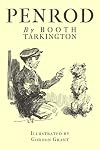
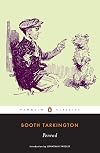
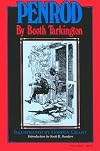
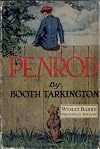
Pulitzer Prize-winning author Booth Tarkington, creator of the beloved novels The Magnificent Ambersons and Alice Adams, also created the lovable character of Penrod Schofield, who is at the center of several collections of tales, short stories, and humorous anecdotes. Penrod, the first title in the series, will appeal to fans of Tom Sawyer and other classic children's literature.Tags
Recommendations















Member Reviews
Penrod is, for me, a very mixed bag. On the one hand, this collection of tales of a turn of the century boy's misdemeanors is nearly on the level of Tom Sawyer for sheer absurd (and memorable!) humor of circumstance. Some of the scenes, like the Great Tar Fight, the spending of the dollar, and the awful circus sideshow, will stick in my mind clearly for a long time. Tarkington also has that deft hand at understatement which makes wackiness all the more laughable, and there's a definite undertone of satire on the boys' behavior as a reflection of their parents' social norms in a funhouse mirror.
On the other hand, the racism in this novel is more than casual. Although I read a fair amount of older and "classic" fiction and am usually show more pretty thick-skinned about the terms used for and the attitudes displayed toward members of any "race" other than Northern Europeans, this book pushes it a bit further than I can read comfortably. Literally every mention of phenotype was accompanied by an implied or blatant statement of mental and evolutionary inferiority, a random minor character is dismissed as an "octoroon girl," and the two more-or-less major black characters are ridiculous stereotypes. Certain chapters were worse than others in this regard, but far too many otherwise hysterically funny scenes were thrown off-kilter by entirely unnecessary racism.
So I'm torn on this one. Is this a classic of boyhood humor? Without a doubt. Would parts of it still appeal strongly to readers of all ages? I really do think so. Is it nonetheless hard and, at times, almost painful to read due to historically accurate attitudes? Unfortunately, yes. show less
On the other hand, the racism in this novel is more than casual. Although I read a fair amount of older and "classic" fiction and am usually show more pretty thick-skinned about the terms used for and the attitudes displayed toward members of any "race" other than Northern Europeans, this book pushes it a bit further than I can read comfortably. Literally every mention of phenotype was accompanied by an implied or blatant statement of mental and evolutionary inferiority, a random minor character is dismissed as an "octoroon girl," and the two more-or-less major black characters are ridiculous stereotypes. Certain chapters were worse than others in this regard, but far too many otherwise hysterically funny scenes were thrown off-kilter by entirely unnecessary racism.
So I'm torn on this one. Is this a classic of boyhood humor? Without a doubt. Would parts of it still appeal strongly to readers of all ages? I really do think so. Is it nonetheless hard and, at times, almost painful to read due to historically accurate attitudes? Unfortunately, yes. show less
This was a well-written and at times touching account of a white American boy in the early 20th Century. It has some cringey sections about race, but I give it credit for at least including Black characters considering the time it was written.
My larger complaint is the inherent meanness portrayed in boyhood. I like to think that children are not generally so cold-hearted but I may be wrong. In particular, with regard to animals, Penrod and his friends are pretty appalling. The dog Duke is supposed to be Penrod's best friend, but they poison him, throw things at him, and more. And they are awful to the rats (it is implied that they kill them after keeping them caged for some time) and shoot at birds for fun.
So it's a mixed bag of stories.
My larger complaint is the inherent meanness portrayed in boyhood. I like to think that children are not generally so cold-hearted but I may be wrong. In particular, with regard to animals, Penrod and his friends are pretty appalling. The dog Duke is supposed to be Penrod's best friend, but they poison him, throw things at him, and more. And they are awful to the rats (it is implied that they kill them after keeping them caged for some time) and shoot at birds for fun.
So it's a mixed bag of stories.
I read most of this. It’s fairly funny, about a little boy who gets into different scrapes. Think Otis Spofford. But it’s also pervasively racist, with many casual racial epithets for African-Americans, and talk of “Congo man eaters.” I got to a part where Penrod makes friends with three African-American brothers. One has a speech impediment, one is missing a finger, and I forget what was the deal with the third brother. Penrod decides he’s going to open a freak show starring the three brothers. I just couldn’t take it anymore and brought the book back to the library. I think the fact that it’s a children’s book is what makes it the most awful.
Eleven-year-old Penrod Schofield, his wistful dog Duke, his friend Sam Williams, and his black neighbors Herman and Verman are the young protagonists of this investigation into how much mischief a resourceful young boy can get up to in pre-World War I Midwestern America.
Penrod likes Marjorie Jones, but he explodes the pageant in which she is a willing and he an unwilling participant, he gives her four-year-old brother Mitchy-Mitch a two-cent piece that the boy promptly swallows, and he douses her and her brother with tar—though, admittedly, he was provoked by their both calling him “little gentleman.” Despite its frequent obstacles to love, the book ends with Marjorie giving Penrod a note that reads, “Your my bow.”
For a show more while, the bully Rupe Collins is Penrod’s hero, until Rupe picks on Verman, when Penrod’s attitude changes toward him—and Herman and Verman make short work of the bully, anyway. Penrod has a brief career in the show business, with his acts being several rats in a box, a stray dachshund, the tongue-tied Verman and the index-fingerless Herman, plus Roderick Magsworth Bitts, who is goaded into admitting that he is indeed related, as a nephew, to the Rena Magsworth who had just been convicted of multiple murders. Penrod’s adventures also include filling the hat of his sister’s admirer with tar, because that officious young cleric keeps calling him “young gentleman.” He also succeeds in coaxing the boy out of the nicest boy in town, and does it in the boy’s own yard with his mother watching from the window.
The unreconstructed, casual racism of the American Midwest in 1914 is evident in Penrod, and someone has published an expurgated edition in this decade, though it seems to me we ought to be able to see what people enjoyed with all its warts, or leave it on the shelf. show less
Penrod likes Marjorie Jones, but he explodes the pageant in which she is a willing and he an unwilling participant, he gives her four-year-old brother Mitchy-Mitch a two-cent piece that the boy promptly swallows, and he douses her and her brother with tar—though, admittedly, he was provoked by their both calling him “little gentleman.” Despite its frequent obstacles to love, the book ends with Marjorie giving Penrod a note that reads, “Your my bow.”
For a show more while, the bully Rupe Collins is Penrod’s hero, until Rupe picks on Verman, when Penrod’s attitude changes toward him—and Herman and Verman make short work of the bully, anyway. Penrod has a brief career in the show business, with his acts being several rats in a box, a stray dachshund, the tongue-tied Verman and the index-fingerless Herman, plus Roderick Magsworth Bitts, who is goaded into admitting that he is indeed related, as a nephew, to the Rena Magsworth who had just been convicted of multiple murders. Penrod’s adventures also include filling the hat of his sister’s admirer with tar, because that officious young cleric keeps calling him “young gentleman.” He also succeeds in coaxing the boy out of the nicest boy in town, and does it in the boy’s own yard with his mother watching from the window.
The unreconstructed, casual racism of the American Midwest in 1914 is evident in Penrod, and someone has published an expurgated edition in this decade, though it seems to me we ought to be able to see what people enjoyed with all its warts, or leave it on the shelf. show less
A fun set of anecdotes about 11-year-old Penrod Schofield, growing up and getting into mischief in early 20th century Midwestern America. Reminded me a bit of Tom Sawyer but in a more suburban setting. I loved his birthday visit to Aunt Sarah:
"...Boys are just people, really. ... they haven't learned to cover themselves all over with little pretences. When Penrod grows up he'll be just the same as he is now, except that whenever he does what he wants to do he'll tell himself and other people a little story about it to make his reason for doing it seem nice and pretty and noble."
"...Boys are just people, really. ... they haven't learned to cover themselves all over with little pretences. When Penrod grows up he'll be just the same as he is now, except that whenever he does what he wants to do he'll tell himself and other people a little story about it to make his reason for doing it seem nice and pretty and noble."
I'm surprised this book isn't read by more people. A close friend recommended Penrod to me, and it's one of the best recs I ever got. Penrod is a kid who has no shame. He's hilarious. He does as he pleases, no matter the consequences. I've spent hours of enjoyment in his and Tarkington's fictional company.
The one thing that is off-punting is Tarkington's attitudes toward race. The reader in 2014 has a difficult time with such backward views (this reader did anyway).
But I still read Twain and so I will still read Tarkington. Those guys are too funny not to read.
The one thing that is off-punting is Tarkington's attitudes toward race. The reader in 2014 has a difficult time with such backward views (this reader did anyway).
But I still read Twain and so I will still read Tarkington. Those guys are too funny not to read.
Booth Tarkington has long been an author that I felt I should sample, and so I decided to start with Penrod. Penrod is the main character and a young boy of 11 growing up in Indiana in the early 1900’s. Penrod was originally published in 1914 and although considered as a novel, really consists of a collection of loosely connected short stories. The tone and style of the book reminded me a great deal of Tom Sawyer. Penrod prides himself in being considered the “worst boy in town” and each chapter provides him a way of sustaining his reputation.
Although this book harkens back to a younger America and a simpler time, it is quite dated and there would be little in the book that would appeal to the younger reader of today. There are show more plenty of examples of the casual racism that was so prevalent in books published in the first half of the 20th century, but I suspect Tarkington himself would not consider himself a bigot. It is wise to keep in mind the time in which this book was written, although it is hard not to be distracted by these racial slurs.
My first exercise in reading Booth Tarkington brings me confidence that I could tackle something a little more ambitious and I think I will be looking at The Magnificent Ambersons at some point in the future. Penrod, although at one time a very popular book, has little that one can relate to today other than giving us a glimpse of mid-western life before World War I. show less
Although this book harkens back to a younger America and a simpler time, it is quite dated and there would be little in the book that would appeal to the younger reader of today. There are show more plenty of examples of the casual racism that was so prevalent in books published in the first half of the 20th century, but I suspect Tarkington himself would not consider himself a bigot. It is wise to keep in mind the time in which this book was written, although it is hard not to be distracted by these racial slurs.
My first exercise in reading Booth Tarkington brings me confidence that I could tackle something a little more ambitious and I think I will be looking at The Magnificent Ambersons at some point in the future. Penrod, although at one time a very popular book, has little that one can relate to today other than giving us a glimpse of mid-western life before World War I. show less
Members
- Recently Added By
Lists

The Guardian's 1000 Novels Everyone Must Read
1,005 works; 550 members

1970s
657 works; 23 members

CCE 1000 Good Books List
1,033 works; 12 members

Armed Services Editions
150 works; 1 member

First published in 1916
68 works; 4 members

Best 20th Century Books as of 1924
100 works; 6 members

EGBERTINA's List of Newbery books that I hated or found unnecessary
58 works; 3 members

Publisher's Weekly Bestsellers Part I - 1895-1939
399 works; 8 members

Children's Literature 1900 - 1950 in order
413 works; 8 members

EGBERTINA'S List of childhood books worthy of merit or unspeakable delight
155 works; 6 members
Author Information

109+ Works 6,583 Members
Newton Booth Tarkington was born in Indianapolis, Indiana on July 29, 1869. He was educated at Phillips Exeter Academy, than spent his first two years of college at Purdue University and his last two at Princeton University. When his class graduated in 1893, he lacked sufficient credits for a degree. Upon leaving Princeton, he returned to Indiana show more determined to pursue a career as a writer. Tarkington was an early member of The Dramatic Club, founded in 1889, and often wrote plays and directed and acted in its productions. After a five-year apprenticeship full of publishers' rejection slips, Tarkington enjoyed a huge commercial success with The Gentleman from Indiana, which was published in 1899. He produced a total of 171 short stories, 21 novels, 9 novellas, and 19 plays along with a number of movie scripts, radio dramas, and even illustrations over the course of a career that lasted from 1899 until his death in 1946. His novels included Monsieur Beaucaire, The Flirt, Seventeen, Gentle Julia, and The Turmoil. He won the Pulitzer Prize in fiction in 1919 and 1922 for his novels The Magnificent Ambersons and Alice Adams. He used the political knowledge he acquired while serving one term in the Indiana House of Representatives in the short story collection In the Arena. In collaboration with dramatist Harry Leon Wilson, Tarkington wrote The Man from Home, the first of many successful Broadway plays. He wrote children's stories in the final phase of his career. He died on May 19, 1946 after an illness. (Bowker Author Biography) show less
All Editions
Awards and Honors
Distinctions
Notable Lists
Series

Belongs to Publisher Series
Work Relationships
Is contained in
Has the adaptation
Common Knowledge
- Canonical title
- Penrod
- Original publication date
- 1914
- People/Characters
- Penrod Schofield; Sam Williams
- Important places
- USA; Indiana, USA
- Related movies
- Penrod (1922 | IMDb)
- Epigraph
- To
John, Donald And Booth Jameson
From A Grateful Uncle - First words
- Penrod sat morosely upon the back fence and gazed with envy at Duke, his wistful dog.
Classifications
Statistics
- Members
- 894
- Popularity
- 30,120
- Reviews
- 19
- Rating
- (3.85)
- Languages
- English, Finnish, Russian
- Media
- Paper, Audiobook, Ebook
- ISBNs
- 103
- ASINs
- 44