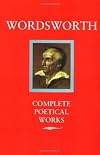
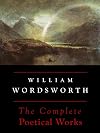
The Poetical Works of William Wordsworth
by William Wordsworth
On This Page
Description
Wordsworth's visionary intensity and simplicity of style made him one of the most popular Romantic poets.Wordsworth's major theme was the influence of nature on man, and this was explored and expounded to great acclaim through the Lyrical Ballads. These remain a landmark in the history of English romanticism for their innovative, elementary style and their treatment of familiar objects and ordinarypeople. As a young man Wordsworth was inspired by revolutionary ideals and heartfelt passions show more which influenced his poetry. With great lucidity he wrote a range of celebrated sonnets, evocative odes, and majestic blank verse. He was a great innovator and his poetical works have permanently enlargedthe range of English poetry, both in subject matter and in execution.This book contains every piece of verse known to have been published by the poet himself, including the 1850 text of The Prelude. show lessTags
Recommendations




















Member Reviews
Wordsworth was one of the supremely great poets in English, but having worked through (and work is the operative word) his entire poetical works, I can affirm that no great poet wrote such a high percentage of extraordinarily dull verse. The dozen or two anthology pieces are among the glories of poetry, and there are, perhaps 50 or 80 other pages here that give pleasure, but the vast majority of it is leaden, flat, and pedestrian. No great poet in my experience has a worse ear. The change of diction from an early and rather charming late 18th century pastiche, to the magnificence of the Lyrical Ballads period, and then to endless word-spinning of the last decades is astonishing. The long poems are, admittedly, an acquired taste, but show more while there are some dull stretches in the Prelude, these are more than compensated by the splendor of the rest; The Excursion has few such compensations. show less
I'm afraid I have to agree with this review on Goodreads: "There is great poetry here, salting an interminable field of twaddle." The great--well, it's so great it pulls the rating up to a three, "I liked it" and am glad I didn't miss it, and this is one of the great poets of the English language. In fact, Wordsworth wrote one of my favorite poems, "Composed Upon Westminster Bridge." It's short enough to quote in its entirety:
Earth has not anything to show more fair:
Dull would he be of soul who could pass by
A sight so touching in its majesty:
This City now doth, like a garment, wear
The beauty of the morning; silent, bare,
Ships, towers, domes, theatres, and temples lie
Open unto the fields, and to the sky;
All bright and glittering in the show more smokeless air.
Never did sun more beautifully steep
In his first splendour, valley, rock, or hill;
Ne'er saw I, never felt, a calm so deep!
The river glideth at his own sweet will:
Dear God! the very houses seem asleep;
And all that mighty heart is lying still!
Ironic in a way this should be my favorite. Wordsworth is famous for his poetry about nature; it's one reason he's one of the avatars of Romanticism. And my favorite poem of his, as it was when I only knew a few of his, even after reading hundreds, happens to be one about a city. But then that is probably why it appeals--this could be as much about my own New York City as it is London. And I wouldn't have a problem lauding at least a dozen more. But then there are things like this--the first stanza of "Beggars:"
She had a tall Man's height, or more;
No bonnet screen'd her from the heat;
A long drab-colour'd Cloak she wore,
A Mantle reaching to her feet:
What other dress she had I could not know;
Only she wore a Cap that was as white as snow.
Really Wordsworth? Did she have a little lamb that followed her? Not exactly the only line that reeked of cliche. Indeed, one poem is famously bad--so bad it shows up on worst works of poetry lists: "The Thorn:"
There is a thorn; it looks so old,
In truth you'd find it hard to say,
How it could ever have been young,
It looks so old and grey.
Not higher than a two-year's child,
It stands erect this aged thorn;
No leaves it has, no thorny points;
It is a mass of knotted joints,
A wretched thing forlorn.
It stands erect, and like a stone
With lichens it is overgrown.
That's just the first stanza--for its full awfulness, you need to read the whole thing--if you can make yourself. It's painful. I certainly never found anything like this kind of dross in Keats or Shakespeare (as much as I might not like Keats' Endymion or Shakespeare's "Lover's Complaint" or Rape of Lucrece--well, even Endymion has some gorgeous lines--and bad Shakespeare or Keats is a rare thing. Wordsworth not so much. show less
Earth has not anything to show more fair:
Dull would he be of soul who could pass by
A sight so touching in its majesty:
This City now doth, like a garment, wear
The beauty of the morning; silent, bare,
Ships, towers, domes, theatres, and temples lie
Open unto the fields, and to the sky;
All bright and glittering in the show more smokeless air.
Never did sun more beautifully steep
In his first splendour, valley, rock, or hill;
Ne'er saw I, never felt, a calm so deep!
The river glideth at his own sweet will:
Dear God! the very houses seem asleep;
And all that mighty heart is lying still!
Ironic in a way this should be my favorite. Wordsworth is famous for his poetry about nature; it's one reason he's one of the avatars of Romanticism. And my favorite poem of his, as it was when I only knew a few of his, even after reading hundreds, happens to be one about a city. But then that is probably why it appeals--this could be as much about my own New York City as it is London. And I wouldn't have a problem lauding at least a dozen more. But then there are things like this--the first stanza of "Beggars:"
She had a tall Man's height, or more;
No bonnet screen'd her from the heat;
A long drab-colour'd Cloak she wore,
A Mantle reaching to her feet:
What other dress she had I could not know;
Only she wore a Cap that was as white as snow.
Really Wordsworth? Did she have a little lamb that followed her? Not exactly the only line that reeked of cliche. Indeed, one poem is famously bad--so bad it shows up on worst works of poetry lists: "The Thorn:"
There is a thorn; it looks so old,
In truth you'd find it hard to say,
How it could ever have been young,
It looks so old and grey.
Not higher than a two-year's child,
It stands erect this aged thorn;
No leaves it has, no thorny points;
It is a mass of knotted joints,
A wretched thing forlorn.
It stands erect, and like a stone
With lichens it is overgrown.
That's just the first stanza--for its full awfulness, you need to read the whole thing--if you can make yourself. It's painful. I certainly never found anything like this kind of dross in Keats or Shakespeare (as much as I might not like Keats' Endymion or Shakespeare's "Lover's Complaint" or Rape of Lucrece--well, even Endymion has some gorgeous lines--and bad Shakespeare or Keats is a rare thing. Wordsworth not so much. show less
The collected poetical works of William Wordsworth (1770–1850), one of the founders of English Romanticism. Includes The Prelude, Lyrical Ballads, and major shorter poems such as Tintern Abbey and I Wandered Lonely as a Cloud. Published by George Routledge and Sons, 1881.
much age wear to F/B boards and spine - int.. intact - published by Kay, jun. and brother; Boston, J. Munroe and Co
Mrs. Seth Tiny
From her friend L L Gallagher
May 25. 1839
From her friend L L Gallagher
May 25. 1839
revised edition of 1902 with new introduction by Sheats
Contains a short biography of the poet
Members
- Recently Added By
Lists

CCE 1000 Good Books List
1,033 works; 12 members

Trinity College Booklist (1951): Class Ten, English Literature
358 works; 5 members

New Lifetime Reading Plan by Fadiman and Major
225 works; 5 members
Author Information

544+ Works 11,600 Members
Some Editions
Awards and Honors
Notable Lists
Common Knowledge
- Original publication date
- 1904
- People/Characters
- William Wordsworth
- Quotations
- There is a comfort in the strength of love; 'Twill make a thing endurable, which else Would overset the brain, or break the heart.
- Disambiguation notice
- This is the complete poetical works by Wordsworth. Do not combine with selections of his poetry.
Classifications
Statistics
- Members
- 802
- Popularity
- 34,568
- Reviews
- 7
- Rating
- (4.09)
- Languages
- English, French
- Media
- Paper, Ebook
- ISBNs
- 25
- ASINs
- 88