On This Page
Description
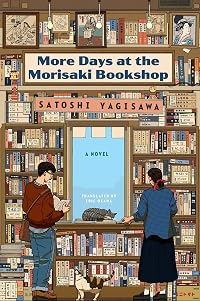
In this charming and emotionally resonant follow up to the internationally bestselling "Days at the Morisaki Bookshop", Satoshi Yagisawa paints a poignant and thoughtful portrait of life, love, and how much books and bookstores mean to the people who love them. Set again in the beloved Japanese bookshop and nearby coffee shop in the Jimbochi neighborhood of Toyko, More Days at the Morisaki Bookshop deepens the relationship between Takako, her uncle Satoru, and the people in their lives. A show more new cast of heartwarming regulars have appeared in the shop, including an old man who wears the same ragged mouse-colored sweater and another who collects books solely for the official stamps with the author's personal seal. Satoshi Yagisawa illuminates the everyday relationships between people that are forged and grown through a shared love of books. Characters leave and return, fall in and out of love, and some eventually die. As time passes, Satoru, with Takako's help, must choose whether to keep the bookshop open or shutter its doors forever. Making the decision will take uncle and niece on an emotional journey back to their family's roots and remind them again what a bookstore can mean to an individual, a neighborhood, and a whole culture. show lessTags
Recommendations










Member Reviews
I love traveling to the Morisaki Bookshop! I so wish it were a real place and close to me. After I finished reading Days at the Morisaki Bookshop_, I wanted to find out what happened between Satoru and Momoko. This gave me a sense of closure and heartache. It's a charming sequel, and I love the journey you take with Takako and the spectrum of emotions you and Takako feel. When Takako finds out that Momoko's cancer has returned, I felt like my heart stopped. I was thinking, "No! She has just come back into Satoru's life!" Then when she loses her battle, I suddenly found myself sobbing as if I knew her.
This book will stay with me forever.
This book will stay with me forever.
A return to the district of Jinbocho, a neighbourhood with a huge number of second-hand bookshops, and specifically to the Morasaki Bookshop. A shop that specialises n modern Japanese literature and is run by Saturo with his wife, Momoko. Niece Takako is now working in her own job but still visits, having fallen in love with reading whilst caretaking the store. Takako is falling for Wada, her boyfriend, but is unsure of her feelings for him, whilst her friend Tomo has pushed aside the man who loves her as she is afraid of falling in love. When Momoko falls seriously ill, all the friends associated with the bookshop have to re-evaluate their feelings.
I loved the first book in this series for the same reason I love this one, the gentle show more introversion of the story, the beautiful translation which feels incredibly Japanese in tone and the love of reading that threads through. It's a very short read - a couple of hours max - but is so relaxing and calming that it's almost like a meditation. show less
I loved the first book in this series for the same reason I love this one, the gentle show more introversion of the story, the beautiful translation which feels incredibly Japanese in tone and the love of reading that threads through. It's a very short read - a couple of hours max - but is so relaxing and calming that it's almost like a meditation. show less
"Here in Tokyo’s neighborhood of secondhand bookstores is our little bookshop. It’s full of little stories. And it holds within its walls the thoughts and hopes and feelings of a great many people.”
It was wonderful to revisit Tokyo’s Jimbocho neighborhood and the Morisaki Bookshop once again, the story picks up with Takako, her uncle Satoru and Satoru’s wife Momoko who has returned to her husband after years apart. Takako is now gainfully employed in a design studio, having moved on from the events described in the previous book and is now in a new relationship. Satoru and Momoko are running the bookshop, but Takako often spends her free time at the ship and fondly remembers the time she spent living in the apartment above. show more The narrative follows the joys, sorrows and struggles of these characters, their friends and their customers as they go about leading their daily lives.
But when tragedy strikes, it is up to Takako to remind her uncle how important the bookstore is to everyone around them and how their love for books and reading can help them through the most difficult of times.
“When I’m sad, I read. I can go on reading for hours. Reading quiets the turmoil I feel inside and brings me peace. Because when I'm immersed in the world of a book, no one can get hurt,”
More Days at the Morisaki Bookshop by Satoshi Yagisawa (translated by Eric Ozawa) is a short and simple yet emotionally moving story that revolves around themes of family, love, grief, healing and personal growth, and the of course, the magical power of books and bookstores. Whereas the previous novel focused on Takako’s journey as she dealt with heartbreak and disappointment, the second book in the series revolves around the interpersonal dynamics between people in Takako’s life and the role the Morisaki Bookstore plays in their lives. The pacing is on the slower side and despite the slightly stilted writing, I thought that the story flowed well. I loved the setting and thought that the characters were well thought out. I found the quirky characters amusing and enjoyed the literary references. There were a few subplots that were left unexplored and I certainly hope we get the opportunity to meet these characters again. I wish we had learned more about the neighborhood and the second-hand book business, but this does not detract from my overall experience.
“People forget all kinds of things. They live by forgetting. Yet our thoughts endure, the way waves leave traces in the sand.”
Though this is the second in a series, this book can be read as a standalone.
Many thanks to Harper Perennial and Paperbacks for the digital review copy via NetGalley. All opinions expressed in this review are my own. show less
It was wonderful to revisit Tokyo’s Jimbocho neighborhood and the Morisaki Bookshop once again, the story picks up with Takako, her uncle Satoru and Satoru’s wife Momoko who has returned to her husband after years apart. Takako is now gainfully employed in a design studio, having moved on from the events described in the previous book and is now in a new relationship. Satoru and Momoko are running the bookshop, but Takako often spends her free time at the ship and fondly remembers the time she spent living in the apartment above. show more The narrative follows the joys, sorrows and struggles of these characters, their friends and their customers as they go about leading their daily lives.
But when tragedy strikes, it is up to Takako to remind her uncle how important the bookstore is to everyone around them and how their love for books and reading can help them through the most difficult of times.
“When I’m sad, I read. I can go on reading for hours. Reading quiets the turmoil I feel inside and brings me peace. Because when I'm immersed in the world of a book, no one can get hurt,”
More Days at the Morisaki Bookshop by Satoshi Yagisawa (translated by Eric Ozawa) is a short and simple yet emotionally moving story that revolves around themes of family, love, grief, healing and personal growth, and the of course, the magical power of books and bookstores. Whereas the previous novel focused on Takako’s journey as she dealt with heartbreak and disappointment, the second book in the series revolves around the interpersonal dynamics between people in Takako’s life and the role the Morisaki Bookstore plays in their lives. The pacing is on the slower side and despite the slightly stilted writing, I thought that the story flowed well. I loved the setting and thought that the characters were well thought out. I found the quirky characters amusing and enjoyed the literary references. There were a few subplots that were left unexplored and I certainly hope we get the opportunity to meet these characters again. I wish we had learned more about the neighborhood and the second-hand book business, but this does not detract from my overall experience.
“People forget all kinds of things. They live by forgetting. Yet our thoughts endure, the way waves leave traces in the sand.”
Though this is the second in a series, this book can be read as a standalone.
Many thanks to Harper Perennial and Paperbacks for the digital review copy via NetGalley. All opinions expressed in this review are my own. show less
In the original, the themes of discovery and growth predominated, as the protagonist, heartbroken over a broken affair, retreats to her uncle's used bookstore. In this sequel, the themes are darker--alienation, death, and despair--as the characters move through life. The bookstore remains a centering force, but is largely in the background. A touching, sentimental narrative. I only wish all the names were not so similar: Takako, Tomoko, Takano. Several times the immersion into the story was disrupted as I had to recall which referred to whom.
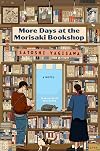
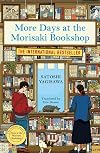
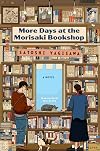
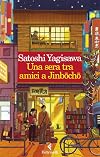
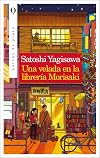
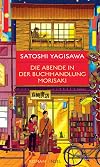
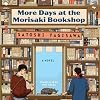
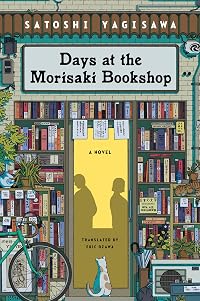
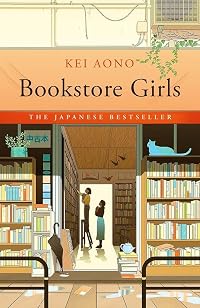
Also, don't be misled by the cover art. There are no bookstore cats exerting a friendly, stabilizing influence. :(
Also, don't be misled by the cover art. There are no bookstore cats exerting a friendly, stabilizing influence. :(
I am in a whirly-bird state of mind, and as such, the gentler pace of this book, a pace which normally is quite fine with me, was not as enjoyable for me as usual. It is not the book's fault; it is my internal agitation that interfered with reading pleasure. One of the things I did enjoy (as I did with the first book in the series) was the abundance of book recommendations that occur in the story. It's always a nice bonus to read about books someone has treasured, even if they're imaginary.
I’ve loved books from international authors for so long and admittedly I’ve not read a great deal from Japanese authors but that’s going to change. I fell in love with these characters in book one and I enjoyed catching up with them in this sequel. I truly wish this would be an endless series because I just can’t get enough. I highlighted parts because it spoke to me so deeply and especially with an Uncle and Niece relationship that brought my Uncle Arthur to mind a lot. I was excited to see another title “With Love From the Morisaki Bookshop” but it’s a collectors edition containing both titles. These characters are going to remain with me for a long time. An easy favourite
I do not think this book works as well as the first one. I think Yagisawa tried to impart a little more emotional weight but adds too many different elements and I felt like it was almost flippant - like nothing really mattered to the people in the book. I was also disappointed that the characters felt like they were different from the first book even though they had the same names.
Members
- Recently Added By
Lists

novels in or about bookshops (or libraries)
59 works; 21 members

Books about bookstores
3 works; 1 member
Author Information

6 Works 2,804 Members
Series

Work Relationships
Is contained in
Common Knowledge
- Canonical title
- More Days at the Morisaki Bookshop
- Original title
- 続・森崎書店の日々; Zaku Morisaki shoten no hibi
- Original publication date
- 2024-07-02
- People/Characters
- Takako; Satoru Morisaki; Momoko Morisaki
- Important places
- Jimbocho neighborhood, Tokyo, Japan
- First words*
- It's my day off from work, and I'm walking down the same familiar street.
- Last words*
- (Click to show. Warning: May contain spoilers.)And it holds within its walls the thoughts and hopes and feelings of a great many people.
- Original language
- Japanese
*Some information comes from Common Knowledge in other languages. Click "Edit" for more information.
Classifications
- Genres
- General Fiction, Fiction and Literature
- DDC/MDS
- 895.63 — Literature & rhetoric Asian Literature Literatures of East and Southeast Asia Japanese Japanese fiction
- LCC
- PL877.5 .A348 — Language and Literature Languages and literatures of Eastern Asia, Africa, Oceania Languages of Eastern Asia, Africa, Oceania Japanese language and literature Japanese literature
- BISAC
Statistics
- Members
- 619
- Popularity
- 46,988
- Reviews
- 22
- Rating
- (3.91)
- Languages
- 7 — English, French, German, Greek, Italian, Polish, Spanish
- Media
- Paper, Audiobook, Ebook
- ISBNs
- 27
- ASINs
- 9