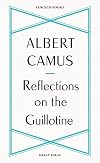
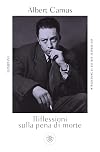
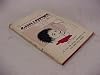
Reflections on the Guillotine
by Albert Camus
On This Page
Description
Written when execution by guillotine was still legal in France, Albert Camus' devastating attack on the 'obscene exhibition' of capital punishment remains one of the most powerful, persuasive arguments ever made against the death penalty.Tags
Recommendations















Member Reviews
(Read in French)
When you have a tendency towards art and thought that is difficult, abstract, contradictory, it can be edifying to come back to Camus, a man whose works, to my eye, have always emanated a kind of confidence. Even as he considers a life drained of meaning ( L'Étranger) or the capricious fate that decides who lives and who dies ( La Peste) you feel as if this is a person who decided early on how he was going to live his life and did so. The difficulty (maybe impossibility) of truly finding your way is built right into his worldview. Despite modern day political conservatives crowing about the influence of marxists and postmodernists on the left, I think Camus is one of the true well-springs of contemporary leftist show more thought, both for good and bad. His ideas are always practical, psychological; one must first come to terms with the meaning of their individual existence before anything else - given how one can spend a lifetime "finding meaning", this precept can often lead to a kind of political and social paralysis. It's a navel-gazing philosophy - there isn't necessarily anything wrong with that, but I sometimes find Camus lacking in specificity.
In this essay, Camus is as specific as I've ever seen him. You can tell that this was written with the intention of being read immediately, the audience being his contemporaries in the mid-century western world. He lays out a lot of compelling arguments about why capital punishment is a logically flawed practice, saying from the outset that he wants to avoid any emotional argument in favor of reasoned criticism. I found a lot of the ideas he set down to be novel, and even the classic arguments against capital punishment are worth absorbing again for the salience with which he writes. Most surprising to me is the final part of the book, where Camus's train of thought takes an anarchist, dare I say even libertarian bent - living through an era where the vast majority of excess death had been caused by State violence, Camus criticizes secular adherents of the death penalty as participating in the deification of the State, assuming that political bodies could replace God, and as such gain the right to mete out decisions on who lives and who dies. The capital punishment abolitionist, therefore, takes up the mantle of protecting the populace from the excesses of the political state, and also does their part in conserving what Camus terms as the only shared culture across the whole human race - that of opposition to dying.
Camus does briefly touch on the societal factors that play into who gets sentenced to death, but doesn't go deeply into how economic and social divisions play into the judicial system. He's going for a broad based attack on capital punishment, and so (perhaps wisely) avoids specifics. I do wish we got a little more bite out of his criticism of the sociopolitical systems that support such a practice - another thing that allies Camus to the feckless modern liberal is his unwillingness to cross over into true criticism of the economic and political hegemony, much less to to suggest any kind of action be taken. This is perhaps due to the vast amounts of violence he witnessed in his life in the name of ideas. I think that the most important underpinning idea in this essay (as Camus bases his abolitionism upon a series of ideas, rather than than one grand "anti-death penalty stance") is the the first that he discusses: if every execution is meant as a example to all deviants and ne'er-do-wells, why are modern executions carried out in the depths of prisons closed to the public? If the supporters of execution truly believed this, criminals would still be decapitated in public squares, or strung up on a rope for all to see. Camus rightly points out that supporters of execution know that if executions were done in public, there would be far fewer people in favor of them. In this way, we run up against one of the greatest contradiction in the Western, post-industrial lifestyle - so much of what we count on as the basis of our comfortable lives is hidden away from public view. If you ask someone if they oppose the sordid conditions of farm animals, or the terrible conditions of overseas workers, the abuses of police in impoverished areas, or wars waged for profit, you will often get a shrug in response; most people don't think these things concern them because they have never actually seen them. It seems to me that this central hypocrisy is the root cause for the general malaise and anxiety now flooding the western world. We know evil things are being done in the name of our comfort, we may even see videos or pictures on social media. We may even post in support of various social causes and far-flung revolutions, giving the illusion of having done something. But these calamities will, most likely, never affect our lives and the average citizen of the developed world will almost certainly never do anything about them. show less
When you have a tendency towards art and thought that is difficult, abstract, contradictory, it can be edifying to come back to Camus, a man whose works, to my eye, have always emanated a kind of confidence. Even as he considers a life drained of meaning ( L'Étranger) or the capricious fate that decides who lives and who dies ( La Peste) you feel as if this is a person who decided early on how he was going to live his life and did so. The difficulty (maybe impossibility) of truly finding your way is built right into his worldview. Despite modern day political conservatives crowing about the influence of marxists and postmodernists on the left, I think Camus is one of the true well-springs of contemporary leftist show more thought, both for good and bad. His ideas are always practical, psychological; one must first come to terms with the meaning of their individual existence before anything else - given how one can spend a lifetime "finding meaning", this precept can often lead to a kind of political and social paralysis. It's a navel-gazing philosophy - there isn't necessarily anything wrong with that, but I sometimes find Camus lacking in specificity.
In this essay, Camus is as specific as I've ever seen him. You can tell that this was written with the intention of being read immediately, the audience being his contemporaries in the mid-century western world. He lays out a lot of compelling arguments about why capital punishment is a logically flawed practice, saying from the outset that he wants to avoid any emotional argument in favor of reasoned criticism. I found a lot of the ideas he set down to be novel, and even the classic arguments against capital punishment are worth absorbing again for the salience with which he writes. Most surprising to me is the final part of the book, where Camus's train of thought takes an anarchist, dare I say even libertarian bent - living through an era where the vast majority of excess death had been caused by State violence, Camus criticizes secular adherents of the death penalty as participating in the deification of the State, assuming that political bodies could replace God, and as such gain the right to mete out decisions on who lives and who dies. The capital punishment abolitionist, therefore, takes up the mantle of protecting the populace from the excesses of the political state, and also does their part in conserving what Camus terms as the only shared culture across the whole human race - that of opposition to dying.
Camus does briefly touch on the societal factors that play into who gets sentenced to death, but doesn't go deeply into how economic and social divisions play into the judicial system. He's going for a broad based attack on capital punishment, and so (perhaps wisely) avoids specifics. I do wish we got a little more bite out of his criticism of the sociopolitical systems that support such a practice - another thing that allies Camus to the feckless modern liberal is his unwillingness to cross over into true criticism of the economic and political hegemony, much less to to suggest any kind of action be taken. This is perhaps due to the vast amounts of violence he witnessed in his life in the name of ideas. I think that the most important underpinning idea in this essay (as Camus bases his abolitionism upon a series of ideas, rather than than one grand "anti-death penalty stance") is the the first that he discusses: if every execution is meant as a example to all deviants and ne'er-do-wells, why are modern executions carried out in the depths of prisons closed to the public? If the supporters of execution truly believed this, criminals would still be decapitated in public squares, or strung up on a rope for all to see. Camus rightly points out that supporters of execution know that if executions were done in public, there would be far fewer people in favor of them. In this way, we run up against one of the greatest contradiction in the Western, post-industrial lifestyle - so much of what we count on as the basis of our comfortable lives is hidden away from public view. If you ask someone if they oppose the sordid conditions of farm animals, or the terrible conditions of overseas workers, the abuses of police in impoverished areas, or wars waged for profit, you will often get a shrug in response; most people don't think these things concern them because they have never actually seen them. It seems to me that this central hypocrisy is the root cause for the general malaise and anxiety now flooding the western world. We know evil things are being done in the name of our comfort, we may even see videos or pictures on social media. We may even post in support of various social causes and far-flung revolutions, giving the illusion of having done something. But these calamities will, most likely, never affect our lives and the average citizen of the developed world will almost certainly never do anything about them. show less
This was beat-for-beat a banger of a book - 82 page essay.
It was boring at moments when I was simply agreeing with him, but every point remains relevant today regarding the abolition of the death penalty.
It was boring at moments when I was simply agreeing with him, but every point remains relevant today regarding the abolition of the death penalty.
Ratings
Members
- Recently Added By
Lists

Reading LIst
648 works; 1 member

Llibres que he llegit el 2026
37 works; 1 member
Author Information

358+ Works 108,075 Members
Born in 1913 in Algeria, Albert Camus was a French novelist, dramatist, and essayist. He was deeply affected by the plight of the French during the Nazi occupation of World War II, who were subject to the military's arbitrary whims. He explored the existential human condition in such works as L'Etranger (The Outsider, 1942) and Le Mythe de Sisyphe show more (The Myth of Sisyphus, 1942), which propagated the philosophical notion of the "absurd" that was being given dramatic expression by other Theatre of the Absurd dramatists of the 1950s and 1960s. Camus also wrote a number of plays, including Caligula (1944). Much of his work was translated into English. He was awarded the Nobel Prize for Literature in 1957. Camus died in an automobile accident in 1960. (Bowker Author Biography) show less
Some Editions
Work Relationships
Common Knowledge
- Canonical title
- Reflections on the Guillotine
- Original title
- Réflexions sur la guillotine
Classifications
- Genres
- Nonfiction, Philosophy, Politics and Government, General Nonfiction
- DDC/MDS
- 364.66 — Society, government, & culture Social problems and social services Crime Punishment Death penalty
- LCC
- HV8555 .C313 — Social sciences Social pathology. Social and public welfare. Criminology Social pathology. Social and public welfare. Criminal justice administration Penology. Prisons. Corrections
- BISAC
Statistics
- Members
- 127
- Popularity
- 256,258
- Reviews
- 2
- Rating
- (4.03)
- Languages
- 7 — English, French, Hebrew, Italian, Portuguese (Portugal), Spanish, Swedish
- Media
- Paper, Ebook
- ISBNs
- 14
- ASINs
- 6