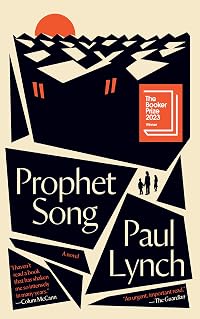
Prophet Song
by Paul Lynch
On This Page
Description
"On a dark, wet evening in Dublin, scientist and mother-of-four Eilish Stack answers her front door to find two officers from Ireland's newly formed secret police on her step. They have arrived to interrogate her husband, a trade unionist. Ireland is falling apart, caught in the grip of a government turning toward tyranny. As the life she knows and the ones she loves disappear before her eyes, Eilish must contend with the dystopian logic of her new, unraveling country. How far will she go to show more save her family? And what-or who-is she willing to leave behind? Exhilarating, terrifying, and surprisingly intimate, Prophet Song offers a shocking vision of a country at war and a deeply human portrait of a mother's fight to hold her family together"-- show lessTags
Recommendations





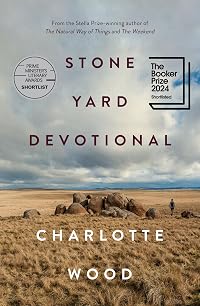
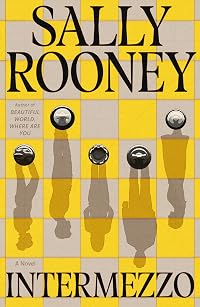
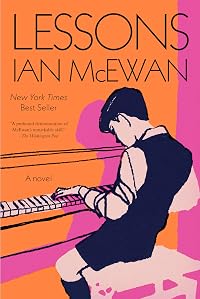
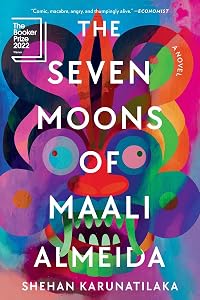






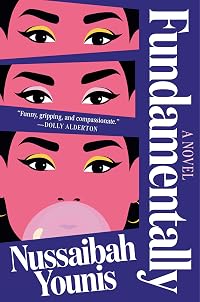
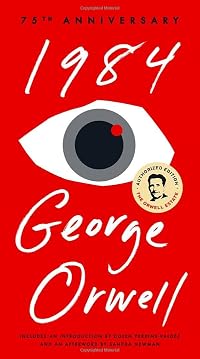
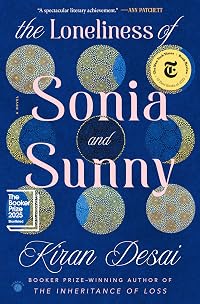
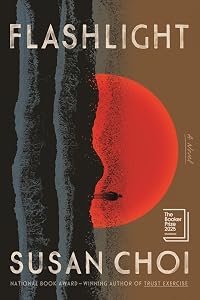


Member Recommendations
kjuliff Both extremely well written novels on the effects of war on civilians or POWs.
Member Reviews
An ordinary middle class Dublin family finds themselves in a terrifying situation, as a recently elected authoritarian government cracks down on organisations which offer any kind of challenge. Larry works for a teachers' trade union and is called in by the Garda (the Irish police) - a few days later, Eilish learns that her husband has been arrested on a demonstration. So this nightmare story set in a near future Ireland begins.
Eilish is soon struggling to hold her family's lives together, as she can't discuss the increasingly threatening situation, her children are angry and upset and then rebellious. The country's constitution, political and legal systems can be of no use, bosses and colleagues are frightened by Eilish even trying to show more discuss what is happening, and then by her presence in the workplace.
This is beautifully written in a slightly experimental style. I did struggle a bit with the long, long multipage paragraphs offering little time to pause for breath, but this form is deliberate, reflecting how quickly everything is happening, and Eilish has little time to think, let alone resist.
The book also shows how difficult a woman's life can be as a working mother, who also worries about her elderly father, whose husband has simply been taken away. And how can the Stack family go on a planned holiday to Canada to visit Eilish's sister when they cannot renew or sort out passports. How can they leave? How can they stay? What will happen to them?
A look at a very frightening possible future in Ireland, maybe, where it is set, or Britain, the US. Other readers have thought of current repressive states, but could this happen in our own countries? Has it happened in the past? (I thought of Latin America in the 1970s, Europe in the 1930s, perhaps again as new right wing Presidents and parties are elected, too). I also thought of the asylum seekers and refugees in my country and around the world, having to leave behind everything they know in terrifying situations, and facing disbelief, contempt and impossible bureaucratic hoops and obstacles whereever they go.
A compelling and chilling read. show less
Eilish is soon struggling to hold her family's lives together, as she can't discuss the increasingly threatening situation, her children are angry and upset and then rebellious. The country's constitution, political and legal systems can be of no use, bosses and colleagues are frightened by Eilish even trying to show more discuss what is happening, and then by her presence in the workplace.
This is beautifully written in a slightly experimental style. I did struggle a bit with the long, long multipage paragraphs offering little time to pause for breath, but this form is deliberate, reflecting how quickly everything is happening, and Eilish has little time to think, let alone resist.
The book also shows how difficult a woman's life can be as a working mother, who also worries about her elderly father, whose husband has simply been taken away. And how can the Stack family go on a planned holiday to Canada to visit Eilish's sister when they cannot renew or sort out passports. How can they leave? How can they stay? What will happen to them?
A look at a very frightening possible future in Ireland, maybe, where it is set, or Britain, the US. Other readers have thought of current repressive states, but could this happen in our own countries? Has it happened in the past? (I thought of Latin America in the 1970s, Europe in the 1930s, perhaps again as new right wing Presidents and parties are elected, too). I also thought of the asylum seekers and refugees in my country and around the world, having to leave behind everything they know in terrifying situations, and facing disbelief, contempt and impossible bureaucratic hoops and obstacles whereever they go.
A compelling and chilling read. show less
Mr. Lynch reached into my chest and tore my heart out and stomped on it, but he did so through such beautiful prose that I can't hate him. I want to give him and this book All The Stars. My copy is littered with dozens of Post-It flags marking passages that made me ache with the terrible dichotomy of the ugly story and its gorgeous telling.
At its center, it's a simple story of a mother's love for her children. The Stacks live an ordinary middle class life in Dublin, but it's not the Dublin we know. It's the heart of a newly fascist state where Larry Stack, a trade unionist, has been disappeared, where rights are being slowly eroded, and where the country soon descends into civil war. Through it all, Eilish strives to keep her four show more children grounded and safe, even as the dangers move ever closer.
I found the ending frustrating but appropriate to the story, and certainly the image of refugees from western Europe taking to small boats to escape to a better place was a pitch-perfect inversion of the current state of the world. In [Prophet Song], Paul Lynch has held up a funhouse mirror to our society, giving us a grotesque reflection of reality that exposes how easily distortion, disinformation, and unchecked power can remake it.
5 stars
"When Eilish closes her eyes now she sees only the past, a past that belongs to somebody else and she is emptiness watching from some cold and bottomless dark and is met with the feeling of the world grown intolerable..." show less
At its center, it's a simple story of a mother's love for her children. The Stacks live an ordinary middle class life in Dublin, but it's not the Dublin we know. It's the heart of a newly fascist state where Larry Stack, a trade unionist, has been disappeared, where rights are being slowly eroded, and where the country soon descends into civil war. Through it all, Eilish strives to keep her four show more children grounded and safe, even as the dangers move ever closer.
I found the ending frustrating but appropriate to the story, and certainly the image of
5 stars
"When Eilish closes her eyes now she sees only the past, a past that belongs to somebody else and she is emptiness watching from some cold and bottomless dark and is met with the feeling of the world grown intolerable..." show less
"The NAP {new government} is trying to change what you and I call reality, they want to muddy it like water if you say one thing is another thing and you say it enough times then it must be so, and if you keep saying it over and over people accept it as true."
One day Eilish, a Dublin mother of four who works as a scientist, finds her husband has been taken, presumably arrested, and officials won't tell her anything. There follows an insidious progression of events, some in the background, some in your face. Some people begin leaving, but Eilish can't get a passport for her youngest child, still an infant. She still can't locate her husband and doesn't want to leave until he returns. There are talks of internment camps as more and more show more are arrested. Then demonstrations at which the government shoots the demonstrators. The government declares a national emergency; habeas corpus is suspended; the government takes control of the judiciary, as well as the media; listening to foreign stations is outlawed; schools are closed; soldiers patrol the streets. Soon bombs are falling. What they said can't happen here has happened here. It's not somewhere faraway that's happening on the news.
Through it all we are focused on Eilish who is desperately trying to hold her family together. But events move beyond her control ("You cannot put a stop to the wind he says and the wind is going to blow right through this country....") as she and one member after the other of her family are affected in ways that will change them forever. The book is written in long sections without paragraphs, without quotation marks so that it is difficult to know when someone is speaking, and who that person might be, and there is scant other punctuation. This means the book requires close reading, we must move right in where Eilish and her family and the people around her are suffering, and suffer along with them. The style of writing is what makes this book so brilliant.
This was a very scary, and I will say prescient book. I look around at a country in which millions are willing to vote for a rapist and psychopathic con man, a man facing 91 felony counts, and a man who has told us what he will do in a second term, which would turn this country into a banana republic with him as King--starting with jailing his political rivals and anyone who has spoken an ill word of him, and I am terrified. The importance of this book is it shows us that yes, it can happen here, and unfortunately millions of people don't seem to care.
I leave you with these quotes from the book:
"it is vanity to think that the world will end during your lifetime in some sudden event, that what ends is your life and only your life, that what is sung by the prophets is but the same song sung across time, the coming of the sword, the world devoured by fire, the sun gone down into the earth at noon and the world cast into darkness..."
"The world is always ending over and over again in one place but not another and that the end of the world is always a local event, it comes to your country and visits your town and knocks on the door of your house and becomes to others some distant warning, a brief report on the news, an echo of events that has passed into folklore...."
and,
"How could he have known anyhow, how could any of us have known what was going to happen, I suppose other people seemed to know, but I never understood how they were so certain, what I mean is, you could never have imagined it, not in a million years, all that was to happen, and I could never understand those that left, how they could just leave like that, leave everything behind, all that life, all that living, it was absolutely impossible for us to do so at the time and the more I look at it the more it seems there was nothing we could do anyhow..."
Highly recommended.
5 stars show less
One day Eilish, a Dublin mother of four who works as a scientist, finds her husband has been taken, presumably arrested, and officials won't tell her anything. There follows an insidious progression of events, some in the background, some in your face. Some people begin leaving, but Eilish can't get a passport for her youngest child, still an infant. She still can't locate her husband and doesn't want to leave until he returns. There are talks of internment camps as more and more show more are arrested. Then demonstrations at which the government shoots the demonstrators. The government declares a national emergency; habeas corpus is suspended; the government takes control of the judiciary, as well as the media; listening to foreign stations is outlawed; schools are closed; soldiers patrol the streets. Soon bombs are falling. What they said can't happen here has happened here. It's not somewhere faraway that's happening on the news.
Through it all we are focused on Eilish who is desperately trying to hold her family together. But events move beyond her control ("You cannot put a stop to the wind he says and the wind is going to blow right through this country....") as she and one member after the other of her family are affected in ways that will change them forever. The book is written in long sections without paragraphs, without quotation marks so that it is difficult to know when someone is speaking, and who that person might be, and there is scant other punctuation. This means the book requires close reading, we must move right in where Eilish and her family and the people around her are suffering, and suffer along with them. The style of writing is what makes this book so brilliant.
This was a very scary, and I will say prescient book. I look around at a country in which millions are willing to vote for a rapist and psychopathic con man, a man facing 91 felony counts, and a man who has told us what he will do in a second term, which would turn this country into a banana republic with him as King--starting with jailing his political rivals and anyone who has spoken an ill word of him, and I am terrified. The importance of this book is it shows us that yes, it can happen here, and unfortunately millions of people don't seem to care.
I leave you with these quotes from the book:
"it is vanity to think that the world will end during your lifetime in some sudden event, that what ends is your life and only your life, that what is sung by the prophets is but the same song sung across time, the coming of the sword, the world devoured by fire, the sun gone down into the earth at noon and the world cast into darkness..."
"The world is always ending over and over again in one place but not another and that the end of the world is always a local event, it comes to your country and visits your town and knocks on the door of your house and becomes to others some distant warning, a brief report on the news, an echo of events that has passed into folklore...."
and,
"How could he have known anyhow, how could any of us have known what was going to happen, I suppose other people seemed to know, but I never understood how they were so certain, what I mean is, you could never have imagined it, not in a million years, all that was to happen, and I could never understand those that left, how they could just leave like that, leave everything behind, all that life, all that living, it was absolutely impossible for us to do so at the time and the more I look at it the more it seems there was nothing we could do anyhow..."
Highly recommended.
5 stars show less
I think I've found another new favorite author in Irish writer Paul Lynch, because his Booker Prize-winning PROPHET SONG (2023) presented me with one of the most compelling and frightening fictional scenarios I have ever experienced. Yes, "frightening." Because this dystopian story of what could be present-day Ireland, told from the vantage point of Eilish Stack, a forty-ish Dublin wife and mother of four, puts us right smack in the middle of an "it couldn't happen here" nightmare precipitated by a newly elected authoritarian regime. A new arm of the Garda is now knocking on doors and spririting people away in the dead of night and "disappearing" them. And Eilish's husband, a teacher and union rep, is one of the first to go. He is show more simply gone. But she bravely digs in, refusing to leave her home, as the country gradually descends into a bloody civil war. Then her sixteen year-old son, about to be drafted, goes underground to join the resistance. Still Eilish digs in, worried also about her aged widowed father across town, showing signs of dementia. Her co-workers at a science research firm also begin to disappear, replaced by government loyalists. Finally she too is let go. The war intensifies, government bombing and shelling reaching her very doorstep. Whole neighborhoods are reduced to rubble, until "there's nothing left but the people who refuse to leave."
In reading this chilling description of a country in turmoil and people being disappeared, I thought of Pinochet's dirty war in Chile where thousands of dissidents were "disappeared." But, and this was the most disturbing, I also thought of the hundreds of people being illegally "disappeared" right now here in our own country, by ICE. And I also flashed on all the images of Gaza, reduced to utter rubble and dust, and yet there are still tens of thousands there - "the people who refuse to leave."
Is this a frighteningly real novel? Hell yes. But the writing itself is often poetically beautiful, and Eilish Stack will be a character hard to forget. I cannot recommend this book highly eough. But I would caution my fellow Americans not to read it too close to bedtime, because it might cause nightmares. Yes - frightening.
- Tim Bazzett, author of the memoir, BOOKLOVER show less
In reading this chilling description of a country in turmoil and people being disappeared, I thought of Pinochet's dirty war in Chile where thousands of dissidents were "disappeared." But, and this was the most disturbing, I also thought of the hundreds of people being illegally "disappeared" right now here in our own country, by ICE. And I also flashed on all the images of Gaza, reduced to utter rubble and dust, and yet there are still tens of thousands there - "the people who refuse to leave."
Is this a frighteningly real novel? Hell yes. But the writing itself is often poetically beautiful, and Eilish Stack will be a character hard to forget. I cannot recommend this book highly eough. But I would caution my fellow Americans not to read it too close to bedtime, because it might cause nightmares. Yes - frightening.
- Tim Bazzett, author of the memoir, BOOKLOVER show less
Cormac McCarthy passed away this year but his spirit lives on in the visceral writing of Paul Lynch. The landscape is different with the lanes and houses of Dublin replacing the Badlands of the US but the human concerns are the same.
This is a book that is painful but rewarding to read. It is a book with a voice that demands to be heard - a voice decrying state overreach, the loss of liberty, inhumanity, oppression, the feral greed of conflict, the importance of human kindness and familial togetherness. It is a book without a proper end although there is a watershed of sorts. It is a book that chilled me to the bone severally and had little in the way of lightness about it. It is a book that forced you to read in chunks by its very show more structure. It is a book to be moved by and to remember.
I don't know whether this book will win the Booker, and I suspect it probably will not, but I do believe that it will outlive whatever does go on to win and it will certainly stay with me long after I came weeping to the end. show less
This is a book that is painful but rewarding to read. It is a book with a voice that demands to be heard - a voice decrying state overreach, the loss of liberty, inhumanity, oppression, the feral greed of conflict, the importance of human kindness and familial togetherness. It is a book without a proper end although there is a watershed of sorts. It is a book that chilled me to the bone severally and had little in the way of lightness about it. It is a book that forced you to read in chunks by its very show more structure. It is a book to be moved by and to remember.
I don't know whether this book will win the Booker, and I suspect it probably will not, but I do believe that it will outlive whatever does go on to win and it will certainly stay with me long after I came weeping to the end. show less
Summary: A mother tries to hold her family and life together as Ireland descends into authoritarian rule.
Paul Lynch’s Prophet Song, winner of the 2023 Booker Prize is a tough read in two respects. One is seeing the unraveling of a democratic society through the disbelieving eyes of Eilish stack, an educated, middle class mother who works for a biotech company. It is disturbing becausew of how close to home it strikes.
The other respect is the text, written without paragraphs with dialogue without quotation marks. Yet this running text reflects increasingly unsettled and anxious perceptions of Eilish, fusing dialogue, emotions, and interior thought. We sense her movement back and forth from disbelief to concern, from hollow assurances show more that even her children don’t believe to rising fear, from clinging to the hope that her “disappeared” will come home to the realization that no one taken by the government comes home, from the illusion that she can preserve her home and way of life and that their only hope is flight. It’s the increasingly frantic and instinctive thought of one who loses husband, two sons, her job, her respect as “traiter” is spray-painted on her car and home, as her neighborhood becomes a battleground between the regime and the resistance, and finally her flight with her daughter and infant son, having to pay “fees” at numerous checkpoints as she they try to flee. The running text takes us inside her mind and we live the growing terror with Eilish.
It all begins when the National Alliance Party takes over the Republic of Ireland, declares emergency powers and suspends the constitution including writs of habeas corpus. The reality comes home when her husband Larry, a leader in a teacher’s union, goes out to a protest–and never returns. Her eldest son Mark has to go into hiding to avoid the drafting of 17 year-olds. He joins the resistance. After infrequent communications on burner phones, Eilish hears no more, but persists in hoping he will come home. Then, after a list of draft-dodgers, including her son, is published, she learns her services are no longer required. Meanwhile, her father, across town, is descending into dementia. Yet, in his occasional lucid moments, he tells her she must take the children and leave.
Subsequently, her neighborhood becomes front lines in the battle between the Party and the resistance. Power and water are intermittent and the gone. Buildings around suffer bombardment. Yet she uses all her resources, including money from her sister for her to get out of the country to survive. She can’t let go of hope that her husband and son will come home. Only when another son goes missing does she realize that she must save the two who remain–if she can.
The story takes us into the powerful disbelief that democracy really can’t unravel and how rapidly a society can consume itself when it does. We also see how powerful the urge is to try to hold onto home, onto some shred of normalcy. We glimpse how bad things must get for someone to flee from home and become a refugee. When Eilish’s neighborhood becomes a warzone, her running narrative gives the reader of what lived reality must be like in Gaza and other warzones.
Paul Lynch takes us to a place those of us in the West resist going. We join Eilish in denial that it can happen here–that our institutions, the rule of law, our education, jobs, and suburbs will protect us. He forces us to look into the dark abyss through the eyes of Eilish to recognize the vulnerability of all of this when we embrace unfettered power rather than the less “efficient” processes of the rule of law and democratic legislative processes. His book reminds us that the possibility of effective resistance after the fact is far more perilous than resisting beforehand, as inconvenient as that may be. Is this book a “Prophet Song” for us? show less
Paul Lynch’s Prophet Song, winner of the 2023 Booker Prize is a tough read in two respects. One is seeing the unraveling of a democratic society through the disbelieving eyes of Eilish stack, an educated, middle class mother who works for a biotech company. It is disturbing becausew of how close to home it strikes.
The other respect is the text, written without paragraphs with dialogue without quotation marks. Yet this running text reflects increasingly unsettled and anxious perceptions of Eilish, fusing dialogue, emotions, and interior thought. We sense her movement back and forth from disbelief to concern, from hollow assurances show more that even her children don’t believe to rising fear, from clinging to the hope that her “disappeared” will come home to the realization that no one taken by the government comes home, from the illusion that she can preserve her home and way of life and that their only hope is flight. It’s the increasingly frantic and instinctive thought of one who loses husband, two sons, her job, her respect as “traiter” is spray-painted on her car and home, as her neighborhood becomes a battleground between the regime and the resistance, and finally her flight with her daughter and infant son, having to pay “fees” at numerous checkpoints as she they try to flee. The running text takes us inside her mind and we live the growing terror with Eilish.
It all begins when the National Alliance Party takes over the Republic of Ireland, declares emergency powers and suspends the constitution including writs of habeas corpus. The reality comes home when her husband Larry, a leader in a teacher’s union, goes out to a protest–and never returns. Her eldest son Mark has to go into hiding to avoid the drafting of 17 year-olds. He joins the resistance. After infrequent communications on burner phones, Eilish hears no more, but persists in hoping he will come home. Then, after a list of draft-dodgers, including her son, is published, she learns her services are no longer required. Meanwhile, her father, across town, is descending into dementia. Yet, in his occasional lucid moments, he tells her she must take the children and leave.
Subsequently, her neighborhood becomes front lines in the battle between the Party and the resistance. Power and water are intermittent and the gone. Buildings around suffer bombardment. Yet she uses all her resources, including money from her sister for her to get out of the country to survive. She can’t let go of hope that her husband and son will come home. Only when another son goes missing does she realize that she must save the two who remain–if she can.
The story takes us into the powerful disbelief that democracy really can’t unravel and how rapidly a society can consume itself when it does. We also see how powerful the urge is to try to hold onto home, onto some shred of normalcy. We glimpse how bad things must get for someone to flee from home and become a refugee. When Eilish’s neighborhood becomes a warzone, her running narrative gives the reader of what lived reality must be like in Gaza and other warzones.
Paul Lynch takes us to a place those of us in the West resist going. We join Eilish in denial that it can happen here–that our institutions, the rule of law, our education, jobs, and suburbs will protect us. He forces us to look into the dark abyss through the eyes of Eilish to recognize the vulnerability of all of this when we embrace unfettered power rather than the less “efficient” processes of the rule of law and democratic legislative processes. His book reminds us that the possibility of effective resistance after the fact is far more perilous than resisting beforehand, as inconvenient as that may be. Is this book a “Prophet Song” for us? show less
“the world is always ending over and over again in one place but not another and that the end of the world is always a local event, it comes to your country and visits your town and knocks on the door of your house and becomes to others but some distant warning, a brief report on the news, an echo of events that has passed into folklore,”
We are living in turbulent times and it seems at times to be spinning out of control. It is just not here in the states but warning drums are sounding across the globe. In his brilliant, prophetic novel, Mr Lynch captures a terrifying near-future, where his homeland of Ireland falls into the ugly grip of a totalitarian state. The story revolves around one family, especially the mother, who tries show more desperately to shield her family from the coming storm. A devastating but important read.
Worthy of the Booker Prize. show less
We are living in turbulent times and it seems at times to be spinning out of control. It is just not here in the states but warning drums are sounding across the globe. In his brilliant, prophetic novel, Mr Lynch captures a terrifying near-future, where his homeland of Ireland falls into the ugly grip of a totalitarian state. The story revolves around one family, especially the mother, who tries show more desperately to shield her family from the coming storm. A devastating but important read.
Worthy of the Booker Prize. show less
Members
- Recently Added By
Published Reviews
ThingScore 100
With his winding, dread-filled sentences and without paragraph breaks, Lynch plunges readers into this nightmare and scarcely provides any space to breathe....At times, the novel's relentless bleakness made it almost unbearable to read. And yet its plausibility kept me from looking away....The lesson for readers is not necessarily to wake up to signs of totalitarianism knocking at our doors, show more but to empathize with those for whom it has already called. show less
added by Lemeritus
Lynch stays deliberately vague, partly so that the story can serve as a more general allegory, but there’s a cost to the allegory, too. Without an emergency, without any kind of immediate history, it’s hard to understand what the nationalists are fighting for ... This is not a funny book; it’s fairly relentless, even before things go haywire. I wouldn’t have minded a little more show more acceptable, less intense life ... Lynch’s decision to leave the political context blank starts to pay off. What’s happening to Eilish opens out into a much larger and older story of displacement, as she struggles to find a passage with whatever family she has left into something like civilization. show less
added by Lemeritus
His story about the modern-day ascent of fascism is so contaminated with plausibility that it’s impossible not to feel poisoned by swelling panic ... Eilish is a carefully-drawn portrait of affection and grit ... [A] relentless novel. It’s written in the grammar of dread. The sentences cascade from one to the next without so much as a moment’s breath. And with no paragraph breaks to show more cling to, every page feels as slippery as the damp walls of a torture chamber. I have not read such a disturbing novel since Richard Flanagan’s The Narrow Road to the Deep North, which won the Booker Prize almost 10 years ago. show less
added by Lemeritus
Lists

Best Dystopias
280 works; 272 members

Recommend the 20 best books you've read in the last five years
2,168 works; 601 members

Books Read in 2023
5,638 works; 147 members

2023 Christmas Gifts
39 works; 11 members

Top Five Books of 2023
767 works; 317 members

Books Read in 2024
4,727 works; 128 members

New Books March
15 works; 1 member

Booker Prize Longlist 2023
13 works; 1 member
Top Five Books of 2024
795 works; 264 members

Books Read in 2025
4,128 works; 98 members

Books We Discovered On LibraryThing
530 works; 130 members
Top Five Books of 2025
954 works; 303 members
Author Information

5 Works 2,551 Members
Some Editions
Awards and Honors
Awards
Distinctions
The Guardian Book of the Day (2023-08-31)
Series
Belongs to Publisher Series
Antípoda (86)
Common Knowledge
- Canonical title
- Prophet Song
- Original publication date
- 2023-08-24
- People/Characters
- Eilish Stack; Larry Stack
- Important places
- Dublin, Ireland; Kevin Street Garda Station, Dublin 8, Dublin, Ireland; Clontarf, Dublin, Ireland
- Epigraph
- The thing that hath been, it is that which shall be; and that which is done is that which shall be done; and there is no new thing under the sun.
Ecclesiastes 1:9
In the dark times
will there also be singing?
Yes, there will also be singing.
About the dark times.
Bertolt Brecht - Dedication
- For Anna, Amelie and Elliot
- First words
- The night has come and she has not heard the knocking, standing at the window looking out onto the garden.
- Quotations
- She looks to the sky watching the rain as it falls through space and there is nothing to see in the ruined yard but the world insisting on itself, the cement's sedate crumbling giving way to the rising sap beneath, and when t... (show all)he yard is past there will remain the world's insistence, the world insisting it is not a dream and yet to the looker there is no escaping the dream and the price of life that is suffering, and she sees her children delivered into a world of devotion and love and sees them damned to a world of terror, wishing for such a world to end, wishing for the world its destruction, and she looks at her infant son, this child who remains an innocent and she sees how she has fallen afoul of herself and grows aghast, seeing that out of terror comes pity and out of pity comes love and out of love the world can be redeemed again, and she can see that the world does not end, that it is vanity to think the world will end durig your lifetime in some sudden event, that what ends is your life and only your life, that what is sung by the prophets is but the same song sung across time, the coming of the sword the world devoured by fire, the sun gone down into the earth at noon and the world cast in darkness, the fury of some god incarnate in the outh of the prophet raging at the wickedness that will be cast out of sight, and the prophet sigs not of the end of the world but of what has been done and what will be done and what is being done to some but not others, that the world is always ending over and over again in one place but not another and tha the end of the world is always a local event, it comes to your country and visits your town and knocks on the door of your house and becomes to others but some distant warning, a brief report on the news, an echo of events that has passed into folklore, Ben's laughter behind her and she turns and sees Molly tickling him on her lap and she watches her son and sees in his eyes a radiant intensity that speaks of the world before the fall and she is on her knees crying, taking hold of Molly's hand. (pp. 303-305)
- Last words
- (Click to show. Warning: May contain spoilers.)She looks for Molly's eyes and cannot find the right words, there are no words now for what she wants to say and she looks towards the sky seeing only darkness knowing she has been at one with this darkness and that to stay would be to remain in this dark when she wants for them to live, and she touches her son's head and she takes Molly's hands and squeezes them as though saying she will never let go, and she says, to the sea, we must go to the sea, the sea is life.
- Blurbers
- Doyle, Rob; Harvey, Samantha; McCann, Colum; Rash, Ron; Hickey, Christine Dwyer
- Canonical DDC/MDS
- 823.92
- Canonical LCC
- PR6112.Y534
Classifications
Statistics
- Members
- 1,960
- Popularity
- 10,840
- Reviews
- 93
- Rating
- (4.20)
- Languages
- 12 — Catalan, Dutch, English, French, German, Greek, Italian, Polish, Portuguese, Russian, Spanish, Swedish
- Media
- Paper, Audiobook, Ebook
- ISBNs
- 31
- ASINs
- 17