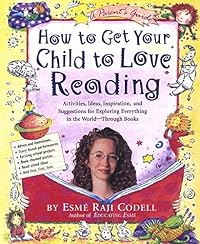
How to Get Your Child to Love Reading: For Ravenous and Reluctant Readers Alike
by Esmé Raji Codell
On This Page
Description
Blending her experience as both a teacher and a parent with a passion for children's literature, Codell presents this indispensable resource for parents that puts kids on the road to reading. Includes fun-filled activities that emphasize excitement and thousands of book recommendations on a variety of subjects.Tags
Recommendations





Member Reviews
I love the concept of this book - children's books arranged categorically, to make it possible to choose by theme. For organizing something like a children's library storytime, it would be an invaluable resource. As a parent, though, I wished for descriptions of each work, and found that something about the selections never struck me as being quite right - it is just never the right time, or for some reason, Bella and I just haven't loved the books selected.
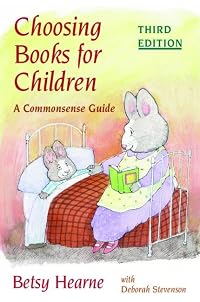
There are a lot of interesting ideas interspersed throughout the book - things you can do to promote reading, either in your classroom as a teacher, or at home. I think the book lacks clear organization that would make those ideas easily accessible though. In practice, it languishes show more on my shelf, filled with ideas I know I could use, if I only had the patience to hunt for them. Other books fulfill this book's purpose for me in a better way - Oppenheim's Choosing Books for Kids stands out here. show less
There are a lot of interesting ideas interspersed throughout the book - things you can do to promote reading, either in your classroom as a teacher, or at home. I think the book lacks clear organization that would make those ideas easily accessible though. In practice, it languishes show more on my shelf, filled with ideas I know I could use, if I only had the patience to hunt for them. Other books fulfill this book's purpose for me in a better way - Oppenheim's Choosing Books for Kids stands out here. show less
This book speaks to several of my ambitions for librarianship, which are to 1) foster a love of reading, 2) create library “repeat customers,” and 3) encourage life-long learning.
Author Esmé Raji Codell compares children’s literature to a potato, because it’s versatile and plentiful. But “if you hand somebody a potato, or if you hand somebody a children’s book, and he doesn’t know how to make it cook ... well, then.”
This book’s purpose is to aid those adults who match children with appropriate literature, who want to help children form positive associations with books and reading.
It begins with “Children’s Book Basics” that address motivations in reading, the value of read-alouds, and more. Of particular show more interest, because the school where I work integrates art in its curriculum, was a section in the book that discusses integrating art and literature.
Codell suggests several questions for discussing artwork and layout:
“Why do you think the author chose these colors? How do they make you feel?” ... “What art supplies do you think the artist used to create this picture?” ... “When you look at this picture, does this character / object seem near or far? Why?” ... “What in this picture tells us when the story happened and where the story happened?” ... “What in the character’s body or face shows you how he feels?”
I expect to refer often to this book for ideas and inspiration. show less
Author Esmé Raji Codell compares children’s literature to a potato, because it’s versatile and plentiful. But “if you hand somebody a potato, or if you hand somebody a children’s book, and he doesn’t know how to make it cook ... well, then.”
This book’s purpose is to aid those adults who match children with appropriate literature, who want to help children form positive associations with books and reading.
It begins with “Children’s Book Basics” that address motivations in reading, the value of read-alouds, and more. Of particular show more interest, because the school where I work integrates art in its curriculum, was a section in the book that discusses integrating art and literature.
Codell suggests several questions for discussing artwork and layout:
“Why do you think the author chose these colors? How do they make you feel?” ... “What art supplies do you think the artist used to create this picture?” ... “When you look at this picture, does this character / object seem near or far? Why?” ... “What in this picture tells us when the story happened and where the story happened?” ... “What in the character’s body or face shows you how he feels?”
I expect to refer often to this book for ideas and inspiration. show less
How to Get Your Child to Love Reading: For Ravenous and Reluctant Readers Alike, A Parent’s Guide by Esme Raji Codell. Epiphany Library section: Life Skills, Learning, K-12. Along with The Read Aloud Handbook by Jim Trelease in our library, this thick compendium is the most authoritative, influential, thorough look at children’s literature I have yet to find. Codell, a teacher, librarian and author, includes activities, inspiration and ideas for exploring everything in the world through books.
The first chapter discusses background information on reading aloud to kids, connecting reading with cooking and parties, history and time travel, with math and science, with theater and film, fairy tales and fantasy. There is information on show more nurturing book lovers and book creators, and lists, lists, lists of books – for a rainy day, family stories, friendship, animals, pets, love stories, circus, toyland, space, gardening, and books for sick children. There are books with strong girl characters, must-reads by the time you are 13, teen angst books, and cyberspace: the last reading frontier. Appendices contain Newbery award winners (best children’s book of the year), Caldecott winners (best illustrated book of the year), and resources for teachers such as sample reading certificates for kids and how to make reading displays.
If you need a gift for new parents, I suggest giving this book. So many parents WANT to read to their kids; they are just not sure about how to go about it, or which books to select. This book is a key that unlocks the world of books for parents and children. Another treat is Codell’s web site, www.planetesme.com. Full color, with lots of glittery appeal, there are contests kids can enter, activities for connecting reading with festivals, holidays, the seasons; and there are hundreds of book reviews with the book covers in full color. It’s easy to find books that appeal to your child’s interests. Note them and then find them at Epiphany’s library and the public library.
Reading is one of life’s sweetest pleasures. Being able to read well and enjoying reading are also critical to school and life success. Read to children from infancy to age 13, if they will allow you to. By that time you will be reading exciting classic children’s/adult literature together – Little Women, Romeo and Juliet, Kidnapped. Read aloud half an hour each day. Many parents read aloud at their child’s bedtime, but you can also read aloud in waiting rooms, in car or plane, or at the laundromat. Don’t be surprised if others gather around to listen! That’s so great! Just because your child learns to read independently doesn’t mean you should stop reading aloud. Why, even adults love to be read to, and the “hams” among us love to read aloud, doing the dialects, and adding lots of expression.
Books make childhood such a special time of life by connecting them to the big wide world, and this helpful resource will suggest kid-tested books that will enthrall both you and your child. show less
The first chapter discusses background information on reading aloud to kids, connecting reading with cooking and parties, history and time travel, with math and science, with theater and film, fairy tales and fantasy. There is information on show more nurturing book lovers and book creators, and lists, lists, lists of books – for a rainy day, family stories, friendship, animals, pets, love stories, circus, toyland, space, gardening, and books for sick children. There are books with strong girl characters, must-reads by the time you are 13, teen angst books, and cyberspace: the last reading frontier. Appendices contain Newbery award winners (best children’s book of the year), Caldecott winners (best illustrated book of the year), and resources for teachers such as sample reading certificates for kids and how to make reading displays.
If you need a gift for new parents, I suggest giving this book. So many parents WANT to read to their kids; they are just not sure about how to go about it, or which books to select. This book is a key that unlocks the world of books for parents and children. Another treat is Codell’s web site, www.planetesme.com. Full color, with lots of glittery appeal, there are contests kids can enter, activities for connecting reading with festivals, holidays, the seasons; and there are hundreds of book reviews with the book covers in full color. It’s easy to find books that appeal to your child’s interests. Note them and then find them at Epiphany’s library and the public library.
Reading is one of life’s sweetest pleasures. Being able to read well and enjoying reading are also critical to school and life success. Read to children from infancy to age 13, if they will allow you to. By that time you will be reading exciting classic children’s/adult literature together – Little Women, Romeo and Juliet, Kidnapped. Read aloud half an hour each day. Many parents read aloud at their child’s bedtime, but you can also read aloud in waiting rooms, in car or plane, or at the laundromat. Don’t be surprised if others gather around to listen! That’s so great! Just because your child learns to read independently doesn’t mean you should stop reading aloud. Why, even adults love to be read to, and the “hams” among us love to read aloud, doing the dialects, and adding lots of expression.
Books make childhood such a special time of life by connecting them to the big wide world, and this helpful resource will suggest kid-tested books that will enthrall both you and your child. show less
I am thinking I may need to purchase this book! This is a treasure trove of quality book suggestions for kids.
Author of The First Year Teacher Excellent resource for teaching children about books
Members
- Recently Added By
Author Information

14 Works 3,391 Members
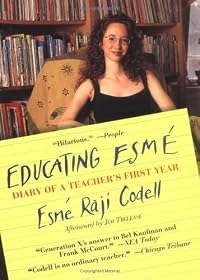
Esme Raji Codell is an avid collector of sparkly stickers and a pretty good roller skater. She is also the author of Educating Esme: Diary of a Teacher's First Year, which won an Alex Award, given for the best adult books for young adults, among many honors. She has worked as a children's bookseller, teacher, and school librarian, and now runs the show more popular children's literature Web site www.planetesme.com. Esme lives in Chicago with her husband and son show less
Classifications
- Genre
- Nonfiction
- DDC/MDS
- 028.55 — Computer science, information & general works Library & information sciences Reading and use of other information media Reading of young; Juveniles For Specific Interests
- LCC
- Z1037 .A1 .C58 — Bibliography, Library Science and Information Resources General bibliography Books for special classes of persons, institutions, etc.
- BISAC
Statistics
- Members
- 316
- Popularity
- 100,591
- Reviews
- 7
- Rating
- (4.27)
- Languages
- English
- Media
- Paper
- ISBNs
- 2
- UPCs
- 1
- ASINs
- 1