On This Page
Description
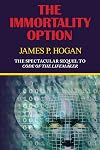
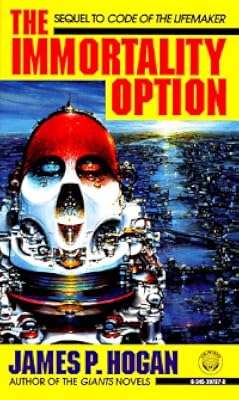
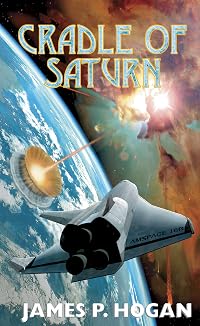
In this spectacular sequel to the acclaimed Code of the Lifemaker, James Hogan returns to the strange world of Titan, inhabited by bizarre self-conscious robots.Little is known about the civilization that gave birth to these machine intelligences, until scientists discover blocks of embedded computer code that appear to be strangely out of place.
Reactivating the computer codes results in the re-awakening of ancient beings, creators of the strange robot culture, totally alien and immensely show more powerful. And they are unhappy at being restrained wihtin the narrow confines of the machines they find themselves in. They would much rather be the masters of all.
But while the scientists are helpless against these mighty beings, Karl Zambendorf, the media-star "psychic," and his support team prepare to meet the challenge.
The alien intelligences might be intellectually superior and super-rational, but this also makes them hyper-materialistic and mechanistic in their outlook ... hence, totally unprepared for such "higher" concepts as the spiritual, the mystical, and the transcendental. And selling such notions is precisely Zambendorf's stock in trade.
"...on the cutting edge of technology...Hogan's talent carries the reader from peak to peak in the story" - Booklist
. show less
Tags
Recommendations



















Member Reviews
This is a sequel to The Code of the Lifemaker. I really liked that one beyond expectations. Unlike other Hogan books I'd read, it was well-paced, not preachy or of any recognizably political flavor, was free of eye-glazing over-detail--and had an original premise: On Titan, abandoned machines of a dead alien civilization have evolved a mechanical "biosphere" of robots. It had characters more memorable than usual for Hogan, particularly Karl Zambendorf, purported psychic, who returns in this book with his team. The theme of the first book, reason and science as a candle in the dark, resonated with me, and it was all handled with a light touch and humor, having me grinning from the beginning.
I read Hogan himself felt he was satisfied with show more leaving the first book as a standalone, but his publisher urged a sequel. I wish they had left well enough alone. This just doesn't have the life the other book did, which was effortless to read, while this dragged. I'm not sure why, except that maybe it's that while Hogan is great at ideas, he's not so good at characterization and style in ways that could sustain such ideas over two books. What was fresh in the first is, been there, done that in the second. show less
I read Hogan himself felt he was satisfied with show more leaving the first book as a standalone, but his publisher urged a sequel. I wish they had left well enough alone. This just doesn't have the life the other book did, which was effortless to read, while this dragged. I'm not sure why, except that maybe it's that while Hogan is great at ideas, he's not so good at characterization and style in ways that could sustain such ideas over two books. What was fresh in the first is, been there, done that in the second. show less
I did not like this one nearly as much as its predecessor, The Code of the Lifemaker. This continues the story from that volume by filling in what is happening to the aliens, and how this whole thing worked out.
It was interesting, it held my attention, but it's probably not something I will ever reread. I had some trouble believing the ending was "plausible", whatever plausible means in this science-fiction world.
It was interesting, it held my attention, but it's probably not something I will ever reread. I had some trouble believing the ending was "plausible", whatever plausible means in this science-fiction world.
Ratings
Members
- Recently Added By
Author Information

78+ Works 11,739 Members
James P. Hogan was born in London on June 27, 1941. He left school at the age of sixteen and eventually began an intensive, broad-based five-year program at the Royal Aircraft Establishment covering the practical and theoretical sides of electrical, electronic, and mechanical engineering. He worked as a design engineer for several companies before show more moving to sales. He started writing science fiction books in the 1970s and became a full-time writer in 1979. He wrote 30 fiction and non-fiction books during his lifetime including Inherit the Stars, Voyage from Yesteryear, and Kicking the Sacred Cow. He won three Seiun-sho awards, which were voted for by Japanese science fiction fans. He died suddenly on July 12, 2010 at the age of 69. (Bowker Author Biography) show less
Series

Common Knowledge
- Original title
- The Immortality Option
- Original publication date
- 1995
- Dedication
- To June, Yvette,and Lucy
- First words
- By the second decade of the twenty-first century the nations of Earth, while as prone as ever to localized squabblings that would probably be a part of the human scene for as long as humanity endured, had receded from the spe... (show all)cter of global doomsday that had tied up entire industries of creative talent and stifled vision for over fifty years.
- Last words
- (Click to show. Warning: May contain spoilers.)Five hours later, the Shirasagi fired its main drive to lift out of Titan orbit and came around onto a course that would carry it back in the direction of the inner region of the solar system, toward the beckoning warm glow of the sun.
Classifications
Statistics
- Members
- 322
- Popularity
- 99,367
- Reviews
- 3
- Rating
- (3.30)
- Languages
- English
- Media
- Paper, Ebook
- ISBNs
- 8
- ASINs
- 2