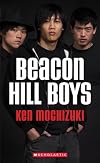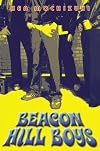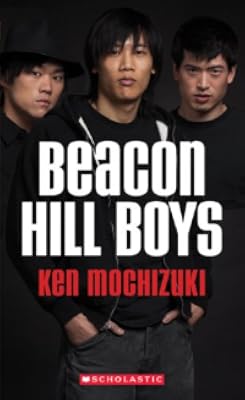
Beacon Hill Boys
by Ken Mochizuki
On This Page
Description
In 1972 in Seattle, a teenager in a Japanese American family struggles for his own identity, along with a group of three friends who share his anger and confusion.Tags
Recommendations





























Member Reviews
The point of view of a male sansei is unique in the Asian American literature I’ve read – most novels dealing with Japanese Americans are from the point of view of issei or nisei. Also, I like that the author set the story in the early 70s with both the Vietnam war and the civil rights era as a backdrop – again, many novels featuring Japanese Americans are set in the WWII era. Frankly, the Asian American kids I know get pretty bored of hearing about WWII and Japanese internment, because now that it’s part of the curriculum it’s not the same outrage it was for my generation, like it was a big government secret or something. Similar to Native American kids, they get sick of seeing themselves always depicted in the past instead show more of in a contemporary reality to which they can relate. They really don’t want to read about immigrants, they want to read about people who were born here and identify as Americans. Dan is a great contemporary Asian American character who defies the model minority stereotype. show less
Dan Inagaki is 16 in early 1970s Seattle. He chafes under the Japanese ways of his parents and resents comparisons to his older brother Brad, an athlete and scholar. Dan and his friends float through life, frustrated at the opportunities they'll never have and the stereotypes they can't and won't live up to. Dan is particularly interested in the Japanese internment and his father's war experiences but cannot get the full story out of anyone. It's his comparative American cultures class that begins to give him a glimpse of his parents' histories.
I'm not sure how I feel about this book. Giving it four stars because I think it's important to the historical record as a YA story about Japanese American teens discovering activism in the 70s.
But the story was uneven. Written about high school juniors, but the language and storytelling read more like a middle grade book. And we saw a lot of the MC thinking about girls, and then suddenly we were being told about these other things he did which he literally never thought of. If this had been written about 13 year old and not 17 years olds it would have made more sense to me. As it is, it was just too uneven for me to love it as much as I wanted too.
Still the conceptual picture of being a Japanese American teen in Seattle (in the 70s or show more whenever really) was refreshing and interesting. Short and easy to read in a single sitting (I got distracted by current events). show less
But the story was uneven. Written about high school juniors, but the language and storytelling read more like a middle grade book. And we saw a lot of the MC thinking about girls, and then suddenly we were being told about these other things he did which he literally never thought of. If this had been written about 13 year old and not 17 years olds it would have made more sense to me. As it is, it was just too uneven for me to love it as much as I wanted too.
Still the conceptual picture of being a Japanese American teen in Seattle (in the 70s or show more whenever really) was refreshing and interesting. Short and easy to read in a single sitting (I got distracted by current events). show less
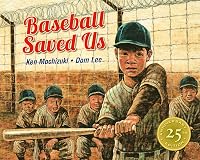
Set in the working class Beacon Hill neighborhood of Seattle in the early 1970’s, Beacon Hill Boys by Ken Mochizuki tells a fiction story about a 16 year-old boy , Dan Inagaki whose parents would like him to be more like his older brother, Brad Inagaki. Brad is a handsome senior who is a star student with a scholarship to Stanford University, an excellent football and baseball player and has a white girlfriend. Dan’s parents consider Brad the perfect son, however Dan is not interested in what his parents’ think of him, instead him and his friends are frustrated because they are tired of being called “Orientals” by their teachers and coaches and they struggle to comprehend their ethnicity as Japanese Americans. Dan’s having a show more rough time at home, where his parents compare him to Golden Boy Brad and at school, where his history teacher replies to his question about Japanese internment camps by saying, "We only teach American history around here." Dan joins with Native American and Chicano students to ask for a history class that addresses not only the camps but also "Cesar Chavez and Wounded Knee." The Vietnamese war is going on during this time and although Marvin Gaye’s song, “What’s Going On” was repeatedly played and sung at Dan’s school, “singing along with Marvin was one thing, doing what he said was another.” No one in his family understands Dan; however his friends, Jerry Ito, Eddie Kanegae and Frank Ishimoto realize his anger and isolation. By coming together, these Beacon Hill boys struggle to grow up in an America that continues to see Asian Americans “assimilate rather than stir up the proverbial melting pot.” Dan agitates at school to be taught about comparative American cultures and pressures his father into telling him about what happened to him in the internment camps, though his father is reluctant to talk about the past. Learning about the past helps Brad come to terms with the present and as his father, whose motto had been “The nail that sticks up the highest gets hit the hardest,” appreciates Brad’s courage in fighting for knowledge and his rights. Dan Inagaki and the other Beacon Hill boys’ struggle and to find themselves and identify their ethnicity as Japanese Americans reflects the American Dream and the strive for a better lifestyle. Ken Mochizuki portrays a story of friendship, dignity and discontent and teaches the reader the importance of one’s knowledge of their culture. Mochizuki was born in Seattle, Washington and has written many books such as “Baseball Saved Us”, and “Passage to Freedom; The Sugihara Story”. In 1999, the United States Army hired him to give presentations on the history of Asian Americans in the United States Military. Currently, he is a full-time author, a free-lance writer and travels extensively to speak to students, teachers and librarians about his work. Mochizuki’s writing is moving, easy to understand and very simple. His use of italics to show what the character really wants to say instead of what they actually say is helpful when it comes to understanding what the character really feels. For example when Dan and his family are eating at a restaurant for Steve’s birthday, Mochizuki writes, “I wanted to scream: She said ‘no’ already! How many times you gotta hear it?” Ken Mochizuki’s elegant yet simple writing style makes Beacon Hill Boys an interesting and fun book to read. -F.K. show less
Ratings
Members
- Recently Added By
Lists

High School Novels about Immigration
40 works; 1 member
Author Information

11+ Works 2,832 Members
Ken Mochizuki was born in Seattle, Washington in 1954. He grew up in the Beacon Hill neighborhood of south Seattle. He graduated from the University of Washington in 1976 with a BA in Communications. Mochizuki was a journalist and actor for many years before writing his picture books and novel, Beacon Hill Boys. (Bowker Author Biography)
Awards and Honors
Classifications
Statistics
- Members
- 73
- Popularity
- 432,164
- Reviews
- 4
- Rating
- (2.67)
- Languages
- English
- Media
- Paper
- ISBNs
- 5
- ASINs
- 1