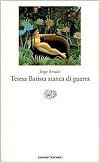
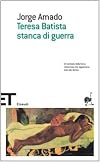
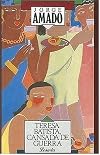
Tereza Batista: Home From the Wars
by Jorge Amado
On This Page
Description
A woman escapes the poverty of her birth and enslavement by becoming a millionaire's mistress.Tags
Recommendations

























Member Reviews
This epic work from Brazilian author Jorge Amado tells the story of Tereza Batista, a beautiful woman with flashes of lightning in her eyes, and an aura about her. She’s the defender of the downtrodden, maintaining personal integrity and quiet determination despite a horrifying upbringing, and despite love that comes and goes, bringing her heartache.
Amado tells the first few segments of Tereza’s life out of sequence, which I found enhances the story. He also creates one of literature’s most evil villains in Justiniano Duarte de Rosa, who makes a game of enslaving and raping young girls, Tereza included. The novel is memorable because of it. Tereza goes through other relationships, including being an older man’s mistress, show more becomes a prostitute and a nightclub dancer, and heroically nurses smallpox victims while others flee. It’s a novel that’s full of life, with manly men, sexy women, good and evil, scenes which sizzle, and touches of voodoo spirits besides.
The novel falls apart in the last section when the prostitutes, at Tereza’s urging, go on strike. It’s highly repetitive, poorly constructed, and in need of editing, almost as if the last 140 pages of this 555 page epic didn’t get as much attention as what came before them.
I also wonder, what would a woman think of this book? For while Amado doesn’t glamorize prostitution, he certainly doesn’t describe its horrors, and it seems acceptable that the heroine takes this life when necessary. Also, while Tereza is a strong, courageous woman, the roles that men and women play here are pretty traditional.
Tereza is meant to symbolize the spirit and determination of Brazilians, who overcome adversity, show empathy for the poor and sick, maintain their love of life and their passion, and never stop dreaming. In this he’s successful, and I liked reading this book. show less
Amado tells the first few segments of Tereza’s life out of sequence, which I found enhances the story. He also creates one of literature’s most evil villains in Justiniano Duarte de Rosa, who makes a game of enslaving and raping young girls, Tereza included. The novel is memorable because of it. Tereza goes through other relationships, including being an older man’s mistress, show more becomes a prostitute and a nightclub dancer, and heroically nurses smallpox victims while others flee. It’s a novel that’s full of life, with manly men, sexy women, good and evil, scenes which sizzle, and touches of voodoo spirits besides.
The novel falls apart in the last section when the prostitutes, at Tereza’s urging, go on strike. It’s highly repetitive, poorly constructed, and in need of editing, almost as if the last 140 pages of this 555 page epic didn’t get as much attention as what came before them.
I also wonder, what would a woman think of this book? For while Amado doesn’t glamorize prostitution, he certainly doesn’t describe its horrors, and it seems acceptable that the heroine takes this life when necessary. Also, while Tereza is a strong, courageous woman, the roles that men and women play here are pretty traditional.
Tereza is meant to symbolize the spirit and determination of Brazilians, who overcome adversity, show empathy for the poor and sick, maintain their love of life and their passion, and never stop dreaming. In this he’s successful, and I liked reading this book. show less
Tanti colori e nomi sconosciuti, tanti frutti mai sentiti prima, ma anche tante pagine, troppe.
La storia è bella ed il mondo di Amado rende bene il sincretismo religioso afrobrasiliano, ma molte pagine di troppo e il finale scontatissimo mi hanno fatto pensare più d'una volta ad un libro Harmony, pronto a colpirmi lì dietro l'angolo d'ogni pagina.
La storia è bella ed il mondo di Amado rende bene il sincretismo religioso afrobrasiliano, ma molte pagine di troppo e il finale scontatissimo mi hanno fatto pensare più d'una volta ad un libro Harmony, pronto a colpirmi lì dietro l'angolo d'ogni pagina.
Comovente, num estilo que só Jorge Amado consegue. Um dos meus preferidos dele
Teresa Batista ansiava por um amor a tranquilidade. A vida deu-lhe violência, maus tratos e exploração e mesmo assim ela era alegre tendo mesmo conseguindo amar e ser amada.
Letto e riletto, uno dei libri dai quali non potrei prescindere. Straordinario e basta, non servono parole, bosogna elggerlo, entrarci dentro, lasciarsi andare.
This is by far Amado's best book. That's why I bought the first edition
רומן בסגנון פולקלוריסטי על טרזה בטיסטה שנמכרת בגיל 14 לסרן שמשתמש בה כשפחת מין ומענה אותה עד שהיא רוצחת אותו. אז היא עוברת מספר ידיים, נאבקת במגיפה השחורה, עוסקת בזנות - עד שהיא הופכת לפילגשו של בעל ממון אציל. איתו היא חיה באושר ועושר עד שהוא מתפגר לה באמצע זיון. מתאהבת במלח שנעלם, מנהיגה מרד זונות נגד השלטונות, כמעט ומתחתנת עם אופה נדיב שהיא איננה אוהבת עד שברגע האחרון מופיע המלח אהוב לבה. ספר חושני, אכזרי ועליז show more תמיד. התרגום יצירת מופת, שילוב נהדר של שפה עילית ושל סלנג. הכל קולח וחי. show less
Nov 21, 2011Hebrew
Members
- Recently Added By
Lists

Female Protagonist
1,056 works; 56 members

Latin American Literature
50 works; 11 members

Fiction with Women's Names in the Title
378 works; 15 members
Author Information

149+ Works 10,769 Members
Jorge Amado, August 10, 1912 - August 6, 2001 Elected to the Brazilian Academy of Letters, Jorge Amado possesses a talent for storytelling as well as a deep concern for social and economic justice. He was born in Bahia, Brazil, in 1912. Some critics claim that his early works suffer from his politics. Others commonly express reservations show more concerning Amado's sentimentality and erotico-mythic stereotyping. In the works represented in English translation, his literary merits prevail. The Violent Land (1942) chronicles the development of Brazilian territory and struggles for its resources, memorializing the deeds of those who built the country. Gabriela, Clove and Cinnamon (1958), which achieved critical and popular success in both Brazil and the United States, tells a sensual love story of a Syrian bar owner and his beautiful cook. Home Is the Sailor (1962) introduces Captain Vasco Moscoso de Aragao, a comic figure in the tradition of Don Quixote. In Dona Flor and Her Two Husbands (1966), Amado introduced the folk culture of shamans and Yorube gods. The protagonists of Shepherds of the Night (1964) are Bahia's poor. (Bowker Author Biography) Jorge Amado has been called the greatest twentieth-century Brazilian novelist. He was born in 1912 in Ilheus, in the northeastern-most state of Bahai. This area serves as the backdrop for most of Amado's work, which reflects a deep appreciation of the Brazilian essence. Amado's works have made him a national figure in Brazil. Amado's early novels were shaped by a belief in Marxism, and relate the sufferings of humble fishermen and cocoa plantation workers. By the 1950s, he had turned his attention to the plight of middle-class Bahains. This more jovial approach brought him worldwide acclaim, and his keen comic sense and appreciation of the common man have drawn comparisons to the novels of Charles Dickens. Music, cuisine, and passion figure prominently in Amado's literary output. Amado's works have been translated from Portuguese into more than forty languages, have sold over fifty million copies worldwide, and have been reworked for film, television, and stage. His portraits of commanding female characters, including Gabriela from Gabriela, Clove and Cinnamon, and Dona Flor from Dona Flor and Her Two Husbands, have been adapted to the screen, and actress Sonia Braga earned her initial success in these roles. Other titles include The Sand Captains; Memory of a Child; The War of the Saints; and Home Is the Sailor. (Bowker Author Biography) show less
Some Editions
Series
Belongs to Publisher Series
Work Relationships
Is contained in
Common Knowledge
- Canonical title
- Tereza Batista: Home From the Wars
- Original title
- Tereza Batista cansada de guerra
- Original publication date
- 1972; 1973 (spanish, Argentina) (spanish, Argentina)
- People/Characters*
- Tereza Batista
- Related movies*
- Tereza Batista (1992 | IMDb)
- Original language
- Portuguese
- Canonical LCC
- PZ3.A478 Tg3 PQ9697.A647
*Some information comes from Common Knowledge in other languages. Click "Edit" for more information.
Classifications
- Genres
- Fiction and Literature, General Fiction
- DDC/MDS
- 869.3 — Literature & rhetoric Spanish Literature Literatures of Portuguese and Galician languages Portuguese fiction
- LCC
- PZ3 .A478 .T — Language and Literature Fiction and juvenile belles lettres Fiction and juvenile belles lettres Fiction in English
- BISAC
Statistics
- Members
- 529
- Popularity
- 56,219
- Reviews
- 10
- Rating
- (3.96)
- Languages
- 12 — Arabic, Dutch, English, French, German, Hebrew, Italian, Norwegian (Bokmål), Portuguese, Russian, Spanish, Turkish
- Media
- Paper, Ebook
- ISBNs
- 41
- ASINs
- 11