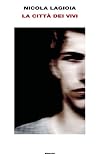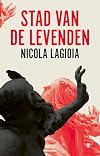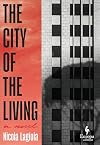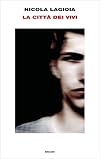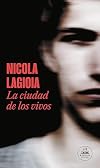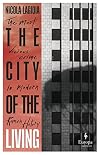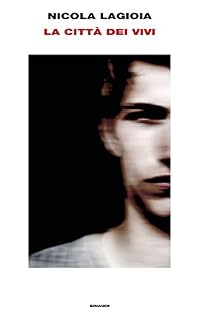
The City of the Living
by Nicola Lagioia
On This Page
Description
In March 2016, in a nondescript apartment on the outskirts of Rome, Manuel Foffo and Marco Prato, two "ordinary" young men from good families, brutally murdered twenty-three year old Luca Varani. News of the seemingly inexplicable crime sent shockwaves through Rome and beyond. What motivated such extreme violence? Were the killers evil or in the grip of societal evils? Did they know what they were doing? Or were they possessed? And if the latter, possessed by what? Based on months of show more interviews, court documentation, and correspondence with the killers themselves, The City of the Living is not only a fast-paced, revelatory thriller in the style of Lisa Taddeo's Animal, it is also a descent into the dark heart of Rome--a city that is unlivable and yet teeming with life, overrun by rats and wild animals, and plagued by corruption, drugs, and violence. Yet, the Eternal City is also a place that, more than any other in the world, seems to inspire a sense of absolute freedom in its inhabitants. Proceeding in concentric circles, Nicola Lagioia leads us through a maze of betrayed expectations, sexual confusion, inability to grow up, economic grievances, crises of identity--progressively tightening the focus of the analysis to locate the breaking point after which anything is possible. As hypnotic as Erik Larson's Devil in the White City, an heir to Truman Capote's In Cold Blood, and destined to cast on spell on fans of the Morbid podcast, The City of the Living is Nicola Lagioia's most gripping, bestselling, and critically acclaimed novel to-date. Razor-sharp, unputdownable, devastating, it is the story not only of a crime but of human nature itself; of the tension between responsibility and guilt, between the drive to oppress and the desire to be free; of who we are and who we can become. show lessTags
Recommendations








Member Reviews
"Think of those horror films where a group of kids goes on a retreat for a weekend in a house at the edge of the forest, and at a certain point, at night, while they're all sleeping, monsters arrive?" said the other writer. "Except that in this case the monsters arrive not from the outside but from within, they come from the obscure depths of those kids."
This is work of non-fiction by Italian author Nicola Lagioia, who is known for his crime novels, using the brutal 2016 murder of a young man named Luca Varani by two other young men to explore Roman society more broadly, but also diving deeply into the lives of all three men and their families, as well as his own experiences as he investigates this crime that fascinated all of Italy. show more
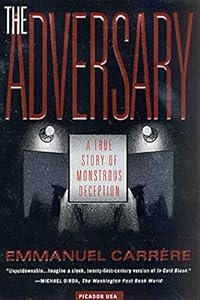
Lagioia is doing something more substantial here than just writing true crime, although that is the easiest description of what this is. It is similar to Emmanuel Carrère's The Adversary, although Lagioia makes this not about his interactions with the two murderers but about their motivations, or more exactly, their attempts to explain their motivations even to themselves. As an American reader, it was startling to see how easily members of the press got access to confidential information like police interviews. While a lot of space is given to the timeline of the crime, the description of the actual murder isn't graphic.
Another focus is the city of Rome, a city that Lagioia portrays as a decaying and corrupt corpse, yet when he and his wife make the decision to leave, they recognize quickly that they made a mistake and for all its faults, they don't want to live anywhere else.
This is a fascinating look at something we are used to over here (true crime narratives) from a different angle, as well as being a glimpse into what life is like in Rome. I will note that this book is often described as fiction, or in one case as "true crime fiction," but whether that is due to the author's reputation as a novelist or the publisher being well known for literary fiction, this book is non-fiction. show less
This is work of non-fiction by Italian author Nicola Lagioia, who is known for his crime novels, using the brutal 2016 murder of a young man named Luca Varani by two other young men to explore Roman society more broadly, but also diving deeply into the lives of all three men and their families, as well as his own experiences as he investigates this crime that fascinated all of Italy. show more
Lagioia is doing something more substantial here than just writing true crime, although that is the easiest description of what this is. It is similar to Emmanuel Carrère's The Adversary, although Lagioia makes this not about his interactions with the two murderers but about their motivations, or more exactly, their attempts to explain their motivations even to themselves. As an American reader, it was startling to see how easily members of the press got access to confidential information like police interviews. While a lot of space is given to the timeline of the crime, the description of the actual murder isn't graphic.
Another focus is the city of Rome, a city that Lagioia portrays as a decaying and corrupt corpse, yet when he and his wife make the decision to leave, they recognize quickly that they made a mistake and for all its faults, they don't want to live anywhere else.
This is a fascinating look at something we are used to over here (true crime narratives) from a different angle, as well as being a glimpse into what life is like in Rome. I will note that this book is often described as fiction, or in one case as "true crime fiction," but whether that is due to the author's reputation as a novelist or the publisher being well known for literary fiction, this book is non-fiction. show less
The City of the Living, written by Nicola Lagioia and translated by Ann Goldstein, is a loosely fictionalized account of a horrific murder, examining both the individuals involved and the society within which it took place.
I actually have mixed feelings about this volume. Not so much with the decision to create a fictional account or with the valuable element of looking beyond the simple equation murderer equals evil, but with how it was made into a sort of hybrid. If the "novel" was going to largely show the investigation Lagioia made, then do so straightforwardly. If he was going to fictionalize it, then make the novel the result of his investigation, not an author-centered account of it. Having said that, the writing and translation show more are good and my personal preference with how I would have liked the information to be presented is just that, a personal preference.
What makes this a more interesting true crime book than many is the attention given to familial issues, society, and place. Nothing happens in a vacuum and that includes murder. Looking at how various elements play into the crime does not make the murderers less responsible, it just shows that many things share the responsibility for what happened. Responsibility is different from guilt, especially legal guilt. Looking at family environment, societal dysfunction, and drug use don't excuse the criminal's act, but they do acknowledge what might have fed the impulse and thus offer some insight into how we can help limit future crimes. Simply labeling them as evil not only ignores our own part in it but gives the impression that all is well with society and the problem is just a few evil people. Kinda like the old "bad apple" excuse for widespread police violence and corruption in the US (and no doubt elsewhere).
This will be an excellent read for fans of true crime as well as those who study the bigger picture around crime, from psychological analyses to socio-economic conditions. This can easily be read for pleasure (to the extent reading about horrific crimes can be) as well as for analysis.
Reviewed from a copy made available by the publisher via NetGalley. show less
I actually have mixed feelings about this volume. Not so much with the decision to create a fictional account or with the valuable element of looking beyond the simple equation murderer equals evil, but with how it was made into a sort of hybrid. If the "novel" was going to largely show the investigation Lagioia made, then do so straightforwardly. If he was going to fictionalize it, then make the novel the result of his investigation, not an author-centered account of it. Having said that, the writing and translation show more are good and my personal preference with how I would have liked the information to be presented is just that, a personal preference.
What makes this a more interesting true crime book than many is the attention given to familial issues, society, and place. Nothing happens in a vacuum and that includes murder. Looking at how various elements play into the crime does not make the murderers less responsible, it just shows that many things share the responsibility for what happened. Responsibility is different from guilt, especially legal guilt. Looking at family environment, societal dysfunction, and drug use don't excuse the criminal's act, but they do acknowledge what might have fed the impulse and thus offer some insight into how we can help limit future crimes. Simply labeling them as evil not only ignores our own part in it but gives the impression that all is well with society and the problem is just a few evil people. Kinda like the old "bad apple" excuse for widespread police violence and corruption in the US (and no doubt elsewhere).
This will be an excellent read for fans of true crime as well as those who study the bigger picture around crime, from psychological analyses to socio-economic conditions. This can easily be read for pleasure (to the extent reading about horrific crimes can be) as well as for analysis.
Reviewed from a copy made available by the publisher via NetGalley. show less
Non sono di tante parole, non farò un commento lungo, ma ho un sacco di pensieri che frullano per la testa. Questo libro mi ha tenuta in ostaggio fino a che non l'ho finito, non è una cosa che capita spesso. Ricordavo il fatto di cronaca che racconta, ma dopo l'iniziale sconvolgimento non ci ho dedicato attenzione. Credo molto in quella famosa frase che tutti citano, sul guardare nell'abisso ed esserne guardati, quindi dopo l'iniziale sconvolgimento, ho deciso di non entrare nella storia, di non cercare di capire, non volevo giudicare soprattutto, anche se il mio giudizio l'avevo probabilmente già espresso. Questo racconto mi ha portato a fare i conti con questo caso e ve lo dico, non è che alla fine se ne capisca di più; o almeno, show more si, veniamo a conoscere la storia, i protagonisti, ma se la domanda è perché? una risposta non c'è. Ma l'analisi che fa l'autore, su questo tipo di vicende da cronaca nera, che poi è morte e quindi vita, ci fa riflettere molto, sulle vittime, sui carnefici, sulle situazioni, sull'animo umano, sull'irreversibilità di alcune cose che succedono nella nostra vita. E' un bel libro, lo consiglio show less
This true crime book is billed as a novel; I guess the author tries to add some literary conceits like an exploration into the inner lives of the murderers, and an analysis of life in Rome, but mostly the book reads like an overlong account of minutiae of the criminal case. Some intriguing themes include the alienation and lack of accountability that the murderers feel, and the parallels between them and the child sex abusers who prey on refugees in Rome. I would have been interested to learn more about these topics and less about the excruciating details of what happened before, during, and immediately after the murder.
Favorite line: "What was extraordinary about Rome was not the call of transcendence, which only idiots could feel, but show more the omnipresent awareness that everything is human and everything decays. This was the lesson of the past." show less
Favorite line: "What was extraordinary about Rome was not the call of transcendence, which only idiots could feel, but show more the omnipresent awareness that everything is human and everything decays. This was the lesson of the past." show less
A senseless & brutal murder is explored before/during/after & the various factors that were or may have been involved. I read the book quickly but felt it would have been stronger had it been shortened a bit. It has been compared to In Cold Blood but I feel like the writing was too choppy by comparison. Still, it factored in news coverage & social media in the telling, making it reflective of our world.
Ruben's review states, "One minor point of criticism is that I would have liked more assessment of the role of drugs, alcohol and sleep deprivation as contributing to the crime." & I agree.
My heart breaks for Luca Varani, his family, & his friends. And for the others affected by this horrible murder.
Recommended for true crime fans.
If you read international true crime, I'd also suggest you check out Magnetized: Conversations with a Serial Killer by Carlos Busqued, trans. from the Spanish by Samuel Rutter. show less
Ruben's review states, "One minor point of criticism is that I would have liked more assessment of the role of drugs, alcohol and sleep deprivation as contributing to the crime." & I agree.
My heart breaks for Luca Varani, his family, & his friends. And for the others affected by this horrible murder.
"Crimes of this type, in which theshow more
accomplices hadn't known each other for long, almost all followed the same outline. Not three, not five, not eight. Two was the recurring number. A dominator and a dominated. A manipulated and a manipulator, even if the roles were often interchangeable. It was a matter of individuals who, on their own, were unlikely to have committed the crime for which they ended up in jail almost without realizing it. We weren't dealing with serial killers. In theory, they were normal people."
Recommended for true crime fans.
If you read international true crime, I'd also suggest you check out Magnetized: Conversations with a Serial Killer by Carlos Busqued, trans. from the Spanish by Samuel Rutter. show less
An autofictional account of a much publicised murder that occurred in 2016 in Rome, Italy. The first part of the account, told in the third person narrative, deals with the crime, the arrest. The second part, told in the first person narrative, continues on, and is punctuated by personal recollections and statement of friends. It is written in a style that sort of plays of events as they are happening.
Unfortunately, I was not at all engaged with the writing style or presentation. I did persevere till the end but there really was no really interest except to finish.
Unfortunately, I was not at all engaged with the writing style or presentation. I did persevere till the end but there really was no really interest except to finish.
En marzo de 2016, en un apartamento situado a las afueras de Roma, dos jóvenes de buena familia se lanzaron durante varios días a una fiesta de drogas y alcohol. Decidieron invitar a alguien y dieron con Luca Varani, un chico de veintitres años al que apenas conocían. Le ofrecieron diero a cambio de sexo, y horas después empezaron a torturarlo hasta la muerte. No había motivo aparente y nadie encontró respuestas para tanto horror. Los asesinos tenían entonces veinticinco y veintinueve años: eran Manuel Foffo, proveniente de una familia de empresarios, y Marco Prato, un conocido relaciones públicas de la noche gay romana, hijo de un profesor universitario.
No existía motivo para realizar la tortura y posterior asesinato, show more solamente querían descubrir que se sentía al matar a alguien. show less
No existía motivo para realizar la tortura y posterior asesinato, show more solamente querían descubrir que se sentía al matar a alguien. show less
Dec 20, 2022 (Edited)Spanish
Members
- Recently Added By
Author Information

20+ Works 475 Members
Awards and Honors
Common Knowledge
- Canonical title
- The City of the Living
- Original title
- La città dei vivi
- Original publication date
- 2020
- People/Characters*
- Luca Varani; Manuel Foffo; Marco Prato
- Important places*
- Rome, Italië
- Important events*
- moord op Luca Varani
- Original language*
- Italiaans
*Some information comes from Common Knowledge in other languages. Click "Edit" for more information.
Classifications
Statistics
- Members
- 137
- Popularity
- 237,876
- Reviews
- 7
- Rating
- (3.79)
- Languages
- Dutch, English, Italian, Spanish
- Media
- Paper, Ebook
- ISBNs
- 10
- ASINs
- 4