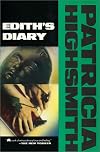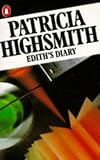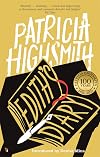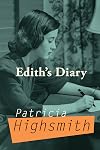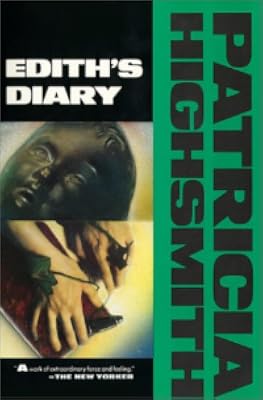
Edith's Diary
by Patricia Highsmith
On This Page
Description
Edith Howland's diary is her most precious possession, and as she is moving house she is making sure it's safe. A suburban housewife in fifties America, she is moving to Brunswick with her husband Brett and her beloved son, Cliffie, to start a new life for them all. She is optimistic, but she has high hopes most of all for her new venture with Brett, a local newspaper, the Brunswick Corner Bugle. Life seems full of promise, and indeed, to read her diary, filled with her most intimate show more feelings and revelations, you would never think otherwise. Strange then, that reality is so dangerously different? show lessTags
Recommendations




















Member Reviews
As Michael Dirda assured me in his reviews of [a:Patricia Highsmith|7622|Patricia Highsmith|http://d.gr-assets.com/authors/1217411179p2/7622.jpg] books, I really enjoyed [b:Edith's Diary|129497|Edith's Diary|Patricia Highsmith|http://d.gr-assets.com/books/1347813345s/129497.jpg|1002905] and whipped through it quickly. Like watching a train wreck, I could not keep from reading about Edith’s devastating emotional and mental decline. She seems to operate well creatively (writing and sculpting, cleaning and working) yet hits the truth with her comment early on after her worthless son, Cliffie, expresses an interest in Uncle George’s codeine cough medicine: “We’re all crackers,” Edith thought, “all insane…” She seems show more productive, preparing meals, going to work, writing articles for her local newspaper but her diary entries clue us in that all is not well. She imagines a perfect fantasy world in her diary early in the novel: “The entry was a lie. But after all who was going to see it? And she felt better, having written it, felt less melancholic, almost cheerful, in fact.” The calmness and matter-of-fact narration belies the increasing madness of her heroine. My sympathy for Edith started to grow at this point. She’s depressed and troubled but trying to keep a lid on it not unlike her driving: “She was tempted to put on speed, but prudently kept within the limit, a discipline she found easy.” She also “stifled her anger” on hearing of her ex-husband’s new baby and frequently smothers her rage at her philandering husband. A further key to her state is the frequent reference to her smiling, her laughter, giggles and hilarity when she might be expected to be angry. The abyss Edith feels early on grows and swallows her by novel’s end and Highsmith provides no respite for the reader. Does she believe in nature or nuture? Highsmith has said that it’s the former which produces the criminal mind and Edith (like Highsmith) has a cold, unsatisfactory relationship with her parents as the incorrigible Cliffie does with Edith.
I haven’t encountered this much drinking in a novel since [b:The Thin Man|80616|The Thin Man|Dashiell Hammett|http://d.gr-assets.com/books/1321111302s/80616.jpg|1336952] Friends and neighbors drop by for drinks at every hour of the day. Visits dwindle as Edith’s mental state declines and soon it is mainly her psychotic son, Cliffie, joining her for cocktails and wine at dinner. The denouement is a surprise but fitting as the other options of psychoanalysis in that day (and the creepy doctors her ex-husband brings over) offer unlikely solutions for Edith and there is a nice wrap up in being brought down by her own idealized creation of her son.
From Dirda: "Like Oscar Wilde, Highsmith insisted (in [b:Plotting and Writing Suspense Fiction|572046|Plotting and Writing Suspense Fiction |Patricia Highsmith|http://d.gr-assets.com/books/1312016063s/572046.jpg|559075]1966) that art essentially has nothing to do with morality, convention or moralizing.... I find the public passion for justice quite boring and artificial, for neither life nor nature care if justice is ever done or not. The murder in the novel is left vague and the obvious evildoer goes unpunished." show less
I haven’t encountered this much drinking in a novel since [b:The Thin Man|80616|The Thin Man|Dashiell Hammett|http://d.gr-assets.com/books/1321111302s/80616.jpg|1336952] Friends and neighbors drop by for drinks at every hour of the day. Visits dwindle as Edith’s mental state declines and soon it is mainly her psychotic son, Cliffie, joining her for cocktails and wine at dinner. The denouement is a surprise but fitting as the other options of psychoanalysis in that day (and the creepy doctors her ex-husband brings over) offer unlikely solutions for Edith and there is a nice wrap up in being brought down by her own idealized creation of her son.
From Dirda: "Like Oscar Wilde, Highsmith insisted (in [b:Plotting and Writing Suspense Fiction|572046|Plotting and Writing Suspense Fiction |Patricia Highsmith|http://d.gr-assets.com/books/1312016063s/572046.jpg|559075]1966) that art essentially has nothing to do with morality, convention or moralizing.... I find the public passion for justice quite boring and artificial, for neither life nor nature care if justice is ever done or not. The murder in the novel is left vague and the obvious evildoer goes unpunished." show less
Having read most of Highsmith's books and being an inveterate reader of books about misfits and sociopaths, I was completely taken aback by my reaction to this. I felt so close to the protagonist that, although I kept Highsmith's books at the time, after a while I had to make this one leave home. It made me way too uneasy to have it close by.
I was having a slightly difficult life when I read it. I expect now it wouldn't scare me to death. Still, my feeling is that this is not a book to read if you are in the depths of despair. Be advised.
I was having a slightly difficult life when I read it. I expect now it wouldn't scare me to death. Still, my feeling is that this is not a book to read if you are in the depths of despair. Be advised.
The main character in this novel, a middle-aged woman named Edith who moves from New York to a small town in Pennsylvania with her husband and son, is hard not to love. She’s smart, up on the liberal politics of the day (circa mid 1950’s to the mid 1970’s over the course of the book), likes a good drink, and is incredibly patient with the men in her life. Just as she’s someone who is easy to identify with, these men are incredibly flawed and maddening, and she gets it from three different generations. We see her son grow up with disturbing patterns of sociopathic behavior, her husband begin to have an affair with his young secretary, and her husband’s uncle move in to the house instead of an old folk’s home, expecting her to show more tend to him. Highsmith does a good job in avoiding making a saint out of her, and in building tension in the strain this puts her under. It’s hard to tell exactly where it’s going and I’d advise not knowing much more about the book if you’re going to read it. It’s got elements of real darkness and carries an emotional impact though.
Quotes:
On happiness:
“Edith had constantly to bolster herself by remembering that she didn’t believe life had any purpose, anyway. To be happy, one had to work at whatever one had to work at, and without asking why, and without looking back for results.”
And:
“The joy of life is in the doing. Don’t judge too much what is done or expect praise or thanks.”
On meaninglessness:
“’Isn’t it safer, even wiser, to believe that life has no meaning at all?’
She’d felt better after getting that down on paper. Such an attitude wasn’t phony armor, she thought, it was a fact that life had no meaning. One simply went on and on, worked on, and did one’s best. The joy of life was in movement, in action itself.”
On politics; it was hard to not mentally replace Nixon with Trump and TV with the Internet:
“Why was he [Nixon] elected in the first place? Advertising, television. Do you expect brains, judgment from people who watch the crap on TV? Everybody in the United States watching on average four hours a day?”
On religion:
“The ‘sanctity’ of human life – surely, as long as there was someone else to change the bedpans. I’d like to see the Pope changing a bedpan, Edith thought, or even giving birth for the eighth time, maybe with a breech delivery. Eternal pregnancy for the Pope, eternal pangs! After all, that was what he wished on an awful lot of women.”
On socialism, this from 1954 in the novel. It really made me ponder the reaction of capitalists and the wealthy to workers movements since the mid-19th century, and aside from the evils of their totalitarian implementations in the 20th century, the aspect of that reaction that is simply trying to preserve wealth in the hands of the powerful, and how it relates to American politics in the beginning of this century:
“We have been brainwashed for decades (since 1917) to hate Communism. Reader’s Digest has never failed to print one article per issue about the inefficiency of anything socialized, such as medicine.” show less
Quotes:
On happiness:
“Edith had constantly to bolster herself by remembering that she didn’t believe life had any purpose, anyway. To be happy, one had to work at whatever one had to work at, and without asking why, and without looking back for results.”
And:
“The joy of life is in the doing. Don’t judge too much what is done or expect praise or thanks.”
On meaninglessness:
“’Isn’t it safer, even wiser, to believe that life has no meaning at all?’
She’d felt better after getting that down on paper. Such an attitude wasn’t phony armor, she thought, it was a fact that life had no meaning. One simply went on and on, worked on, and did one’s best. The joy of life was in movement, in action itself.”
On politics; it was hard to not mentally replace Nixon with Trump and TV with the Internet:
“Why was he [Nixon] elected in the first place? Advertising, television. Do you expect brains, judgment from people who watch the crap on TV? Everybody in the United States watching on average four hours a day?”
On religion:
“The ‘sanctity’ of human life – surely, as long as there was someone else to change the bedpans. I’d like to see the Pope changing a bedpan, Edith thought, or even giving birth for the eighth time, maybe with a breech delivery. Eternal pregnancy for the Pope, eternal pangs! After all, that was what he wished on an awful lot of women.”
On socialism, this from 1954 in the novel. It really made me ponder the reaction of capitalists and the wealthy to workers movements since the mid-19th century, and aside from the evils of their totalitarian implementations in the 20th century, the aspect of that reaction that is simply trying to preserve wealth in the hands of the powerful, and how it relates to American politics in the beginning of this century:
“We have been brainwashed for decades (since 1917) to hate Communism. Reader’s Digest has never failed to print one article per issue about the inefficiency of anything socialized, such as medicine.” show less
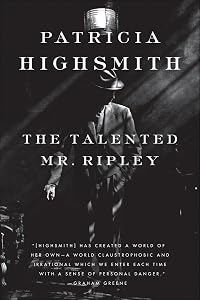
I’m ashamed to admit I haven’t read Highsmith before now. I saw “The Talented Mr. Ripley” and it made me feel uneasy. This book does that as well and in spades.
Edith’s rapidly deteriorating life is simply far too relatable - the kid who just tries to pluck her wires, who has an evil undercurrent to his every smile - the husband who falls in love with someone and abandons Edith, offering scant help and depositing his elderly uncle on her for care - the ‘kindly’ neighbours who may or may not be so.
And Edith herself, a very unreliable narrator who takes refuge in her huge diary, changing her life story in it to one happier than her real one...
It’s a very sad story of a woman who, though bright and accomplished, is being show more squashed by unreasonable expectations and giving in, slowly, to fantasies of a better world. To add to her pressures, this is the time of the Kennedy assassinations, Nixon, Viet Nam... it’s no wonder she takes to writing small, violent fictions.
Help comes too late, too little. The ending is heartbreaking.
It isn’t a comfortable book. It is, however, stunningly good. show less
Edith’s rapidly deteriorating life is simply far too relatable - the kid who just tries to pluck her wires, who has an evil undercurrent to his every smile - the husband who falls in love with someone and abandons Edith, offering scant help and depositing his elderly uncle on her for care - the ‘kindly’ neighbours who may or may not be so.
And Edith herself, a very unreliable narrator who takes refuge in her huge diary, changing her life story in it to one happier than her real one...
It’s a very sad story of a woman who, though bright and accomplished, is being show more squashed by unreasonable expectations and giving in, slowly, to fantasies of a better world. To add to her pressures, this is the time of the Kennedy assassinations, Nixon, Viet Nam... it’s no wonder she takes to writing small, violent fictions.
Help comes too late, too little. The ending is heartbreaking.
It isn’t a comfortable book. It is, however, stunningly good. show less
As Michael Dirda assured me in his reviews of [a:Patricia Highsmith|7622|Patricia Highsmith|http://d.gr-assets.com/authors/1217411179p2/7622.jpg] books, I really enjoyed [b:Edith's Diary|129497|Edith's Diary|Patricia Highsmith|http://d.gr-assets.com/books/1347813345s/129497.jpg|1002905] and whipped through it quickly. Like watching a train wreck, I could not keep from reading about Edith’s devastating emotional and mental decline. She seems to operate well creatively (writing and sculpting, cleaning and working) yet hits the truth with her comment early on after her worthless son, Cliffie, expresses an interest in Uncle George’s codeine cough medicine: “We’re all crackers,” Edith thought, “all insane…” She seems show more productive, preparing meals, going to work, writing articles for her local newspaper but her diary entries clue us in that all is not well. She imagines a perfect fantasy world in her diary early in the novel: “The entry was a lie. But after all who was going to see it? And she felt better, having written it, felt less melancholic, almost cheerful, in fact.” The calmness and matter-of-fact narration belies the increasing madness of her heroine. My sympathy for Edith started to grow at this point. She’s depressed and troubled but trying to keep a lid on it not unlike her driving: “She was tempted to put on speed, but prudently kept within the limit, a discipline she found easy.” She also “stifled her anger” on hearing of her ex-husband’s new baby and frequently smothers her rage at her philandering husband. A further key to her state is the frequent reference to her smiling, her laughter, giggles and hilarity when she might be expected to be angry. The abyss Edith feels early on grows and swallows her by novel’s end and Highsmith provides no respite for the reader. Does she believe in nature or nuture? Highsmith has said that it’s the former which produces the criminal mind and Edith (like Highsmith) has a cold, unsatisfactory relationship with her parents as the incorrigible Cliffie does with Edith.
I haven’t encountered this much drinking in a novel since [b:The Thin Man|80616|The Thin Man|Dashiell Hammett|http://d.gr-assets.com/books/1321111302s/80616.jpg|1336952] Friends and neighbors drop by for drinks at every hour of the day. Visits dwindle as Edith’s mental state declines and soon it is mainly her psychotic son, Cliffie, joining her for cocktails and wine at dinner. The denouement is a surprise but fitting as the other options of psychoanalysis in that day (and the creepy doctors her ex-husband brings over) offer unlikely solutions for Edith and there is a nice wrap up in being brought down by her own idealized creation of her son.
From Dirda: "Like Oscar Wilde, Highsmith insisted (in [b:Plotting and Writing Suspense Fiction|572046|Plotting and Writing Suspense Fiction |Patricia Highsmith|http://d.gr-assets.com/books/1312016063s/572046.jpg|559075]1966) that art essentially has nothing to do with morality, convention or moralizing.... I find the public passion for justice quite boring and artificial, for neither life nor nature care if justice is ever done or not. The murder in the novel is left vague and the obvious evildoer goes unpunished." show less
I haven’t encountered this much drinking in a novel since [b:The Thin Man|80616|The Thin Man|Dashiell Hammett|http://d.gr-assets.com/books/1321111302s/80616.jpg|1336952] Friends and neighbors drop by for drinks at every hour of the day. Visits dwindle as Edith’s mental state declines and soon it is mainly her psychotic son, Cliffie, joining her for cocktails and wine at dinner. The denouement is a surprise but fitting as the other options of psychoanalysis in that day (and the creepy doctors her ex-husband brings over) offer unlikely solutions for Edith and there is a nice wrap up in being brought down by her own idealized creation of her son.
From Dirda: "Like Oscar Wilde, Highsmith insisted (in [b:Plotting and Writing Suspense Fiction|572046|Plotting and Writing Suspense Fiction |Patricia Highsmith|http://d.gr-assets.com/books/1312016063s/572046.jpg|559075]1966) that art essentially has nothing to do with morality, convention or moralizing.... I find the public passion for justice quite boring and artificial, for neither life nor nature care if justice is ever done or not. The murder in the novel is left vague and the obvious evildoer goes unpunished." show less
His mother was fighting a losing battle, Cliffie thought, because she was trying to fight the majority. The majority wasn’t even fighting back, it was just indifferent.
Oh, gadz, I wanted to hit most of the characters in this story. Repeatedly. With a shovel. Not only was this story of the suburban dream more of a nightmare, but Highsmith's detailed character description made the characters come to life more than I cared for.
Edith is looking forward to the prospect of moving from New York to Brunswick Corner, a small town in Pennsylvania, where she hopes to settle with her husband and son into a calmer more wholesome life. But soon the suburban dream falls apart as the model family shows cracks:
Edith's son, Cliffie, is a despicable show more little horror (he tries to kill the cat a couple of times and that is just the start). Her husband turns out to be self-righteous, selfish coward. And Edith is left to bear the strain of all of it.
What makes the book truly miserable is the way that Edith's cracking up is dealt with by the people around her, and so her keeping a diary, where she records a fantasy of a perfect life she imagines, becomes the symbol of her madness, her rebellion, as well as of the way society hides what is perceived as the imperfect, the damaged.
This is one of the most political works I have read by Highsmith. It heavily features Edith's (not necessairly the author's) thoughts on the Kennedys, the Vietnam War, Nixon, Watergate, etc. as a backdrop to Edith's alienation with her suburban neighbours.
Even tho I found it compelling, Edith's Diary is not a book I would recommend easily. It just really too depressing and frustrating to pass on to a friend. However, for the Highsmith enthusiast, this shows another side of her writing where she explores the connection between societal norms and psychological derangement. show less
Oh, gadz, I wanted to hit most of the characters in this story. Repeatedly. With a shovel. Not only was this story of the suburban dream more of a nightmare, but Highsmith's detailed character description made the characters come to life more than I cared for.
Edith is looking forward to the prospect of moving from New York to Brunswick Corner, a small town in Pennsylvania, where she hopes to settle with her husband and son into a calmer more wholesome life. But soon the suburban dream falls apart as the model family shows cracks:
Edith's son, Cliffie, is a despicable show more little horror (he tries to kill the cat a couple of times and that is just the start). Her husband turns out to be self-righteous, selfish coward. And Edith is left to bear the strain of all of it.
What makes the book truly miserable is the way that Edith's cracking up is dealt with by the people around her, and so her keeping a diary, where she records a fantasy of a perfect life she imagines, becomes the symbol of her madness, her rebellion, as well as of the way society hides what is perceived as the imperfect, the damaged.
This is one of the most political works I have read by Highsmith. It heavily features Edith's (not necessairly the author's) thoughts on the Kennedys, the Vietnam War, Nixon, Watergate, etc. as a backdrop to Edith's alienation with her suburban neighbours.
Even tho I found it compelling, Edith's Diary is not a book I would recommend easily. It just really too depressing and frustrating to pass on to a friend. However, for the Highsmith enthusiast, this shows another side of her writing where she explores the connection between societal norms and psychological derangement. show less
We are all familiar with the concept of the unreliable narrator in fiction. But how much greater is that unreliability, how much greater the pinch of salt or the necessary adjustment, when we read someone’s diary! Many of us will have kept diaries, in our teens if not for longer. Looking back on them provides us with an opportunity to reassess the self-delusions of someone who is no longer the same ‘us’ are we are now. To read old diaries is to engage in a constant process of negotiation with a past self. Diaries give us the chance to tell our own stories: to present the world as we know it, with ourselves as the central characters, and everyone else swirling around us in secondary roles. We are unreliable, not through intention show more or malice, but through simple solipsism. Edith, the protagonist of Patricia Highsmith’s novel, also keeps a diary. It was given to her as a gift when she was young and idealistic, starting out on a life that she felt sure would be full of success. But increasingly, as we follow Edith through her life, that diary becomes a reminder of life’s unpleasant tendency not to fit in with nice, neat expectations. The appropriate narrative arc never quite seems to arise in real life. Family members, somehow, never quite fulfil the expectations we have of them. More and more, Edith finds herself having to correct the shortcomings of real life in her diary, an imagined world of perfection which could all too easily become more real than her own imperfect life...
For the full review, please see my blog:
https://theidlewoman.net/2020/06/21/ediths-diary-1977-patricia-highsmith/ show less
For the full review, please see my blog:
https://theidlewoman.net/2020/06/21/ediths-diary-1977-patricia-highsmith/ show less
Members
- Recently Added By
Lists

Backlisted
109 works; 9 members
Author Information

301+ Works 32,886 Members
Patricia Highsmith wrote twenty-one novels including "Strangers on a Train" & the "Ripley" series. She died in 1995 in Switzerland, where she resided much of her life. (Publisher Provided) Patricia Highsmith (January 19, 1921 -- February 4, 1995) was an American novelist and short story writer, most widely known for her psychological thrillers, show more which led to more than two dozen film adaptations. She was born in Fort Worth, Texas. Highsmith grew up with her maternal grandmother in Astoria, Queens, and attended Barnard College. Her first novel, Strangers on a Train (1950), was adapted for stage and screen numerous times, notably by Alfred Hitchcock in 1951. In addition to her acclaimed series about murderer Tom Ripley, which was made into a film in 1955, she wrote many short stories, often macabre, satirical or tinged with black humor. Highsmith liked to examine the ways in which people can get to the point where they are capable of murder, as well as who they become after they have committed a crime. In carefully constructed stories and novels, she integrated this scrutiny of the human psyche into complex plots that often took unexpected twists. In Strangers on a Train, architect Guy Haines meets Charles Bruno on a train. Bruno conceives a plan to have Haines kill Bruno's father, while Bruno will kill Haines's wife. The effect that this plan has on Haines is the focus of the story. Highsmith's awards include: O. Henry Award for best publication of first story, for "The Heroine" in Harper's Bazaar (1946), Grand Prix de Littérature Policière, for The Talented Mr. Ripley (1957), and the Dagger Award -- Category Best Foreign Novel, for The Two Faces of January from the Crime Writers' Association of Great Britain (1964). Highsmith died of aplastic anemia and cancer in Locarno, Switzerland, at age 74. Her last novel, Small G: A Summer Idyll, was published one month after her death in 1995. (Bowker Author Biography) show less
Some Editions
Awards and Honors
Notable Lists
Series
Belongs to Publisher Series
detebe (20485)
Virago Modern Classics (637)
Common Knowledge
- Canonical title*
- Ediths Tagebuch
- Original title
- Edith's Diary
- Original publication date
- 1977
- People/Characters
- Edith Howland
- Dedication
- To Marion
- First words
- Edith had left her diary among the last things to pack, mainly because she didn't know where to put it.
- Last words
- (Click to show. Warning: May contain spoilers.)Cliffie opened up a drawer and found pajama pants, couldn't find the top, and snatched from the floor a different colored top he was currently wearing. 'Right there, Norm!'
- Original language*
- Amerikanisch
*Some information comes from Common Knowledge in other languages. Click "Edit" for more information.
Classifications
Statistics
- Members
- 618
- Popularity
- 47,084
- Reviews
- 26
- Rating
- (3.95)
- Languages
- 11 — Danish, Dutch, English, Finnish, French, German, Greek, Italian, Portuguese, Spanish, Swedish
- Media
- Paper, Ebook
- ISBNs
- 43
- ASINs
- 11