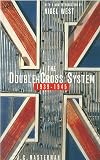
The Double-Cross System in the War of 1939 to 1945
by J. C. Masterman
On This Page
Description
"The Double-Cross System is the amazing true story of how British intelligence penetrated and practically operated Nazi German's spy network within the British Isles. With great imagination, care and precise coordination, the British were able to identify Nazi agents, induce many to defect, and supply Germany completely false information about bombings, battles, and even the D-Day invasion. Told by the man who himself masterminded the entire unbelievable four-and-a-half-year scheme, and show more filled with dazzling tidbits and extraordinary stories, The Double-Cross System is a testimony to Britain's skill in the fine art of counterespionage"--"The amazing true story of how British intelligence penetrated and practically operated Nazi Germany's spy network within the British Isles"-- show lessTags
Recommendations























Member Reviews
Written shortly after the end of the Second World War but not published for almost 30 years after that, John Cecil Masterman's account of the "double cross" system is meticulous, balanced and well organized. Since it was written relatively soon after the war ended, Masterman's perspective is still very immediate and there isn't too much hindsight to colour the impressions he has. As one might expect of an Oxford don, he writes well, with elegantly long sentences and touches of wry humour (one example: one of the double agents decides to steal an MI5 motorbike in an attempt to escape his guards; however, the motorcycle, "being government property, is not maintained effectively and soon breaks down"). The book also includes a very handy show more table at the end listing all of the major double-cross agents, their length of service, primary areas of interest, and reasons for discontinuing their use.
Because of its author and the time it was written, this is a particularly fascinating book. I would recommend it to those with an interest in the Second World War and espionage, with one suggestion: it may be helpful to read a more modern account first (e.g. by Christopher Andrew or Ben Macintyre), just to have the background fresh in your mind as you read. Masterman does provide ample explanation, since this book was originally written as a government report for an audience that may not have necessarily known the ins and outs of the system, but having the extra background really helped me personally. show less
Because of its author and the time it was written, this is a particularly fascinating book. I would recommend it to those with an interest in the Second World War and espionage, with one suggestion: it may be helpful to read a more modern account first (e.g. by Christopher Andrew or Ben Macintyre), just to have the background fresh in your mind as you read. Masterman does provide ample explanation, since this book was originally written as a government report for an audience that may not have necessarily known the ins and outs of the system, but having the extra background really helped me personally. show less
An interesting account of the double agents who worked for Britain during WW2. It was written by an MI 5 insider who oversaw much of the activities. He details the hits and misses of the organisation, the aims of counter-espionage and the role of the agents in a larger tool of warfare - deception.
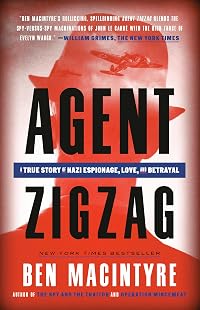
Although much of the book is about the system, how it worked, and why it worked, there are some insights into several of the agents personalities. GARBO built up an entire fictitious network of sub spies and was sending misleading information to the Germans well before he was finally enlisted by the British. ZIGZAG was a petty criminal, in gaol on Jersey when the Germans invaded that island. As a double agent he was able to combine a life of show more crime with a love of country. show less
Although much of the book is about the system, how it worked, and why it worked, there are some insights into several of the agents personalities. GARBO built up an entire fictitious network of sub spies and was sending misleading information to the Germans well before he was finally enlisted by the British. ZIGZAG was a petty criminal, in gaol on Jersey when the Germans invaded that island. As a double agent he was able to combine a life of show more crime with a love of country. show less
Finally, a definitive explanation for why Hitler did not believe the real invasion would be launched at Normandy. His "spies" led him to believe the landings would be at Calais. That message was the result of a strategic deception by the British intelligence. The author reveals the process of bringing a captured spy into an effective intelligence service, developing total empathy, and then providing credible messages.
Well written and entertaining. The facts need no embellishment.
The classic post-1945 account of the British double-agent system by Sir John, with a foreword by a counter-integence director. The unofficial, official history with a clear explanation of structure decision and safety considerations and deception operations.
The Security Service, also known as MI5 (Military Intelligence, Section 5), is the United Kingdom's domestic counter-intelligence and security agency and is part of its intelligence machinery alongside the Secret Intelligence Service (MI6), Government Communications Headquarters (GCHQ), and Defence Intelligence (DI).
A bombshell when it came out, followed closely by an even bigger bombshell -- the revelation of what went on at Bletchley Park. I was in earshot when they went off.
Members
- Recently Added By
Lists

Folio Society
831 works; 53 members

Books Read in 2018
4,360 works; 110 members
Author Information

7+ Works 725 Members
Sir John Masterman served as provost of Worcester College at Oxford and vice-chancellor of Oxford University before his work with British Intelligence during the Second World War. He is also the author of several mystery books, including An Oxford Tragedy. Fate Cannot Harm Me, and Marshall Ney.
Some Editions
Awards and Honors
Distinctions
Common Knowledge
- Original publication date
- 1972
- People/Characters
- John Cecil Masterman
- Important events
- World War II (1939 | 1945)
Classifications
Statistics
- Members
- 496
- Popularity
- 61,133
- Reviews
- 9
- Rating
- (3.60)
- Languages
- Dutch, English, Hebrew, Swedish
- Media
- Paper, Ebook
- ISBNs
- 14
- UPCs
- 1
- ASINs
- 16