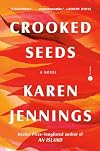
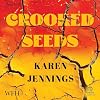
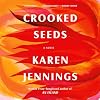
Crooked Seeds
by Karen Jennings
On This Page
Description
"In her parched, crumbling corner of a Cape Town public housing complex, Deidre van Deventer receives a call from the South African police department. Her family home, recently reclaimed by the government, has become the scene of a criminal investigation. The remains of several bodies have just been unearthed from their land, after decades underground. Detectives pepper her with questions: Was your brother a member of a pro-apartheid group in the 1990s? Is it true that he was building bombs show more as part of a terrorist plot? Deirdre doesn't know the answers to most of these questions. All she knows is that she was denied-repeatedly-the life she felt she deserved: overshadowed by her brother, then abandoned by her daughter, Deidre has been left to watch over her aging mother, making do with government help and the fading generosity of her neighbors. But as alarming evidence from the investigation continues to surface, and detectives pressure her to share what she knows of her family's disturbing past, Deidre must finally confront her own shattered memories so that something better might emerge from what remains"-- show lessTags
Recommendations









Member Reviews
A couple of years ago I read Karen Jennings’ novel entitled An Island which was nominated for the 2021 Booker Prize. I loved it (https://schatjesshelves.blogspot.com/2022/01/review-of-island-by-karen-jennings.html) so I was anxious to read her next offering.
Crooked Seeds is set in near-future Cape Town, South Africa, which is experiencing a years-long drought and wildfires. Fifty-three-year-old Deidre van Deventer lives in a dilapidated public housing complex after her family home was reclaimed by the government. She is contacted by the police when several bodies, including those of children, are found on the property formerly owned by her family. In particular, she is questioned about her brother Ross’s associations with a 1990s show more pro-apartheid group with terrorist leanings. When she was eighteen, Deidre herself suffered life-altering injuries as a result of a bomb believed to have been built by Ross. She claims to know nothing, but she is forced to uncover family secrets and question responsibility for the past.
Deidre is a totally unlikeable character. She believes she has been denied the life she deserves so is angry, bitter and resentful. She is both physically and psychologically damaged, but she has options which she chooses not to take, preferring to wallow in self-pity. She is determined to be seen as a victim in need of sympathy. She believes the world owes her and so constantly manipulates people to do things for her. A neighbour mockingly mimics Deidre: “’”Do this for me, do that for me, help me, help me, I’m a fucking cripple and I can’t do anything for myself.” . . . you are the most selfish person I’ve ever met.’” When another acquaintance suggests Deidre help out at a charity, she responds with, “’Why would I help anyone else? I’m the one that needs help,’ she said, poking her chest with a finger. ‘Me. Look at me. I’m the one!’” Though she does nothing to deserve the help of others, some people do come to her aid but then she shows no genuine gratitude. In fact, she abuses both herself and others. Her neighbour questions, “’Are you trying to be unpleasant, tell me? Is that your plan, to be unpleasant and make everyone dislike you?’” Because of her choices and unwillingness to take any responsibility for herself, it’s difficult to have sympathy for Deidre.
Of course Deidre’s upbringing, when she was overshadowed by her brother, affected her. Trudy, Deidre’s mother, always saw Ross as the golden child so her daughter was sidelined: “He was the one they spoke of. He the one they returned to again and again, throughout her life. Even when he had left, even when it should have been her, there he was.” Trudy tells Deidre, “’It’s just that there are people, like your brother . . . [who] can be just a bit more’” and “’Ross is special, that’s the thing. He’s special.’” After the bombing, Ross fled and though some people feel “’he should have been brought back and forced to see what he had done,’” Trudy’s version is different: “He had been no more than a boy when he was forced to go away.” Rather than blame Ross, Trudy says, “’I chased away my boy and he never got to have the life he was meant to have. He never got to live as he should have.’” Some more attention to her daughter might have meant that an accusation against Deidre wouldn’t be true: “’She lives across the fucking street and you can’t walk a hundred meters to see your own fucking mother.’”
The novel is really an allegory. Just as Deidre is forced to reckon with her family’s past, South Africa must reckon with its history of colonialism and apartheid and address its national and generational trauma and collective guilt. A policeman tells Deidre, “’the truth has to come out. To leave the thing alone would have been to deny it and cover it up.’” The first step to moving forward and making positive change is acknowledging and taking responsibility for the wrongs of the past. At the end, Deidre feels diseased and wants to remove “all that was rotten within her.” Fire destroys Table Mountain overlooking Cape Town, leaving “slopes of black and ruin,” but fire can promote seed germination. The book ends with a glimmer of hope: “If only the rain would come, just a little bit of rain, to wet the soil, feed the seeds, so that something might grow again.” Perhaps something better can emerge from what remains.
The novel is not an easy read. At times, it is a grinding read because there is little to alleviate its bleakness; in fact, at times I didn’t want to continue. Its message, however, is worthwhile. Though the book’s setting is South Africa, its theme applies to other countries; it certainly made me think of my country’s need for truth and reconciliation with our First Nations people.
Note: I received an eARC from the publisher via NetGalley.
Please check out my reader's blog (https://schatjesshelves.blogspot.com) and follow me on Twitter (https://twitter.com/DCYakabuski). show less
Crooked Seeds is set in near-future Cape Town, South Africa, which is experiencing a years-long drought and wildfires. Fifty-three-year-old Deidre van Deventer lives in a dilapidated public housing complex after her family home was reclaimed by the government. She is contacted by the police when several bodies, including those of children, are found on the property formerly owned by her family. In particular, she is questioned about her brother Ross’s associations with a 1990s show more pro-apartheid group with terrorist leanings. When she was eighteen, Deidre herself suffered life-altering injuries as a result of a bomb believed to have been built by Ross. She claims to know nothing, but she is forced to uncover family secrets and question responsibility for the past.
Deidre is a totally unlikeable character. She believes she has been denied the life she deserves so is angry, bitter and resentful. She is both physically and psychologically damaged, but she has options which she chooses not to take, preferring to wallow in self-pity. She is determined to be seen as a victim in need of sympathy. She believes the world owes her and so constantly manipulates people to do things for her. A neighbour mockingly mimics Deidre: “’”Do this for me, do that for me, help me, help me, I’m a fucking cripple and I can’t do anything for myself.” . . . you are the most selfish person I’ve ever met.’” When another acquaintance suggests Deidre help out at a charity, she responds with, “’Why would I help anyone else? I’m the one that needs help,’ she said, poking her chest with a finger. ‘Me. Look at me. I’m the one!’” Though she does nothing to deserve the help of others, some people do come to her aid but then she shows no genuine gratitude. In fact, she abuses both herself and others. Her neighbour questions, “’Are you trying to be unpleasant, tell me? Is that your plan, to be unpleasant and make everyone dislike you?’” Because of her choices and unwillingness to take any responsibility for herself, it’s difficult to have sympathy for Deidre.
Of course Deidre’s upbringing, when she was overshadowed by her brother, affected her. Trudy, Deidre’s mother, always saw Ross as the golden child so her daughter was sidelined: “He was the one they spoke of. He the one they returned to again and again, throughout her life. Even when he had left, even when it should have been her, there he was.” Trudy tells Deidre, “’It’s just that there are people, like your brother . . . [who] can be just a bit more’” and “’Ross is special, that’s the thing. He’s special.’” After the bombing, Ross fled and though some people feel “’he should have been brought back and forced to see what he had done,’” Trudy’s version is different: “He had been no more than a boy when he was forced to go away.” Rather than blame Ross, Trudy says, “’I chased away my boy and he never got to have the life he was meant to have. He never got to live as he should have.’” Some more attention to her daughter might have meant that an accusation against Deidre wouldn’t be true: “’She lives across the fucking street and you can’t walk a hundred meters to see your own fucking mother.’”
The novel is really an allegory. Just as Deidre is forced to reckon with her family’s past, South Africa must reckon with its history of colonialism and apartheid and address its national and generational trauma and collective guilt. A policeman tells Deidre, “’the truth has to come out. To leave the thing alone would have been to deny it and cover it up.’” The first step to moving forward and making positive change is acknowledging and taking responsibility for the wrongs of the past. At the end, Deidre feels diseased and wants to remove “all that was rotten within her.” Fire destroys Table Mountain overlooking Cape Town, leaving “slopes of black and ruin,” but fire can promote seed germination. The book ends with a glimmer of hope: “If only the rain would come, just a little bit of rain, to wet the soil, feed the seeds, so that something might grow again.” Perhaps something better can emerge from what remains.
The novel is not an easy read. At times, it is a grinding read because there is little to alleviate its bleakness; in fact, at times I didn’t want to continue. Its message, however, is worthwhile. Though the book’s setting is South Africa, its theme applies to other countries; it certainly made me think of my country’s need for truth and reconciliation with our First Nations people.
Note: I received an eARC from the publisher via NetGalley.
Please check out my reader's blog (https://schatjesshelves.blogspot.com) and follow me on Twitter (https://twitter.com/DCYakabuski). show less
Karen Jennings achieves something quite remarkable in the harrowing opening pages of Crooked Seeds. The novel begins by introducing its central character Deirdre van Deventer living in unbelievably squalid conditions in Cape Town, South Africa. Everything in her dingy apartment is dirty and smelly, including her, the details rendered in distasteful detail. I suspect that most readers would judge her harshly.
And then the reader's perspective about this woman is reversed, evoking a sense of profound pity along with a sense of apprehension that the same circumstances could conceivably happen to any of us. It is revealed that this is what it's like during the water crisis in Cape Town in an entirely possible future. Or in many cities around show more the world with increasingly unreliable rainfall.
Over the course of 2016 water restrictions were lifted from Level 1 to Level 3, and by 2018 Level 6 (87 litres per person per day) rose to Level 6B (50 litres per person per day). There were plans to police the water distribution points across the city when Day Zero was declared, i.e. when the dam levels reached only 13.5 percent. On that day the water supply would be shut off except for its use in hospitals and the CBD, and residents would have to rely on 149 water collection points around the City to collect a daily ration of 25 litres of water per person. And this of course would affect the economy because employees would have to queue for water. It's not hard to imagine the kind of chaos and civil disorder that might ensue.
(Cape Town, a city of 4 million people, had no desalination plant. Two were hastily built, but were decommissioned two years later. So — while they had a reprieve with good rains just in time to stave off Day Zero — they still don't have a secure and reliable water supply.)
So when Deirdre wakes up with a raging thirst, it's not a problem easily resolved. Deirdre doesn't have water to wash herself, or her clothes, or her bedding, or her crockery, cutlery and cooking pans, or to keep her place clean. So resiling from that hasty condemnation, the reader feels pity for this woman, especially because she's disabled and finds it hard to queue for water on crutches.
But then the author engineers another reversal in the reader's construction of events... all in the space of a few pages of sparse prose.
Such a crisis demands that people work cooperatively for the public good in order to prevent disaster. But another seesaw of opinion occurs when Deirdre is revealed as a thoroughly selfish, lazy, ungrateful woman with a foul mouth who won't do anything to help herself or anyone else. What's more, she's a White South African who is still ordering around People of Colour, to get things for her, to cadge drink and cigarettes from, to carry her stuff, to drive her to places and to listen to her self-pitying complaints. Her sense of entitlement is still in fine shape, and she is deeply resentful about the change in her privileged status in post-apartheid South Africa. Even her own daughter has abandoned her and gone to England for a better future.
To read the rest of my review please visit https://anzlitlovers.com/2024/03/25/crooked-seeds-2024-by-karen-jennings/ show less
And then the reader's perspective about this woman is reversed, evoking a sense of profound pity along with a sense of apprehension that the same circumstances could conceivably happen to any of us. It is revealed that this is what it's like during the water crisis in Cape Town in an entirely possible future. Or in many cities around show more the world with increasingly unreliable rainfall.
After good rains in 2013 and 2014, the City of Cape Town began experiencing a drought in 2015, the first of three consecutive years of dry winters brought on possibly by the El Niño weather pattern and perhaps by climate change. Water levels in the City's dams declined from 71.9 percent in 2014 to 50.1 percent in 2015. (Wikipedia, Cape Town Water Crisis, viewed 25/3/24)
Over the course of 2016 water restrictions were lifted from Level 1 to Level 3, and by 2018 Level 6 (87 litres per person per day) rose to Level 6B (50 litres per person per day). There were plans to police the water distribution points across the city when Day Zero was declared, i.e. when the dam levels reached only 13.5 percent. On that day the water supply would be shut off except for its use in hospitals and the CBD, and residents would have to rely on 149 water collection points around the City to collect a daily ration of 25 litres of water per person. And this of course would affect the economy because employees would have to queue for water. It's not hard to imagine the kind of chaos and civil disorder that might ensue.
(Cape Town, a city of 4 million people, had no desalination plant. Two were hastily built, but were decommissioned two years later. So — while they had a reprieve with good rains just in time to stave off Day Zero — they still don't have a secure and reliable water supply.)
So when Deirdre wakes up with a raging thirst, it's not a problem easily resolved. Deirdre doesn't have water to wash herself, or her clothes, or her bedding, or her crockery, cutlery and cooking pans, or to keep her place clean. So resiling from that hasty condemnation, the reader feels pity for this woman, especially because she's disabled and finds it hard to queue for water on crutches.
But then the author engineers another reversal in the reader's construction of events... all in the space of a few pages of sparse prose.
Such a crisis demands that people work cooperatively for the public good in order to prevent disaster. But another seesaw of opinion occurs when Deirdre is revealed as a thoroughly selfish, lazy, ungrateful woman with a foul mouth who won't do anything to help herself or anyone else. What's more, she's a White South African who is still ordering around People of Colour, to get things for her, to cadge drink and cigarettes from, to carry her stuff, to drive her to places and to listen to her self-pitying complaints. Her sense of entitlement is still in fine shape, and she is deeply resentful about the change in her privileged status in post-apartheid South Africa. Even her own daughter has abandoned her and gone to England for a better future.
To read the rest of my review please visit https://anzlitlovers.com/2024/03/25/crooked-seeds-2024-by-karen-jennings/ show less
Crooked Seeds by Karen Jennings is described primarily as being about a crime that happened at Deidre van Deventer’s childhood home. The story actually focuses, though, on how Deidre has responded to the many changes and challenges in her life and country since that time.
Set in the near future with South Africa facing serious environmental crisis with water scarcity and rampant fires, government corruption, and lingering consequences of colonialism and apartheid, Deidre is a very unlikeable character. She lost a leg in an accidental bomb blast caused by her brother, who then disappeared, when she was a teenager. She is sick, exhausted, addicted, and feels that the world owes her everything that she can never get, even though she show more brings much of it on herself.
The author is amazing at describing the awfulness, and Deidre really comes to life. You can feel her pain, the hole in her life from pushing others away, and her disgust. But, as one of the other reviews mentioned, this really works best as an allegory for national and generational trauma. It does not offer easy answers or happy endings but focuses on the wounds that remain. As an individual’s story we miss the understanding about her daughter’s origins and the reasons behind the crimes at the childhood home.
I like this book more on reflection than when I was actually reading it. The author is obviously quite talented and manages a lot in a relatively short novel.
Thank you to Random House and NetGalley for providing an e-ARC. show less
Set in the near future with South Africa facing serious environmental crisis with water scarcity and rampant fires, government corruption, and lingering consequences of colonialism and apartheid, Deidre is a very unlikeable character. She lost a leg in an accidental bomb blast caused by her brother, who then disappeared, when she was a teenager. She is sick, exhausted, addicted, and feels that the world owes her everything that she can never get, even though she show more brings much of it on herself.
The author is amazing at describing the awfulness, and Deidre really comes to life. You can feel her pain, the hole in her life from pushing others away, and her disgust. But, as one of the other reviews mentioned, this really works best as an allegory for national and generational trauma. It does not offer easy answers or happy endings but focuses on the wounds that remain. As an individual’s story we miss the understanding about her daughter’s origins and the reasons behind the crimes at the childhood home.
I like this book more on reflection than when I was actually reading it. The author is obviously quite talented and manages a lot in a relatively short novel.
Thank you to Random House and NetGalley for providing an e-ARC. show less
I liked the writing style and the view into a side of life in South Africa with which I was completely unfamiliar. However, I found the ending rushed and dissatisfying. This is a quick read so worth trying out!
Not a happy book. Post apartheid South Africa suffering severe drought when water was severely limited. The focus is on Deidre who is unpleasant and an alcoholic who has horrible interactions with pretty much everyone. An extremely sad life with little redemption.
Ratings
Members
- Recently Added By
Lists

2025 Women's Prize for Fiction Longlist
16 works; 6 members
Author Information

6 Works 374 Members
Some Editions
Awards and Honors
Awards
Distinctions
Common Knowledge
- Canonical title
- Crooked Seeds
- Original publication date
- 2024
- Important places
- Cape Town, Western Cape, South Africa
- Epigraph
- For this is action, this not being sure, this careless
Preparing, sowing the seeds crooked in the furrow,
Making ready to forget, and always coming back
To the mooring of starting out, that day so long ago.
"S... (show all)oonest Mended" from The Double Dream of Spring by John Ashbery - Dedication
- For Robert
- Blurbers
- Roddy Doyle; John Self; Lucie Shelly
Classifications
Statistics
- Members
- 62
- Popularity
- 497,527
- Reviews
- 5
- Rating
- (3.54)
- Languages
- English
- Media
- Paper, Audiobook, Ebook
- ISBNs
- 10
- ASINs
- 3