
The Naive and Sentimental Lover
by John le Carré
On This Page
Description
Aldo Cassidy is the naive and sentimental lover. A successful, judicious man, he is wrenched away from the ordered certainties of his life by a sudden encounter with Shamus, a wild, carousing artist and Helen, his nakedly alluring wife. Cassidy, plunged into a whirlpool of recklessness and spontaneity, becomes a man bewildered and agonised as he is torn between two poles of a nature more complex than he had ever imagined.Tags
Recommendations











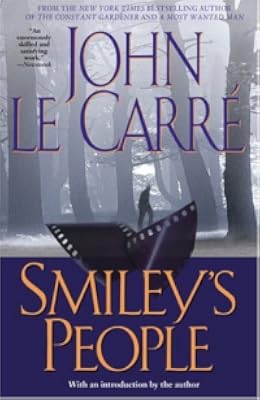




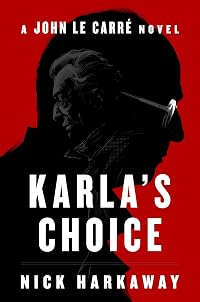





Member Recommendations

Member Reviews
Aldo Cassidy is a successful businessman who lives a double life, telling his wife, family and work colleagues elaborate lies, without reason, while wondering aimlessly about looking at houses. Then he meets a writer, Shamus, and his wife and allows himself to be lead around Paris.
This is a rare failure for John Le Carre, moving away from the world of spies to attempt something less plot driven. It's as well written, if uneven, as any of his books but less engaging.
It's interesting to wonder if it would have been better received if published under a different name. How much of my own disappointment stems from an fixed expectation of what a John Le Carre should be? The other question which comes to mind is how influential it was on Le show more Carre's decisions regarding his next novel: Tinker, Tailor, Soldier, Spy. show less
This is a rare failure for John Le Carre, moving away from the world of spies to attempt something less plot driven. It's as well written, if uneven, as any of his books but less engaging.
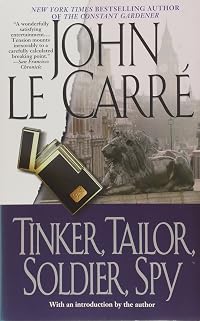
It's interesting to wonder if it would have been better received if published under a different name. How much of my own disappointment stems from an fixed expectation of what a John Le Carre should be? The other question which comes to mind is how influential it was on Le show more Carre's decisions regarding his next novel: Tinker, Tailor, Soldier, Spy. show less
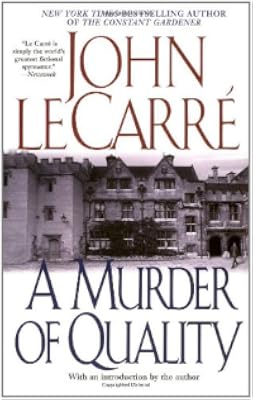
This is not, like I have seen claimed in several places, le Carré’s first novel that is not a spy thriller (there is also A Murder of Quality, which although it features George Smiley as its protagonist is not about espionage at all, but is a murder mystery) but his first (and possibly only, I have not read them all yet) non-genre novel. It also seems the least liked of his novels, and while it would be easy to dismiss that as fans complaining that they are not getting their customary fare, I think there might be rather more to it in this case.
The basic story of The Naive and Sentimental Lover is a familiar one – it’s about a bourgeois male who is successful in his life but still suffers from its essential emptiness and finds show more himself seduced by the bohemian lifestyle (represented here by a married couple rather than the more customary single femme fatale) to which he eventually falls victim. And in the beginning, Le Carré’s novel does indeed look like a British retelling of Professor Unrat (by Heinrich Mann, most famous in its movie version, Der Blaue Engel, with Marlene Dietrich and Emil Jannings). Things, and the reader’s assessment of them, start to change, though; and while Aldo Cassidy, the novel’s protagonist, appears to be the most unlikable of Le Carré’s characters so far (and that is saying something), by the end of The Naive and Sentimental Lover we might still not like him much but do feel some sympathy for him, while his Bohemian temptation, the writer Shamus and his wife Helen, has been thoroughly demystified and it is not all clear who in the course of events has fallen victim to who.
In fact, very few things are clear by the end of The Naive and Sentimental Lover, and it appears that the world of everyday life, of pram fastening design and business, of married life and extra-marital affairs, of bourgeoisie and bohemia is coloured in just as many shades of grey and possibly even murkier than the world of international espionage. With spy novels, there at least is some basic conflict and some sense that things matter - even if both should get debunked in the course of the narrative, they do give it some shape. And while it is perhaps unfair to compare The Naive and Sentimental Lover to something the novel does not at all aspire to be, to me it seems that shape is precisely what is missing from it. Shape, not structure – that the novel has, Le Carré is too good (and too controlled) a writer to just go rambling, and so we get a novel that is basically divided into three parts, each of them with the emphasis of another of its three protagonists (although Aldo’s remains the central consciousness throughout). But the novel’s events, the descriptions and character portraits hang slack on that framework, like clothes several sizes too big for their wearer.
The novel just seems to lack a purpose, a sense of going anywhere – it might have been a better book if Le Carré had gone all the way and let Aldo descent into ruin and madness, but in the end, stodgy English middle-class hypocrisy wins out and Aldo basically gets on with his life much like he did before – which is in all likelihood a point Le Carré wanted to make, probably even a valid point, but not one that makes for a good novel, at least not if one stays mainly with a realistic approach.
That is not to say that The Naive and Sentimental Lover does not have its flashes of brilliance, like Aldo’s business dealings which range from the satirical to the absurd, or the half-hallucinatory excesses of Aldo’s and Shamus’ trip to Paris – indeed the novel seems to be best where Le Carré not only leaves the spy thriller genre but goes a step farther and leaves the accustomed ground of realistic fiction altogether. He always returns to the solid ground of realism soon, though, and as a result the novel becomes dreary again; I for one wish it had stayed in the exotic climates of a somewhat more modernist approach for fiction longer, I probably would have enjoyed it more then. show less
The basic story of The Naive and Sentimental Lover is a familiar one – it’s about a bourgeois male who is successful in his life but still suffers from its essential emptiness and finds show more himself seduced by the bohemian lifestyle (represented here by a married couple rather than the more customary single femme fatale) to which he eventually falls victim. And in the beginning, Le Carré’s novel does indeed look like a British retelling of Professor Unrat (by Heinrich Mann, most famous in its movie version, Der Blaue Engel, with Marlene Dietrich and Emil Jannings). Things, and the reader’s assessment of them, start to change, though; and while Aldo Cassidy, the novel’s protagonist, appears to be the most unlikable of Le Carré’s characters so far (and that is saying something), by the end of The Naive and Sentimental Lover we might still not like him much but do feel some sympathy for him, while his Bohemian temptation, the writer Shamus and his wife Helen, has been thoroughly demystified and it is not all clear who in the course of events has fallen victim to who.
In fact, very few things are clear by the end of The Naive and Sentimental Lover, and it appears that the world of everyday life, of pram fastening design and business, of married life and extra-marital affairs, of bourgeoisie and bohemia is coloured in just as many shades of grey and possibly even murkier than the world of international espionage. With spy novels, there at least is some basic conflict and some sense that things matter - even if both should get debunked in the course of the narrative, they do give it some shape. And while it is perhaps unfair to compare The Naive and Sentimental Lover to something the novel does not at all aspire to be, to me it seems that shape is precisely what is missing from it. Shape, not structure – that the novel has, Le Carré is too good (and too controlled) a writer to just go rambling, and so we get a novel that is basically divided into three parts, each of them with the emphasis of another of its three protagonists (although Aldo’s remains the central consciousness throughout). But the novel’s events, the descriptions and character portraits hang slack on that framework, like clothes several sizes too big for their wearer.
The novel just seems to lack a purpose, a sense of going anywhere – it might have been a better book if Le Carré had gone all the way and let Aldo descent into ruin and madness, but in the end, stodgy English middle-class hypocrisy wins out and Aldo basically gets on with his life much like he did before – which is in all likelihood a point Le Carré wanted to make, probably even a valid point, but not one that makes for a good novel, at least not if one stays mainly with a realistic approach.
That is not to say that The Naive and Sentimental Lover does not have its flashes of brilliance, like Aldo’s business dealings which range from the satirical to the absurd, or the half-hallucinatory excesses of Aldo’s and Shamus’ trip to Paris – indeed the novel seems to be best where Le Carré not only leaves the spy thriller genre but goes a step farther and leaves the accustomed ground of realistic fiction altogether. He always returns to the solid ground of realism soon, though, and as a result the novel becomes dreary again; I for one wish it had stayed in the exotic climates of a somewhat more modernist approach for fiction longer, I probably would have enjoyed it more then. show less
This is the odd-le-Carré-out - the only one that doesn't have some connection to the world of espionage. I only read it for completeness, thinking it was a sort of romance story but really it's literary fiction. It's about a middle-aged, highly successful, somewhat unhappy businessman (Cassidy) who becomes entranced by an anarchic, charming, child-like writer (Shamus) and also the writer's wife (Helen). I understand that this is generally derided or just ignored by le Carré fans, but I still found it a great fun read. It's funny and engaging, and le Carré's prose is as readable as ever. It's better than some other literary fiction books by more respected purveyors of the genre.
But it's not perfect. It is certainly unnecessarily long, show more and sometime's the strength and endurance of the relationship between Shamus and Cassidy stretches credibility a little bit. The denouement felt a little forced, although it was satisfying. And I don't like the title at all.
A note about the book itself. I had to order it on Interlibrary-loan as there wasn't a copy in all of New York's Five Boroughs. For an author of le Carré's stature, I think that says a lot about how the book is regarded. When it turned up, it was a hard-back first edition; a blue cover with the top of the pages coloured a pinkish-purple (but not the side or bottom of the pages - maybe they'd faded). The dust-jacket was no longer associated, except that someone had cut out the blurb from the inside flaps and stuck them into the back of the book. Finally, it had £2.50 scribbled in pencil in the top corner on the first page or so. I wonder how it made its way from Britain into the US library system. show less
But it's not perfect. It is certainly unnecessarily long, show more and sometime's the strength and endurance of the relationship between Shamus and Cassidy stretches credibility a little bit. The denouement felt a little forced, although it was satisfying. And I don't like the title at all.
A note about the book itself. I had to order it on Interlibrary-loan as there wasn't a copy in all of New York's Five Boroughs. For an author of le Carré's stature, I think that says a lot about how the book is regarded. When it turned up, it was a hard-back first edition; a blue cover with the top of the pages coloured a pinkish-purple (but not the side or bottom of the pages - maybe they'd faded). The dust-jacket was no longer associated, except that someone had cut out the blurb from the inside flaps and stuck them into the back of the book. Finally, it had £2.50 scribbled in pencil in the top corner on the first page or so. I wonder how it made its way from Britain into the US library system. show less
The Naive and Sentimental Lovers is plodding and takes forever to get to its end point. The culture clash between the bohemian couple and the businessman (Aldo Cassidy, "pram" manufacturer) could have been interesting, but Cassidy just goes along with whatever Shamus and Helen do. The dialogue is interminable and meandering. Shamus is not as interesting as he thinks he is, which is Le Carre's point (I think), but having to read his verbal diarrhea was not fun.
I am not very sure what I just read. I almost aborted it but plowed on, hoping there's a plot twist or an epiphany that would turn the book from a 2-star to a 3-star read. It never came. If I interpret this book correctly, it's the story of a lonely and rich young man who went on an adventure and finally found bliss and peace in his family. Could be a good story but Le Carre wrote 500-plus pages of mystery to get there.
I enjoyed this character study a good deal. It's very out of genre for JLC, but that's good. It's well in his technique however, as he is a character driven writer. It seems that's a relatively early work, and didn't find much favour with his usual audience. Pooh! From my limited experience, I think he writes well of altered states of consciousness.
Read during: Summer 2002
This is the only non 'tradecraft of espionage' novel that I've read by John LeCarre and I did not enjoy it at all. I'm very suprised, I've really loved his other novels but this one completely did not work for me. I found the writing style very disjoint and I excessively disliked every single character. Disliking a few is okay but I could not stand any of them. Apparently, Aldo Cassidy is going through a life crisis, aided and abetted by a once time famous writer and his oddly devoted wife. His life as a very rich inventor of brakes for prams is upset and he goes on drunken binges in Paris but then returns quietly to his previous life and doesn't think about the past. Didn't move me an inch.
This is the only non 'tradecraft of espionage' novel that I've read by John LeCarre and I did not enjoy it at all. I'm very suprised, I've really loved his other novels but this one completely did not work for me. I found the writing style very disjoint and I excessively disliked every single character. Disliking a few is okay but I could not stand any of them. Apparently, Aldo Cassidy is going through a life crisis, aided and abetted by a once time famous writer and his oddly devoted wife. His life as a very rich inventor of brakes for prams is upset and he goes on drunken binges in Paris but then returns quietly to his previous life and doesn't think about the past. Didn't move me an inch.
Members
- Recently Added By
Lists

Reading LIst
648 works; 1 member
Author Information

212+ Works 99,173 Members
David John Moore Cornwell was born in Poole, Dorsetshire, England in 1931. He attended Bern University in Switzerland from 1948-49 and later completed a B.A. at Lincoln College, Oxford. He taught at Eton from 1956-58 and was a member of the British Foreign Service from 1959 to 1964. He writes espionage thrillers under the pseudonym John le Carré. show more The pseudonym was necessary when he began writing, in the early 1960s because, at that time, he held a diplomatic position with the British Foreign Office and was not allowed to publish under his own name. When his third book, The Spy Who Came in from the Cold, became a worldwide bestseller in 1964, he left the foreign service to write full time. His other works include Call for the Dead; A Murder of Quality; Tinker, Tailor, Soldier, Spy; The Honourable Schoolboy; and Smiley's People. He has received numerous awards for his writing, including the Grand Master Award from the Mystery Writers of America in 1986 and the Diamond Dagger from the Crime Writers Association in 1988. In 2011 he accepted the Goethe Medal. And in 2020, he accepted the Olof Palme Prize. Ten of his books have been adapted for television and motion pictures including The Spy Who Came in from the Cold, The Russia House, The Constant Gardener, A Most Wanted Man, and Our Kind of Traitor. Le Carré's memoir, The Pigeon Tunnel: Stories from my Life, became a New York Times bestseller in 2016. In 2019, he published a spy thriller, Agent Running in the Field. John Le Carré died on December 12, 2020 from pneumonia at the age of 89. (Bowker Author Biography) John le Carre was born in 1931. After attending the univesities of Berne and Oxford, he spent five years in the British Foreign Service. He's the author of eighteen novels, translated into twenty-five languages. He lives in England. (Publisher Provided) show less
Some Editions
Awards and Honors
Distinctions
Series
Belongs to Publisher Series
BUR: L [Rizzoli] (645)
Common Knowledge
- Canonical title*
- Der wachsame Träumer
- Original title
- The naïve and sentimental lover
- Original publication date
- 1971; 1ª ed. it. 1972
- People/Characters
- Aldo Cassidy; Sandra Cassidy; Hugo Cassidy; Mark Cassidy; Shamus; Helen (show all 9); Angie Mawdray; John Elderman; Beth Elderman
- Important places
- Haverdown; London, England, UK; Paris, France; Saiñte-Angéle
- Dedication
- A John Miller
e Michael Truscott,
con affetto. - First words
- Cassidy drove contentedly through the evening sunlight, his face as close to the windscreen as the safety belt allowed, his foot alternating diffidently between accelerator and brake as he scanned the narrow lane for unseen h... (show all)azards.
- Last words
- (Click to show. Warning: May contain spoilers.)For in this world, whatever was left of it to inhabit, Aldo Cassidy dared not remember love.
- Original language*
- Englisch
*Some information comes from Common Knowledge in other languages. Click "Edit" for more information.
Classifications
- Genres
- Fiction and Literature, General Fiction, Romance
- DDC/MDS
- 823.914 — Literature & rhetoric English & Old English literatures English fiction 1900- 1901-1999 1945-1999
- LCC
- PZ4 .L4526 — Language and Literature Fiction and juvenile belles lettres Fiction and juvenile belles lettres Fiction in English
- BISAC
Statistics
- Members
- 1,037
- Popularity
- 24,996
- Reviews
- 13
- Rating
- (3.15)
- Languages
- 8 — Dutch, English, French, German, Italian, Portuguese, Spanish, Swedish
- Media
- Paper, Audiobook, Ebook
- ISBNs
- 53
- ASINs
- 30