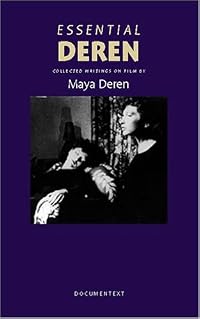
Essential Deren: Collected Writings on Film
by Maya Deren
On This Page
Description
Although it was her idea to bring together her family and that of a neighboring widow woman to reap the harvest, Elvirey feels her heart "squeeze tight" at the thought of the widow and her Pap getting married.Tags
Recommendations
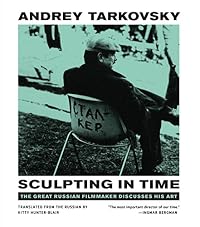
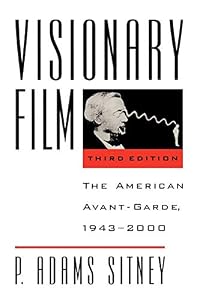
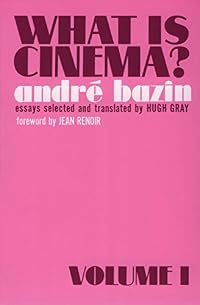
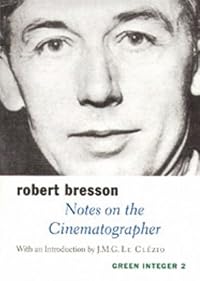










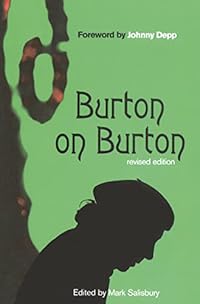
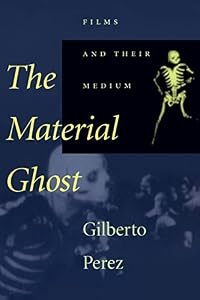

Member Reviews
Members
- Recently Added By
Author Information

20+ Works 588 Members
Sometimes called "the mother of the American avant-garde cinema," Deren was born in Kiev, Ukraine, in the Soviet Union. At age 5, she fled the country with her parents and settled in New York. She attended Syracuse University, where she majored in journalism and became involved in political activism of the Left. She also studied at New York show more University and at Smith College, where she received an M.A. in English. In 1941, Deren took a job with choreographer Katherine Dunham and became fascinated by dance and movement, which was to serve as a subject for some of her films and inspired her thinking about camera movement as an art of dance. Her interest in film was sparked by Czech filmmaker Alexander Hammid, who became her second husband in 1942. They collaborated on her first two films, Meshes of the Afternoon (1943) and At the Land (1944). Both films use slow motion and subjective camera angles to disrupt the realist conventions of narrative film, undermining the coherency and continuity of time and space. Meshes of the Afternoon explores irrational violence, the unconscious, and female subjectivity in surrealist fashion, whereas At the Land more overtly manipulates time and space. A Study in Choreography for Camera (1945), Ritual in Transfigured Time (1946), and Meditation on Violence (1948) are all "dance films," in which the camera's constitutive role for film is explored through camera movement. Particularly striking is the use of the camera as a sparring partner for the boxer featured in Meditation on Violence. Throughout the 1940s, Deren worked in independent, experimental cinema, lecturing extensively and developing a network of nontheatrical exhibit spaces across the country. She also wrote a theoretical tract in An Anagram of Ideas on Art, Form and Film (1946), which is testimony to her dictum that artists need to educate themselves in old and new knowledge---what she called philosophy. The fruit of her efforts was the Creative Film Foundation, which she established in 1954. Four years later, Deren made her last film, The Very Eye of Night, which she described as cool and classicist, contrasting it with the romanticism that she had come to despise in the work of some other avant-garde filmmakers. (Bowker Author Biography) show less
Awards and Honors
Notable Lists
Classifications
- Genres
- Nonfiction, Children's Books
- DDC/MDS
- 791.4301 — Arts & recreation Recreation, sports, and performing arts Public performances Motion pictures, radio, television, podcasting Motion pictures Standard subdivisions Theory And Instruction
- LCC
- PN1995 .D467 — Language and Literature Literature (General) Literature (General) Drama Motion pictures
- BISAC
Statistics
- Members
- 75
- Popularity
- 418,815
- Rating
- (4.44)
- Languages
- English
- Media
- Paper
- ISBNs
- 2