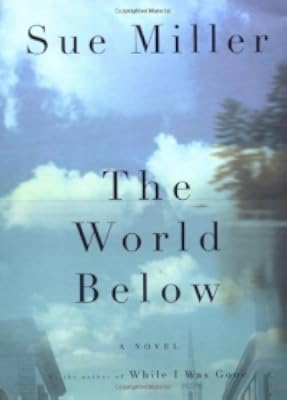
The World Below
by Sue Miller
On This Page
Description
Fiction. Literature. HTML:From the author of While I Was Gone, a stunning new novel that showcases Sue Miller's singular gift for exposing the nerves that lie hidden in marriages and families, and the hopes and regrets that lie buried in the hearts of women.Maine, 1919. Georgia Rice, who has cared for her father and two siblings since her mother's death, is diagnosed, at nineteen, with tuberculosis and sent away to a sanitarium. Freed from the burdens of caretaking, she discovers a nearly show more lost world of youth and possibility, and meets the doomed young man who will become her lover.
Vermont, the present. On the heels of a divorce, Catherine Hubbard, Georgia's granddaughter, takes up residence in Georgia's old house. Sorting through her own affairs, Cath stumbles upon the true story of Georgia's life and marriage, and of the misunderstanding upon which she built a lasting love.
With the tales of these two women—one a country doctor's wife with a haunting past, the other a twice-divorced San Francisco schoolteacher casting about at midlife for answers to her future—Miller offers us a novel of astonishing richness and emotional depth. Linked by bitter disappointments, compromise, and powerful grace, the lives of Georgia and Cath begin to seem remarkably similar, despite their distinctly different times: two young girls, generations apart, motherless at nearly the same age, thrust into early adulthood, struggling with confusing bonds of attachment and guilt; both of them in marriages that are not what they seem, forced to make choices that call into question the very nature of intimacy, faithfulness, betrayal, and love. Marvelously written, expertly told, The World Below captures the shadowy half-truths of the visible world, and the beauty and sorrow submerged beneath the surfaces of our lives—the lost world of the past, our lost hopes for the future. A tour de force from one of our most beloved storytellers. show less
Tags
Recommendations






Member Reviews
The World Below by Sue Miller, published in 2001, has a dual storyline about a twice-divorced woman, Cath, and her deceased maternal grandmother, Georgia, who both lost their mothers at a young age. At age 52 with three adult children, Cath leaves her home in San Francisco and moves into Georgia's Vermont home for a while to regroup. While there, she finds Georgia's diaries, and learns all was not as it seemed with her grandparents' marriage. In 1919, Georgia, age 19, was sent to the tuberculosis sanitarium by her twenty-years-older doctor because he felt she needed a break from taking care of her parents and younger siblings during and after her mother's long illness and death, not because she has tuberculosis. Georgia marries the show more doctor soon after her short stay, but her time at the "san" changes her life, and the parallels to her granddaughter's life are remarkable. This was a nice, quiet, introspective novel to read at the end of the tumultuous Christmas holidays of 2020-21. It's the first book I've read by Miller, but I'd like to read more. show less
I didn't expect to like Sue Miller's writing. I'll admit that straight out. Holding a degree in English literature, and being a reviewer for several publishing houses, I've become a bit (okay, a LOT) of a book snob. But there was some quality to Miller's writing that drew me in. Perhaps it was the way she gracefully switched between the two plot lines, one in 1919 and one in modern times, that impressed me. In any event, I didn't expect to be impressed to begin with, and if I hadn't found something to recommend the book I'd have thrown it across the room with great force, despite having actually paid cover price for this one (it was for a book group, and I was in a rush..).
I was most interested in the 1919 sections, being someone who's show more a fan of Edwardian/turn of the century settings in the first place, but even the sections set in contemporary times were compelling enough to keep me interested. I simply liked the two main characters, grandmother and granddaughter, despite the granddaughter's distressingly EASY conduct early in the book. A bit too much information, if you ask me, but then again you really didn't. I was able to forgive Catherine, though, as she was after all moving into the big, rambling home of her late grandmother, and there was my favorite convention of a trunk filled with mementos to be gone through. A character gets very high marks from me for respecting the past and honoring the dead, etc., though not for dropping knickers for every man who happens by. I do have my standards.
Though this isn't high literature, it's at least a cut above so many other authors writing today. Yes, it's somewhat a romance, and yes, there is a cheese factor to deal with, but this is an entertaining, readable sort of book. It's something to read when you're lazing around on a Sunday, or to bring along on vacation, or when your library book group is reading it, and you work at the library so would like to stay in the good books of your co-workers.
So, read this one, but for god's sake PLEASE read something more literary at least on a semi-regular basis, then it won't be a crime to have a bit of this sort of "junk food" from time to time.. And support your local public library!
Now I shall shut up. show less
I was most interested in the 1919 sections, being someone who's show more a fan of Edwardian/turn of the century settings in the first place, but even the sections set in contemporary times were compelling enough to keep me interested. I simply liked the two main characters, grandmother and granddaughter, despite the granddaughter's distressingly EASY conduct early in the book. A bit too much information, if you ask me, but then again you really didn't. I was able to forgive Catherine, though, as she was after all moving into the big, rambling home of her late grandmother, and there was my favorite convention of a trunk filled with mementos to be gone through. A character gets very high marks from me for respecting the past and honoring the dead, etc., though not for dropping knickers for every man who happens by. I do have my standards.
Though this isn't high literature, it's at least a cut above so many other authors writing today. Yes, it's somewhat a romance, and yes, there is a cheese factor to deal with, but this is an entertaining, readable sort of book. It's something to read when you're lazing around on a Sunday, or to bring along on vacation, or when your library book group is reading it, and you work at the library so would like to stay in the good books of your co-workers.
So, read this one, but for god's sake PLEASE read something more literary at least on a semi-regular basis, then it won't be a crime to have a bit of this sort of "junk food" from time to time.. And support your local public library!
Now I shall shut up. show less
Good intentions can change another person's life, but this change may not always be welcome. When the mother of two girls dies, their grandmother arrives to take them back to her rural home. Their father refuses the offer; privately, the girls laugh at the notion of living with their backwoods relative. But she was right. Caring for their widowed father would prove to be a great sacrifice. They probably would have been better off with the freedom their grandmother's care could have provided.
Years later, when the elder daughter becomes ill, her doctor sends her away to a sanatorium for her health. When she returns, the two marry. After several decades together she discovers that she wasn't really sick enough to warrant the sanatorium. show more Her husband sent her because he thought it would be best, because he thought she needed to escape the life she had taking care of her father.
She is not grateful for his intervention. She liked the life she had. The doctor's well intended gesture had changed her life forever.
Years later, the doctor will do the same for his grand-daughter by sending her to Paris to live with her aunt. There she will discover a side of the grandmother who has raised her that she never suspected.
Sue Miller writes about the ways relationships can be complicated by simple acts and by dramatic ones. Sometimes these are one in the same. In The World Below some characters reveal their past lives, others are discovered, but no one is who we think they are, not entirely. Everyone has a history. Discovering it can be painful, revealing it can be cruel.
Ms. Miller understands the complexities of people and the relationship they form. She understands that even happy families struggle to maintain their relationships. Her work proves Tolstoy wrong, happy families are not all alike. You just have to look a bit harder, get to know them intimately. Families are complex things. For love to survive, some things must be revealed, some things are best kept secret. show less
Years later, when the elder daughter becomes ill, her doctor sends her away to a sanatorium for her health. When she returns, the two marry. After several decades together she discovers that she wasn't really sick enough to warrant the sanatorium. show more Her husband sent her because he thought it would be best, because he thought she needed to escape the life she had taking care of her father.
She is not grateful for his intervention. She liked the life she had. The doctor's well intended gesture had changed her life forever.
Years later, the doctor will do the same for his grand-daughter by sending her to Paris to live with her aunt. There she will discover a side of the grandmother who has raised her that she never suspected.
Sue Miller writes about the ways relationships can be complicated by simple acts and by dramatic ones. Sometimes these are one in the same. In The World Below some characters reveal their past lives, others are discovered, but no one is who we think they are, not entirely. Everyone has a history. Discovering it can be painful, revealing it can be cruel.
Ms. Miller understands the complexities of people and the relationship they form. She understands that even happy families struggle to maintain their relationships. Her work proves Tolstoy wrong, happy families are not all alike. You just have to look a bit harder, get to know them intimately. Families are complex things. For love to survive, some things must be revealed, some things are best kept secret. show less
by the end of this i wasn't caring at all about these characters or their growth or their past or really any of it. sue miller's writing is so good but i'm finding that i'm maybe not so into what she's writing about or maybe the characters' lives she's interested in? i do like her writing and i like her exploration of themes in quiet books, but somehow they consistently don't hit for me.
Sue Miller’s 7th novel - The World Below - begins in Maine in the early part of the twentieth century with Georgia Rice. Georgia’s mother has recently died from cancer, and Georgia - being the eldest child of three siblings - steps into the role of caring for her father and younger brother and sister. But an unexpected diagnosis of tuberculosis sends her to a sanitarium which will change her life in unexpected ways.
Fast forward to the present day where the reader is introduced to Georgia’s 50-something year old granddaughter, Catherine Hubbard who has returned to her grandparent’s home to start over again after a recent divorce. Catherine discovers her grandmother’s diaries, and begins to piece together Georgia’s life.
She show more discovers her own life has paralleled her grandmother’s in inexplicable ways. We learn (through flash backs) that Catherine’s mother, mentally ill and fragile, dies when Catherine is only a teenager, and Catherine briefly goes to live with her grandparents - who are now living in Vermont. During this time in her life, she senses a deep undercurrent of old resentments and misunderstandings which lie beneath the surface of her grandparent’s marriage. Later, as an adult, Catherine starts her own family … and suffers through two painful divorces, leaving her to wonder what her future will bring.
The World Below is a multi-layered, non-linear novel which slips back and forth between the generations. It is a novel about the subtle power struggles within a marriage, the loss of childhood innocence, the re-discovery of self as one moves through the years, and the tenuous hold we have on the past.
I must admit to the novel being slow going for me and a little confusing (with all the flash backs and change in point of view) at the start; but as I made my way through Georgia and Catherine’s lives, their stories began to interest me, and I was slowly pulled into the story. Miller writes with great depth and understanding of her characters - who are filled with the human flaws we all share. Her writing is honest and searing, forcing the reader to examine her own life while sharing the lives of the characters. I have enjoyed Miller’s previous books, and this was no exception.
Recommended. show less
Fast forward to the present day where the reader is introduced to Georgia’s 50-something year old granddaughter, Catherine Hubbard who has returned to her grandparent’s home to start over again after a recent divorce. Catherine discovers her grandmother’s diaries, and begins to piece together Georgia’s life.
She show more discovers her own life has paralleled her grandmother’s in inexplicable ways. We learn (through flash backs) that Catherine’s mother, mentally ill and fragile, dies when Catherine is only a teenager, and Catherine briefly goes to live with her grandparents - who are now living in Vermont. During this time in her life, she senses a deep undercurrent of old resentments and misunderstandings which lie beneath the surface of her grandparent’s marriage. Later, as an adult, Catherine starts her own family … and suffers through two painful divorces, leaving her to wonder what her future will bring.
The World Below is a multi-layered, non-linear novel which slips back and forth between the generations. It is a novel about the subtle power struggles within a marriage, the loss of childhood innocence, the re-discovery of self as one moves through the years, and the tenuous hold we have on the past.
I must admit to the novel being slow going for me and a little confusing (with all the flash backs and change in point of view) at the start; but as I made my way through Georgia and Catherine’s lives, their stories began to interest me, and I was slowly pulled into the story. Miller writes with great depth and understanding of her characters - who are filled with the human flaws we all share. Her writing is honest and searing, forcing the reader to examine her own life while sharing the lives of the characters. I have enjoyed Miller’s previous books, and this was no exception.
Recommended. show less
Thoroughly enjoyed this quiet and introspective novel. Catherine is feeling a bit lost and inheriting her Grandmother's house gives her a chance to re-find herself and think about her past and future. At her Grandmothers she finds old diaries and pieces together from these and the household accounts stories from the past. This is beautifully written and I particularly loved the description of the world below in the story, houses below a reservoir that she saw from a boat as a child and her reaction when she was told this was fantasy. Excellent read.
I registered a book at BookCrossing.com!
http://www.BookCrossing.com/journal/12549041
Two stories, two generations apart. Catherine Hubbard leaves San Francisco after her divorce to take up life in an old house in Vermont, passed down from her grandmother, Georgia Rice. Catherine had spent many good nights in the house when young, after her mother died, and had grown attached to Georgia. Over the years the friendship deepened, although at times she regretted not asking Georgia more questions.
Georgia's story begins, essentially, when she is sent at age 18 to a tuberculosis sanitarium ("san") in the early 1900s. She meets a young man, younger and sicker than she is, and the two engage in hidden, scandalous behavior. Interestingly, such show more liaisons among patients was not uncommon, even in those days. When Georgia later makes references to her "modernity" to her granddaughter, Catherine doesn't follow up.
So it seemed to me that Catherine was embarking on a journey of discovery, and so she is. It isn't as hackneyed as I feared, however. I was envisioning the "rebirth" and clearing of the old Catherine to make way for the new. We've all read that book before. But it is a bit more complicated, and we find parallels between the two women page after page. The women are both intelligent and interesting, and I found the book a pleasure to read. show less
http://www.BookCrossing.com/journal/12549041
Two stories, two generations apart. Catherine Hubbard leaves San Francisco after her divorce to take up life in an old house in Vermont, passed down from her grandmother, Georgia Rice. Catherine had spent many good nights in the house when young, after her mother died, and had grown attached to Georgia. Over the years the friendship deepened, although at times she regretted not asking Georgia more questions.
Georgia's story begins, essentially, when she is sent at age 18 to a tuberculosis sanitarium ("san") in the early 1900s. She meets a young man, younger and sicker than she is, and the two engage in hidden, scandalous behavior. Interestingly, such show more liaisons among patients was not uncommon, even in those days. When Georgia later makes references to her "modernity" to her granddaughter, Catherine doesn't follow up.
So it seemed to me that Catherine was embarking on a journey of discovery, and so she is. It isn't as hackneyed as I feared, however. I was envisioning the "rebirth" and clearing of the old Catherine to make way for the new. We've all read that book before. But it is a bit more complicated, and we find parallels between the two women page after page. The women are both intelligent and interesting, and I found the book a pleasure to read. show less
Members
- Recently Added By
Author Information

24+ Works 12,547 Members
Sue Miller was born November 29, 1943. She received a B.A. from Radcliffe College in 1964. She was a high school teacher, a cocktail waitress and a model before becoming a full time mother. Soon after the birth of her child, she divorced her first husband. Afterwards, she founded the Harvard Day Care Centers and worked as a preschool teacher. At show more the age of 35, she began writing after joining a writing workshop. Her first novel The Good Mother (1986), which is about a divorced woman caught up in a fierce custody battle, was on the bestsellers list for six months. Her other works include Family Pictures (1990), For Love (1993), The Distinguished Guest (1995), and While I Was Gone (1999). She also has a short story collection titled Inventing the Abbotts and Other Stories (1987). Several of her books have been adapted into movies including The Good Mother (1988), which was directed by Leonard Nimoy and starred Diane Keaton and Liam Neeson; Family Pictures (1993), which starred Anjelica Houston and Sam Neill; and Inventing the Abbotts (1997), which starred Liv Tyler. She is currently a professor of creative writing at Smith College. (Bowker Author Biography) show less
Some Editions
Common Knowledge
- Canonical title
- The World Below
- Original publication date
- 2001
- People/Characters
- Catherine Hubbard ; Georgia Rice Holbrooke
- Important places
- West Barstow, Vermont, USA; San Francisco, California, USA
- Dedication
- To the memory of Marguerite Mills Beach,
my own beloved storytelling grandmother. - First words
- Imagine it: a dry, cool day, the high-piled cumulus clouds moving slowly from northwest to southeast in the sky, their shadows following them across the hay fields yet to be cut for the last time this year.
- Quotations
- "Wait until they ask," "Wait until they want to know," the books and advice columns say. But my theory is everyone always wants to know, even when they don't have an inkling of what they want to know about.
How do these things change? That what you loved you come to hate?
It seemed how it must be, how we are. It made me think of the borders we all cross, the distances we've all come from what feels like home. Who lives at home, in America, now?
She explained to me whatever I asked her about and more. In that sense there was nothing that was not available to me to know. But knowing is different from understanding.
We talked about the diaries one day. The diaries and the other material. I told him about my compulsive reading and rereading.
"Ah, you've got the bug," he said.
"Is that what it is?" I asked. "Is that what it feels lik... (show all)e to you when you're doing research on something?"
"Very much."
"Without the personal connection, though."
"No, absolutely with it. I think if you don't feel connected, if you don't feel that what you're figuring out is going to answer something personally for you, then you don't do it. I can't imagine doing it, at any rate."
"Now maybe she went for the sociability, or just because she'd always gone. But maybe, just maybe, she was a believer. A true believer. And then, if that was so, it would raise other questions. You'd have to know, for instanc... (show all)e, what kind of a believer. Did she see each moment of her life as given by God: here, a test to rise to, there, a moment of grace? Or did she just assume him as a beneficent presence? Somehow, maybe even casually, in charge of everything."
When I came to live with my grandparents for good, I wasn't a happy girl. Of course, part of my unhappiness had to do with my mother's death; but I was also unhappy because I was—I had been—an oddity in my high school in ... (show all)Evanston. A loner. A girl who didn't know how to talk to others. How could I have been otherwise, growing up as I did? With a mother who didn't know how to talk to me?
That was all it took, that gesture. He was beautiful, he was older, and no one in my life had ever claimed me so simply. Had ever claimed me at all. - Last words
- (Click to show. Warning: May contain spoilers.)And what gift of love or sympathy made me able to be what she needed in that moment, made me able to act my part, to give her back to her world? Made me able to answer her, "Yes"?
"Yes, of course I will."
Classifications
Statistics
- Members
- 1,074
- Popularity
- 23,874
- Reviews
- 26
- Rating
- (3.53)
- Languages
- 6 — Danish, Dutch, English, French, German, Italian
- Media
- Paper, Audiobook, Ebook
- ISBNs
- 26
- ASINs
- 6