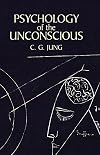
Psychology of the Unconscious
by C. G. Jung
On This Page
Description
Originally published in German as Wandlungen und Symbole der Libido, this is the book that set Carl Jung on his independent path as a psychoanalytic theorist and explorer of the mysterious world of the unconscious mind of the individual and the mythological mind of humanity. He bases his work on an exploration of Miss Frank Miller's Quelques Faits d'Imagination Creatrice, demonstrating complex connections between Miller's self-portrait of her own dreams and fantasies and the world of myth, show more symbol, and religion. From there, he explores a wide range of myth and religion, always relatiing the mythological and religious products of human culture to the functions and fantasies of the unconscious mind, with particular attention to the workings of that fundamental life-energy he calls the libido. The book is a challenge to the reader. Jung does not limit himself to the boundaries of any one language, culture or discipline. He draws from sources in German, French, Italian, English, Greek and Latin, from Milton to Goethe to Longfellow to Augustine. He explores literature, etymology, and anthropology freely to support his views. Where Jung quotes from the original language, this edition provides an English translation immediately following, and gives each of the quoted authors their own voice, thereby providing an audio equivalent of the quotation typography of the original book. The challenge, and the length of the book, is worthwhile. Jung is a fundamental thinker in the history of 20th century Western culture, and this book is the foundation of all his later work. This audiobook is an unabridged recording of the 1916 translation of the first edition of Jung's book. show lessTags
Recommendations



















Member Reviews
Members
- Recently Added By
Author Information

890+ Works 42,609 Members
Carl Gustav Jung was born in Switzerland on July 26, 1875. He originally set out to study archaeology, but switched to medicine and began practicing psychiatry in Basel after receiving his degree from the University of Basel in 1902. He became one of the most famous of modern psychologists and psychiatrists. Jung first met Sigmund Freud in 1907 show more when he became his foremost associate and disciple. The break came with the publication of Jung's Psychology of the Unconscious (1912), which did not follow Freud's theories of the libido and the unconscious. Jung eventually rejected Freud's system of psychoanalysis for his own "analytic psychology." This emphasizes present conflicts rather than those from childhood; it also takes into account the conflict arising from what Jung called the "collective unconscious"---evolutionary and cultural factors determining individual development. Jung invented the association word test and contributed the word complex to psychology, and first described the "introvert" and "extrovert" types. His interest in the human psyche, past and present, led him to study mythology, alchemy, oriental religions and philosophies, and traditional peoples. Later he became interested in parapsychology and the occult. He thought that unidentified flying objects (UFOs) might be a psychological projection of modern people's anxieties. He wrote several books including Studies in Word Association, Flying Saucers: A Modern Myth of Things Seen in the Skies, and Psychology and Alchemy. He died on June 6, 1961 after a short illness. (Bowker Author Biography) show less
Some Editions
Awards and Honors
Series
Belongs to Publisher Series
Common Knowledge
- Canonical title*
- Psicologia do Inconsciente
- Original publication date
- 1912 (original German) (original German)
*Some information comes from Common Knowledge in other languages. Click "Edit" for more information.
Classifications
Statistics
- Members
- 443
- Popularity
- 69,019
- Reviews
- 1
- Rating
- (3.83)
- Languages
- 13 — Czech, Danish, Dutch, English, Finnish, French, German, Italian, Norwegian (Bokmål), Norwegian, Portuguese (Brazil), Russian, Swedish
- Media
- Paper, Audiobook, Ebook
- ISBNs
- 49
- UPCs
- 1
- ASINs
- 18