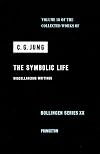
The Symbolic Life: Miscellaneous Writings
by C. G. Jung
On This Page
Description
This volume is a miscellany of writings that Jung published after the Collected Works had been planned, minor and fugitive works that he wished to assign to a special volume, and early writings that came to light in the course of research.Tags
Recommendations











Member Reviews
The Symbolic Life gathers some 160 of Jung’s writings that span sixty years and reflect his inquiring mind, numerous interests, and wide circle of professional and personal acquaintance. These writings include three longer works, “The Symbolic Life,” “Symbols and the Interpretation of Dreams,” and “The Tavistock Lectures”; a number of previously overlooked reviews, reports, and articles from the early years of Jung’s career; several finished or virtually finished manuscripts that weren’t published in his lifetime, including a 1901 report on Freud’s On Dreams; and works Jung wrote after retiring from active medical practice. The other pieces collected here include forewords to books by colleagues and pupils, replies show more to journalists’ questions, encyclopedia articles, and letters on technical subjects. Source: Publisher show less
Ratings
Members
- Recently Added By
Lists

Jordan B. Peterson's Recommended Books
104 works; 5 members
Author Information

901+ Works 42,813 Members
Carl Gustav Jung was born in Switzerland on July 26, 1875. He originally set out to study archaeology, but switched to medicine and began practicing psychiatry in Basel after receiving his degree from the University of Basel in 1902. He became one of the most famous of modern psychologists and psychiatrists. Jung first met Sigmund Freud in 1907 show more when he became his foremost associate and disciple. The break came with the publication of Jung's Psychology of the Unconscious (1912), which did not follow Freud's theories of the libido and the unconscious. Jung eventually rejected Freud's system of psychoanalysis for his own "analytic psychology." This emphasizes present conflicts rather than those from childhood; it also takes into account the conflict arising from what Jung called the "collective unconscious"---evolutionary and cultural factors determining individual development. Jung invented the association word test and contributed the word complex to psychology, and first described the "introvert" and "extrovert" types. His interest in the human psyche, past and present, led him to study mythology, alchemy, oriental religions and philosophies, and traditional peoples. Later he became interested in parapsychology and the occult. He thought that unidentified flying objects (UFOs) might be a psychological projection of modern people's anxieties. He wrote several books including Studies in Word Association, Flying Saucers: A Modern Myth of Things Seen in the Skies, and Psychology and Alchemy. He died on June 6, 1961 after a short illness. (Bowker Author Biography) show less
Series
Belongs to Publisher Series
Bollingen Series (20.18)
Work Relationships
Common Knowledge
- Canonical title
- The Symbolic Life: Miscellaneous Writings
- Original title
- Das symbolische Leben: Verschiedene Schriften
- Original publication date
- 1976
- Original language
- German
Classifications
Statistics
- Members
- 140
- Popularity
- 234,286
- Reviews
- 1
- Rating
- (4.50)
- Languages
- 8 — Chinese, English, French, German, Italian, Portuguese, Russian, Spanish
- Media
- Paper, Ebook
- ISBNs
- 17
- ASINs
- 1