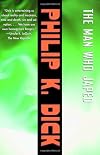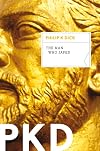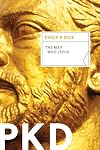
The Man Who Japed
by Philip K. Dick
On This Page
Description
Following a devastating nuclear war, the Moral Reclamation government took over the world and forced its citizens to live by strictly puritanical rules -- no premarital sex, drunkenness, or displaying of neon signs -- all of which are reinforced through a constant barrage of public messages. The chief purveyor of these messages is Alan Purcell, next in line to become head of the propaganda bureau. But there is just one problem: a statue of the government's founder has been vandalized and the show more head is hidden in Purcell's closet. In this buttoned-up society, maybe all a revolution needs is one really great prank . . . show lessTags
Recommendations





















Member Reviews
This 50's PKD is a real keeper. I might really enjoy re-reading it in the next few years, but you know what I really want?
A MOVIE. This novel is a comedic GEM. It's funny as hell. A very McCarthy-era satire mixing post-apocalypse with uber-concerns with public morality in a paranoid state with tiny robots spying on everyone.
The witch-hunts never stopped.
And yet... a man with a sense of humor in the right place at the right time can change the world.
Not to spoil things, but car chases at 30 miles per hour and punting the head of a statue is just icing on the cake.
I can totally see Jon Hamm taking the lead with his totally confident smile as charges of public indecency are leveled against him or when he picks up James Joyce's show more [b:Ulysses|338798|Ulysses|James Joyce|https://images.gr-assets.com/books/1428891345s/338798.jpg|2368224] or when the homage to Swift's [b:A Modest Proposal|5206937|A Modest Proposal|Jonathan Swift|https://images.gr-assets.com/books/1348659670s/5206937.jpg|6627040] airs on public tv.
My imagination adds a rioting crowd of B-52's and horn-rimmed glasses, and oh! such outrage!
Who will stand with me? One last practical joke to topple society? Let me see a show of hands! :) show less
A MOVIE. This novel is a comedic GEM. It's funny as hell. A very McCarthy-era satire mixing post-apocalypse with uber-concerns with public morality in a paranoid state with tiny robots spying on everyone.
The witch-hunts never stopped.
And yet... a man with a sense of humor in the right place at the right time can change the world.
Not to spoil things, but car chases at 30 miles per hour and punting the head of a statue is just icing on the cake.
I can totally see Jon Hamm taking the lead with his totally confident smile as charges of public indecency are leveled against him or when he picks up James Joyce's show more [b:Ulysses|338798|Ulysses|James Joyce|https://images.gr-assets.com/books/1428891345s/338798.jpg|2368224] or when the homage to Swift's [b:A Modest Proposal|5206937|A Modest Proposal|Jonathan Swift|https://images.gr-assets.com/books/1348659670s/5206937.jpg|6627040] airs on public tv.
My imagination adds a rioting crowd of B-52's and horn-rimmed glasses, and oh! such outrage!
Who will stand with me? One last practical joke to topple society? Let me see a show of hands! :) show less
Originally posted at www.fantasyliterature.com
In 2114, Allen and Janet Purcell live in Newer York, a post-apocalyptic city that strictly regulates morality so that all citizens understand exactly how to fit in. Robotic spies film suspect behavior and turn it in to the committee members who are in charge of renting out apartments to law-abiding citizens. Citizens who get drunk, curse, or engage in sexual or other misconduct are brought to trial by the peers who live in their apartment complexes. A guilty verdict usually means losing your lease and having to move to one of the faraway planets that supplies Earth with food.
Allen Purcell has just been offered the top position in the governmentƒ??s ad agency which produces propaganda meant show more to maintain public ethics. The job is very prestigious, but thereÂ??s only one problem: The night before, in his sleep, he japed (made a joke of) the statue of General Streiter, the man who started the current governmental regime. Allen wasnÂ??t conscious of his activity, and he doesnÂ??t think thereÂ??s any evidence that heÂ??s the culprit, but he needs to find out why he did it before he takes a job that puts him in charge of promoting the governmentÂ??s agenda. But when he decides to visit a psychoanalyst, things just go from bad to worse.
The Man Who Japed (1956) is Philip K. DickÂ??s third published novel, and it contains many of the same themes and types of characters seen in most of his works Â?? a bewildered male protagonist with a neurotic wife, a society obsessed with the morality of its neighbors, bad psychoanalysis, fascism, paranoia, fear of nuclear war, media propaganda, McCarthy-like witch hunts, synthetic food, and drug trips. Unusually, women are in positions of power in The Man Who Japed, and the Purcells actually seem to love each other (bad marriages are the norm for this author).
Perhaps IÂ??ve read too much PKD, or perhaps itÂ??s because I had just finished another of his novels, but I was not truly entertained by The Man Who Japed until the last 20% of the story. The final jape and its aftermath was hilarious and completely satisfactory, but much of the story up until that point lacked the constant humor and bizarreness that I love about Philip K. Dick. There were certainly some funny moments (such as the joke with the statue and AllenÂ??s visit to a black market dealer in banned 20th century novels), but most of the novel is obvious hit-Â??em-over-the-head social commentary, and none of it is anything I havenÂ??t previously seen many times from Dick.
Compared to his other works, The Man Who Japed is short, linearly-plotted, and not at all confusing (if you�?re a fan, you know what I mean). I listened to Brilliance Audio�?s recent production which is 5?« hours long. Luke Daniels, who I�?ve come to love, reads the story and does a great job highlighting Dick�?s weird sense of humor. The Man Who Japed isn�?t one of Philip K. Dick�?s best novels, but it�?s one of his first, so just for that reason, it�?s worth reading. show less
In 2114, Allen and Janet Purcell live in Newer York, a post-apocalyptic city that strictly regulates morality so that all citizens understand exactly how to fit in. Robotic spies film suspect behavior and turn it in to the committee members who are in charge of renting out apartments to law-abiding citizens. Citizens who get drunk, curse, or engage in sexual or other misconduct are brought to trial by the peers who live in their apartment complexes. A guilty verdict usually means losing your lease and having to move to one of the faraway planets that supplies Earth with food.
Allen Purcell has just been offered the top position in the governmentƒ??s ad agency which produces propaganda meant show more to maintain public ethics. The job is very prestigious, but thereÂ??s only one problem: The night before, in his sleep, he japed (made a joke of) the statue of General Streiter, the man who started the current governmental regime. Allen wasnÂ??t conscious of his activity, and he doesnÂ??t think thereÂ??s any evidence that heÂ??s the culprit, but he needs to find out why he did it before he takes a job that puts him in charge of promoting the governmentÂ??s agenda. But when he decides to visit a psychoanalyst, things just go from bad to worse.
The Man Who Japed (1956) is Philip K. DickÂ??s third published novel, and it contains many of the same themes and types of characters seen in most of his works Â?? a bewildered male protagonist with a neurotic wife, a society obsessed with the morality of its neighbors, bad psychoanalysis, fascism, paranoia, fear of nuclear war, media propaganda, McCarthy-like witch hunts, synthetic food, and drug trips. Unusually, women are in positions of power in The Man Who Japed, and the Purcells actually seem to love each other (bad marriages are the norm for this author).
Perhaps IÂ??ve read too much PKD, or perhaps itÂ??s because I had just finished another of his novels, but I was not truly entertained by The Man Who Japed until the last 20% of the story. The final jape and its aftermath was hilarious and completely satisfactory, but much of the story up until that point lacked the constant humor and bizarreness that I love about Philip K. Dick. There were certainly some funny moments (such as the joke with the statue and AllenÂ??s visit to a black market dealer in banned 20th century novels), but most of the novel is obvious hit-Â??em-over-the-head social commentary, and none of it is anything I havenÂ??t previously seen many times from Dick.
Compared to his other works, The Man Who Japed is short, linearly-plotted, and not at all confusing (if you�?re a fan, you know what I mean). I listened to Brilliance Audio�?s recent production which is 5?« hours long. Luke Daniels, who I�?ve come to love, reads the story and does a great job highlighting Dick�?s weird sense of humor. The Man Who Japed isn�?t one of Philip K. Dick�?s best novels, but it�?s one of his first, so just for that reason, it�?s worth reading. show less
Excelente. Podia ser um feito um filme brilhante inspirado neste livro. Um mundo que foi transformado num paradigma de abjeta moralidade em que em blocos de apartamentos com uma divisão minúscula, onde se faz tudo, exceto a casa de banho que é única, pública é comum, existe uma quase militar fiscalizadora em que semanalmente as pessoas são acusadas por terem cometido atos que atentam contra a suposta moralidade desse mundo. Essa modalidade é transmitida regularmente em programas, que são desenhados por agências que desenham conteúdos e existem agentes que preservam essa moralidade. À semelhança ao controlo nazi pelos jovens e ao espírito das SS é notória e cria o interesse em acompanhar o que acontece de seguida, ou show more seja, quando a estátua do salvador desse mundo, major Streiter é profanada de uma forma hilariante, sem se saber por quem. Todo o livro gira à volta da personagem principal que vive nesse mundo, mas que está desconfortável de uma forma subconsciente com os epítomas doentios de suposta moralidade que brotam dessa sociedade meio psicopata.
À medida que ele toma consciência do que têm vindo a fazer, partilha com a mulher e desenrola uma sucessão de acontecimentos para tentar ajudar a despertar uma consciência coletiva supostamente adormecida.
Mais uma obra genial de um autor fundamental do século XX show less
À medida que ele toma consciência do que têm vindo a fazer, partilha com a mulher e desenrola uma sucessão de acontecimentos para tentar ajudar a despertar uma consciência coletiva supostamente adormecida.
Mais uma obra genial de um autor fundamental do século XX show less
This was a typical Philip K. Dick novel. It was one of his earlier works, which sets itself adequately, while maybe not as proficiently as some of his later works. The plot here wanders a little, like a lesser Dick novel does, but it still manages to push on through, sufficiently, to its destination. I felt this to be a little bit typical and expected of a Dick novel, although there were some parts in the first third that were unexpected and novel. Overall, still a book for Philip K. Dick enthusiasts, but the regular Sci-Fi reader might not find this one up to par.
3 stars.
3 stars.
A novella length story about how a sense of humour can become criminal in a society that ruthlessly enforces codified morality.
Mad Men meets 1984.
L'Agence de recherches fondée par Allen Purcell a pour objet social de fournir des scripts à TéléMédia, l'organisme de propagande de cette Société Morale du XXII° siècle. Le système social a été mis en place par le Major Streiter, après l'apocalypse, il y'a plus d'un siècle, en le basant sur le Réarmement Moral (Rémor) : les valeurs morales conventionnelles sont intransgressibles, et tout le monde surveille tout le monde.
Purcell est nommé à la tête de TéléMédia. Il est donc maintenant en quelque sorte le garant de la moralité publique. Mais il supporte mal cette société, et il vient, plus ou moins inconsciemment, de profaner nuitamment la statue du Major Streiter. Il ne sait pas lui même pourquoi. Trouvera-t-il show more de l'aide auprès de la Station d'Hygiène Mentale ? Est-il un rebelle qui devra affronter la société ? show less
Purcell est nommé à la tête de TéléMédia. Il est donc maintenant en quelque sorte le garant de la moralité publique. Mais il supporte mal cette société, et il vient, plus ou moins inconsciemment, de profaner nuitamment la statue du Major Streiter. Il ne sait pas lui même pourquoi. Trouvera-t-il show more de l'aide auprès de la Station d'Hygiène Mentale ? Est-il un rebelle qui devra affronter la société ? show less
Jan 22, 2012French
Members
- Recently Added By
Lists

Books Read in 2021
5,361 works; 114 members
Author Information

663+ Works 146,278 Members
Phillip Kindred Dick was an American science fiction writer best known for his psychological portrayals of characters trapped in illusory environments. Born in Chicago, Illinois, on December 16, 1928, Dick worked in radio and studied briefly at the University of California at Berkeley before embarking on his writing career. His first novel, Solar show more Lottery, was published in 1955. In 1963, Dick won the Hugo Award for his novel, The Man in the High Castle. He also wrote a series of futuristic tales about artificial creatures on the loose; notable of these was Do Androids Dream of Electric Sheep?, which was later adapted into film as Blade Runner. Dick also published several collections of short stories. He died of a stroke in Santa Ana, California, in 1982. (Bowker Author Biography) show less
Some Editions
Series
Belongs to Publisher Series
PKD composition order (1955)
Work Relationships
Common Knowledge
- Canonical title
- The Man Who Japed
- Original title
- The Man Who Japed
- Original publication date
- 1955-10-17
- People/Characters
- Purcell, Allen
- First words
- At Seven A.M., Allen Purcell, the forward-looking young president of the newest and most creative of the Research Agencies, lost a bedroom.
- Last words
- (Click to show. Warning: May contain spoilers.)Allen, his arm around his wife, waited composedly for the Getabouts of the Cohorts.
Classifications
Statistics
- Members
- 866
- Popularity
- 31,203
- Reviews
- 7
- Rating
- (3.41)
- Languages
- 8 — Dutch, English, French, German, Hungarian, Italian, Japanese, Portuguese
- Media
- Paper, Audiobook, Ebook
- ISBNs
- 28
- ASINs
- 12