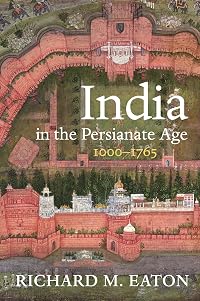
India in the Persianate Age: 1000-1765
by Richard M. Eaton
On This Page
Description
Protected by vast mountains and seas, the Indian subcontinent might seem a nearly complete and self-contained world with its own religions, philosophies, and social systems. And yet this ancient land and its varied societies experienced prolonged and intense interaction with the peoples and cultures of East and Southeast Asia, Europe, Africa, and especially Central Asia and the Iranian plateau. Richard M. Eaton tells this extraordinary story with relish and originality, as he traces the rise show more of Persianate culture, a many-faceted transregional world connected by ever-widening networks across much of Asia. Introduced to India in the eleventh century by dynasties based in eastern Afghanistan, this culture would become progressively indigenized in the time of the great Mughals (sixteenth, seventeenth, and eighteenth centuries). Eaton brilliantly elaborates the complex encounter between India's Sanskrit culture ?an equally rich and transregional complex that continued to flourish and grow throughout this period ?and Persian culture, which helped shape the Delhi Sultanate, the Mughal Empire, and a host of regional states. This long-term process of cultural interaction is profoundly reflected in the languages, literatures, cuisines, attires, religions, styles of rulership and warfare, science, art, music, and architecture ?and more ?of South Asia. show lessTags
Recommendations





Member Reviews
When I picked up "India in The Persianate Age" by Richard Eaton, I was unsure what to expect. Books like this are difficult to review because they are so good.
Unlike many authors who focus on North India or the Mughals, he covers North, East, and South India. It starts with Mahmud of Ghazni and busts the Somnath myth. Then, he covered a wide sweep of history until the British. We may have become a Persian-speaking country if the Mughals had not imploded. My father studied Persian, apart from Punjabi and English, not Hindi.
Books like this cover great ground and are tough stories to write. Many themes weave together, each strand and node affecting the other. It can become confusing for the reader.
To Richard Eaton's eternal credit, he show more created a fascinating, engaging, eye-opening, and comprehensible book.
I believe this is a book every Indian, especially today, must read. show less
Unlike many authors who focus on North India or the Mughals, he covers North, East, and South India. It starts with Mahmud of Ghazni and busts the Somnath myth. Then, he covered a wide sweep of history until the British. We may have become a Persian-speaking country if the Mughals had not imploded. My father studied Persian, apart from Punjabi and English, not Hindi.
Books like this cover great ground and are tough stories to write. Many themes weave together, each strand and node affecting the other. It can become confusing for the reader.
To Richard Eaton's eternal credit, he show more created a fascinating, engaging, eye-opening, and comprehensible book.
I believe this is a book every Indian, especially today, must read. show less
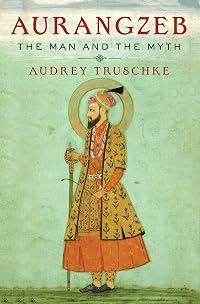
A competent survey of Muslim rule in the Indian subcontinent during the second millennium CE. Despite the volume of the text, it has not the space to go too deeply into any period, hence a better understanding of the subject would probably call for dipping into other, more specialised, works. Perhaps the most evocative part of the book is the description of the decline of the Mughal empire under Aurangazeb, that poignantly misdirected monarch who spent the better part of his life chasing dust demons in the Deccan peninsula. The author has a tendency to try (perhaps too hard) to see only good in even the most outre of the Muslim regimes (e.g., his attempts to find some good in even the murderous and fratricidial rites of the Turco-Mongol show more system of succession), perhaps due to his deep commitment to the subject. show less
More like 3.5
Ratings
Members
- Recently Added By
Lists

Library Non-Fiction
164 works; 1 member
Author Information
14+ Works 368 Members
Richard M. Eaton is Professor of History at the University of Arizona, Tucson.
Awards and Honors
Awards
Classifications
Statistics
- Members
- 159
- Popularity
- 208,096
- Reviews
- 3
- Rating
- (4.07)
- Languages
- English
- Media
- Paper, Ebook
- ISBNs
- 5
- ASINs
- 2