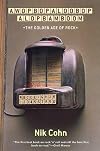
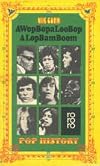
Awopbopaloobop Alopbamboom: The Golden Age of Rock
by Nik Cohn
On This Page
Description
From the rise of Bill Haley to the death of Jimi Hendrix, this account of music in the 1950s and 1960s is "the definitive history of rock 'n' roll" ( Rolling Stone ). This is British music journalist Nik Cohn's classic and cogent history of an unruly era-filled with outrageous tales and vivid descriptions of the music, and covering artists from Elvis Presley to Eddie Cochran to Bob Dylan to the Beatles and beyond. From the father of what would become a new literary form-rock criticism-this show more is a seminal history of rock and roll's evolution, including revisions and updates made for a new edition in the early 1970s. show lessTags
Recommendations





















Member Recommendations

How the Beatles Destroyed Rock 'n' Roll: An Alternative History of American Popular Music by Elijah Wald
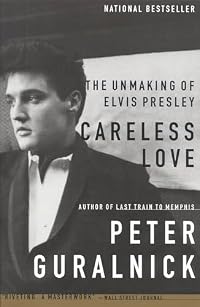
Crypto-Willobie Cohn's book has a similar premise to part of Wald's -- that the 'rock' explosion of the 60s (Beatles etc) segregated and overwhelmed the more authentic music that went before it.
Member Reviews
This isn't a history of rock but a love letter to early rock, nothing really cuts it post 1959 in Cohn's mind, and he seems a bit of a crochety old man. I made it until he referred to Dionne Warwick as a "negress."
I’m conflicted about this book. On the one hand, Awopbop, Etc. is an interesting history of the first two decades of rock music, written by a man who was a fan first, music critic second, and who was there. It’s informative, with a lot of anecdotes about stage performances and such which give a good sense of what it was like to see the Stones or the Who or Little Richard perform, or to be in the music scene at the time. It had me looking up musical styles and artists, and did a good job of showing the progression of rock and, to a point, the interactions between the parallel musical styles.
On the other hand, this was written by a man who was there and published in 1968, so the hip, pattery writing style doesn’t always hold up show more well—he sounds cynical and pithy when he’s being affectionate, he chooses some deeply unsavory words—and a good number of his opinions are … sigh. This is probably one to steel yourself for a bit, if you’re Black, female, or Black-and-female, for instance.
Also, because he was living the history, there are artists he missed because they were largely overshadowed (Sister Rosetta Tharpe is notable), connections he doesn’t make, and tastes and opinions that you/I don’t agree with for all that they are, again, interesting to read. (Sergeant Pepper’s is not bad rock music just because it doesn’t have simple, catchy single, I don’t care what he says.)
This is a great book to read if you’re really into the subject or want to read a contemporary perspective on the early years of rock, like I was. But there are probably better, more complete histories out there, and I’ll be looking for them.
All the same, I do kind of want to read Cohn’s opinion on metal, disco, and glam. What did he make of Queen? Bowie? I’m sure he’d have hated ABBA. show less
On the other hand, this was written by a man who was there and published in 1968, so the hip, pattery writing style doesn’t always hold up show more well—he sounds cynical and pithy when he’s being affectionate, he chooses some deeply unsavory words—and a good number of his opinions are … sigh. This is probably one to steel yourself for a bit, if you’re Black, female, or Black-and-female, for instance.
Also, because he was living the history, there are artists he missed because they were largely overshadowed (Sister Rosetta Tharpe is notable), connections he doesn’t make, and tastes and opinions that you/I don’t agree with for all that they are, again, interesting to read. (Sergeant Pepper’s is not bad rock music just because it doesn’t have simple, catchy single, I don’t care what he says.)
This is a great book to read if you’re really into the subject or want to read a contemporary perspective on the early years of rock, like I was. But there are probably better, more complete histories out there, and I’ll be looking for them.
All the same, I do kind of want to read Cohn’s opinion on metal, disco, and glam. What did he make of Queen? Bowie? I’m sure he’d have hated ABBA. show less
Nik Cohn got in early with his history of rock and roll, published in 1969 (I think), although the artform survived until about 1984 before it choked on its own vomit. Enough old man's grumblings, Awopbop is stunning on the impact of the early rockers on England - his chapters on Little Richard and Jerry Lee Lewis are something else. On the Beatles, he once seemed churlish but now quite sane, and gets 10/10 for prescience when he states that the Rolling Stones should all die in a plane crash on their thirtieth birthdays. PJ Probyisms aside, this is a truly great book.
I've read several of the books on David Bowie's favorite books list and haven't cared for a few of them (this being one), which made me feel like I must be wrong. This is also praised by Greil Marcus (who I love), so I feel like I must be missing something. But this reads too much like a sloppy high school English paper, even if the subject matter is interesting. Maybe it's unfair that I read this at the same time as reading a music book by Lester Bangs, who is otherworldly good.
One of the few heirlooms in my family is a set of books about the First World War by Frank R. Cana. They were dashed out as soon as the war ended so include some factual errors, such as that Samsonov was killed by a German shell at Tannenberg, when, in fact, he committed suicide.
There are similar things here, a book about the history of 'pop' (somewhat loosely defined) written in 1969. Buddy Holly died in Iowa, not North Dakota, and Eddie Cochran did not die on the A1, he died on the A4 traveling back from Bristol to London. Such mistakes are to be expected from a book knocked out pre-internet in deepest Connemara, but it is odd that proof-reading missed them and none of the book's immediacy would be lost by correcting them now.
There show more are questions of interpretation besides those of fact. Cohn is often contemptuous of novelty acts but P.J. Proby, who built a short career on splitting his trousers onstage, gets extensive favourable coverage. Also, some of the trends discerned in pop turned out to be only partial. The Stones were not finished in late 1966, and from Beggar's Banquet onwards released a series of the greatest albums ever recorded.
But I suppose 'immediacy' is the keyword here. This is how pop looked in 1969 to a shrewd observer with extensive knowledge and a talent for writing. It would have looked different to him had he written any later. But, of course, then he wouldn't have been the first to write it. show less
There are similar things here, a book about the history of 'pop' (somewhat loosely defined) written in 1969. Buddy Holly died in Iowa, not North Dakota, and Eddie Cochran did not die on the A1, he died on the A4 traveling back from Bristol to London. Such mistakes are to be expected from a book knocked out pre-internet in deepest Connemara, but it is odd that proof-reading missed them and none of the book's immediacy would be lost by correcting them now.
There show more are questions of interpretation besides those of fact. Cohn is often contemptuous of novelty acts but P.J. Proby, who built a short career on splitting his trousers onstage, gets extensive favourable coverage. Also, some of the trends discerned in pop turned out to be only partial. The Stones were not finished in late 1966, and from Beggar's Banquet onwards released a series of the greatest albums ever recorded.
But I suppose 'immediacy' is the keyword here. This is how pop looked in 1969 to a shrewd observer with extensive knowledge and a talent for writing. It would have looked different to him had he written any later. But, of course, then he wouldn't have been the first to write it. show less
an old book. rated4 stars despite the fact that the author and i disagree on many groups. Well written, with generous writeups on various stars; who the hell is PJ Rowly?
4 despite t
4 despite t
He doesn't like Dylan, and Dylan was all I cared about when I read it.
Members
- Recently Added By
Lists

David Bowie's Top 100
97 works; 23 members

David Bowie's List of Top 100 Books
94 works; 6 members
David Bowie’s Top 100 Favourite Reads
100 works; 3 members
Author Information

18+ Works 894 Members
Nik Cohn is the author of Rock Dreams (with Guy Peellaert), The Heart of the World, and a number of other books. One of his short stories became the film Saturday Night Fever.
Some Editions
Awards and Honors
Distinctions
Series
Belongs to Publisher Series
rororo (1542)
Common Knowledge
- Canonical title*
- A Wop Bopaloo Bop Alop Bam Boom : Nik Cohn's Pop History
- Original title
- A wopbopaloobop alopbamboom : Pop from the beginning
- Alternate titles
- Rock from the Beginning
- Original publication date
- 1970
- Quotations
- Elvis is where pop begins and ends. He's the great original and, even now, he's the image that makes all others seem shoddy, the boss.
Bogart proved thirty years ago that, in mass media, you don't need to be a monster intellectual to be great. In fact, it's a definite disadvantage if you are. What you do need is style, command, specific image and these are t... (show all)he exact things that Chuck Berry has always been overflowing with.
Hype has become such an integral part of pop that one hardly notices it any more. From certain angles, it's justifiable - you believe in your product and you spend money promoting it in every possible way. You have faith.
[P]op doesn't work around good records or pretty voices or cute people - those are only details. Really, it happens off superheroes and superdollars, off hyped mass hysteria and deepdown social change, off short-term collecti... (show all)ve insanities. People aren't relevant.
*Some information comes from Common Knowledge in other languages. Click "Edit" for more information.
Classifications
Statistics
- Members
- 262
- Popularity
- 123,146
- Reviews
- 7
- Rating
- (3.70)
- Languages
- English, French, German, Spanish
- Media
- Paper, Ebook
- ISBNs
- 19
- ASINs
- 14