On This Page
Description
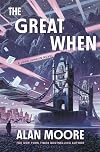
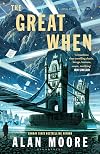
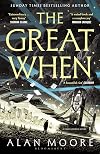
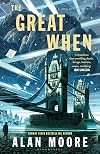
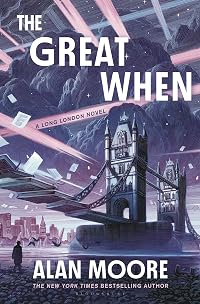
The year is 1949, the city London. Amidst the smog of the capital stumbles Dennis Knuckleyard, a hapless eighteen year-old employed by a second-hand bookshop. One day, on an errand to acquire books for sale, Dennis discovers a novel that simply does not exist. It is a fictitious book, a figment from another novel. Yet it is physically there in his hands. How? Dennis has stumbled on a book from the Great When, a magical version of London beyond time and space, where reality blurs with show more fiction and concepts such as Crime and Poetry are incarnated as wondrous, terrible beings. But this other, magical London must remain a secret: if Dennis cannot find a way to return this book to where it belongs, he risks repercussions, such as his body being turned inside out (or worse). So begins a journey delving deep into the city's occult underbelly and tarrying with an eccentric cast of sorcerers, gangsters, and murderers - some from legend, some all too real, and all with plans of their own. Soon Dennis finds himself at the centre of an explosive series of events that may alter and endanger both Londons forever... show lessTags
Recommendations

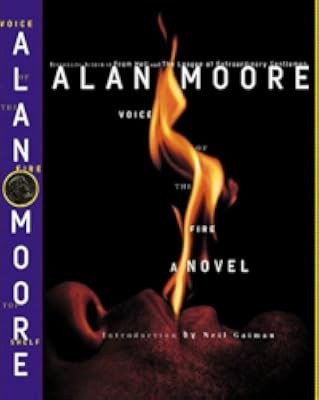
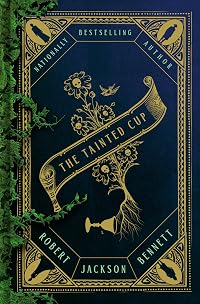
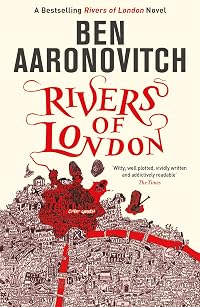
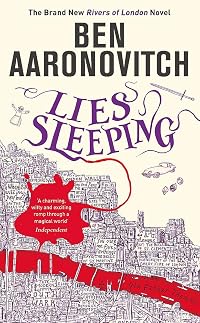







Member Recommendations
Member Reviews
The Great When: set in 1949 with London pretty much destroyed, in pieces, and the national psychology in a similar state. Everybody important in magic has just died. Aleister Crowley, Dion Fortune, Arthur Machen, Harry Price, Uncle Tom Cobbley, so there’s a gaping hole in English magic and English psychology.
Love the way Moore brings the character to life including Prince Monolulu, The Inferred Saracen, Golgonooza, Austin Osman Spare, Augustus John, The legendary Joe meek the Telstar man
He uses interesting phrases such as "Mafeking relieved" (meaning a boost to British morale), and the Oxcross of London (Aleph tau, Hebrew) alternative London A-Z.
Overall another excellent entertaining alternate London story. I particularly loved the show more bookseller, Coffin Ada, with her reputation and behaviour (reminiscent of Black's Books), Dennis Knucleyard, the somewhat gaumless apprentice, and ultimately the adventure he finds himself in. Very similar story to Garth Nix's Lefthanded Booksellers of London, but 100 times better. The characters in Moore's story being real characters from history, and broght to life in a really cool way. Had to look at the art of Austin Spare after reading the story, really great stuff, also had to re-read Blake's Jerusalem. Loved the inventive mind of Moore spilling out of the text, Oxcross, and his ability to describe two Londons as though they both existed. Looking forward to the next one in the series. show less
Love the way Moore brings the character to life including Prince Monolulu, The Inferred Saracen, Golgonooza, Austin Osman Spare, Augustus John, The legendary Joe meek the Telstar man
He uses interesting phrases such as "Mafeking relieved" (meaning a boost to British morale), and the Oxcross of London (Aleph tau, Hebrew) alternative London A-Z.
Overall another excellent entertaining alternate London story. I particularly loved the show more bookseller, Coffin Ada, with her reputation and behaviour (reminiscent of Black's Books), Dennis Knucleyard, the somewhat gaumless apprentice, and ultimately the adventure he finds himself in. Very similar story to Garth Nix's Lefthanded Booksellers of London, but 100 times better. The characters in Moore's story being real characters from history, and broght to life in a really cool way. Had to look at the art of Austin Spare after reading the story, really great stuff, also had to re-read Blake's Jerusalem. Loved the inventive mind of Moore spilling out of the text, Oxcross, and his ability to describe two Londons as though they both existed. Looking forward to the next one in the series. show less
Had I ruthlessly implemented the "50-page Rule" I would have tossed this book aside after said fifty pages, as what I was reading mostly seemed like blather. Not to mention that the conceit of books being wrapped up with an alternate, metaphysical, London is all that fresh at the moment.
Having said that, this novel does come into something of its own the deeper that you get into it, and there is some very nice writing that almost offsets the continuing periodic hemorrhages of word salad. The conclusion does manage to be poignant.
However, despite not being a total throwaway, I find it hard to imagine four more books of this stuff being produced. The impression I'm left with is of the sort of vanity project that a successful writer cashes show more in their accumulated chips to push forward with, when cooler heads might have suggested caution. show less
Having said that, this novel does come into something of its own the deeper that you get into it, and there is some very nice writing that almost offsets the continuing periodic hemorrhages of word salad. The conclusion does manage to be poignant.
However, despite not being a total throwaway, I find it hard to imagine four more books of this stuff being produced. The impression I'm left with is of the sort of vanity project that a successful writer cashes show more in their accumulated chips to push forward with, when cooler heads might have suggested caution. show less
The first section, titled The Music at the Beginning, is a series of sketches that introduce some characters and things (more like creatures) that relate to the main story. They lack any discernible context to help you understand them, and so you start wondering: where is the story? As the real story then unfolded, I forgot much of this music, some of which was too tangential. It's not the first time I have seen authors lump together background material and dump it at the start. I've done it, too. It's like, let's get into the mood first and get the readers wondering; the smart ones will figure it out. But it's just frustrating. It would have been more effective distributed into some well-placed flashbacks.
Luckily for us more challenged show more readers, the remaining bulk is largely linear and compelling. Not to mention peppered with original little metaphor bombs that fairly burst with narrative flavor. These are so good that I was shocked to see them from someone who is mostly known for graphic stories; so good that I am envious.
Speaking of flavor, the depiction of London locations, with hints of their antiquity, is tasty. And the feel of the psychically damaged postwar city is plausible and engrossing, especially if you like historical settings and references to real historical people. It's a quest story, with mystery and suspense, youthful angst and longing, and above all, that fundamental magic of good storytelling: characters who are distinctly well-drawn, but so original that you can never have seen them before, speaking words that you cannot guess ahead of time.
Reviewers seem mixed about the dense, surreal imagery of the spooky alternate London. Here, my reader's laziness yielded to the challenge of trying to see the fantastic monstrosities that Moore could only describe in ragged verbal pen strokes.
As other readers have noted, the last chapter happens long after the crux, and it is both perplexing and unsatisfactory. It appears to be about someone like the protagonist, but it isn't anyone that we know. It's also jarring that the follow-up volume yet to come apparently will resume with the original characters. We are left wondering: who is this wretched old man with the wasted life at the end of The Great When? show less
Luckily for us more challenged show more readers, the remaining bulk is largely linear and compelling. Not to mention peppered with original little metaphor bombs that fairly burst with narrative flavor. These are so good that I was shocked to see them from someone who is mostly known for graphic stories; so good that I am envious.
Speaking of flavor, the depiction of London locations, with hints of their antiquity, is tasty. And the feel of the psychically damaged postwar city is plausible and engrossing, especially if you like historical settings and references to real historical people. It's a quest story, with mystery and suspense, youthful angst and longing, and above all, that fundamental magic of good storytelling: characters who are distinctly well-drawn, but so original that you can never have seen them before, speaking words that you cannot guess ahead of time.
Reviewers seem mixed about the dense, surreal imagery of the spooky alternate London. Here, my reader's laziness yielded to the challenge of trying to see the fantastic monstrosities that Moore could only describe in ragged verbal pen strokes.
As other readers have noted, the last chapter happens long after the crux, and it is both perplexing and unsatisfactory. It appears to be about someone like the protagonist, but it isn't anyone that we know. It's also jarring that the follow-up volume yet to come apparently will resume with the original characters. We are left wondering: who is this wretched old man with the wasted life at the end of The Great When? show less
I'm a huge Alan Moore fan. I haven't loved everything he's written, but I've loved enough of it to want to read everything he's written. So, when I saw this at an out-of-town bookstore there was no question about which book I was going to buy to support that independent store.
After reading the first chapter I thought I might DNF. Things weren't making any sense. But I didn't want to give up on one of my favorite authors (or on my $30 investment). I'm glad I didn't because there is some absolutely wonderful writing going on here. Passages and lines I would like to remember forever, but have already forgotten because I didn't write them down.
Unfortunately, the visits to the "other London" are so surreal they often became kind of a slog show more because of their length. Some of the imagery reminded me of China Mieville's (another of my top 5) writing and that was great, but other times it just seemed like random words on a page.
The overall plot was decent but didn't blow me away. I'm thinking that the 2nd book will be even better though so definitely going to pick that up (I think it just came out). show less
After reading the first chapter I thought I might DNF. Things weren't making any sense. But I didn't want to give up on one of my favorite authors (or on my $30 investment). I'm glad I didn't because there is some absolutely wonderful writing going on here. Passages and lines I would like to remember forever, but have already forgotten because I didn't write them down.
Unfortunately, the visits to the "other London" are so surreal they often became kind of a slog show more because of their length. Some of the imagery reminded me of China Mieville's (another of my top 5) writing and that was great, but other times it just seemed like random words on a page.
The overall plot was decent but didn't blow me away. I'm thinking that the 2nd book will be even better though so definitely going to pick that up (I think it just came out). show less
Disclaimer: I was given a free copy of this book by the publisher in return for an honest review.
There’s no doubting the scale of ferocity of Alan Moore’s imagination, but whether it’s captured effectively on the page is a different matter. The Great When is in turns witty, disorienting and frustrating. There are many, many great lines, but they’re not drawn into much of a coherent narrative. Perhaps fittingly, I’m left not really sure what I just read.
There’s no doubting the scale of ferocity of Alan Moore’s imagination, but whether it’s captured effectively on the page is a different matter. The Great When is in turns witty, disorienting and frustrating. There are many, many great lines, but they’re not drawn into much of a coherent narrative. Perhaps fittingly, I’m left not really sure what I just read.
the new Alan Moore novel The Great When is brilliant of course and very literary. centers in on the Great City of London - no not that one, but the old conceit of an underground other city driven by imagination. beautifully written, as a kind of vivid comic without artwork and it looks like Alan is having the kinda fun he deserves. first of a series. archetypes come and go, but may Alan continue forever.
reason read: featured author for September BAC. This is a first in an intended series, The London Quintet. Alan Moore is known as a comic creator and his book Watchmen is included on the 1001 list as being influential in the develop of the novel (probably graphic) though Moore prefers that his books be called comics and not graphic novels. This was a work of urban fantasy and is set in London with the time period post WWII. It has the main character traveling back and forth between two Londons. He has been told to return a book that he accidentally acquired, the book is called A London Walk by a Rev Thomas Hampole. The main character is an 18 y/o male, Dennis Knuckleyard, who works in a second hand bookshop. The killers, and there seems show more to be a lot of violence, are said to be caused by damage of experiencing the Blitz. The author plans to investigate the closing decades of the 20th century. The title is a play on "The Great Wen" which was coined by English pamphleteer William Cobbett about 19th century London as a sebaceous cyst. The characters are flawed individuals who meet great challenges. The book is full of action, language is rough but that would be expected considering the settings. The writing is witty, sharp, and satirical. Would I read further in the series? I'm not ruling it out but it isn't a priority. I rated it 3.6 stars show less
Members
- Recently Added By
Lists

2025 Hugo Awards -- Eligible Works -- Novels
33 works; 2 members

Books Read in 2024
4,727 works; 128 members

Books Read in 2025
4,128 works; 98 members
Author Information

1,124+ Works 96,689 Members
Multiple award-winning author Alan Moore is universally considered the best writer of graphic novels in the medium's history. Among his many awards are the Hugo Award, the Bram Stoker Award, the Eisner Award, and the International Horror Guild Award
Awards and Honors
Distinctions
The Guardian Book of the Day (2024-10-12)
Series

Common Knowledge
- Canonical title
- The Great When
- Original publication date
- 2024
- Dedication
- For Michael Moorcock and Iain Sinclair, both longer in London and there before me
- First words
- Woodwind: out behind the boarding house, where a low winter sun has spattered gold on towering weeds, two sorcerers are dying over tea and biscuits.
- Last words
- (Click to show. Warning: May contain spoilers.)But it's just an ordinary cat.
Classifications
Statistics
- Members
- 471
- Popularity
- 64,920
- Reviews
- 11
- Rating
- (3.72)
- Languages
- English, German, Italian
- Media
- Paper, Audiobook, Ebook
- ISBNs
- 15
- ASINs
- 5