Historical Atlas of World Mythology, Vol. I: The Way of the Animal Powers, Part 2: Mythologies of the Great Hunt
by Joseph Campbell
The Historical Atlas of World Mythology (vol 1, part 2)
272 Members (4.55)
On This Page
Description
Anthropological theory.Tags
Recommendations


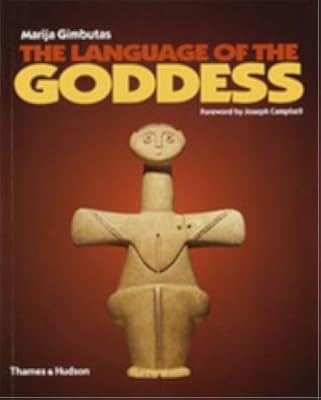
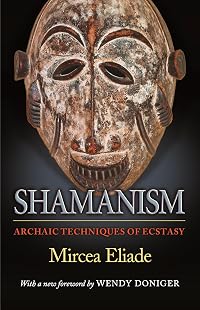


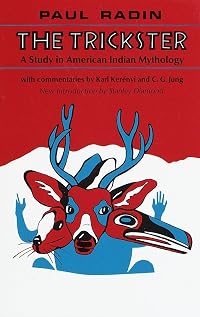























Member Reviews
Members
- Recently Added By
Author Information

201+ Works 41,643 Members
Joseph Campbell was born in White Plains, New York on March 26, 1904. He received a B.A. in English literature in 1925 and an M.A. in Medieval literature in 1927 from Columbia University. He was awarded a Proudfit Traveling Fellowship to continue his studies at the University of Paris. After he had received and rejected an offer to teach at his show more high school alma mater, his Fellowship was renewed, and he traveled to Germany to resume his studies at the University of Munich. During the year he was housemaster of Canterbury School, he sold his first short story, Strictly Platonic, to Liberty magazine. In 1934, he accepted a position in the literature department at Sarah Lawrence College, a post he would retain until retiring in 1972. During his lifetime, he wrote more than 40 books including The Hero with a Thousand Faces, The Mythic Image, the four-volume The Masks of God, and The Power of Myth with Bill Moyers. During the 1940s and 1950s, he collaborated with Swami Nikhilananda on translations of the Upanishads and The Gospel of Sri Ramakrishna. He received several awards including National Institute of Arts and Letters Award for Contributions to Creative Literature and the 1985 National Arts Club Gold Medal of Honor in Literature. He died after a brief struggle with cancer on October 30, 1987. (Bowker Author Biography) show less
Series

Work Relationships
Common Knowledge
- Canonical title
- Historical Atlas of World Mythology, Vol. I: The Way of the Animal Powers, Part 2: Mythologies of the Great Hunt
- First words
- That an abrupt expansion of human consciousness occurred toward the close of the last glacial age, some 30,000 years ago, is evident in the appearance at that time in southwestern France and northern Spain of the earliest kno... (show all)wn works of visual art—both the rock paintings of the vast temple caves of the men's hunting ceremonials, and the numerous nude female figurines that have been found associated chiefly with dwelling sites (see I.1:58-79). (Foreword)
That a fundamental transformation of human consciousness occurred toward the close of the last great glacial age, some 40,000 years ago, is evident in the sudden appearances in Europe at about that time of the two symbolic vi... (show all)sual arts of rock painting and stone sculpture; respectively, in the painted temple caves of the men's hunting rites and in the "Venus" figurines and reliefs associated both with dwelling sites and with sanctuaries in veneration of the female power (see Vol. I.1: pages 58-79). - Last words
- (Click to show. Warning: May contain spoilers.)The differences of interests and concerns of these two distinct personalities are evident in the selections of their contributions, through which the last reflections come to us of a long long day, the sun of which, with its light, has set.
Classifications
- Genres
- Nonfiction, Anthropology, Religion & Spirituality, General Nonfiction, History, Art & Design
- DDC/MDS
- 291.13 — Religion Other religions [Formerly: General Religious Topics] [formerly: Religious mythology, general classes of religion, interreligious relations and attitudes, social theology. Relocated to 201] Archetypal Mythology
- LCC
- BL311 — Philosophy, Psychology and Religion Religions. Mythology. Rationalism Religions. Mythology. Rationalism The myth. Comparative mythology
- BISAC
Statistics
- Members
- 272
- Popularity
- 119,069
- Rating
- (4.55)
- Languages
- English
- Media
- Paper
- ISBNs
- 2
- ASINs
- 1